Kirjojen hintavertailu – 12 903 724 kirjaa ja 27 kauppaa

Kirjailija

Eugene N. Anderson

Kirjat ja teokset yhdessä paikassa: 9 kirjaa, julkaisuja vuosilta 2000–2023, suosituimpiin kuuluu Crossroads of Cuisine: The Eurasian Heartland, the Silk Roads and Food. Vertaile teosten hintoja ja tarkista saatavuus suomalaisista kirjakaupoista.

Nimi esiintyy myös muodoissa: Eugene N Anderson

9 kirjaa

Kirjojen julkaisuvuodet: 2000–2023.

Crossroads of Cuisine: The Eurasian Heartland, the Silk Roads and Food

Crossroads of Cuisine: The Eurasian Heartland, the Silk Roads and Food

Paul David Buell; Eugene N. Anderson; Montserrat de Pablo Moya

BRILL
2020
sidottu
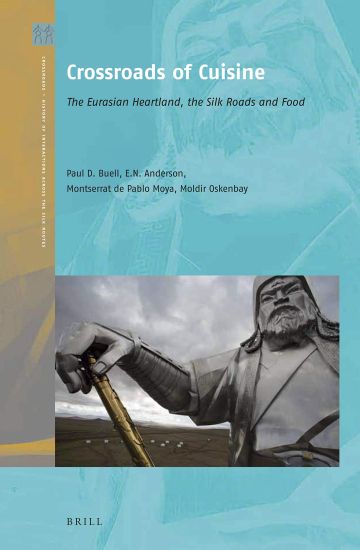
Crossroads of Cuisine provides a history of foods, and foodways in terms of exchanges taking place in Central Asia and in surrounding areas such as China, Korea or Iran during the last 5000 years, stressing the manner in which East and West, West and East grew together through food. It provides a discussion of geographical foundations, and an interlocking historical and cultural overview going down to the present day, with a comparative country by country survey of foods and recipes. An ethnographic photo essay embracing all parts of the book binds it all together, and helps make topics discussed vivid and approachable. The book is important for explaining key relationships that have not always been made clear in past scholarship.
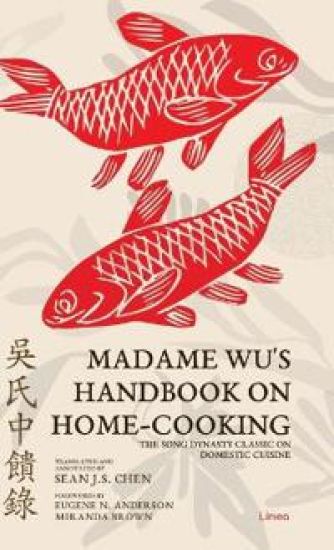
Madame Wu's Handbook on Home-Cooking

Madame Wu's Handbook on Home-Cooking

Eugene N Anderson; Miranda Brown

Linea
2023
sidottu
Madame Wu's Handbook on Home-Cooking: The Song Dynasty Classic on Domestic Cuisine is the first Western language edition of the Wushi Zhongkuilu 吳氏中饋錄, one of the earliest Chinese works on home cooking and the only culinary work written by a Chinese woman from premodern China preserved in its entirety. This translation and annotation by Sean J. S. Chen of this enigmatic cookbook reveal details on the preparation and preservation of foods essential on household tables of Medieval China. It is a valuable snap-shot of Medieval Chinese gastronomy, documenting, among other things, the myriad of home fermentation techniques used in the Song dynasty household, the beginning of soy-sauce use in Chinese cuisine, and the prevalent consumption of Central Asian foods and sweets in Eastern China. The book includes forewords by academic reviewers Eugene N. Anderson and Miranda Brown, as well as preface and notes by the translator.
The East Asian World-System

The East Asian World-System

Eugene N. Anderson

Springer Nature Switzerland AG
2020
nidottu
This book studies the East Asian world-system and its dynastic cycles as they were influenced by climate and demographic change, diseases, the expansion of trade, and the rise of science and technology. By studying the history of East Asia until the beginning of the 20th century and offering a comparative perspective on East Asian countries, including China, Japan and Korea, it describes the historical evolution of the East Asian world-system as being the result of good or poor management of the respective populations and environments. Lastly, the book discusses how the East Asian regions have become integrated into a single world-system by a combination of trade, commerce, and military action. Given its scope, the book will appeal to scholars of history, sociology, political science and environmental studies, and to anyone interested in learning about the effects of climate change on the dynamic development of societies.
The East Asian World-System

The East Asian World-System

Eugene N. Anderson

Springer Nature Switzerland AG
2019
sidottu
This book studies the East Asian world-system and its dynastic cycles as they were influenced by climate and demographic change, diseases, the expansion of trade, and the rise of science and technology. By studying the history of East Asia until the beginning of the 20th century and offering a comparative perspective on East Asian countries, including China, Japan and Korea, it describes the historical evolution of the East Asian world-system as being the result of good or poor management of the respective populations and environments. Lastly, the book discusses how the East Asian regions have become integrated into a single world-system by a combination of trade, commerce, and military action. Given its scope, the book will appeal to scholars of history, sociology, political science and environmental studies, and to anyone interested in learning about the effects of climate change on the dynamic development of societies.
K'Oben

K'Oben

Amber M. O'Connor; Eugene N. Anderson

Rowman Littlefield
2016
sidottu
K’Oben traces the Maya kitchen and its associated hardware, ingredients, and cooking styles from the earliest times for which we have archaeological evidence through today’s culinary tourism in the area. It focuses not only on what was eaten and how it was cooked, but the people involved: who grew or sourced the foods, who cooked them, who ate them. Additionally, the authors examine how Maya foodways and the people involved fit into the social system, particularly in how food is incorporated into culture, economy, and society. The authors provide a detailed literature review of hard-to-find sources including: out of print centuries old cookbooks, archaeological field notes, ethnographies and ethnohistories out of circulation and not available in English, thesis documents only available in Spanish and in university archives as well as current field research on the Maya. The more recent Maya foodways can be studied from cookbooks, ethnographies and ethnohistorical documentation. Between the two of us, we have assembled a small but representative collection of cookbooks, some self-published and rare, that were available in Merida and elsewhere in Mexico during the late 20th century. Some are quite old, and all reflect local traditional foodways. Geographically, the book concentrates on Yucatan, Tabasco and Chiapas in Mexico, but will include Pre-Classic and Classic evidence from Guatemala and El Salvador, whose foodways are influenced by Maya traditions.
Soup For The Qan

Soup For The Qan

Paul D. Buell; Eugene N. Anderson

Routledge
2016
nidottu
First published in 2000. In the early 14th century, a court nutritionist called Hu Sihui wrote his Yinshan Zhengyao, a dietary and nutritional manual for the Chinese Mongol Empire. Hu Sihui, a man apparently with a Turkic linguistic background, included recipes, descriptions of food items, and dietary medical lore including selections from ancient texts, and thus reveals to us the full extent of an amazing cross-cultural dietary; here recipes can be found from as far as Arabia, Iran, India and elsewhere, next to those of course from Mongolia and China. Although the medical theories are largely Chinese, they clearly show Near Eastern and Central Asian influence. This long-awaited expanded and revised edition of the much-acclaimed A Soup for the Qan sheds (yet) new light on our knowledge of west Asian influence on China during the medieval period, and on the Mongol Empire in general.
A Soup for the Qan: Chinese Dietary Medicine of the Mongol Era As Seen in Hu Sihui's Yinshan Zhengyao
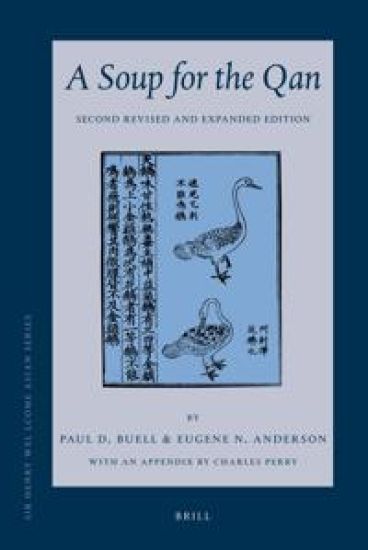
In the early 14th century, a court nutritionist called Hu Sihui wrote his Yinshan Zhengyao, a dietary and nutritional manual for the Chinese Mongol Empire. Hu Sihui, a man apparently with a Turkic linguistic background, included recipes, descriptions of food items, and dietary medical lore including selections from ancient texts, and thus reveals to us the full extent of an amazing cross-cultural dietary; here recipes can be found from as far as Arabia, Iran, India and elsewhere, next to those of course from Mongolia and China. Although the medical theories are largely Chinese, they clearly show Near Eastern and Central Asian influence. This long-awaited expanded and revised edition of the much-acclaimed A Soup for the Qan sheds (yet) new light on our knowledge of west Asian influence on China during the medieval period, and on the Mongol Empire in general.
Soup For The Qan

Soup For The Qan

Paul D. Buell; Eugene N. Anderson

Kegan Paul
2000
sidottu
First published in 2000. In the early 14th century, a court nutritionist called Hu Sihui wrote his Yinshan Zhengyao, a dietary and nutritional manual for the Chinese Mongol Empire. Hu Sihui, a man apparently with a Turkic linguistic background, included recipes, descriptions of food items, and dietary medical lore including selections from ancient texts, and thus reveals to us the full extent of an amazing cross-cultural dietary; here recipes can be found from as far as Arabia, Iran, India and elsewhere, next to those of course from Mongolia and China. Although the medical theories are largely Chinese, they clearly show Near Eastern and Central Asian influence. This long-awaited expanded and revised edition of the much-acclaimed A Soup for the Qan sheds (yet) new light on our knowledge of west Asian influence on China during the medieval period, and on the Mongol Empire in general.