Kirjojen hintavertailu – 12 859 819 kirjaa ja 27 kauppaa
Kirjailija
F. Max Muller
Kirjat ja teokset yhdessä paikassa: 270 kirjaa, julkaisuja vuosilta 1876–2026, suosituimpiin kuuluu The Sacred Books of the East. Vertaile teosten hintoja ja tarkista saatavuus suomalaisista kirjakaupoista.
Nimi esiintyy myös muodoissa: F Max Müller, F Max Muller, F. Max MüLler
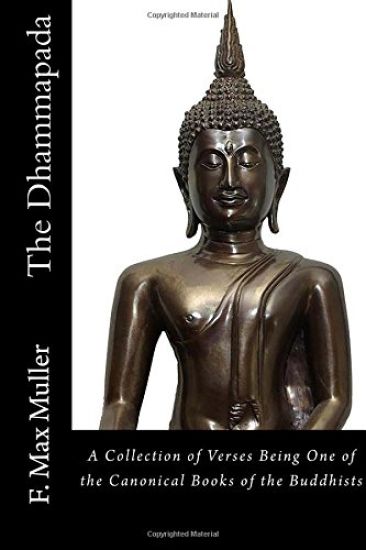
The Dhammapada is one of the great books of the Buddha's teachings. The 423 passages are taken from the various teachings or suttas and represent the core teachings and principles of the Buddha. The collection was assembled probably in the third to fifth centuries CE and contains a number of verses that are organized by category. The passages are taken from longer works - various Buddhist parables - and represent the very core of a specific lesson. This is an excellent starting point for anyone interested in exploring Buddhism and learning more about the practice, but it also enumerates enough great lessons to keep the practiced adherent engaged. The small lessons are derived from the original collection of teachings the Buddha delivered. In this way, The Dhammapada serves as a handy compendium of the Buddha's teachings, all the good stuff in one package.
The Dhammapada-a Collection of Verses; Being One of the Canonical Books of the Buddhists is a Buddhist scripture and a collection of sayings of the Buddha in verse form and one of the most widely read and best known Buddhist scriptures. The original version of the Dhammapada is in the Khuddaka Nikaya, a division of the Pali Canon of Theravada Buddhism. The title, "Dhammapada," is a compound term composed of dhamma and pada, each word having a number of denotations and connotations. Generally, dhamma can refer to the Buddha's "doctrine" or an "eternal truth" or "righteousness" or all "phenomena"; and, at its root, pada means "foot" and thus by extension, especially in this context, means either "path" or "verse" or both. In Tamil language 'Padam' means subject, English translations of this text's title have used various combinations of these and related words. According to tradition, the Dhammapada's verses were spoken by the Buddha on various occasions." By distilling the complex models, theories, rhetorical style and sheer volume of the Buddha's teachings into concise, crystalline verses, the Dhammapada makes the Buddhist way of life available to anyone... In fact, it is possible that the very source of the Dhammapada in the third century B. C. E. is traceable to the need of the early Buddhist communities in India to laicize the ascetic impetus of the Buddha's original words." 9] The text is part of the Khuddaka Nikaya of the Sutta Pitaka, although over half of the verses exist in other parts of the Pali Canon. A 4th or 5th century CE commentary attributed to Buddhaghosa includes 305 stories which give context to the verses. Comparing the Pali Dhammapada, the Gandhari Dharmapada and the Udanavarga, Brough (2001) identifies that the texts have in common 330 to 340 verses, 16 chapter headings and an underlying structure. He suggests that the three texts have a "common ancestor" but underlines that there is no evidence that any one of these three texts might have been the "primitive Dharmapada" from which the other two evolved. The Dhammapada is considered one of the most popular pieces of Theravada literature. A critical edition of the Dhammapada was produced by Danish scholar Viggo Fausboll in 1855, becoming the first Pali text to receive this kind of examination by the European academic community
""Comparative Mythology: An Essay"" written by F. Max Muller is a comprehensive study of the similarities and differences between various mythologies from around the world. The book delves into the origins of myths, their evolution and how they have influenced cultures over time. Muller's analysis is based on the comparative method, which involves comparing myths from different cultures to identify similarities and differences. The book covers a wide range of mythologies including those of ancient Greece, Rome, India, Egypt, and the Norse. Muller also explores the role of myths in shaping religious beliefs, social customs, and political ideologies. This book is a must-read for anyone interested in understanding the rich tapestry of myths that have shaped human civilization. This Is A New Release Of The Original 1909 Edition. This scarce antiquarian book is a facsimile reprint of the old original and may contain some imperfections such as library marks and notations. Because we believe this work is culturally important, we have made it available as part of our commitment for protecting, preserving, and promoting the world's literature in affordable, high quality, modern editions, that are true to their original work.