Kirjojen hintavertailu – 12 859 819 kirjaa ja 27 kauppaa
Kirjailija
F. Scott Fitzgerald
Kirjat ja teokset yhdessä paikassa: 1 096 kirjaa, julkaisuja vuosilta 1905–2030, suosituimpiin kuuluu Tender is the Night. Vertaile teosten hintoja ja tarkista saatavuus suomalaisista kirjakaupoista.
Nimi esiintyy myös muodoissa: F Scott Fitzgerald, F.Scott Fitzgerald, F. Scott Fitzgerald, (?????? F Scott Fitzgerald, F SCOTT FITZGERALD
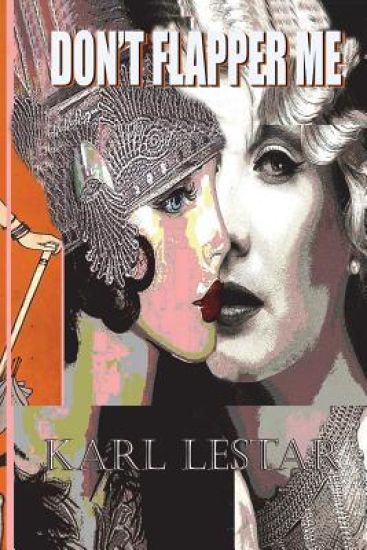
It has been 240 years since 1777 when women lost the right to vote in New York to 1920 when the "Nineteenth Amendment to the U. S. Constitution" ratified, stating, "The right of citizens of the United States to vote shall not be denied or abridged by the United States or by any State on account of sex". The lives of American women in the 1920s differed vastly from their counterparts who had lived only a few decades prior to entrance into the adult world. To the women of the 1920s, the True Woman was little more than a relic that simply acted as a generational gap between their grandmothers and mothers, and themselves. The battle for suffrage was finally over. After all those years of struggles, women had won the precious right to vote. The generations of suffragists that had fought for so long proudly entered the political world. Carrie Chapman Catt carried the struggle into voting awareness with the founding of the League of Women Voters. Alice Paul vowed to fight until an Equal Rights Amendment was added to the Constitution. Margaret Sanger declared that female independence could be accomplished only with proper birth control methods. To their dismay, the daughters of this generation seemed uninterested in these grand causes. As the 1920s roared along, many young women of the age wanted to have fun. With almost infinite more opportunities and equality than the generations before them, these young women quickly and eagerly embraced a rapidly changing world that now allowed females to finally voice their opinions in both the private and public sector. And although a number of holdovers still existed from the Victorian era, the partition between the True Woman and the New Woman was slowly becoming more and more apparent, especially a new phenomenon's like the flapper and the vacuum cleaner took over the American media. Never before in American history had women experienced such personal, social, or political freedom, which meant that the 1920s was also a time of exploration in regards to what it now meant to be a woman. As evidenced in both the images and the articles on these New Women, a completely new outlook on womanly body image was beginning to hold in American communities. In the past, a more full-figured physique was considered most attractive on females, displaying that they were both capable of buying food and not having difficulty in birthing children. In sharp contrast, the 1920s saw the entrance of the flapper, who often "wore the flapper uniform which turned to flattening brassieres that were constructed of shoulder straps and a single band of material that encased the body from chest to waist. Although a healthy, trim build was emulated in past decades, the pencil-thin frames that were now considered to be the ideal of the 1920s were much, much different than anything that had ever been seen before. As evidenced in the many images advertising maternity corsets and girdles, being stick-straight during both pregnancy and immediately after birth was a necessity for decade's New Women. Whereas the True Woman existed solely to be a good mother and wife to her family, the New Woman often placed her appearance and outward image right up along with the home. A very rapidly changing America resulted in a massive shift between the beliefs that had governed the True Woman and those that had come to oversee the New Woman of the 1920s. New opportunities and equalities gave the young women of the 1920s an unprecedented level of freedom compared to their mothers and grandmothers, while also allowing them to indulge in pursuits other than a constant aspiration for motherhood. It was likely this freedom and the third wave of industrialization that had spawned the new athletics, dieting, and flapper crazes that have come to epitomize the 1920s in American history. As the "Flappers" danced at speakeasies women on Puerto Rico dreamed beyond our boundaries of white and gold sands and palm trees, but that is another story. Read
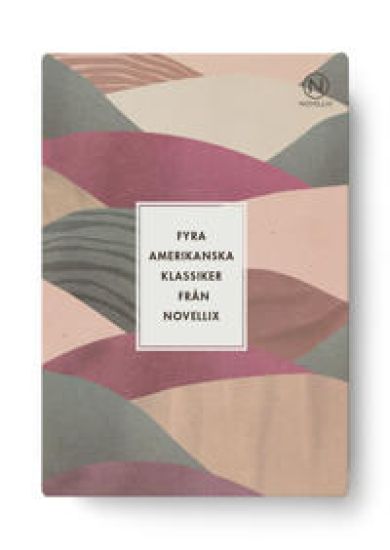
En skräckens mästare, en kontroversiell och självutlämnande poet, en jazzålderns främste skildrare och en skarpögd och älskad samtidsförfattare - här hittar du fyra amerikanska storheters sällsamma och suggestiva berättelser om livet och döden, om drömmar, och om ren och skär fasa. Asken innehåller fyra böcker:Edgar Allan Poe - Huset Ushers undergångSylvia Plath - Johnny Panic och drömbibelnF. Scott Fitzgerald - Det sällsamma fallet Benjamin ButtonJoyce Carol Oates - Nattsidan"Precis så här ska noveller läsas. En och en." Dagens NyheterNovellix ger ut stora läsupplevelser i litet format! En novell per bok, och alltid med originalomslag av svenska formgivare, illustratörer och konstnärer. Novellerna säljs både styckvis och förpackade i fina presentaskar.
The Beautiful and Damned, first published by Scribner's in 1922, is F. Scott Fitzgerald's second novel. It explores and portrays New York caf society and the American Eastern elite during the Jazz Age before and after "the Great War" and in the early 1920s. As in his other novels, Fitzgerald's characters in this novel are complex, especially with respect to marriage and intimacy. The work is generally considered to have drawn upon and be based on Fitzgerald's relationship and marriage with his wife Zelda Fitzgerald. The Beautiful and Damned tells the story of Anthony Patch, a 1910s socialite and presumptive heir to a tycoon's fortune, and his courtship and relationship with his wife Gloria Gilbert. It describes his brief service in the Army during World War I, and the couple's post-war partying life in New York, and his later alcoholism. 1] 3] Gloria and Anthony's love story is much more than just a couple falling in love. Their story deals with the hardships of a relationship, especially when each character has a tendency to be selfish. Joanna Stolarek suggests, Fitzgerald draws on "Zelda, the object of the writer's literary passion".
This short story was first published in the "Chicago Tribune," and first published in book form in Tales of the Jazz Age in 1922. "Of this story I can say that it came to me in an irresistible form, crying to be written. It will be accused perhaps of being a mere piece of sentimentality, but, as I saw it, it was a great deal more. If, therefore, it lacks the ring of sincerity, or even, of tragedy, the fault rests not with the theme but with my handling of it. It appeared in the "Chicago Tribune," and later obtained, I believe, the quadruple gold laurel leaf or some such encomium from one of the anthologists who at present swarm among us. The gentleman I refer to runs as a rule to stark melodramas with a volcano or the ghost of John Paul Jones in the role of Nemesis, melodramas carefully disguised by early paragraphs in Jamesian manner which hint dark and subtle complexities to follow. On this order: "The case of Shaw McPhee, curiously enough, had no hearing on the almost incredible attitude of Martin Sulo. This is parenthetical and, to at least three observers, whose names for the present I must conceal, it seems improbable, etc., etc., etc.," until the poor rat of fiction is at last forced out into the open and the melodrama begins."