Kirjojen hintavertailu – 12 903 735 kirjaa ja 27 kauppaa

Kirjailija

Felipe Fernandez-Armesto

Kirjat ja teokset yhdessä paikassa: 32 kirjaa, julkaisuja vuosilta 1981–2025, suosituimpiin kuuluu The Malaspina Expedition 1789–1794. Vertaile teosten hintoja ja tarkista saatavuus suomalaisista kirjakaupoista.

Nimi esiintyy myös muodoissa: Felipe Fernández-Armesto, Felipe. Fernandez-Armesto

32 kirjaa

Kirjojen julkaisuvuodet: 1981–2025.

The Malaspina Expedition 1789–1794

The Malaspina Expedition 1789–1794

Andrew David; Felipe Fernández-Armesto; Glyndwr Williams

TAYLOR FRANCIS LTD
2022
nidottu
Among the voyages of exploration and surveying in the late 18th century, that of Alejandro Malaspina best represents the high ideals and scientific interests of the Enlightenment. Italian-born, Malaspina entered the Spanish navy in 1774. In September 1788 he and fellow-officer José Bustamante submitted a plan to the Ministry of Marine for a voyage of survey and inspection to Spanish territories in the Americas and Philippines. The expedition was to produce hydrographic charts for the use of Spanish merchantmen and warships and to report on the political, economic and defensive state of Spain's overseas possessions. The plan was approved and in July 1789 Malaspina and Bustamante sailed from Cádiz in the purpose-built corvettes, Descubierta and Atrevida. On board the vessels were scientists and artists and an array of the latest surveying and astronomical instruments. The voyage lasted more than five years. On his return Malaspina was promoted Brigadier de la Real Armada, and began work on an account of the voyage in seven volumes to dwarf the narratives of his predecessors in the Pacific such as Cook and Bougainville. Among much else, it would contain sweeping recommendations for reform in the governance of Spain's overseas empire. But Malaspina became involved in political intrigue. In November 1795 he was arrested, stripped of his rank and sentenced to life imprisonment. Although released in 1803, Malaspina spent the last seven years of his life in obscure retirement in Italy. He never resumed work on the great edition, and his journal was not published in Spain until 1885. Only in recent years has a multi-volume edition appeared under the auspices of the Museo Naval, Madrid, that does justice to the achievements of what for long was a forgotten voyage. This first volume of a series of three contains Malaspina's diario or journal from 31 July 1789 to 14 December 1790, newly translated into English, with substantial introduction and commentary. Among the places visited and described are Montevideo, Puerto Deseado, Port Egmont, Puerto San Carlos, Valparaíso, Callao, Guayaquil and Panamá. Other texts include Malaspina's introduction to his intended edition, and his correspondence with the Minister of the Marine before and during the voyage.
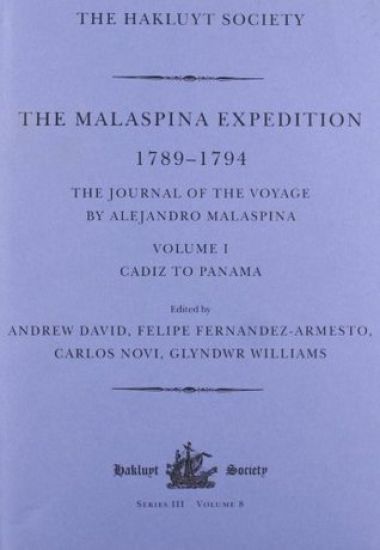
The Malaspina Expedition 1789–1794

The Malaspina Expedition 1789–1794

Andrew David; Felipe Fernández-Armesto; Glyndwr Williams

Hakluyt Society
2002
sidottu
Among the voyages of exploration and surveying in the late 18th century, that of Alejandro Malaspina best represents the high ideals and scientific interests of the Enlightenment. Italian-born, Malaspina entered the Spanish navy in 1774. In September 1788 he and fellow-officer José Bustamante submitted a plan to the Ministry of Marine for a voyage of survey and inspection to Spanish territories in the Americas and Philippines. The expedition was to produce hydrographic charts for the use of Spanish merchantmen and warships and to report on the political, economic and defensive state of Spain's overseas possessions. The plan was approved and in July 1789 Malaspina and Bustamante sailed from Cádiz in the purpose-built corvettes, Descubierta and Atrevida. On board the vessels were scientists and artists and an array of the latest surveying and astronomical instruments. The voyage lasted more than five years. On his return Malaspina was promoted Brigadier de la Real Armada, and began work on an account of the voyage in seven volumes to dwarf the narratives of his predecessors in the Pacific such as Cook and Bougainville. Among much else, it would contain sweeping recommendations for reform in the governance of Spain's overseas empire. But Malaspina became involved in political intrigue. In November 1795 he was arrested, stripped of his rank and sentenced to life imprisonment. Although released in 1803, Malaspina spent the last seven years of his life in obscure retirement in Italy. He never resumed work on the great edition, and his journal was not published in Spain until 1885. Only in recent years has a multi-volume edition appeared under the auspices of the Museo Naval, Madrid, that does justice to the achievements of what for long was a forgotten voyage. This first volume of a series of three contains Malaspina's diario or journal from 31 July 1789 to 14 December 1790, newly translated into English, with substantial introduction and commentary. Among the places visited and described are Montevideo, Puerto Deseado, Port Egmont, Puerto San Carlos, Valparaíso, Callao, Guayaquil and Panamá. Other texts include Malaspina's introduction to his intended edition, and his correspondence with the Minister of the Marine before and during the voyage.
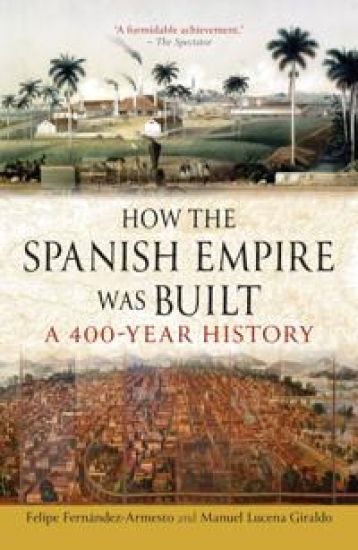
How the Spanish Empire Was Built

How the Spanish Empire Was Built

Felipe Fernández-Armesto; Manuel Lucena Giraldo

REAKTION BOOKS
2025
nidottu

Halvin toimitettuna 21,80 €

In the sixteenth century, Spain was small and divided, yet it built the largest empire in history. How? Felipe Fernández-Armesto and Manuel Lucena Giraldo reveal the crucial role of engineers in this achievement. By investing in infrastructure that benefited local elites, Spain expanded its influence and enriched trade networks. Through vivid stories of engineers, prospectors, soldiers and priests, the authors bring Spanish America’s age of conquest to life. Now in paperback, this dazzling history redefines empire as a venture shaped by collaboration as well as oppression, offering fresh insights into the rise of the Spanish Empire and the complexities of its legacy.
How the Spanish Empire Was Built

How the Spanish Empire Was Built

Felipe Fernández-Armesto; Manuel Lucena Giraldo

REAKTION BOOKS
2024
sidottu
Sixteenth-century Spain was small, poor, disunited and sparsely populated. Yet the Spaniards and their allies built the largest empire the world had ever seen. How did they achieve this? Felipe Fernández-Armesto and Manuel Lucena Giraldo argue that Spain’s engineers were critical to this venture. The Spanish invested in infrastructure to the advantage of local power brokers, enhancing the abilities of incumbent elites to grow wealthy on trade and widening the arc of Spanish influence. Bringing to life stories of engineers, prospectors, soldiers and priests, the authors paint a vivid portrait of Spanish America in the age of conquest. This is a dazzling new history of the Spanish Empire, and a new understanding of empire itself, as a venture marked as much by collaboration as oppression.
Straits

Straits

Felipe Fernandez-Armesto

BLOOMSBURY PUBLISHING PLC
2023
nidottu
SHORTLISTED FOR THE DUFF COOPER PRIZE 2022A FINANCIAL TIMES BEST HISTORY BOOK OF 2022_______________'Rigorous, deft and entertaining ... a sparkling read' - The Spectator'The ride is thrilling ... a work of serious scholarship' - Sunday Telegraph_______________For centuries, Ferdinand Magellan has been celebrated as a hero: a noble adventurer who circumnavigated the globe in an extraordinary feat of human bravery; a paragon of daring and chivalry. Now historian Felipe Fernández-Armesto draws on extensive and meticulous research to conduct a dazzling investigation into Magellan’s life, his character and his ill-fated voyage. He reveals that Magellan did not attempt – much less accomplish – a journey around the globe, and that in his own lifetime, the explorer was abhorred as a traitor, reviled as a tyrant and dismissed as a failure. Fernández-Armesto probes the passions and tensions that drove Magellan to adventure and drew him to disaster: the pride that became arrogance, audacity that became recklessness, determination that became ruthlessness, romanticism that became irresponsibility, and superficial piety that became, in adversity, irrational exaltation. And as the real Magellan emerges, so too do his true ambitions, focused less on circumnavigating the world or cornering the global spice market than on exploiting Filipino gold. Offering up a stranger, darker and even more compelling narrative than the fictional version that has been glorified for half a millennium, Straits untangles the myths that made Magellan a hero._______________
Straits: Beyond the Myth of Magellan

Straits: Beyond the Myth of Magellan

Felipe Fernandez-Armesto

University of California Press
2022
sidottu
An uncompromising study of the fictions, the failures, and the real man behind the myth of Magellan. With Straits, celebrated historian Felipe Fern ndez-Armesto subjects the surviving sources to the most meticulous scrutiny ever, providing a timely and engrossing biography of the real Ferdinand Magellan. The truth that Fern ndez-Armesto uncovers about Magellan's life, his character, and the events of his ill-fated voyage offers up a stranger, darker, and even more compelling narrative than the fictional version that has been celebrated for half a millennium. Magellan did not attempt--much less accomplish--a journey around the globe. In his lifetime he was abhorred as a traitor, reviled as a tyrant, self-condemned to destruction, and dismissed as a failure. Straits untangles the myths that made Magellan a hero and discloses the reality of the man, probing the passions and tensions that drove him to adventure and drew him to disaster. We see the mutations of his character: pride that became arrogance, daring that became recklessness, determination that became ruthlessness, romanticism that became irresponsibility, and superficial piety that became, in adversity, irrational exaltation. As the real Magellan emerges, so do his real ambitions, focused less on circumnavigating the world or cornering the global spice market than on exploiting Filipino gold. Straits is a study in failure and the paradox of Magellan's career, showing that renown is not always a reflection of merit but often a gift and accident of circumstance.
Out of Our Minds

Out of Our Minds

Felipe Fernández-Armesto

Oneworld Publications
2020
nidottu
‘Immensely learned and ambitious…seam-bursting eclecticism and polymathic brio… This is by any standards a significant book and its author deserves high praise.’ Literary Review To imagine – to see that which is not there – is the startling ability that has fuelled human development and innovation through the centuries. As a species we stand alone in our remarkable capacity to refashion the world after the pictures in our minds. Traversing the realms of science, politics, religion, culture, philosophy and history, Felipe Fernández-Armesto reveals the thrilling and disquieting tales of our imaginative leaps. Through groundbreaking insights in cognitive science, he explores how and why we have ideas in the first place, providing a tantalising glimpse into who we are and what we might yet accomplish. Fernández-Armesto shows that bad ideas are often more influential than good ones; that the oldest recoverable thoughts include some of the best; that ideas of Western origin often issued from exchanges with the wider world; and that the pace of innovative thinking is under threat.
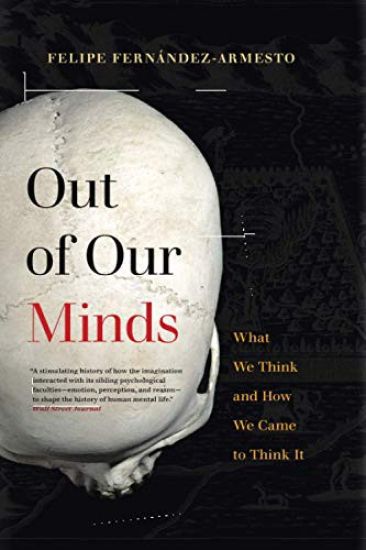
Out of Our Minds: What We Think and How We Came to Think It

Out of Our Minds: What We Think and How We Came to Think It

Felipe Fernández-Armesto

University of California Press
2020
nidottu
"A stimulating history of how the imagination interacted with its sibling psychological faculties--emotion, perception and reason--to shape the history of human mental life."--The Wall Street Journal To imagine--to see what is not there--is the startling ability that has fueled human development and innovation through the centuries. As a species we stand alone in our remarkable capacity to refashion the world after the picture in our minds. Traversing the realms of science, politics, religion, culture, philosophy, and history, Felipe Fern ndez-Armesto reveals the thrilling and disquieting tales of our imaginative leaps--from the first Homo sapiens to the present day. Through groundbreaking insights in cognitive science, Fern ndez-Armesto explores how and why we have ideas in the first place, providing a tantalizing glimpse into who we are and what we might yet accomplish. Unearthing historical evidence, he begins by reconstructing the thoughts of our Paleolithic ancestors to reveal the subtlety and profundity of the thinking of early humans. A masterful paean to the human imagination from a wonderfully elegant thinker, Out of Our Minds shows that bad ideas are often more influential than good ones; that the oldest recoverable thoughts include some of the best; that ideas of Western origin often issued from exchanges with the wider world; and that the pace of innovative thinking is under threat.
Out of Our Minds

Out of Our Minds

Felipe Fernandez-Armesto

University of California Press
2019
sidottu
To imagine--to see what is not there--is the startling ability that has fueled human development and innovation through the centuries. As a species we stand alone in our remarkable capacity to refashion the world after the picture in our minds. Traversing the realms of science, politics, religion, culture, philosophy, and history, Felipe Fern ndez-Armesto reveals the thrilling and disquieting tales of our imaginative leaps--from the first Homo sapiens to the present day. Through groundbreaking insights in cognitive science, Fern ndez-Armesto explores how and why we have ideas in the first place, providing a tantalizing glimpse into who we are and what we might yet accomplish. Unearthing and historical evidence, he begins by reconstructing the thoughts of our Paleolithic ancestors to reveal the subtlety and profundity of the thinking of early humans. A masterful paean to the human imagination from a wonderfully elegant thinker, Out of Our Minds shows that bad ideas are often more influential than good ones; that the oldest recoverable thoughts include some of the best; that ideas of Western origin often issued from exchanges with the wider world; and that the pace of innovative thinking is under threat.
Out of Our Minds

Out of Our Minds

Felipe Fernandez-Armesto

Oneworld Publications
2019
muu
To imagine to see that which is not there is the startling ability that has fuelled human development and innovation through the centuries. As a species we stand alone in our remarkable capacity to refashion the world after the pictures in our minds. Traversing the realms of science, politics, religion, culture, philosophy and history, Felipe Fernandez-Armesto reveals the thrilling and disquieting tales of our imaginative leaps from the first Homo sapiens to the pioneers of the digital age. Through ground-breaking insights in cognitive science, he explores how and why we have ideas in the first place, providing a tantalising glimpse into who we are and what we might yet accomplish. A magisterial paean to the human imagination from a wonderfully elegant thinker, Out of Our Minds is a unique history of our species.
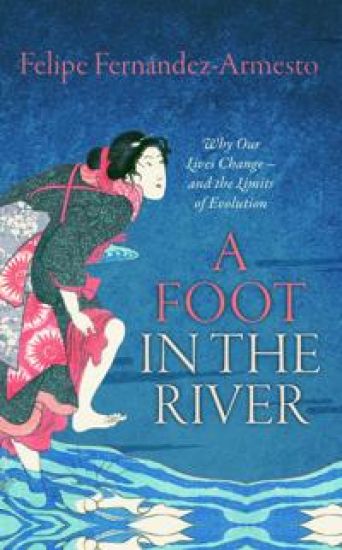
A Foot in the River

A Foot in the River

Felipe Fernandez-Armesto

Oxford University Press
2017
nidottu
We are a weird species. Like other species, we have a culture. But by comparison with other species, we are strangely unstable: human cultures self-transform, diverge, and multiply with bewildering speed. They vary, radically and rapidly, from time to time and place to place. And the way we live -- our manners, morals, habits, experiences, relationships, technology, values -- seems to be changing at an ever accelerating pace. The effects can be dislocating, baffling, sometimes terrifying. Why is this? In A Foot in the River, best-selling historian Felipe Fernández-Armesto sifts through the evidence and offers some radical answers to these very big questions about the human species and its history -- and speculates on what these answers might mean for our future. Combining insights from a huge range of disciplines, including history, biology, anthropology, archaeology, philosophy, sociology, ethology, zoology, primatology, psychology, linguistics, the cognitive sciences, and even business studies, he argues that culture is exempt from evolution. Ultimately, no environmental conditions, no genetic legacy, no predictable patterns, no scientific laws determine our behaviour. We can consequently make and remake our world in the freedom of unconstrained imaginations. A revolutionary book which challenges scientistic assumptions about culture and how and why cultural change happens, A Foot in the River comes to conclusions which readers may well find by turns both daunting and also potentially hugely liberating.
Revel for The World

Revel for The World

Felipe Fernandez-Armesto

PEARSON EDUCATION (US)
2015
lisenssiavain
REVEL™ for The World: A History interweaves two enduring stories–centered on our interactions with nature and with each other–into a compelling narrative of mankind, from the origins of civilization to the present. Employing an engaging prose style and a comprehensive map program that brings history to life, author Felipe Fernández-Armesto empowers students to see the connections among peoples and events, and to think critically about topics large and small. REVEL is Pearson’s newest way of delivering our respected content. Fully digital and highly engaging, REVEL offers an immersive learning experience designed for the way today's students read, think, and learn. Enlivening course content with media interactives and assessments, REVEL empowers educators to increase engagement with the course, and to better connect with students. NOTE: REVEL is a fully digital delivery of Pearson content. This ISBN is for the standalone REVEL access card. In addition to this access card, you will need a course invite link, provided by your instructor, to register for and use REVEL.
A Foot in the River

A Foot in the River

Felipe Fernández-Armesto

Oxford University Press
2015
sidottu
We are a weird species. Like other species, we have a culture. But by comparison with other species, we are strangely unstable: human cultures self-transform, diverge, and multiply with bewildering speed. They vary, radically and rapidly, from time to time and place to place. And the way we live - our manners, morals, habits, experiences, relationships, technology, values - seems to be changing at an ever accelerating pace. The effects can be dislocating, baffling, sometimes terrifying. Why is this? In A Foot in the River, best-selling historian Felipe Fernández-Armesto sifts through the evidence and offers some radical answers to these very big questions about the human species and its history - and speculates on what these answers might mean for our future. Combining insights from a huge range of disciplines, including history, biology, anthropology, archaeology, philosophy, sociology, ethology, zoology, primatology, psychology, linguistics, the cognitive sciences, and even business studies, he argues that culture is exempt from evolution. Ultimately, no environmental conditions, no genetic legacy, no predictable patterns, no scientific laws determine our behaviour. We can consequently make and remake our world in the freedom of unconstrained imaginations. A revolutionary book which challenges scientistic assumptions about culture and how and why cultural change happens, A Foot in the River comes to conclusions which readers may well find by turns both daunting and also potentially hugely liberating.
Our America

Our America

Felipe Fernández-Armesto

WW Norton Co
2015
nidottu
Overlooking the significance of America’s Hispanic past, the United States is typically perceived as an offshoot of Britain, with its history unfolding east to west, beginning with the first settlers in Jamestown. In an absorbing narrative, Felipe Fernández-Armesto begins with the explorers and conquistadors who planted Spain’s first colonies in Puerto Rico, Florida and the Southwest in the sixteenth century. Missionaries and rancheros carry Spain’s expansive impulse into the late eighteenth century, settling in California, mapping the American interior to the Rockies and charting the Pacific coast. The nineteenth-century triumph of Anglo-America in the West is followed by the twentieth-century Hispanic resurgence, spreading from the West to cities including Chicago, Miami and Boston. Today’s plural America is the product of its past.
Our America

Our America

Felipe Fernández-Armesto

WW Norton Co
2014
sidottu
The United States is still typically conceived of as an offshoot of England, with our history unfolding east to west beginning with the first English settlers in Jamestown. This view overlooks the significance of America’s Hispanic past. With the profile of the United States increasingly Hispanic, the importance of recovering the Hispanic dimension to our national story has never been greater. This absorbing narrative begins with the explorers and conquistadores who planted Spain’s first colonies in Puerto Rico, Florida, and the Southwest. Missionaries and rancheros carry Spain’s expansive impulse into the late eighteenth century, settling California, mapping the American interior to the Rockies, and charting the Pacific coast. During the nineteenth century Anglo-America expands west under the banner of “Manifest Destiny” and consolidates control through war with Mexico. In the Hispanic resurgence that follows, it is the peoples of Latin America who overspread the continent, from the Hispanic heartland in the West to major cities such as Chicago, Miami, New York, and Boston. The United States clearly has a Hispanic present and future. And here is its Hispanic past, presented with characteristic insight and wit by one of our greatest historians.
The Conquistadors

The Conquistadors

Matthew Restall; Felipe Fernandez-Armesto

Oxford University Press Inc
2012
nidottu
With startling speed, Spanish conquistadors invaded hundreds of Native American kingdoms, took over the mighty empires of the Aztecs and Incas, and initiated an unprecedented redistribution of the world's resources and balance of power. They changed the course of history, but the myth they established was even stranger than their real achievements. This Very Short Introduction deploys the latest scholarship to shatter and replace the traditional narrative. Chapters explore New World civilizations prior to the invasions, the genesis of conquistador culture on both sides of the Atlantic, the roles black Africans and Native Americans played and the consequences of the invasions. The book reveals who the conquistadors were and what made their adventures possible. ABOUT THE SERIES: The Very Short Introductions series from Oxford University Press contains hundreds of titles in almost every subject area. These pocket-sized books are the perfect way to get ahead in a new subject quickly. Our expert authors combine facts, analysis, perspective, new ideas, and enthusiasm to make interesting and challenging topics highly readable.
1492

1492

Felipe Fernandez-Armesto

Bloomsbury Publishing PLC
2011
nidottu
‘Fernández-Armesto's rich vision of the 1490s is unlike any other world historians have given us. He has performed an amazing feat of portraying the world as one place before it had yet become one place ... This is popular history at its best: grounded in research, insightfully critical, and written with grace' Literary Review‘Filled with marvels and sensations rich in description and replete with anecdote ... A compendium of delights' The TimesThe world would end in 1492 - so the prophets, soothsayers and stargazers said. They were right. Their world did end. But ours began. In search of the origins of the modern world, 1492 takes readers on a journey around the globe of the time, in the company of real-life travellers, drawing together the threads that began to bind the planet: from the way power and wealth are distributed around the globe to the way major religions and civilizations divide the world. Events that began in 1492 even transformed the whole ecological system of the planet. Wars and witchcraft, plagues and persecutions, poetry and prophecy, science and magic, art and faith - all the glories and follies of the time are in this book.
Columbus on Himself

Columbus on Himself

Felipe Fernandez-Armesto

Hackett Publishing
2010
pokkari
Intended as an antidote to potted biographies and piecemeal reconstructions of his voyages, this volume draws on judicious selections from Christopher Columbus' own writings - chronologically arranged, and translated into idiomatic English - to relate his self-perception and personal history, as far as is possible, in his own words.