Kirjojen hintavertailu – 12 903 735 kirjaa ja 27 kauppaa

Kirjailija

Felipe Fernandez-Armesto

Kirjat ja teokset yhdessä paikassa: 32 kirjaa, julkaisuja vuosilta 1981–2025, suosituimpiin kuuluu The Malaspina Expedition 1789–1794. Vertaile teosten hintoja ja tarkista saatavuus suomalaisista kirjakaupoista.

Nimi esiintyy myös muodoissa: Felipe Fernández-Armesto, Felipe. Fernandez-Armesto

32 kirjaa

Kirjojen julkaisuvuodet: 1981–2025.

Internal Colonization in Medieval Europe

Internal Colonization in Medieval Europe

Felipe Fernandez-Armesto; James Muldoon

Ashgate Publishing Limited
2008
sidottu
Around the year 1000 Rodulfus Glaber described France as being in the throes of a building boom. He may have been the first writer to perceive the early medieval period as a Dark Age that was ending to be replaced by a better world. In the articles gathered here distinguished medieval historians discuss the ways in which this transformation took place. European society was becoming more stable, the climate was improving, and the population increasing so that it was necessary to increase food production. These circumstances in turn led to the cutting down of forests, the draining of wetlands, and the creation of pastures on higher elevations from which the glaciers had retreated. New towns were established to serve as economic and administrative centers. These developments were witness to the processes of internal colonization that helped create medieval Europe.

The Medieval Frontiers of Latin Christendom

The Medieval Frontiers of Latin Christendom

Felipe Fernandez-Armesto

Ashgate Publishing Limited
2008
sidottu
The aim of this first volume in the series "The Expansion of Latin Europe" is to sketch the outlines of medieval expansion, illustrating some of the major topics that historians have examined in the course of demonstrating the links between medieval and modern experiences. The articles reprinted here show that European expansion began not in 1492 following Columbus's voyages but earlier as European Christian society re-arose from the ruins of the Carolingian Empire. The two phases of expansion were linked but the second period did not simply replicate the medieval experience. Medieval expansion occurred as farmers, merchants, and missionaries reduced forests to farmland and pasture, created new towns, and converted the peoples encountered along the frontiers to Christianity. Later colonizers subsequently adapted the medieval experience to suit their new frontiers in the New World.
Amerigo: The Man Who Gave His Name to America

Amerigo: The Man Who Gave His Name to America

Felipe Fernández-Armesto

Random House Trade
2008
nidottu
In Amerigo, the award-winning scholar Felipe Fern ndez-Armesto answers the question "What's in a name?" by delivering a rousing flesh-and-blood narrative of the life and times of Amerigo Vespucci. Here we meet Amerigo as he really was: a rogue and raconteur who counted Christopher Columbus among his friends and rivals; an amateur sorcerer who attained fame and honor through a series of disastrous failures and equally grand self-reinventions. Filled with well-informed insights and amazing anecdotes, this magisterial and compulsively readable account sweeps readers from Medicean Florence to the Sevillian court of Ferdinand and Isabella, then across the Atlantic of Columbus to the brave New World where fortune favored the bold. Amerigo Vespucci emerges from these pages as an irresistible avatar for the age of exploration-and as a man of genuine achievement as a voyager and chronicler of discovery. And now, in Amerigo, this mercurial and elusive figure finally has a biography to do full justice to both the man and his remarkable era. Praise for Amerigo "Wonderfully idiosyncratic and intelligent."-The New York Times Book Review "Fascinating . . . Fern ndez-Armesto's] lively style is effective in evoking the flashy and violent world of Renaissance Europe." -The Washington Post Book World "An outstanding historian . . . Fern ndez-Armesto] introduces Amerigo Vespucci as an amazing Renaissance character independent of his name's fame-and does Fern ndez-Armesto ever deliver."-Booklist (starred review) "Dazzling . . . an elegant tale of Vespucci's ability to transform himself from a merchant into an explorer and conqueror of new worlds." -Publishers Weekly (starred review) NAMED ONE OF THE BEST BOOKS OF THE YEAR BY THE WASHINGTON POST
Pathfinders

Pathfinders

Felipe Fernandez-Armesto

WW Norton Co
2007
pokkari
Greeted with coast-to-coast acclaim on publication, Fernandez-Armesto's ambitious history of world exploration sets a new standard. Presenting the subject for the first time on a truly global scale, Fernandez-Armesto tracks the pathfinders who, over the past five millennia, lay down the routes of contact that have drawn together the farthest reaches of the world. The Wall Street Journal calls it "impressive...a huge story [told] with gusto and panache." To the Washington Post, "Pathfinders is propelled by an Argonaut of an author, indefatigable and daring. It's a wild ride." And in a front-page review, the Seattle Times hails its "tart and elegant presentation...full of surprises. Fernandez-Armesto's lively mind, pithy phrasing, and stunningly thorough and diverse knowledge are a constant pleasure." A plenitude of illustrations and maps in color and black and white augment this rich history. In Pathfinders we have a definitive treatment of a grand subject."
The Americas: A Hemispheric History

The Americas: A Hemispheric History

Felipe Fernández-Armesto

Modern Library
2006
nidottu
The acclaimed historian traces the historical evolution of the entire Western Hemisphere from prehistoric times to the present day, examining the interconnections among North, Central, and South America and the complex links--among migration, trade, religion, culture, food, and more that have shaped the region. Reprint. 15,000 first printing.
So You Think You're Human?

So You Think You're Human?

Felipe. Fernandez-Armesto

Oxford University Press
2005
nidottu
You think you're human. But what does that mean? How can humanity be defined? Felipe Fernandez-Armesto takes us on an enlightening journey through the history of humankind to reveal the challenges to our most fundamental belief - that we are, and have always been, human. Chimps and humans are objectively so alike that an anthropologist from Mars might classify them together; advances in artificial intelligence mean that humans no longer have exclusive access to reason, consciousness and imagination; developments in genetics threaten humanity with an uncertain future. The harder we cling to the concept of humanity, the more slippery it becomes. But if it breaks down altogether, what will this mean for human values, human rights, and the defence of human dignity? So You Think You're Human? confronts these problems from a historical perspective, showing how our current understanding of what it means to be human has been shaken by new challenges from science and philosophy. Fernandez-Armesto shows how our concept of humankind has changed over time, tracing its faltering expansion to its present limits and arguing that these limits are neither fixed or scientifically verifiable. Controversially, he proposes that we have further to go in developing our concept of humankind and that we need to rethink it as a matter of urgency.
The Americas

The Americas

Felipe Fernandez-Armesto

Weidenfeld Nicolson
2004
pokkari
A history of North, South and Central America, from prehistory to the present, by one of the world's best-known historians. With his trademark range and independence of thought, Felipe Fernandez- Armesto sweeps aside the tidy separation between the enlightened `first world' United States and Canada, and less privileged `Latin America'. He shows us why it is impossible to understand the history of North, Central and South America in isolation. From the emergence of the first human civilisations through the arrival of Europeans and up to today, the land mass has been bound together in a complex web of inter-relationships - from migration and trade to religion, slavery, warfare, culture, food and the spread of political ideas. For most of human history, it was the South that dominated the North - and, as he argues in his provocative conclusion, it might well again
Near a Thousand Tables: A History of Food

Near a Thousand Tables: A History of Food

Felipe Fernandez-Armesto

FREE PRESS
2003
nidottu

Halvin toimitettuna 20,90 €

A brilliant account from acclaimed food historian Felipe Fern ndez-Armesto on the fascinating story of food as culture, culinary history, and the eight great revolutions in the history of food--perfect for fans of Tasting History. In this "appetizingly provocative" (Los Angeles Times) book, food historian Felipe Fernandez-Armesto guides readers through the eight great revolutions in the world history of food: the origins of cooking, which set humankind on a course apart from other species; the ritualization of eating, which brought magic and meaning into people's relationship with what they ate; the inception of herding and the invention of agriculture, perhaps the two greatest revolutions of all; the rise of inequality, which led to the development of haute cuisine; the long-range trade in food which, practically alone, broke down cultural barriers; the ecological exchanges, which revolutionized the global distribution of plants and livestock; and, finally, the industrialization and globalization of mass-produced food. From prehistoric snail "herding" to Roman banquets to Big Macs to genetically modified tomatoes, Near a Thousand Tables is a full-course meal of extraordinary narrative, brilliant insight, and fascinating explorations that will satisfy the hungriest of readers.
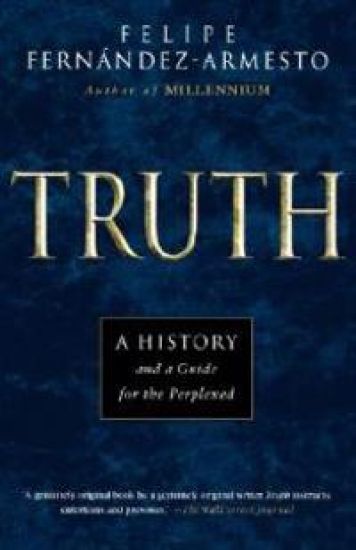
Truth: A History and a Guide for the Perplexed

Truth: A History and a Guide for the Perplexed

Felipe Fernandez-Armesto

St. Martin's Griffin
2001
nidottu
Written by a renowned Oxford historian, this fascinating volume presents a global history of truth. Sharp and authoritative, Truth manages to touch every period of human experience; it leaps from truth-telling technologies of "primitive" societies to the private mental worlds of great philosophers; from spiritualism to science and from New York to New Guinea. In clear, lucid prose, this little book takes on an enormous subject and makes it understandable to anyone.
The European Opportunity

The European Opportunity

Felipe Fernández-Armesto

Variorum
1995
sidottu
These 15 articles follow on from those in The Global Opportunity in that they examine how and why the Europeans expanded worldwide. Part one explores the means in terms of science, technology and material resources; part two examines the motives, primarily as a result of restricted resources in Europe; while part three concludes with the reasons that the expansion continued and grew - the momentum.
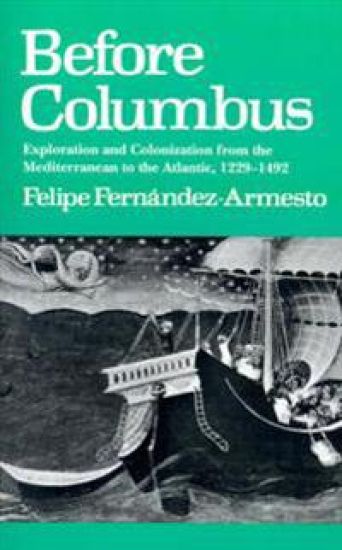
Before Columbus

Before Columbus

Felipe Fernandez-Armesto

University of Pennsylvania Press
1987
pokkari
Demonstrating that Columbus's voyage was a new step in a centuries-old process of European expansion, Fernandez-Armesto provides a stimulating account of the broadening of Europe's physical and mental horizons in the Middle Ages. He shows how the techniques and institutions of medieval colonial expansion that were applied to the New World made long-term conquest and settlement possible. A brief introduction analyzes the problems that face students and historians. Then, concentrating on medieval Spanish colonial development, but carefully linking that development to the wider European process of expansion, the author surveys the great areas of expansion in the Western Mediterranean: the island conquests of the House of Barcelona; the "first Atlantic Empire" in Andalusia, its environs, Valencia, and Murcia; the Genoese Mediterranean; and the North African coast. In the last four chapters, Fernandez-Armesto sketches the course and characteristics of early European expansion of the Atlantic before Columbus and highlights the impact of geography and anthropology on the discovery of "the Atlantic space." The emphasis throughout is on tracing the elements of continuity and discontinuity between Mediterranean and Atlantic worlds and studying how colonial societies originate and behave.