Kirjailija
Flavius Josephus
Kirjat ja teokset yhdessä paikassa: 304 kirjaa, julkaisuja vuosilta 1987–2026, suosituimpiin kuuluu The works of Flavius Josephus. Translated into English by Sir Roger L'Estrange, Kt. ... All carefully revised and compared with the original Greek. To which are prefix'd two discourses. Vertaile teosten hintoja ja tarkista saatavuus suomalaisista kirjakaupoista.
304 kirjaa
Kirjojen julkaisuvuodet: 1987–2026.
Über das hohe Alter des jüdischen Volkes (Gegen Apion)
Flavius Josephus
BoD - Books on Demand
2021
nidottu
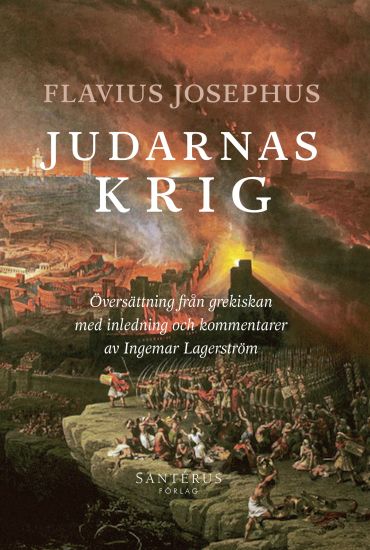
Här berättas om personligheter som läsaren kanske redan känner från Bibeln: Herodes den Store, Herodes Antípas, Pontius Pilatus, kung Agrippa, romerske prokuratorn Felix och flera andra. Du får läsa om religiösa och politiska rörelser, om fariséer, sadducéer och essener, om Jerusalem och dess tempel, om Palestinas geografi och natur, och mycket annat. Verkets författare är juden Josephus. Han föddes år 37 e. Kr., ett år efter att Pontius Pilatus kallats hem från Judéen, och samma år som Caligula utropades till kejsare i Rom.
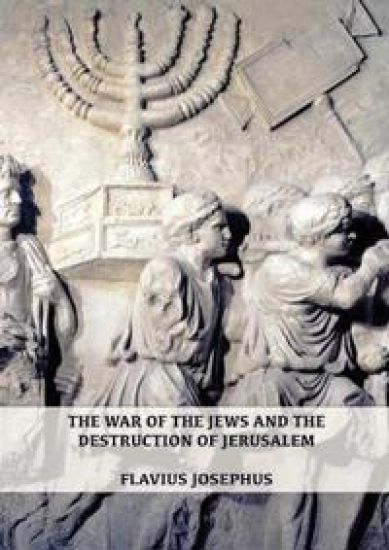
An important classic in Christian literature due to the veracity of the historical fulfillment of the prophecy foretold by Jesus in Matthew 24. From the days of Antiocus Epiphanes to the complete destruction of the city of Jerusalem. This present edition "The Wars of the Jews and the Destruction of Jerusalem" contains the seven volumes in one volume. First printing in BIG letters.
The Life of Flavius Josephus By Flavius Josephus1. The family from which I am derived is not an ignoble one, but hath descended all along from the priests and as nobility among several people is of a different origin, so with us to be of the sacerdotal dignity, is an indication of the splendor of a family. Now, I am not only sprung from a sacerdotal family in general, but from the first of the twenty-four courses and as among us there is not only a considerable difference between one family of each course and another, I am of the chief family of that first course also nay, further, by my mother I am of the royal blood for the children of Asamoneus, from whom that family was derived, had both the office of the high priesthood, and the dignity of a king, for a long time together. I will accordingly set down my progenitors in order. My grandfather's father was named Simon, with the addition of Psellus: he lived at the same time with that son of Simon the high priest, who first of all the high priests was named Hyrcanus. This Simon Psellus had nine sons, one of whom was Matthias, called Ephlias: he married the daughter of Jonathan the high priest, which Jonathan was the first of the sons of Asamoneus, who was high priest, and was the brother of Simon the high priest also. This Matthias had a son called Matthias Curtus, and that in the first year of the government of Hyrcanus: his son's name was Joseph, born in the ninth year of the reign of Alexandra: his son Matthias was born in the tenth year of the reign of Archclaus as was I born to Matthias in the first year of the reign of Caius Caesar. I have three sons: Hyrcanus, the eldest, was born in the fourth year of the reign of Vespasian, as was Justus born in the seventh, and Agrippa in the ninth. Thus have I set down the genealogy of my family as I have found it described in the public records, and so bid adieu to those who calumniate me as of a lower original]. 2. Now, my father Matthias was not only eminent on account of his nobility, but had a higher commendation on account of his righteousness, and was in great reputation in Jerusalem, the greatest city we have. I was myself brought up with my brother, whose name was Matthias, for he was my own brother, by both father and mother and I made mighty proficiency in the improvements of my learning, and appeared to have both a great memory and understanding. Moreover, when I was a child, and about fourteen years of age, I was commended by all for the love I had to learning on which account the high priests and principal men of the city came then frequently to me together, in order to know my opinion about the accurate understanding of points of the law. And when I was about sixteen years old, I had a mind to make trim of the several sects that were among us. These sects are three: - The first is that of the Pharisees, the second that Sadducees, and the third that of the Essens, as we have frequently told you for I thought that by this means I might choose the best, if I were once acquainted with them all so I contented myself with hard fare, and underwent great difficulties, and went through them all.
This book has been considered by academicians and scholars of great significance and value to literature. This forms a part of the knowledge base for future generations. So that the book is never forgotten we have represented this book in a print format as the same form as it was originally first published. Hence any marks or annotations seen are left intentionally to preserve its true nature.
This book has been considered by academicians and scholars of great significance and value to literature. This forms a part of the knowledge base for future generations. So that the book is never forgotten we have represented this book in a print format as the same form as it was originally first published. Hence any marks or annotations seen are left intentionally to preserve its true nature.
This book has been considered by academicians and scholars of great significance and value to literature. This forms a part of the knowledge base for future generations. So that the book is never forgotten we have represented this book in a print format as the same form as it was originally first published. Hence any marks or annotations seen are left intentionally to preserve its true nature.
This book has been considered by academicians and scholars of great significance and value to literature. This forms a part of the knowledge base for future generations. So that the book is never forgotten we have represented this book in a print format as the same form as it was originally first published. Hence any marks or annotations seen are left intentionally to preserve its true nature.
This book has been considered by academicians and scholars of great significance and value to literature. This forms a part of the knowledge base for future generations. So that the book is never forgotten we have represented this book in a print format as the same form as it was originally first published. Hence any marks or annotations seen are left intentionally to preserve its true nature.

The Life Of Flavius Josephus: Translated By William Whiston This book is a result of an effort made by us towards making a contribution to the preservation and repair of original classic literature. In an attempt to preserve, improve and recreate the original content, we have worked towards: 1. Type-setting & Reformatting: The complete work has been re-designed via professional layout, formatting and type-setting tools to re-create the same edition with rich typography, graphics, high quality images, and table elements, giving our readers the feel of holding a 'fresh and newly' reprinted and/or revised edition, as opposed to other scanned & printed (Optical Character Recognition - OCR) reproductions. 2. Correction of imperfections: As the work was re-created from the scratch, therefore, it was vetted to rectify certain conventional norms with regard to typographical mistakes, hyphenations, punctuations, blurred images, missing content/pages, and/or other related subject matters, upon our consideration. Every attempt was made to rectify the imperfections related to omitted constructs in the original edition via other references. However, a few of such imperfections which could not be rectified due to intentional\unintentional omission of content in the original edition, were inherited and preserved from the original work to maintain the authenticity and construct, relevant to the work. We believe that this work holds historical, cultural and/or intellectual importance in the literary works community, therefore despite the oddities, we accounted the work for print as a part of our continuing effort towards preservation of literary work and our contribution towards the development of the society as a whole, driven by our beliefs. We are grateful to our readers for putting their faith in us and accepting our imperfections with regard to preservation of the historical content. HAPPY READING
The Wars of the Jews; Or, The History of the Destruction of Jerusalem
Flavius Josephus
Bibliotech Press
2020
sidottu
Titus Flavius Josephus born Yosef ben Matityahu was a first-century Romano-Jewish historian who was born in Jerusalem--then part of Roman Judea--to a father of priestly descent and a mother who claimed royal ancestry. He initially fought against the Romans during the First Jewish-Roman War as head of Jewish forces in Galilee, until surrendering in 67 CE to Roman forces led by Vespasian after the six-week siege of Jotapata. Josephus claimed the Jewish Messianic prophecies that initiated the First Roman-Jewish War made reference to Vespasian becoming Emperor of Rome. In response Vespasian decided to keep Josephus as a slave and presumably interpreter. After Vespasian became Emperor in 69 CE, he granted Josephus his freedom, at which time Josephus assumed the emperor's family name of Flavius. Flavius Josephus fully defected to the Roman side and was granted Roman citizenship. He became an advisor and friend of Vespasian's son Titus, serving as his translator when Titus led the Siege of Jerusalem in 70 CE. Since the siege proved ineffective at stopping the Jewish revolt, the city's destruction and the looting and destruction of Herod's Temple (Second Temple) soon followed. Josephus recorded Jewish history, with special emphasis on the first century CE and the First Jewish-Roman War (66-70 CE), including the Siege of Masada. His most important works were The Jewish War (c. 75) and Antiquities of the Jews (c. 94). The Jewish War recounts the Jewish revolt against Roman occupation. Antiquities of the Jews recounts the history of the world from a Jewish perspective for an ostensibly Greek and Roman audience. These works provide valuable insight into first century Judaism and the background of Early Christianity, although not specifically mentioned by Josephus. Josephus' works are the chief source next to the Bible for the history and antiquity of ancient Palestine. (wikipedia.org)
The Wars of the Jews; Or, The History of the Destruction of Jerusalem
Flavius Josephus
Bibliotech Press
2020
pokkari
Titus Flavius Josephus born Yosef ben Matityahu was a first-century Romano-Jewish historian who was born in Jerusalem--then part of Roman Judea--to a father of priestly descent and a mother who claimed royal ancestry. He initially fought against the Romans during the First Jewish-Roman War as head of Jewish forces in Galilee, until surrendering in 67 CE to Roman forces led by Vespasian after the six-week siege of Jotapata. Josephus claimed the Jewish Messianic prophecies that initiated the First Roman-Jewish War made reference to Vespasian becoming Emperor of Rome. In response Vespasian decided to keep Josephus as a slave and presumably interpreter. After Vespasian became Emperor in 69 CE, he granted Josephus his freedom, at which time Josephus assumed the emperor's family name of Flavius. Flavius Josephus fully defected to the Roman side and was granted Roman citizenship. He became an advisor and friend of Vespasian's son Titus, serving as his translator when Titus led the Siege of Jerusalem in 70 CE. Since the siege proved ineffective at stopping the Jewish revolt, the city's destruction and the looting and destruction of Herod's Temple (Second Temple) soon followed. Josephus recorded Jewish history, with special emphasis on the first century CE and the First Jewish-Roman War (66-70 CE), including the Siege of Masada. His most important works were The Jewish War (c. 75) and Antiquities of the Jews (c. 94). The Jewish War recounts the Jewish revolt against Roman occupation. Antiquities of the Jews recounts the history of the world from a Jewish perspective for an ostensibly Greek and Roman audience. These works provide valuable insight into first century Judaism and the background of Early Christianity, although not specifically mentioned by Josephus. Josephus' works are the chief source next to the Bible for the history and antiquity of ancient Palestine. (wikipedia.org)
Against Apion is a polemical work written by Flavius Josephus as a defense of Judaism as a classical religion and philosophy against criticism by Apion, stressing its antiquity against what he perceived as more recent traditions of the Greeks. One of his main sources was Menander of Ephesus. Against Apion cites Josephus' earlier work Antiquities of the Jews, so can be dated after C. E. 94. It was most likely written in the early second century. (wikipedia.org)
Against Apion is a polemical work written by Flavius Josephus as a defense of Judaism as a classical religion and philosophy against criticism by Apion, stressing its antiquity against what he perceived as more recent traditions of the Greeks. One of his main sources was Menander of Ephesus. Against Apion cites Josephus' earlier work Antiquities of the Jews, so can be dated after C. E. 94. It was most likely written in the early second century. (wikipedia.org)
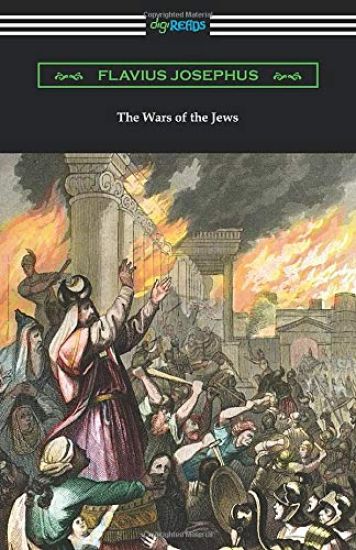
Written in 75 AD by the Jewish historian and Roman citizen Titus Flavius Josephus, "The Wars of the Jews", describes Jewish history from the capture of Jerusalem in 164 BC. to the destruction of the city in 70 AD. Josephus, born in Jerusalem in 37 AD with the name Yosef ben Matityahu, was from a Jewish family with a father of a priestly heritage and a mother who claimed to have royal blood. Josephus fought against the Romans in the First Jewish-Roman War and was eventually taken prisoner by the Romans and made a slave of the Roman leader Vespasian. When Vespasian later became emperor, he granted Josephus his freedom and Josephus became a Roman citizen. His uniquely blended history allows for an interesting perspective in "The Wars of the Jews". Beginning with Antiochus IV Epiphanes, a Seleucid ruler who captured Jerusalem, and going through the revolts against the Roman Empire, to the events of the First Jewish-Roman War in which Jerusalem was razed, Josephus offers a fascinating first-hand account of an important time in the history of Judaism. This edition is printed on premium acid-free paper.