Kirjailija
Ford Madox Ford
Kirjat ja teokset yhdessä paikassa: 302 kirjaa, julkaisuja vuosilta 1964–2026, suosituimpiin kuuluu Parade's End. Vertaile teosten hintoja ja tarkista saatavuus suomalaisista kirjakaupoista.
302 kirjaa
Kirjojen julkaisuvuodet: 1964–2026.
In The Good Soldier, Ford Madox Ford paved the way for over a century of thriller writers and film-makers who would go on to use the idea of the unreliable narrator to create mystery and suspense. Events in the story unfold just before World War I and chronicle the tragedy of Edward Ashburnham, the soldier to whom the title refers, and his own seemingly perfect marriage and that of two American friends. The novel opens with the famous line, "This is the saddest story I have ever heard." The Good Soldier is a masterpiece of early twentieth-century fiction.
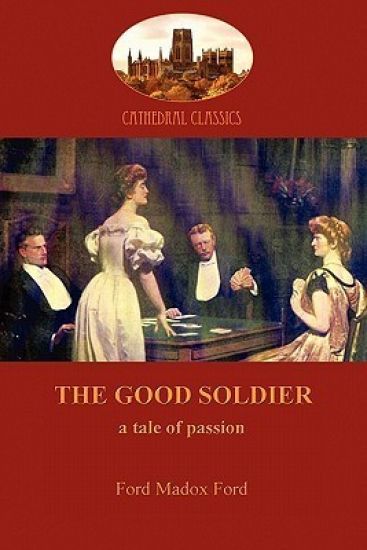
The Good Soldier: A Tale of Passion
Ford Madox Ford
Createspace Independent Publishing Platform
2016
nidottu
The Good Soldier: A Tale of Passion
Ford Madox Ford
Createspace Independent Publishing Platform
2015
nidottu
The Good Soldier tells the stories of two outwardly happy couples who meet at a health spa in Germany just before the start of the First World War, and whose loveless, adultery-ridden relationships are strained and gradually disintegrate, with tragic consequences. Drawing inspiration from his personal life, Ford Madox Ford innovatively used non-chronological flashbacks as well as an unreliable narrator to reveal the scandalous affairs, lies and betrayals behind the facade of respectability, and craft a masterly work of fiction and a subtle investigation of the notions of truth and deception.
The Good Soldier: Original and Unabridged
Ford Madox Ford
Createspace Independent Publishing Platform
2014
nidottu
Halvin toimitettuna 16,40 €
The Good Soldier by English novelist Ford Madox Ford, is set just before World War I and chronicles the tragedy of Edward Ashburnham, the soldier to whom the title refers, and his own seemingly perfect marriage and that of two American friends. The novel was loosely based on two incidents of adultery and on Ford's messy personal life. The story is narrated by the character John Dowell, half of one of the couples whose dissolving relationships form the subject of the novel. Dowell tells the stories of those dissolutions as well as the deaths of three characters and the madness of a fourth, in a rambling, non-chronological fashion that leaves gaps for the reader to fill. This literary technique forms part of Ford's pioneering view of literary impressionism. Ford employs the device of the unreliable narrator to great effect as the main character gradually reveals a version of events that is quite different from what the introduction leads the reader to believe. The novel's original title was The Saddest Story, but after the onset of World War I, the publishers asked Ford for a new title. Ford suggested (sarcastically) The Good Soldier, and the name stuck. The novel opens with the famous line, "This is the saddest story I have ever heard." Dowell explains that for nine years he, his wife Florence and their friends Captain Edward Ashburnham (the "good soldier" of the book's title) and his wife Leonora had an ostensibly normal friendship while Edward and Florence sought treatment for their heart ailments at a spa in Nauheim, Germany. As it turns out, nothing in the relationships or in the characters is as it first seems. Florence's heart ailment is a fiction she perpetrated on John to force them to stay in Europe so that she could continue her affair with an American thug named Jimmy. Edward and Leonora have a loveless, imbalanced marriage broken by his constant infidelities (both of body and heart) and Leonora's attempts to control Edward's affairs (both financial and romantic). Dowell is a fool and is coming to realize how much of a fool he is, as Florence and Edward had an affair under his nose for nine years without John knowing until Florence was dead.
'This is the saddest story I have ever heard.' Wealthy American John Dowell describes in a disarmingly casual, compellingly intimate manner how he and his wife Florence meet an English couple in a German spa resort. They become friends over the years and gradually the history of their relationships and the passions that lie behind the orderly Edwardian façade are unveiled. Dowell is the archetypal 'unreliable narrator', and his casual revelations are both unexpected and explosive. A masterpiece of early Modernism and a virtuoso performance of literary skill, Ford's 'Tale of Passion' reflects contemporary interests in psychology, sexuality, and the New Woman. Its portrayal of the destruction of a civilized elite anticipates the cataclysm of the First World War, which erupted while Ford was finishing the book. This new edition includes Ford's important essay 'On Impressionism', which sheds valuable light on his artistic technique. ABOUT THE SERIES: For over 100 years Oxford World's Classics has made available the widest range of literature from around the globe. Each affordable volume reflects Oxford's commitment to scholarship, providing the most accurate text plus a wealth of other valuable features, including expert introductions by leading authorities, helpful notes to clarify the text, up-to-date bibliographies for further study, and much more.
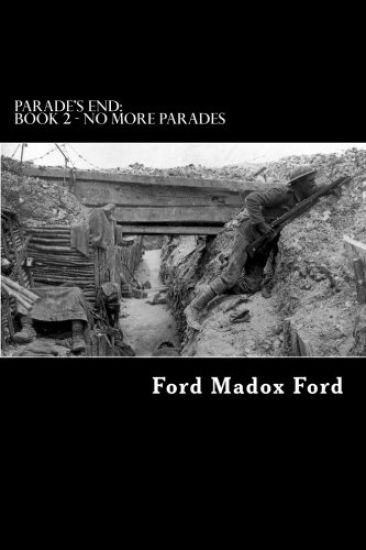
Parade's End: Book 2 - No More Parades
Ford Madox Ford
Createspace Independent Publishing Platform
2012
nidottu
"No More Parades" - the second volume of Ford Madox Ford's highly-regarded tetralogy Parade's End, was originally published in 1925 and has recently been made into a BBC/HBO television miniseries. The novel chronicles the life of Christopher Tietjens, "the last Tory", a brilliant government statistician from a wealthy landowning family who is serving in the British Army during World War I. Tietjens may or may not be the father of the child of his wife, Sylvia, a flippant socialite who seems intent on ruining him. Meanwhile, Tietjens' incipient affair with Valentine Wannop, a high-spirited suffragette, has not been consummated, despite what all their friends believe. The novel follows Tietjens in the army in France and Belgium, as well as Sylvia and Valentine in their separate paths over the course of the war. Ford Madox Ford (17 December 1873 - 26 June 1939) was an English novelist, poet, critic and editor whose journals, The English Review and The Transatlantic Review, were instrumental in the development of early 20th-century English literature. He is now best remembered for The Good Soldier (1915), the Parade's End tetralogy (1924-28) and The Fifth Queen trilogy (1906-08).
Christopher Tietjens has long loved the beautiful young suffragette Valentine, but the pair are held apart by Christopher's loyalty to his wife Sylvia, and to a set of principles which belong to an old world, and which are about to be swallowed up in the mud and chaos of the Western Front.
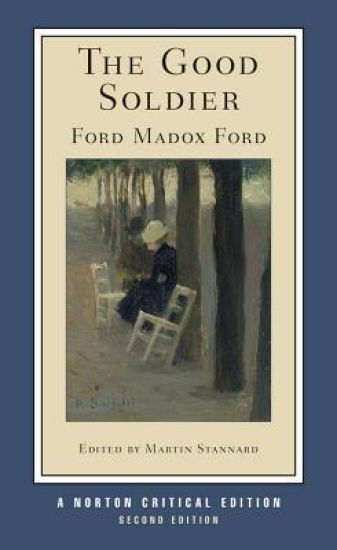
Originally titled “The Saddest Story” and heralded by Graham Greene as “one of the finest novels of our century,” Ford’s 1915 tale of passion and deceit in the lives of two married couples is a modernist masterpiece. The Norton Critical Edition of The Good Soldier allows the reader to thoroughly study Ford’s great work and unravel its mysteries and meanings. This Second Edition is again based on the meticulously edited first text of the novel and offers detailed annotation, a note on the text, and sections on textual variants and manuscript development along with pertinent illustrations. "Backgrounds and Contexts" brings together important appraisals of the work directly following its publication. Reactions from Rebecca West and Theodore Dreiser are included among the reviews. The section also collects critiques on literary impressionism, including one by Ford, and related writings by Henry James and by frequent Ford collaborator Joseph Conrad, among others. "Biographical and Critical Commentary" collects differing assessments of The Good Soldier. Contributions from Richard Aldington, Samuel Hynes, John A. Meixner, Frank Kermode, Carol Jacobs, Thomas C. Moser, Ann Barr Snitow, and Vincent J. Cheng are joined by new selections from Colm Toibin, John G. Peters, Max Saunders, Karen A. Hoffman, and Julian Barnes. A Selected Bibliography is also included.

Two seemingly upstanding couples find their friendships enveloped by scandal and tragedy, as the facade of wealth and privilege falls away and details of their indiscretions emerge.
A brilliant and heart-rending evocation of destructive passion. When John Dowell and his wife befriend Edward and Leonora Ashburnham they appear to be the perfect couple. He is a distinguished soldier and she is beautiful and intelligent. However, what lies beneath the surface of their marriage is far more sinister and their influence leads John into a tragic drama that threatens to destroy everything he cares about. WITH AN INTRODUCTION BY ZOE HELLER
With an Introduction and Notes by Sara Haslam, Department of English, The Open University. The Good Soldier is a masterpiece of twentieth-century fiction, an inspiration for many later, distinguished writers, including Graham Greene. Set before the First World War, it tells the tale of two wealthy and sophisticated couples, one English, one American, as they travel, socialise, and take the waters in the spa towns of Europe. They are 'playing the game', in style. That game has begun to unravel, however, and with compelling attention to the comic, as well as the tragic, results the American narrator reveals his growing awareness of the sexual intrigues and emotional betrayals that lie behind its façade.