Kirjailija
Ford Madox Ford
Kirjat ja teokset yhdessä paikassa: 302 kirjaa, julkaisuja vuosilta 1964–2026, suosituimpiin kuuluu Parade's End. Vertaile teosten hintoja ja tarkista saatavuus suomalaisista kirjakaupoista.
302 kirjaa
Kirjojen julkaisuvuodet: 1964–2026.
The Dowells, a wealthy American couple, have been close friends with the Ashburnhams for years. Edward Ashburnham, a first-rate soldier, seems to be the perfect English gentleman, and Leonora his perfect wife, but beneath the surface their marriage seethes with unhappiness and deception. This is a novel of passion and betrayal.
This is the story of fatal attraction and its consequences. The American narrator's highly-strung wife falls for his bluff, inarticulate English friend. Retrospectively piecing the story together, the betrayed and now widowed husband puzzles over the mysteries of the affair.
Novelist, poet, literary critic, editor, a founding father of English Modernism, and one of the most significant novelists of the twentieth century, Ford Madox Ford (1873-1939) was the author of over eighty books, editor of The English Review and The Transatlantic Review, and collaborator with Joseph Conrad on The Inheritors, Romance, and other works. His most famous novel is The Good Soldier (1915). This collection contains essays and letters on the English novel, impressionism, vers libre, Joseph Conrad, H. G. Wells, Henry James, Herbert Read, and Ernest Hemingway.
The Good Soldier (Collector's Edition) (Laminated Hardback with Jacket)
Ford Madox Ford
Revive Classics
2025
sidottu
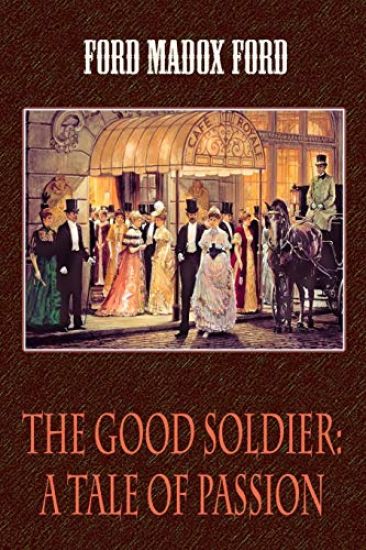
The Good Soldier: A Tale of Passion
Ford Madox Ford
Createspace Independent Publishing Platform
2018
nidottu
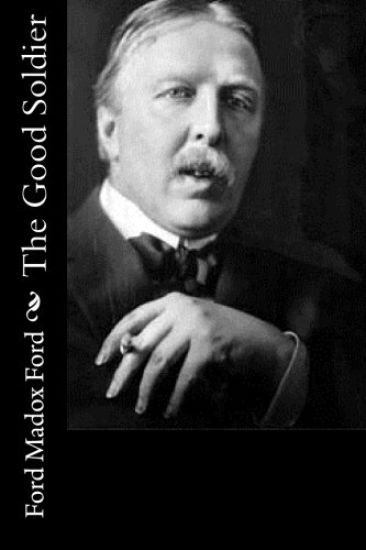
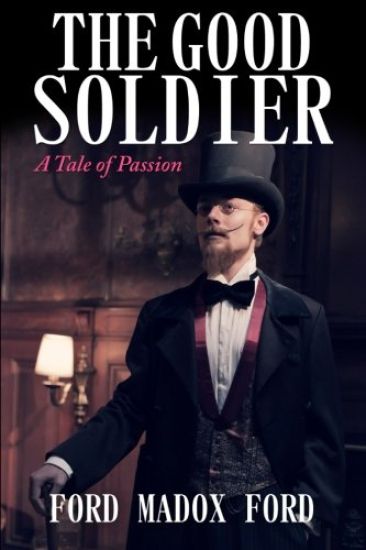
The Good Soldier: A Tale of Passion is a 1915 novel by English novelist Ford Madox Ford. It is set just before World War I and chronicles the tragedy of Edward Ashburnham, the soldier to whom the title refers, and his own seemingly perfect marriage and that of two American friends. The novel is told using a series of flashbacks in non-chronological order, a literary technique that formed part of Ford's pioneering view of literary impressionism. Ford employs the device of the unreliable narrator to great effect as the main character gradually reveals a version of events that is quite different from what the introduction leads the reader to believe. The novel was loosely based on two incidents of adultery and on Ford's messy personal life. The novel's original title was The Saddest Story, but after the onset of World War I, the publishers asked Ford for a new title. Ford suggested (sarcastically) The Good Soldier, and the name stuck. In 1998, the Modern Library ranked The Good Soldier 30th on its list of the 100 best English-language novels of the 20th century. In 2015, the BBC ranked The Good Soldier 13th on its list of the 100 greatest British novels.

The Inheritors (1901) by: Joseph Conrad and Ford Madox Ford. / quasi-science fiction NOVEL /
Ford Madox Ford; Joseph Conrad
Createspace Independent Publishing Platform
2017
nidottu
The Inheritors: An Extravagant Story (1901) is a quasi-science fiction novel on which Ford Madox Ford and Joseph Conrad collaborated. It looks at society's mental evolution and what is gained and lost in the process. Written before the first World War, its themes of corruption and the effect of the 20th Century on British aristocracy appeared to predict history. It was first published in London by William Heinemann and later the same year in New York by McClure, Phillips & Co. In the novel, the metaphor of the "fourth dimension" is used to explain a societal shift from a generation of people who have traditional values of interdependence, being overtaken by a modern generation who believe in expediency, callously using political power to bring down the old order. Its narrator is an aspiring writer who himself makes a similar transition at a personal level only to feel he has lost everything.
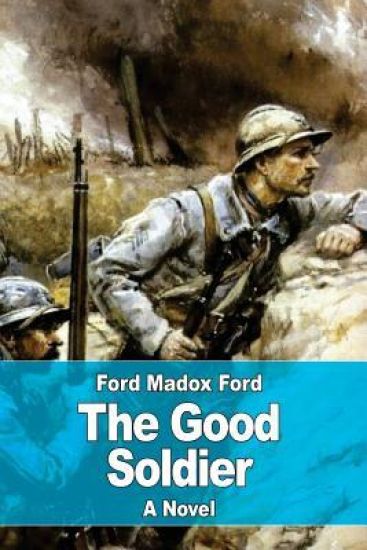
The Good Soldier: A Tale of Passion (Starbooks Classics Editions)
Ford Madox Ford
Createspace Independent Publishing Platform
2014
nidottu
The Good Soldier: A Tale of Passion "I know nothing - nothing in the world - of the hearts of men. I only know that I am alone - horribly alone." The Good Soldier: A Tale of Passion is a 1915 novel by English novelist Ford Madox Ford. It is set just before World War I and chronicles the tragedy of Edward Ashburnham, the soldier to whom the title refers, and his own seemingly perfect marriage and that of two American friends. The novel is told using a series of flashbacks in non-chronological order, a literary technique that formed part of Ford's pioneering view of literary impressionism. Ford employs the device of the unreliable narrator to great effect as the main character gradually reveals a version of events that is quite different from what the introduction leads the reader to believe. The novel was loosely based on two incidents of adultery and on Ford's messy personal life. The novel's original title was The Saddest Story, but after the onset of World War I, the publishers asked Ford for a new title. Ford suggested (sarcastically) The Good Soldier, and the name stuck. In 1998, the Modern Library ranked The Good Soldier 30th on its list of the 100 best English-language novels of the 20th century. Major characters John Dowell: The narrator, husband to Florence. Dowell is an American Quaker, a gullible and passionless man who cannot read the emotions of the people around him. Florence Dowell: John Dowell's wife and a scheming, manipulative, unfaithful woman who uses Dowell for his money while pursuing her affairs on the side. She fakes a heart ailment to get what she wants out of her husband and has a lengthy affair with Edward Ashburnham. Edward Ashburnham: Friend of the Dowells and husband of Leonora. Ashburnham is a hopeless romantic who keeps falling in love with the women he meets; he is at Nauheim for the treatment of a heart problem but it's unclear whether the ailment is real. He is Dowell's opposite, a virile, physical, passionate man. Leonora Ashburnham: Edward's wife by a marriage that was more or less arranged by their fathers. Leonora comes to resent Edward's philandering as much for its effect on her life as on her marriage and asserts more and more control over Edward until he dies. Nancy Rufford: The young ward of the Ashburnhams; Edward falls in love with Nancy after he tires of Florence. Eventually Nancy is sent by Ashburnham to India to live with her father, but she goes mad en route when she learns of Edward's death. La Dolciquita: A Spanish dancer (The Grand Duke's mistress) who is Edward's first sexual affair. Although he believes himself to be romantically attached to her, he quickly becomes disillusioned by her thirst for his money. She is not at all interested in Edward's "sentimental" gestures, and asks for money and expensive gifts in exchange for sex. Maisie Maidan: Edward's third affair. Maisie was a young, pretty, married woman whom Leonora purchases from her "child husband" and brings back to Europe for Edward's sake. Maisie has a true heart defect and it takes her life as she tries to flee from Edward.
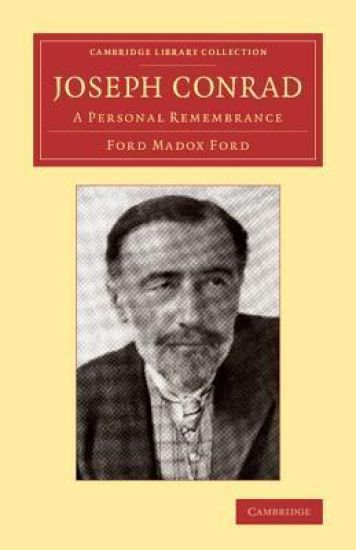
Determined not to write a biography about his friend Joseph Conrad (1857–1924) in the usual dry style, Ford Madox Ford (1873–1939) instead produced a novel. As a result, some biographical facts are given less emphasis than others, in particular the acrimony which later blighted relations between the two men. But the work is distinguished by its liveliness and by a wealth of vivid detail. Ford describes Conrad's remarkably long-eared horse, his haphazard use of adverbs and their fraught collaboration over their second joint novel, Romance, during which Ford's carefully unexciting style provoked the adventure-loving Conrad to depression. Ford's impressionistic portrayal of Conrad as an elegant, likeable swindler and 'beautiful genius' strikes a far richer chord than a purely historical account. First published in 1924, just after Conrad's death, this work remains a striking example of creative non-fiction, instructive for scholars and students of English literature.
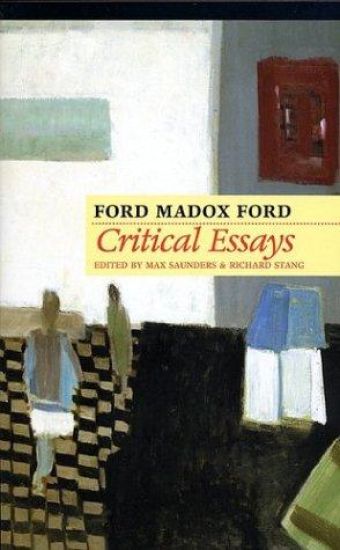
Critical Essays showcases a critic whom Ezra Pound called in 1914, "the best critic in England, one might say the only critic of any importance." This volume provides access to the best of Ford Madox Ford's essays. The essays are arranged chronologically and span nearly forty years--covering most of Ford's writing life. Saunders and Stang have included essays, literary portraits, and book reviews that Ford published in the English Review, The Tribune, The Bystander, The Outlook, Piccadilly Review, the Transatlantic Review, and the Chicago Tribune Sunday Magazine, among other places.