Kirjojen hintavertailu – 12 859 819 kirjaa ja 27 kauppaa
Kirjailija
Francis Bacon
Kirjat ja teokset yhdessä paikassa: 609 kirjaa, julkaisuja vuosilta 1810–2026, suosituimpiin kuuluu La Nueva Atlántida: Spanish Version. Vertaile teosten hintoja ja tarkista saatavuus suomalaisista kirjakaupoista.
The New Atlantis by Sir Francis Bacon . New Atlantis is an incomplete utopian novel by Sir Francis Bacon, published in 1627. In this work, Bacon portrayed a vision of the future of human discovery and knowledge, expressing his aspirations and ideals for humankind. The novel depicts the creation of a utopian land where "generosity and enlightenment, dignity and splendour, piety and public spirit" are the commonly held qualities of the inhabitants of the mythical Bensalem. Bacon's literary executor, Dr. Rowley, published "The New Atlantis" in 1627, the year after the author's death. It seems to have been written about 1623, during that period of literary activity which followed Bacon's political fall. None of Bacon's writings gives in short apace so vivid a picture of his tastes and aspirations as this fragment of the plan of an ideal commonwealth. The generosity and enlightenment, the dignity and splendor, the piety and public spirit, of the inhabitants of Bensalem represent the ideal qualities which Bacon the statesman desired rather than hoped to see characteristic of his own country; and in Solomon's House we have Bacon the scientist indulging without restriction his prophetic vision of the future of human knowledge.
The Advancement of Learning by Francis Bacon. The Advancement of Learning (full title: Of the Proficience and Advancement of Learning, Divine and Human) is a 1605 book by Francis Bacon. It inspired the taxonomic structure of the highly influential Encyclopedie by Jean le Rond d'Alembert and Denis Diderot, and is credited by Bacon's biographer-essayist Catherine Drinker Bowen with being a pioneering essay in support of empirical philosophy. The following passage from The Advancement of Learning was used as the foreword to a popular Cambridge textbook: So that as Tennis is a game of no use in itself, but of great use in respect it maketh a quick eye, and a body ready to put itself in all positions, so, in the Mathematics the use which is collateral, an intervenient, is no less worthy, than that which is principle and intended.
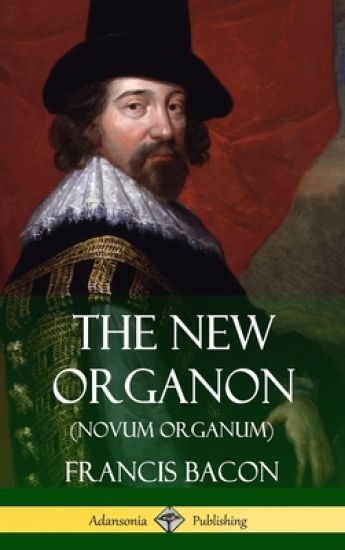
The New Organon (in Latin, Novum Organum) is a historic work by Francis Bacon which lays out the system of logic which became known as the Baconian Method. Originally penned in Latin, this text discusses the various methods of reasoning one may use to come to a sound conclusion. The philosophical debate on the nature of inductive and reductive thinking has seen scholars deem The New Organon to be one of the first writings to signify the Enlightenment period of human development. It would also prove notable for its questioning of antiquity: until this time, Greek thought on logic had gone largely unchallenged. Perhaps most significantly of all is this work's impact upon the eventual formulation of the scientific method. Although strictly a text of philosophy, it was the intellectual rigors described by Bacon that were to become a forebear to the intensive development of the sciences in the 17th and 18th centuries.
The New Atlantis by Francis Bacon details the ideas and vision of the scientific utopia conceived by the author, and is offered here in hardcover. This story sets out a process of discovery whereby sailors, lost off the Peruvian coastline, stumble across Bensalem. While the opening passages hold only the bare bones of plot, the emphasis once the explorers arrive in Bensalem is its university: Salomon's House. Promoted tenets include kindness, compassion and honesty, aesthetic beauty in public buildings and civic life, an intellectual spirit fostered among the population, a university named Salomon's House where sciences are studied and developed, and a strong sense of religious piety held by the population. Today, The New Atlantis is significant for statements of the ideals of the nascent Enlightenment era, in which Francis Bacon was an influential thinker. The text is also interpretative, with Bensalem's conversion to Christianity and the nature of its hierarchy poignant elements in the fiction.
They who have presumed to dogmatize on nature, as on some well investigated subject, either from self-conceit or arrogance, and in the professorial style, have inflicted the greatest injury on philosophy and learning. For they have tended to stifle and interrupt inquiry exactly in proportion as they have prevailed in bringing others to their opinion: and their own activity has not counterbalanced the mischief they have occasioned by corrupting and destroying that of others. They again who have entered upon a contrary course, and asserted that nothing whatever can be known, whether they have fallen into this opinion from their hatred of the ancient sophists, or from the hesitation of their minds, or from an exuberance of learning, have certainly adduced reasons for it which are by no means contemptible. They have not, however, derived their opinion from true sources, and, hurried on by their zeal and some affectation, have certainly exceeded due moderation. But the more ancient Greeks (whose writings have perished), held a more prudent mean, between the arrogance of dogmatism, and the despair of scepticism; and though too frequently intermingling complaints and indignation at the difficulty of inquiry, and the obscurity of things, and champing, as it were, the bit, have still persisted in pressing their point, and pursuing their intercourse with nature; thinking, as it seems, that the better method was not to dispute upon the very point of the possibility of anything being known, but to put it to the test of experience. Yet they themselves, by only employing the power of the understanding, have not adopted a fixed rule, but have laid their whole stress upon intense meditation, and a continual exercise and perpetual agitation of the mind.
The New Atlantis is Sir Francis Bacon's creation of an ideal land where its citizens uphold the common qualities of "generosity and enlightenment, dignity and splendor, piety and public spirit." This short 1627 utopian novel depicts the land of Bensalem, discovered by a European ship after becoming lost somewhere to the west of Peru. One of the crew narrates their look at the island's customs and institutions, especially their impressive culture of science and research.
This complete collection of Francis Bacon's essays is superbly presented and meticulously faithful to the original publication. An intellectual possessed of a staggering breadth of knowledge and learning, Francis Bacon wrote many essays on a range of topics. Subjects such as married life, child rearing, the sins of envy and vainglory, and the virtues of friendship, love and good counsel are all thoughtfully expounded upon and detailed in these essays. Cautionary writings on the subjects of anger and revenge are also present; Bacon notably makes an impassioned plea for true justice, noting that the quality of mercy is a far higher virtue than the 'wild justice' born of angry revenge. Reflecting the early colonial times in which Francis Bacon lived, we also witness essays upon the subjects of travel, Empire, ambition and commerce. Well-traveled and curious about distant lands, it is also with experience that Bacon imbues color and depth to his essays.
This complete collection of Francis Bacon's essays is superbly presented and meticulously faithful to the original publication. An intellectual possessed of a staggering breadth of knowledge and learning, Francis Bacon wrote many essays on a range of topics. Subjects as diverse as married life, child rearing, the sins of envy and vainglory, and the virtues of friendship, love and good counsel are all thoughtfully expounded upon and detailed in these essays. Cautionary writings on the subjects of anger and revenge are also present. Bacon notably makes an impassioned plea for true justice, noting that the quality of mercy is a far higher virtue than the 'wild justice' born of angry revenge. Reflecting the early colonial times in which Francis Bacon lived, we also witness essays upon the subjects of travel, Empire, ambition and commerce. Well-traveled and curious about distant lands, it is also with experience that Bacon imbues color and depth to his essays.
Dieses Buch "Neues Organon - Gro e Erneuerung der Wissenschaften (Vollst ndige deutsche Ausgabe)" ist mit einem detaillierten und dynamischen Inhaltsverzeichnis versehen und wurde sorgf ltig Korrektur gelesen. Neues Organon / Das Novum organum scientiarum, ist das wissenschaftstheoretische philosophische Hauptwerk von Francis Bacon. Es gilt als Wendepunkt in der Kulturgeschichte zwischen mittelalterlichem Denken und neuzeitlicher methodischer Forschung, die auf Fortschritt und damit Gemeinwohl ausgerichtet ist. Als Idolenlehre wird das in diesem Werk von Francis Bacon entwickelte erkenntniskritische Konzept des Empirismus bezeichnet. Mit diesem Vorgehen sollen Trugschl sse und naive Naturverst ndnisse vermieden werden. Im wissenschaftlichen Sinne sollen die Ereignisse kognitiv geordnet werden mit dem Ziel die Welt zu verstehen und Regeln zu entwickeln. Francis Bacon (1561-1626) war ein englischer Philosoph, Staatsmann und als Wissenschaftler Wegbereiter des Empirismus.
Francis Bacon (1561/1626) war ein englischer Philosoph, Staatsmann und als Wissenschaftler Wegbereiter des Empirismus. "Neues Organon," ist das wissenschaftstheoretische philosophische Hauptwerk von Francis Bacon, das in Latein verfasst und 1620 in England ver ffentlicht wurde. Es gilt als Wendepunkt in der Kulturgeschichte zwischen mittelalterlichem Denken und neuzeitlicher methodischer Forschung, die auf Fortschritt und damit Gemeinwohl ausgerichtet ist. Inhalt: - Franz Baco von Verulam's Leben und Schriften - Franz von Verulam's, des Erzkanzlers von England, Grosse Erneuerung der Wissenschaften: Franz von Verulam's Ansichten und Erw gungen, deren Kenntniss die Zeitgenossen wie die Nachkommen interessiren wird. - Franz von Verulam's Grosse Erneuerung der Wissenschaften.
The New Atlantis is Sir Francis Bacon's creation of an ideal land where its citizens uphold the common qualities of "generosity and enlightenment, dignity and splendor, piety and public spirit." This short 1627 utopian novel depicts the land of Bensalem, discovered by a European ship after becoming lost somewhere to the west of Peru. One of the crew narrates their look at the island's customs and institutions, especially their impressive culture of science and research.
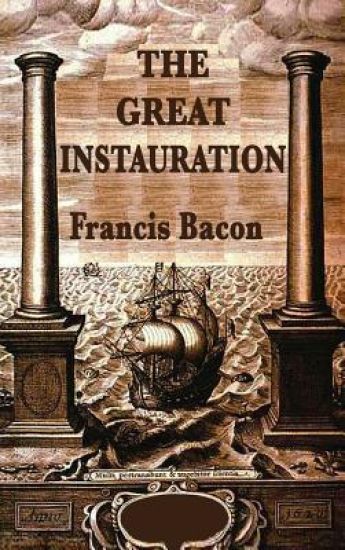
Francis Bacon is considered the father of modern science. He proposed, at his time, a great reformation of all process of knowledge for the advancement of learning divine and human. He called it Instauratio Magna (The Great Instauration). Bacon planned his Great Instauration in imitation of the Divine Work - the Work of the Six Days of Creation, as defined in the Bible, leading to the Seventh Day of Rest or Sabbath in which Adam's dominion over creation would be restored, thus dividing the great reformation in six parts: 1. Partitions of the Sciences 2. New Method 3. Natural History 4. Ladder of the Intellect 5. Anticipations of the 2nd Philosophy 6. The Second Philosophy or Active Science