Kirjojen hintavertailu – 12 859 819 kirjaa ja 27 kauppaa
Kirjailija
Francis Bacon
Kirjat ja teokset yhdessä paikassa: 609 kirjaa, julkaisuja vuosilta 1810–2026, suosituimpiin kuuluu La Nueva Atlántida: Spanish Version. Vertaile teosten hintoja ja tarkista saatavuus suomalaisista kirjakaupoista.
Francis Bacon, 1st Viscount St Alban, PC KC ( 22 January 1561 - 9 April 1626) was an English philosopher, statesman, scientist, jurist, orator, and author. He served both as Attorney General and as Lord Chancellor of England. After his death, he remained extremely influential through his works, especially as philosophical advocate and practitioner of the scientific method during the scientific revolution. Bacon has been called the father of empiricism. His works argued for the possibility of scientific knowledge based only upon inductive reasoning and careful observation of events in nature. Most importantly, he argued this could be achieved by use of a sceptical and methodical approach whereby scientists aim to avoid misleading themselves. While his own practical ideas about such a method, the Baconian method, did not have a long-lasting influence, the general idea of the importance and possibility of a sceptical methodology makes Bacon the father of scientific method. This marked a new turn in the rhetorical and theoretical framework for science, the practical details of which are still central in debates about science and methodology today. In addition to his work in the sciences, Bacon was also a venerable patron of libraries and developed a functional system for the cataloging of books by dividing them into three categories- history, poetry, and philosophy- which could further be divided into more specific subjects and subheadings. Bacon is the first recipient of the Queen's counsel designation and was conferred in 1597 when Queen Elizabeth reserved Bacon as her legal advisor. After the accession of King James I in 1603, Bacon was knighted. He was later created Baron Verulam in 1618 and Viscount St. Alban in 1621. Because he had no heirs, both titles became extinct upon his death in 1626, at 65 years of age. Bacon died of pneumonia, with one account by John Aubrey stating that he had contracted the condition while studying the effects of freezing on the preservation of meat. He is buried at St Michael's Church, St Albans, Hertfordshire...................................... Mary Augusta Scott (1851-1918) was a scholar and professor of English at Smith College. She was one of the first women to receive a PhD from Yale University, in 1894. (1851-1918) was a scholar and professor of English at Smith College. She was one of the first women to receive a PhD from Yale University, in 1894. Life and work: Scott was born in Dayton, Ohio, and received her master's degree at Vassar College. She studied at Newnham College, Cambridge University, Johns Hopkins and Yale University; she earned her Ph. D. from Yale in 1894. A professor of English at Smith from 1902, Scott edited and published The Essays of Francis Bacon. She also completed Elizabethan Translations from the Italian, published in the Vassar Semi-Centennial Series in 1916, and reviewed by the Journal of Modern Philology in 1918. She was a frequent contributor to The Dial and other literary and academic journals.
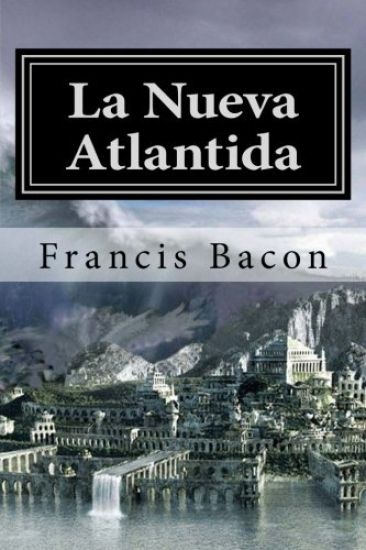
En Bensalem, el conocimiento es considerado como el m s preciado de sus tesoros. Por eso en el pasaje m s conocido de la obra se refieren a los investigadores con las palabras: "Estas son, hijo m o, las riquezas de la Casa de Salom n". En Bensalem, el matrimonio y la familia son la base de la sociedad y los lazos familiares se celebran en fiestas subvencionadas por el estado.
This work has been selected by scholars as being culturally important, and is part of the knowledge base of civilization as we know it. This work was reproduced from the original artifact, and remains as true to the original work as possible. Therefore, you will see the original copyright references, library stamps (as most of these works have been housed in our most important libraries around the world), and other notations in the work. This work is in the public domain in the United States of America, and possibly other nations. Within the United States, you may freely copy and distribute this work, as no entity (individual or corporate) has a copyright on the body of the work. As a reproduction of a historical artifact, this work may contain missing or blurred pages, poor pictures, errant marks, etc. Scholars believe, and we concur, that this work is important enough to be preserved, reproduced, and made generally available to the public. We appreciate your support of the preservation process, and thank you for being an important part of keeping this knowledge alive and relevant.
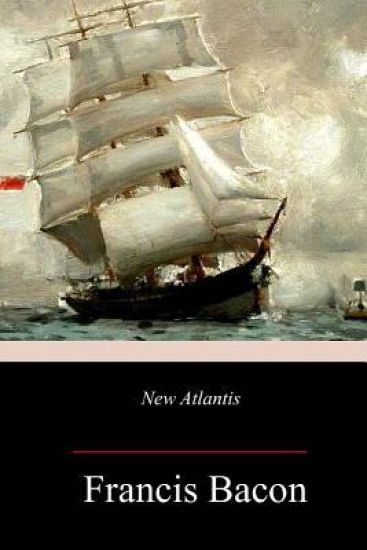
The New Atlantis is Sir Francis Bacon's creation of an ideal land where its citizens uphold the common qualities of "generosity and enlightenment, dignity and splendor, piety and public spirit." This short 1627 utopian novel depicts the land of Bensalem, discovered by a European ship after becoming lost somewhere to the west of Peru. One of the crew narrates their look at the island's customs and institutions, especially their impressive culture of science and research.
Francis Bacon, primer bar n Verulam, vizconde de Saint Albans y canciller de Inglaterra (Strand (Londres), fue un c lebre fil sofo, pol tico, abogado y escritor ingl s, padre del empirismo filos fico y cient fico. Desarroll en su De dignitate et augmentis scientiarumn (De la dignificaci n y progreso de la ciencia) una teor a emp rica del conocimiento y precis las reglas del m todo cient fico experimental en su Novum Organum, lo que hizo de l uno de los pioneros del pensamiento cient fico moderno.
La presente traducci n in dita al espa ol de Mar Escribano de los Ensayos de Francis Bacon sigue una edici n inglesa de 60 ensayos producida por T. Nelson &Sons, Ltd. La traductora ha tratado de ser lo m s fiel posible al original respetando el estilo de las frases y la sencillez de la prosa de Bacon. Esta obra es la primera parte de una serie de dos libros. El argumento consiste en los 25 primeros ensayos de Bacon pero acompa ados de una historia 'entretenida' entre un pomposo ingl s y una brava castellana.
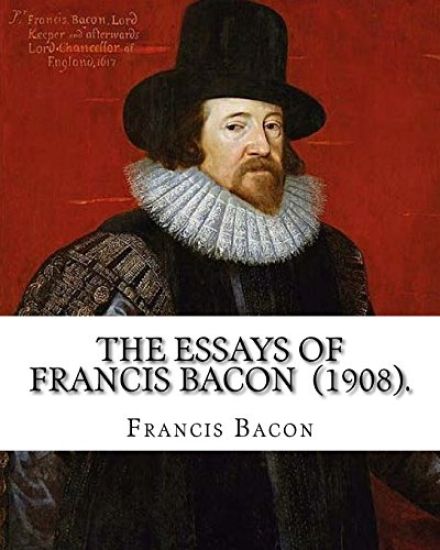
The Essays of Francis Bacon - On civil, moral, literary and political subjects. Together with the life of that celebrated writer. Vol. 1 is an unchanged, high-quality reprint of the original edition of 1787. Hansebooks is editor of the literature on different topic areas such as research and science, travel and expeditions, cooking and nutrition, medicine, and other genres. As a publisher we focus on the preservation of historical literature. Many works of historical writers and scientists are available today as antiques only. Hansebooks newly publishes these books and contributes to the preservation of literature which has become rare and historical knowledge for the future.
The New Atlantis by Sir Francis Bacon. Bacon's literary executor, Dr. Rowley, published "The New Atlantis" in 1627, the year after the author's death. It seems to have been written about 1623, during that period of literary activity which followed Bacon's political fall. None of Bacon's writings gives in short apace so vivid a picture of his tastes and aspirations as this fragment of the plan of an ideal commonwealth. The generosity and enlightenment, the dignity and splendor, the piety and public spirit, of the inhabitants of Bensalem represent the ideal qualities which Bacon the statesman desired rather than hoped to see characteristic of his own country; and in Solomon's House we have Bacon the scientist indulging without restriction his prophetic vision of the future of human knowledge. No reader acquainted in any degree with the processes and results of modern scientific inquiry can fail to be struck by the numerous approximations made by Bacon's imagination to the actual achievements of modern times.
Of Gardens - An Essay by Francis Bacon. GOD almighty first planted a garden: and indeed it is the purest of human pleasures. It is the greatest refreshment of the spirits of man; without which, buildings or palaces are but gross handy-works: and a man shall ever see, that when ages grow to civility or elegancy, men come to build stately, sooner than to garden finely, as if gardening were the greater perfection. I do hold it, in the royal ordering of gardens, there ought to be gardens for all the months in the year: in which, severally, things of beauty may be then in season. For December and January, or the latter part of November, you must take such things as are green all winter; holly, ivy, bays, juniper, cypress-trees, yew, pine-apple trees, fir trees, rosemary,6 lavender, periwinkle (the white, the purple, and the blue), germander, flags, orange trees, lemon trees, and myrtles, if they be stoved, and sweet marjoram, warm set.
The Advancement of Learning (Or: Of the Proficience and Advancement of Learning, Divine and Human) by Francis Bacon is a book that inspired the taxonomic structure of the highly influential Encyclop die by Jean le Rond d'Alembert and Denis Diderot, and is credited by Bacon's biographer-essayist Catherine Drinker Bowen with being a pioneering essay in support of empirical philosophy. And the New Atlantis by the same author is an incomplete utopian novel, first published in 1627. This book portrays a vision of the future of human discovery and knowledge, expressing his aspirations and ideals for humankind, and it depicts the creation of a utopian land where "generosity and enlightenment, dignity and splendour, piety and public spirit" are the commonly held qualities of the inhabitants of the mythical Bensalem.