Kirjojen hintavertailu – 12 859 819 kirjaa ja 27 kauppaa
Kirjailija
Francis Bacon
Kirjat ja teokset yhdessä paikassa: 609 kirjaa, julkaisuja vuosilta 1810–2026, suosituimpiin kuuluu La Nueva Atlántida: Spanish Version. Vertaile teosten hintoja ja tarkista saatavuus suomalaisista kirjakaupoista.
Precis de la philosophie de Bacon, et des progres qu'ont fait les science naturelles par ses preceptes et son exemple... par J. A. de Luc, ... Date de l'edition originale: 1802Sujet de l'ouvrage: Bacon, Francis (1561-1626)Ce livre est la reproduction fidele d'une oeuvre publiee avant 1920 et fait partie d'une collection de livres reimprimes a la demande editee par Hachette Livre, dans le cadre d'un partenariat avec la Bibliotheque nationale de France, offrant l'opportunite d'acceder a des ouvrages anciens et souvent rares issus des fonds patrimoniaux de la BnF. Les oeuvres faisant partie de cette collection ont ete numerisees par la BnF et sont presentes sur Gallica, sa bibliotheque numerique. En entreprenant de redonner vie a ces ouvrages au travers d'une collection de livres reimprimes a la demande, nous leur donnons la possibilite de rencontrer un public elargi et participons a la transmission de connaissances et de savoirs parfois difficilement accessibles. Nous avons cherche a concilier la reproduction fidele d'un livre ancien a partir de sa version numerisee avec le souci d'un confort de lecture optimal. Nous esperons que les ouvrages de cette nouvelle collection vous apporteront entiere satisfaction. Pour plus d'informations, rendez-vous sur www.hachettebnf.fr
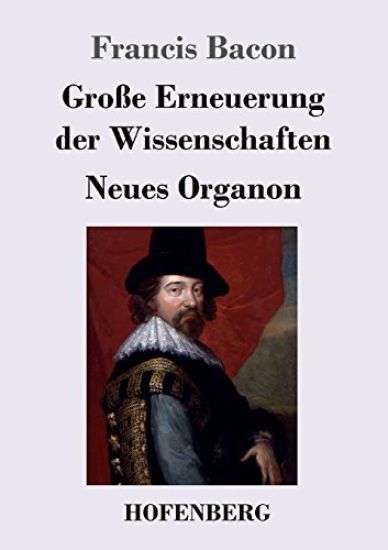
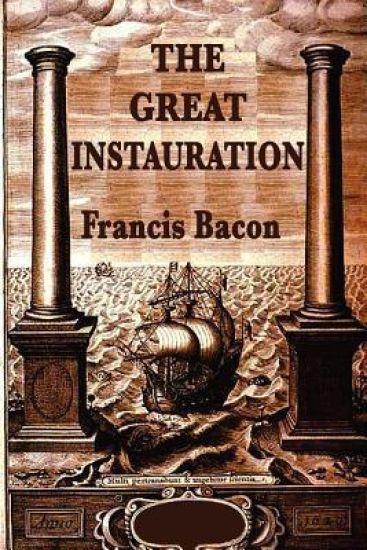
Francis Bacon: Gro e Erneuerung der Wissenschaften. Neues Organon Edition Holzinger. Taschenbuch Berliner Ausgabe, 2017, 4. Auflage Durchgesehener Neusatz mit einer Biographie des Autors bearbeitet und eingerichtet von Michael Holzinger Von der urspr nglich auf sechs Teile geplanten Abhandlung hat Bacon nur den ersten und gr ere Abschnitte des zweiten und dritten Teils publiziert. Als erstes erschienen die zwei B cher des zweiten Teils unter dem Titel Instauratio Magna. Novum Organum, sive Indicia vera de interpretatione naturae, London 1620. Die erste deutsche bersetzung durch G. W. Bartoldy erschien unter dem Titel Neues Organon, Berlin 1793. Der Text folgt der bersetzung durch Julius Heinrich von Kirchmann von 1870. Textgrundlage ist die Ausgabe: Franz Bacon's Neues Organon. bersetzt, erl utert und mit einer Lebensbeschreibung des Verfassers versehen von J. H. von Kirchmann, Berlin: L. Heimann, 1870 (Philosophische Bibliothek, Bd. 32). Herausgeber der Reihe: Michael Holzinger Reihengestaltung: Viktor Harvion Gesetzt aus der Minion Pro, 10 pt.
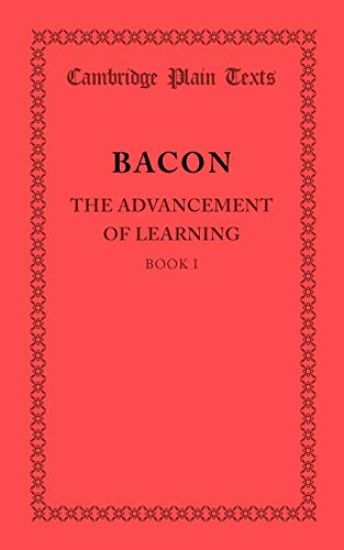
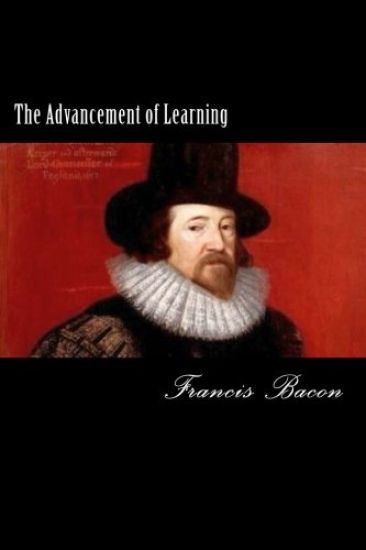
Originally published in 1922 as part of the Cambridge Plain Texts series, this volume contains the complete text for the first book of Francis Bacon's The Advancement of Learning. An editorial introduction is also included. This book will be of value to anyone with an interest in Bacon and his works.
Along with Shakespeare's works, Bacon's "Essays" is the supreme achievement of the English Renaissance. Philosopher, statesman, author, Bacon made all knowledge his province, and in the "Essays" is to be found more worldly wisdom than in any other book. "My essays come home, to men's business and bosoms." And Pope penned the epitaph, "If parts allure thee think how Bacon shined, The wisest, brightest, meanest of mankind." As terse as Emerson is expansive, Bacon's "Essays" are perhaps the most truly Classical (in spirit) prose in the English language. Fans of the Leo Strauss school should have a fieldday reading between the lines of the essays "On Atheism" and "On Superstition"; for the rest of us, nobody can come away from even one of these essays without gaining invaluable insights. Though Bacon is rightly heralded for the radical newness of his pragmatic methods, he is steeped in history--those mindful of Napoleon's dictum that history is the only true philosophy will certainly respond enthusiastically to Bacon's approach. From the post-Machiavellian insights of "Of Empire" to the pre-Enlightenment ethics of "Of Goodness and Goodness of Nature", one will find in reading Bacon's prose what the youth of Athens must have found in following Socrates: the presence of a benevolent, worldly-wise, supremely rational mind determined to show you the order of the world.