

Kirjailija
Francis Fukuyama
Kirjat ja teokset yhdessä paikassa: 37 kirjaa, julkaisuja vuosilta 1995–2026, suosituimpiin kuuluu Der letzte Mensch. Vertaile teosten hintoja ja tarkista saatavuus suomalaisista kirjakaupoista.
37 kirjaa
Kirjojen julkaisuvuodet: 1995–2026.
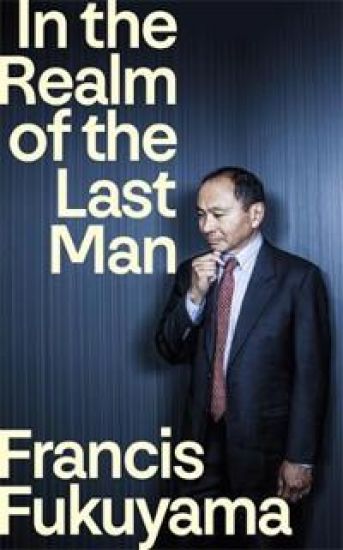
FROM THE AUTHOR OF THE INTERNATIONAL BESTSELLER THE END OF HISTORY AND THE LAST MAN In 1989, one year before the fall of the Berlin Wall, Francis Fukuyama - then an early-career academic who had cut his teeth conducting research for Ronald Reagan during his years as California governor - delivered a conference paper that would go on to become one of the most celebrated -and controversial - works of political theory of our time: The End of History. By 2009, he had broken with his neoconservative mentors, from Allan Bloom to Paul Wolfowitz, after recanting his support for the 'disastrous' invasion of Iraq in 2003, and the laissez-faire economics that produced the financial crash of 2008. But why did he change his mind? In this powerful political memoir, encompassing his father's involvement in the civil rights movement and his own work on CIA contracts in the 1980s, Fukuyama analyses his life alongside the seismic political shifts of the last thirty years - from Bush to Obama to Trump, from the War on Terror to Russia's invasion of Ukraine. Profound and provocative, this is an intimate portrait of one of the twenty-first century's most important thinkers, an urgent study of contemporary politics - and a treatise on how the West can claw democracy back from the brink.
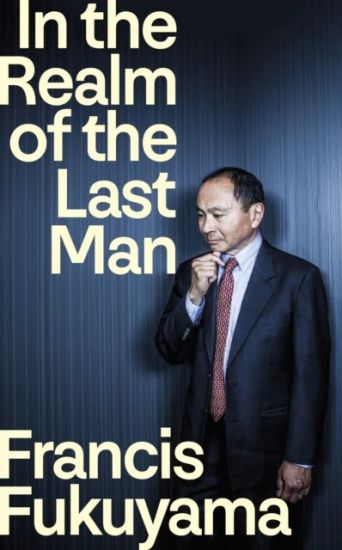
FROM THE AUTHOR OF THE INTERNATIONAL BESTSELLER THE END OF HISTORY AND THE LAST MAN In 1989, one year before the fall of the Berlin Wall, Francis Fukuyama - then an early-career academic who had cut his teeth conducting research for Ronald Reagan during his years as California governor - delivered a conference paper that would go on to become one of the most celebrated -and controversial - works of political theory of our time: The End of History. By 2009, he had broken with his neoconservative mentors, from Allan Bloom to Paul Wolfowitz, after recanting his support for the 'disastrous' invasion of Iraq in 2003, and the laissez-faire economics that produced the financial crash of 2008. But why did he change his mind? In this powerful political memoir, encompassing his father's involvement in the civil rights movement and his own work on CIA contracts in the 1980s, Fukuyama analyses his life alongside the seismic political shifts of the last thirty years - from Bush to Obama to Trump, from the War on Terror to Russia's invasion of Ukraine. Profound and provocative, this is an intimate portrait of one of the twenty-first century's most important thinkers, an urgent study of contemporary politics - and a treatise on how the West can claw democracy back from the brink.

Identichnost: Stremlenie k priznaniju i politika neprijatija
Francis Fukuyama
Alpina Publisher
2024
sidottu
Analiz sovremennykh politicheskikh protsessov (borba za prava menshinstv, obschestvennye dvizhenija, tsvetnye revoljutsii). Issledovanie ponjatija "identichnost" ot Platona do Trampa. Avtor - vydajuschijsja politicheskij filosof. V poslednie gody vse bolshe i bolshe vnimanija ljudi vo vsem mire nachinajut udeljat svoej identichnosti - natsionalnoj, rasovoj, gendernoj, religioznoj. Etot globalnyj trend, po mneniju Frensisa Fukujamy, avtora bestsellera "Konets istorii i poslednij chelovek", javljaetsja reshajuschim faktorom dlja effektivnoj raboty obschestvennogo mekhanizma, bud to v stranakh Vostoka, Jugo-Vostochnoj Azii, Soedinennykh Shtatakh ili Skandinavii. V svoej novoj knige Fukujama issleduet istoki nashego stremlenija k priznaniju dostoinstva i razbiraet posledstvija vlijanija politiki identichnosti na liberalnyj miroporjadok v epokhu populizma. Zadacha, kotoruju stavit pered soboj Fukujama, - dokazat, chto prava lichnosti, lezhaschie v osnove liberalnoj idei, ne tolko mogut vesti k individualisticheskomu drobleniju obschestv, no i sozdat osnovu dlja sotsialnoj konsolidatsii. Tsitata"V etoj knige ja ispolzuju termin "identichnost" v tom smysle, kotoryj pomozhet ponjat, pochemu ona tak vazhna dlja sovremennoj politiki. Identichnost vyrastaet prezhde vsego iz razlichija mezhdu istinnym vnutrennim "ja" i vneshnim mirom sotsialnykh pravil i norm, kotorye ne priznajut i ne uvazhajut tsennost ili dostoinstvo etogo vnutrennego "ja". Na protjazhenii vsej istorii chelovechestva lichnosti vstupali v protivorechie so svoimi obschestvami. No tolko nyne slozhilos mnenie, chto istinnoe vnutrennee "ja" imeet estestvennuju, prirodnuju tsennost, a vneshnee obschestvo sistematicheski oshibaetsja i nespravedlivo ego otsenivaet. Menjat neobkhodimo ne vnutrennee "ja", podchinjaja ego pravilam obschestva, no samo obschestvo". OsobennostiV svoej provokatsionnoj knige Fukujama razbiraetsja v prichinakh sovremennykh politicheskikh, ekonomicheskikh i sotsialnykh javlenij (Brekzit, dvizhenie #MeToo, "arabskaja vesna", rastsvet natsionalizma i proch.) s tochki zrenija vseobschego stremlenija ljudej k priznaniju ne tolko svoej individualnosti, no i tozhdestvennosti drugim. Avtor issleduet ponjatie identichnosti (lichnoj, gruppovoj, kollektivnoj i natsionalnoj) skvoz prizmu raznykh filosofskikh shkol i analiziruet posledstvija rasprostranenija politiki identichnosti (borba za priznanie dostoinstva) po vsemu miru. Sokrat i Platon, Martin Ljuter i Martin Ljuter King, Russo, Gegel, Gobbs i Nitsshe, Marks i sovremennye adepty psikhoterapii - daleko ne polnyj spisok intellektualnykh guru, prizvannykh Fukujamoj dlja togo, chtoby objasnit segodnjashnie problemy zapadnogo mira. Avtor predlagaet konkretnye shagi dlja togo, chtoby politika identichnosti prinosila realnuju polzu ljudjam, privodja k dolgozhdannym izmenenijam kak v gosudarstvennoj politike, tak i v kulturnykh normakh.
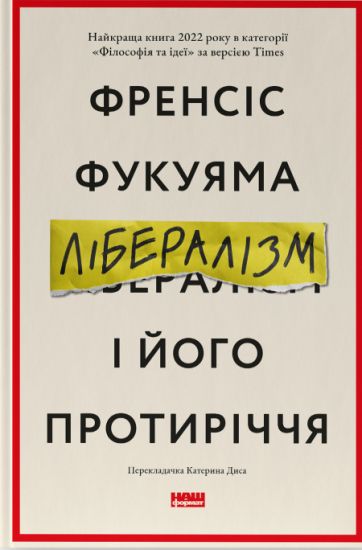
Stari kompromisi v krajinakh rozvinutogo svitu rujnujutsja na nashikh ochakh. Bagato khto vvazhav liberalne suspilstvo idealom, do jakogo potribno pragnuti, odnak sogodni pered nim stojat globalni vikliki. Neoliberali peretvorjujut ekonomichnu svobodu i vilnij rinok na religijnij kult, progresisti nav'jazujut prioriteti interesiv okremikh grup i globalnij pererozpodil dokhodiv, posiljujutsja pravij ta livij populizmi. U knizhtsi podano rezultati gruntovnogo doslidzhennja riznikh form nerivnosti ta identichnostej, dzherel finansovikh kriz, degradatsiji elit, tekhnologij manipuljuvannja naselennjam, porivnjannja liberalizmu z ideologijami v suchasnikh avtokratijakh. Tsja knizhka korisna dlja rozuminnja politichnoji, ekonomichnoji ta sotsiokulturnoji map svitu, perevag i vrazlivostej populjarnikh nini suspilno-politichnikh teorij, a takozh pidvodnikh kameniv, jaki trapljajutsja na shljakhakh demokratichnikh krajin. PerekladachKaterina Disa

Liberalism and Its Discontents
Francis Fukuyama
Picador USA
2023
nidottu
Halvin toimitettuna 21,10 €
A short book about the challenges to liberalism from the right and the left by the bestselling author of The Origins of Political Order Classical liberalism is in a state of crisis. Developed in the wake of Europe's wars over religion and nationalism, liberalism is a system for governing diverse societies that is grounded in fundamental principles of equality and the rule of law. It emphasizes the rights of individuals to pursue their own forms of happiness free from encroachment by government. It's no secret that liberalism hasn't always lived up to its own ideals. In the United States, many have long been denied equality before the law, excluded from the category of full human beings worthy of universal rights. Only recently has this definition expanded to include, to varying degrees, women, African Americans, LGBTQ+ people, and other historically marginalized groups. As the renowned political philosopher Francis Fukuyama shows in Liberalism and Its Discontents, the principles of liberalism have also, in recent decades, been pushed to new extremes by both the right and the left: neoliberals have made a cult of economic freedom, and progressives have focused on identity over human universality as central to their political vision. The result, Fukuyama argues, has been a fracturing of our civil society and increasing peril to our democracy. In this succinct, clear account of our current political discontents, Fukuyama offers an essential defense of a revitalized liberalism for the twenty-first century.
Liberalism and Its Discontents
Francis Fukuyama
Profile Books Ltd
2023
pokkari
Halvin toimitettuna 17,60 €
An acclaimed defence of liberalism by the renowned political philosopher

Det liberale demokratiet og liberalismen er på vikende front over hele verden. Utenfra kommer angrepene tydeligst fra Russland og Kina. Innenfra er det de liberale institusjonene som har vært mest utsatt for angrep. Ledere som Viktor Orbán i Ungarn, Jaros.aw Kaczy.ski i Polen, Jair Bolsonaro i Brasil, Recep Tayyip Erdogan i Tyrkia og Donald Trump i USA har alle blitt demokratisk valgt og deretter brukt makten til å angripe liberale institusjoner. Liberalismen har ikke bare blitt angrepet av populister på høyresiden. Også en fornyet progressiv venstreside har kritisert grunnprinsippene for liberalismen. Begge sider er spesielt misfornøyde med hvordan liberalismen har utviklet seg til nyliberalisme, som har ført til stor økonomisk ulikhet og bidratt til .nanskrisene. I denne boken fremhever Fukuyama det han mener er grunnidéene i samtidens liberalisme. Han forsvarer begrunnelsene for en liberal politikk, men samtidig får han frem årsakene til at mange mennesker i dag betrakter den som mangelfull. Fukuyama parafraserer Winston Churchill, som en gang sa om demokrati: «... liberalisme er den verste styringsformen som .nnes, bortsett fra alle de andre.» Derfor må liberalismen forsvares og fornyes for å møte vår tids store utfordringer.


Liberalismen har på senare år inte bara utmanats av populister på högerkanten, utan även av en förnyad, progressiv vänsterrörelse. Kritiken från vänsterkanten utvecklades ur en anklagelse – som förvisso var korrekt – om att liberala samhällen inte levde upp till sina egna ideal om lika behandling av alla grupper. Kritiken vidgades över tid och kom att även rikta sig mot liberalismens grundläggande ideal som sådana, såsom premissen om universell mänsklig jämlikhet och mot betydelsen av yttrandefrihet och vetenskaplig rationalism som metoder för att nå kunskap. I Missnöjets tid genomlyser Francis Fukuyama både högerns och vänsterns kritik av liberalismen – och tar sikte mot ideologins grund: principerna om jämställdhet och individens frihet. Boken är en tungviktarens uppgörelse med liberalismens motståndare och visar samtidigt på möjligheten att, trots dess brister, värdera liberalismens förtjänster framför illiberala alternativ.
A short book about the challenges to liberalism from the right and the left by the bestselling author of The Origins of Political Order. Classical liberalism is in a state of crisis. Developed in the wake of Europe's wars over religion and nationalism, liberalism is a system for governing diverse societies, which is grounded in fundamental principles of equality and the rule of law. It emphasizes the rights of individuals to pursue their own forms of happiness free from encroachment by government. It's no secret that liberalism didn't always live up to its own ideals. In America, many people were denied equality before the law. Who counted as full human beings worthy of universal rights was contested for centuries, and only recently has this circle expanded to include women, African Americans, LGBTQ+ people, and others. Conservatives complain that liberalism empties the common life of meaning. As the renowned political philosopher Francis Fukuyama shows in Liberalism and Its Discontents, the principles of liberalism have also, in recent decades, been pushed to new extremes by both the right and the left: neoliberals made a cult of economic freedom, and progressives focused on identity over human universality as central to their political vision. The result, Fukuyama argues, has been a fracturing of our civil society and an increasing peril to our democracy. In this short, clear account of our current political discontents, Fukuyama offers an essential defense of a revitalized liberalism for the twenty-first century.

Rossija - tysjacha let odinochestva: Sbornik
Francis Fukuyama; Arnold Tojnbi; Richard Pajps
Rodina
2020
sidottu
Avtory etoj knigi - vsemirno izvestnye uchenye. Richard Pajps - amerikanskij istorik i filosof; Arnold Tojnbi - anglijskij istorik, kulturolog i sotsiolog; Frensis Fukujama - amerikanskij politolog, filosof i istorik. Vse oni v svoikh proizvedenijakh neodnokratno obraschalis k istorii Rossii, osobennostjam ejo obrazovanija i razvitija. Po ikh mneniju, "osobyj russkij put" evoljutsii privel k tomu, chto Rossija s samykh pervykh vekov svoego suschestvovanija okazalas izolirovannoj ot zapadnogo mira i byla obrechena na odinochestvo. Podtverzhdeniem etogo sluzhat mnogie primery iz ee proshlogo, v tom chisle takie, kotorye "vypadajut" iz ofitsioznoj rossijskoj istoriografii, a takzhe sovremennye politicheskie sobytija (o nikh bolee podrobno pishet R. Pajps).

End of History and the Last Man
Francis Fukuyama
Penguin Books Ltd.
2020
pokkari
Halvin toimitettuna 20,80 €
A LANDMARK WORK OF POLITICAL PHILOSOPHY. A GLOBAL BESTSELLER. STILL AS RELEVANT TODAY. With the fall of Berlin Wall in 1989 the threat of the Cold War which had dominated the second half of the twentieth century vanished. And with it the West looked to the future with optimism but renewed uncertainty. The End of History and the Last Man was the first book to offer a picture of what the new century would look like. Boldly outlining the challenges and problems to face modern liberal democracies, Francis Fukuyama examined what had just happened and predicted what was coming next. Now updated with a new afterword, Fukuyama shows how the central issue today remains the same. Have any political and economic models arisen that could challenge liberal democracy as the best way of organizing human societies? He remains unconvinced. Tackling religious fundamentalism, politics, scientific progress, ethical codes and war, The End of History and the Last Man is as compelling today as it was when it was written - and just as provocative too.


Vuosikymmenen vaihteen tärkein yhteiskunnallinen kirja! Francis Fukuyama ennusti kahta vuotta ennen Donald Trumpin vaalivoittoa, mitä Yhdysvalloissa ja maailmalla laajemminkin oli tapahtumassa. Perinteisen politiikan ulkopuolelta tulevat voimakkaat eturyhmät ravisuttivat liberaaliin demokratiaan perustuvaa järjestystä. Nämä populistiset kansallismieliset pyrkivät suoraan yhteyteen ”kansaan”, joka määriteltiin kapeana sisäpiirinä, mikä sulki pois suuren osan muustaväestöstä. Vaatimus yksilön oman identiteetin arvostuksesta määrittelee pitkälti tämän hetken poliittista maailmaa. Liberaalin demokratian universaaleille arvoille ovat nousseet haastajiksi kapeammat identiteetit, jotka perustuvat valtioon, uskontoon, lahkoon, rotuun, etnisyyteen tai sukupuoleen. Tämä ilmiö on synnyttänyt maahanmuuttovihamielisen populismin, poliittisen islamin ja muut kuppikunnat. Siltojen sijaan politiikassa rakennetaan muureja. Identiteetti on ajankohtainen ja tarpeellinen kirja, jonka kirjoittamiseen Trumpin valinta antoi ratkaisevan sysäyksen. Se on terävä varoitus siitä, että ellemme kykene muodostamaan yhteistä ymmärrystä keskinäisestä arvostuksesta, tuomitsemme itsemme jatkuvaan konfliktiin. Francis Fukuyama toimii Stanfordin yliopistossa demokratian, markkinatalouden ja kansainvälisen politiikan tutkijana ja opettajana ja on kirjoittanut useita merkittäviä ja paljon keskustelua herättäneitä kirjoja vuosituhannen vaihteen molemmin puolin. Hänen tunnetuin teoksensa on suomeksi 1992 ilmestynyt Historian loppu ja viimeinen ihminen.

Triumf globalizma. Konets istorii ili nachalo?
Francis Fukuyama; Fernand Braudel
Algoritm
2019
sidottu
Frensis Fukujama - amerikanskij politolog japonskogo proiskhozhdenija. On stal izvesten blagodarja knige "Konets istorii i poslednij chelovek", v kotoroj provozglasil, chto torzhestvo globalizma svidetelstvuet o konechnoj tochke istorii chelovechestva, stanovlenii vsemirnogo pravitelstva. Fernan Brodel - frantsuzskij politolog i istorik, odin iz osnovopolozhnikov mir-sistemnoj teorii v geopolitike. Issleduja fenomen globalizma, Brodel obraschalsja k ego istokam, pokazyvaja evoljutsiju politiki i ekonomiki Zapada, privedshuju k etomu javleniju. V knige predstavleny vzgljady F. Fukujamy i F. Bro-delja, (iz rabot "Konets istorii", "Vremja mira", otdelnykh statej), na problemy globalnoj tsivilizatsii, "mir-ekonomiki", a takzhe na popytki otdelnykh gosudarstv (Rossija, Kitaj) protivopostavit globalizmu sobstvennye politiko-sotsialnye sistemy. Perevodchik: Kubbel L. E., Levin M. B. Redaktor: Selin O. V.
Francis Fukuyama er en av vår tids mest innflytelsesrike statsvitere. Han slo igjennom. i offentligheten med et brak med. artikkelen «The End of History». i 1989. Der spådde han Sovjetunionens oppløsning og at historien gikk mot slutten. Fukuyama har siden den gangen vært produktiv og skrevet om temaer knyttet til anerkjennelse, verdighet, identitet nasjonalisme, religion og kultur. Han er dessuten kjent for å ta opp utfordringen Vestens liberale institusjoner står overfor, årsaker til politisk og økonomisk utvikling og betingelsene for politisk demokrati. Mathilde Fasting presenterer i denne boken hele Fukuyamas forfatterskap. Fasting tar leseren med på møter hun hadde med Fukuyama våren 2019. Diskusjonene favner vidt og bredt, og vi blir kjent med Fukuyamas tankeverden. Fukuyama er en varm forsvarer av det liberale demokratiet og en tenker som over tid har utviklet et bredt teoretisk og empirisk fundament for å forstå hvordan liberale demokratier oppstår, hva som er det vesentlige ved dem, og hvorfor de så langt er de beste eksemplene på politisk orden vi kjenner til. Men han er også bekymret og sier at liberale demokratier står overfor flere utfordringer. De kan deles i tre kategorier: konkurranse fra autokratiske regimer, svekkede institusjoner i liberale demokratier og den undergravende virkningen av populisme, polarisering og mangel på forsvar av liberale demokratier.
Currently in Bill Gates's bookbag and FT Books of 2018 Increasingly, the demands of identity direct the world's politics. Nation, religion, sect, race, ethnicity, gender: these categories have overtaken broader, inclusive ideas of who we are. We have built walls rather than bridges. The result: increasing in anti-immigrant sentiment, rioting on college campuses, and the return of open white supremacy to our politics. In 2014, Francis Fukuyama wrote that American and global institutions were in a state of decay, as the state was captured by powerful interest groups. Two years later, his predictions were borne out by the rise to power of a series of political outsiders whose economic nationalism and authoritarian tendencies threatens to destabilise the entire international order. These populist nationalists seek direct charismatic connection to 'the people', who are usually defined in narrow identity terms that offer an irresistible call to an in-group and exclude large parts of the population as a whole. Identity is an urgent and necessary book: a sharp warning that unless we forge a universal understanding of human dignity, we will doom ourselves to continual conflict.
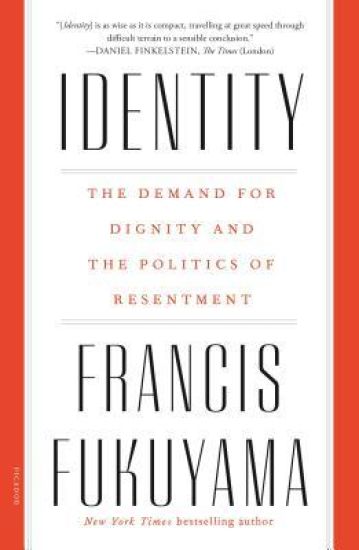
Identity: The Demand for Dignity and the Politics of Resentment
Francis Fukuyama
Picador USA
2019
nidottu
Halvin toimitettuna 20,40 €
The New York Times bestselling author of The Origins of Political Order offers a provocative examination of modern identity politics: its origins, its effects, and what it means for domestic and international affairs of state In 2014, Francis Fukuyama wrote that American institutions were in decay, as the state was progressively captured by powerful interest groups. Two years later, his predictions were borne out by the rise to power of a series of political outsiders whose economic nationalism and authoritarian tendencies threatened to destabilize the entire international order. These populist nationalists seek direct charismatic connection to "the people," who are usually defined in narrow identity terms that offer an irresistible call to an in-group and exclude large parts of the population as a whole. Demand for recognition of one's identity is a master concept that unifies much of what is going on in world politics today. The universal recognition on which liberal democracy is based has been increasingly challenged by narrower forms of recognition based on nation, religion, sect, race, ethnicity, or gender, which have resulted in anti-immigrant populism, the upsurge of politicized Islam, the fractious "identity liberalism" of college campuses, and the emergence of white nationalism. Populist nationalism, said to be rooted in economic motivation, actually springs from the demand for recognition and therefore cannot simply be satisfied by economic means. The demand for identity cannot be transcended; we must begin to shape identity in a way that supports rather than undermines democracy. Identity is an urgent and necessary book--a sharp warning that unless we forge a universal understanding of human dignity, we will doom ourselves to continuing conflict.