Kirjailija
François Mauriac
Kirjat ja teokset yhdessä paikassa: 62 kirjaa, julkaisuja vuosilta 1950–2026, suosituimpiin kuuluu Thérèse. Vertaile teosten hintoja ja tarkista saatavuus suomalaisista kirjakaupoista.
Nimi esiintyy myös muodoissa: Francois Mauriac
62 kirjaa
Kirjojen julkaisuvuodet: 1950–2026.

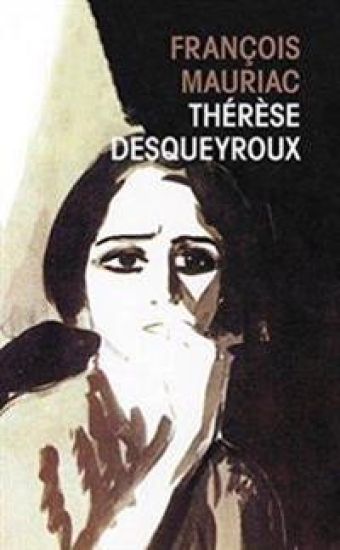
Falsifiant des ordonnances, Th r se a tent d'empoisonner Bernard, son mari, un homme respectable mais froid, but . Pour pr server sa famille du scandale, ce dernier a d pos en faveur de sa femme; Th r se a obtenu un non-lieu. Sur le chemin qui la ram ne du tribunal vers son mari, la jeune femme fait d filer sa vie, les blessures qui l'ont pouss e commettre ce crime d moniaque. Peut- tre la plus belle, la plus violente pri re romanesque de Mauriac.
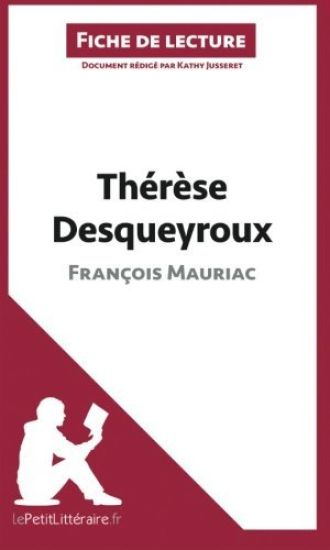
Therese Desqueyroux de Francois Mauriac
Francois Mauriac; Kathy Jusseret
le Petit litteraire
2014
nidottu
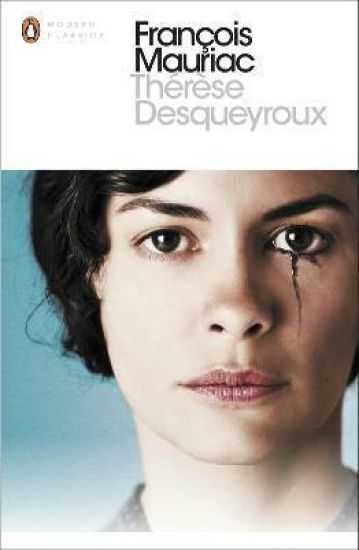
Nobel-prize winner François Mauriac's masterpiece is Thérèse Desqueyroux, the story of a complex woman trapped by provincial life. First published in 1927, this astonishing and daring novel has echoes of Madame Bovary and has recently been made into a ravishing film starring Amélie actress Audrey Tautou. Thérèse Desqueyroux walks free from court, acquitted of trying to poison her husband. Everyone knew she'd tried to do it, but family honour was more important than the truth. As she travels home to the gloomy forests of Argelouse, Thérèse looks back over the marriage that brought her nothing but stifling darkness, and wonders, has she really escaped punishment or is it only just about to begin? François Mauriac was born in Bordeaux in 1885. He left his university studies to devote himself to writing, and published a collection of poems, Les Mains jointes (Clasped Hands), in 1909. He married in 1913 and the following year was mobilized to serve in the First World War with the Auxilliary Medical Squad in Thessalonica. Mauriac's major literary breakthrough came in 1922 with a novel called Le Baiser au lepreux (A Kiss for the Leper). His most famous work, Thérèse Desqueroux, appeared in 1927 and has been made into a film twice: first in 1962, with Emmanuelle Riva in the lead role, and more recently in 2012, in a version starring Audrey Tautou. In 1933 Mauriac was elected a Member of the French Academy and in 1952 he received the Nobel Prize for Literature. He died in Paris in 1970.'A great novel ... the brilliance of its structure and the elegance of its prose never fail to take my breath away' - Beryl Bainbridge
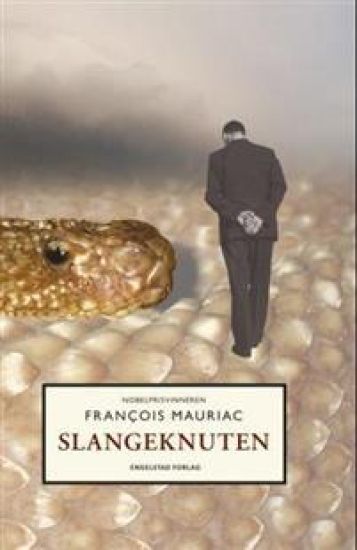
Hovedpersonen er en rik, intelligent og vellykket advokat. Som nygift mistenker han kvinnen i sitt liv for å elske en annen. Han går inn for å hevne seg. Men hatet og hevnlysten blir hans største fiende. Romanen utvikler seg til et spennende psykologisk drama - om ondskap og kjærlighetslengsel. Forfatteren fikk Nobelprisen i litteratur i 1952. Denne romanen er hans mesterverk. Den er også en av de store romanene i det 20. århundret.
Les Mains Jointes Et Autres Poèmes (1905-1923)
François Mauriac
University of Exeter Press
2005
nidottu
Les Mains jointes (1909) was the collection of poetry that launched the long career of Nobel Prize-winning author François Mauriac (1885-1970). This critical edition provides the first ever overview of the volume’s complex textual history (spanning four decades). Drawing on Mauriac’s unpublished cahiers de jeunesse, Paul Cooke challenges the author’s claim that the majority of the poems in the collection were written while he was still at school. A selection of additional poems published between 1905 and 1923 (some of which have remained hidden for nearly a century) allows the reader to situate Les Mains jointes in relation to Mauriac’s wider verse output. In his Introduction, Cooke both explores the genesis and history of Les Mains jointes and offers some analysis of Mauriac’s style as a poet.
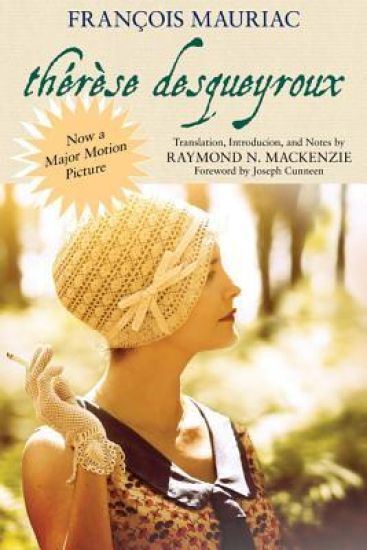
François Mauriac's masterpiece and one of the greatest Catholic novels, Thérèse Desqueyroux is the haunting story of an unhappily married young woman whose desperation drives her to thoughts of murder. Mauriac paints an unforgettable portrait of spiritual isolation and despair, but he also dramatizes the complex realities of forgiveness, grace, and redemption. Set in the countryside outside Bordeaux, in a region of overwhelming heat and sudden storms, the novel's landscape reflects the inner world of Thérèse, a figure who has captured the imaginations of readers for generations. Raymond N. MacKenzie's translation of Thérèse Desqueyroux, the first since 1947, captures the poetic lyricism of Mauriac's prose as well as the intensity of his stream-of-consciousness narrative. MacKenzie also provides notes and a biographical and interpretive introduction to help readers better appreciate the mastery of François Mauriac, who was awarded the Nobel Prize in Literature in 1952. This volume also includes a translation of "Conscience, The Divine Instinct," Mauriac's first draft of the story, never before available in English.
Fran_ois Mauriac, winner of the 1952 Nobel Prize in literature, is one of the most prominent Catholic novelists of the modern era, yet in the English speaking world he is known primarily for only one novel, 1927's ThZr_se Desqueyroux. In this new translation of two other seminal works by Mauriac, the 1930 novel What Was Lost and its theoretical basis, the 1929 essay God and Mammon, Raymond N. MacKenzie re-introduces Mauriac to the English speaking world. Featuring a scholarly introduction by MacKenzie that provides background on Mauriac's religious and artistic struggles, this new edition will delight scholars of Mauriac as well as contemporary readers previously unfamiliar with his work.
"This is Mauriac's first novel, and its appearance in English completes the collected presentation of his works here. Mauriac is the elder statesman of French literature and the Nobel prize-winner, and this small roman d'analyse, traditional in its concerns (he is the most profoundly Christian and Catholic of French writers), is also contemplative in its approach." - Kirkus Reviews
In one of Mauriac's lesser known novels, he introduces the reader to The Frontenacs, small landed gentry of the Bordeaux region on France. This story explores the special, even sacramental, character of the family bond.
Correspondance Francois Mauriac - Georges Duhamel (1919-1966): Le Croyant Et l'Humaniste Inquiet
Georges Duhamel; Francois Mauriac
Klincksieck
1997
nidottu
Ses admirateurs et ses amis retrouveront ici Francois Mauriac. Grace au succes continu de plusieurs de ses oeuvres et a la reedition de son Bloc-notes, il est souvent evoque et cite. Georges Duhamel, lui, traverse une injuste periode de relatif oubli. Si la plupart des actions et des reactions de mon pere m'etaient familieres, ces lettres m'ont decouvert un Georges Duhamel dont j'avais oublie qu'il etait a ce point admirable. Les Salavin avaient ete pour moi, au seuil de l'adolescence, une revelation. Cet homme, aux talents et aux dons si multiples, m'impressionnait. Admiration que confirma son approche lorsque la discrete et lumineuse Blanche Albane et lui furent devenus, a la suite d'un coup de foudre mutuel, des amis de mes parents. Nos deux familles se lierent alors, et nous vecumes, rue de Liege et a Valmondois, des heures merveilleuses. Bernard, Jean, Antoine et leurs cousins Gerard et le petit Zino... On imagine mal le rayonnement de cette jeunesse qui nous emerveillait, mes soeurs, mon jeune frere et moi. La musique, qu'ils maitrisaient, ajoutait a leur mystere et a nos complexes. Georges Duhamel jouait de la flute. Il mettait de surcroit sa vie en musique. Officiant avec un melange de serieux et d'humour. Decoupant le gigot et celebrant les vins qu'il servait lui-meme en faisant le tour de la table. Et l'on ne savait qui l'emportait, alors, de l'oenologie ou de la poesie. Je le connus de plus pres sous l'Occupation ou il lui arriva de me reconforter aux heures de doute. Sa generosite, son devouement, sa delicatesse, cette facon qu'il avait de s'occuper d'autrui eclatent dans ces lettres ou se repondent deux grandes voix. Entre Duhamel et Mauriac, quelle qualite d'ame et de coeur Hommes de lettres, l'un et l'autre, mais a la surface d'eux-memes. Que le docteur J.-J. Hueber soit remercie de nous avoir offert ce bonheur. Claude Mauriac
A Mauriac Reader: Including a Kiss for the Leper, Genetrix, the Desert of Love, the Knot of Vipers, and Woman of the Pharisees
François Mauriac
Farrar, Straus and Giroux
1968
nidottu
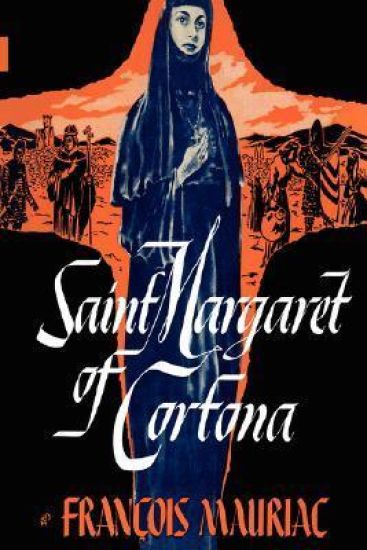
Margaret of Cortona was an Italian penitent of the Third Order of St. Francis. She was born in Laviano, near Perugia, and died in Cortona. She was canonized in 1728. She is the patron saint of the falsely accused; hoboes; homeless; insane; orphaned; mentally ill; midwives; penitents; single mothers; reformed prostitutes; third children; tramps. Saint Margaret of Cortona aroused Mauriac's interest because very little is known about her in France and she succumbed to human love and even had a child. It distracted him in a time where the Germans were all over France and he followed her wherever she led him. This is the story of one such encounter. Mauriac, Fran ois 1885-1970, French writer. Mauriac achieved success in 1922 and 1923 with Le Baiser au l preux and Genitrix (tr. of both in The Family, 1930). Generally set in or near his native Bordeaux, his novels are imbued with his profound, though nonconformist, Roman Catholicism. His characters exist in a tortured universe; nature is evil and man eternally prone to sin. His major novels are The Desert of Love (1925, tr. 1929), Th r se (1927, tr. 1928), and Vipers' Tangle (1932, tr. 1933). Other works include The Frontenacs (1933, tr. 1961) and Woman of the Pharisees (1941, tr. 1946); a life of Racine (1928) and of Jesus (1936, tr. 1937); and plays, notably Asmod e (1938, tr. 1939). Also a distinguished essayist, Mauriac became a columnist for Figaro after World War II. Collections of his articles and essays include Journal, 1932-39 (1947, partial tr. Second Thoughts, 1961), Proust's Way (1949, tr. 1950), and Cain, Where Is Your Brother? (tr. 1962). Mauriac received the 1952 Nobel Prize in Literature.