Kirjojen hintavertailu – 12 903 725 kirjaa ja 27 kauppaa

Kirjailija

Frank Dikötter

Kirjat ja teokset yhdessä paikassa: 31 kirjaa, julkaisuja vuosilta 1995–2027, suosituimpiin kuuluu Red Dawn Over China. Vertaile teosten hintoja ja tarkista saatavuus suomalaisista kirjakaupoista.

Nimi esiintyy myös muodoissa: Frank Dikotter

31 kirjaa

Kirjojen julkaisuvuodet: 1995–2027.

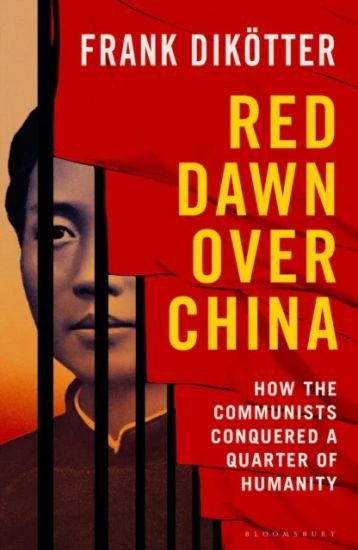
Red Dawn Over China

Red Dawn Over China

Frank Dikötter

BLOOMSBURY PUBLISHING PLC
2027
nidottu
A FINANCIAL TIMES HIGHLIGHT FOR 2026 'The most important reappraisal of modern China to appear in years' PETER FRANKOPAN, author of The Silk Roads and The Earth Transformed From renowned, prize-winning historian Frank Dikötter – ‘the historian of China’ (Spectator) – a commanding new history of China’s path to Communism, brought to the people at the barrel of a gun. The history of modern China has long been portrayed as a tale of Communists fighting in the hills for freedom, gradually gaining popular support by taking land from the rich and giving it to the poor. Drawing on a wealth of archival evidence, Red Dawn Over China reveals how unlikely the Party's victory actually was, had it not been for financial and military support from the Soviet Union. Established in 1921 under the direct guidance of Moscow, for the best part of a decade the Communist Party left a trail of destruction, besieging towns and plundering the countryside. When the Communists managed to hold territory, they reduced the villagers to a state of servitude, undermining belief in their cause as well as the local economy. By 1936 they had the same popular appeal as an obscure religious sect. A brutal war of occupation by Japan allowed them to survive far behind enemy lines. After Soviet troops invaded Manchuria in 1945 and provided more money and munitions, the Communists at long last prevailed through a pitiless war of attrition, driven by an unflinching will to conquer at all costs. In this riveting tale told with great narrative verve, Frank Dikötter reveals how thirteen delegates gathered in a dusty room in 1921 ended up raising the red flag over the Forbidden City in 1949, forever altering the course of history for a quarter of humanity and shaping the world as we know it today. Praise for Frank Dikötter and the People's Trilogy: 'Harrowing and brilliant' Ben Macintyre 'Gripping and masterful' Simon Sebag Montefiore 'One of the few books that anyone who wants to understand the twentieth century simply must read' New Statesman

Red Dawn Over China

Red Dawn Over China

Frank Dikotter

Bloomsbury Publishing (UK)
2026
nidottu

Halvin toimitettuna 28,60 €

From renowned, prize-winning historian Frank Dikotter - 'the historian of China' (Spectator) - a commanding new history of China's path to Communism, brought to the people at the barrel of a gun
Red Dawn Over China

Red Dawn Over China

Frank Dikötter

BLOOMSBURY PUBLISHING PLC
2026
sidottu

Halvin toimitettuna 28,40 €

The history of modern China has long been portrayed as a tale of Communists fighting in the hills for freedom, gradually gaining popular support by taking land from the rich and giving it to the poor. Drawing on a wealth of archival evidence, Red Dawn Over China reveals how unlikely the Party's victory actually was, had it not been for financial and military support from the Soviet Union. Established in 1921 under the direct guidance of Moscow, for the best part of a decade the Communist Party left a trail of destruction, besieging towns and plundering the countryside. When the Communists managed to hold territory, they reduced the villagers to a state of servitude, undermining belief in their cause as well as the local economy. By 1936 they had the same popular appeal as an obscure religious sect. A brutal war of occupation by Japan allowed them to survive far behind enemy lines. After Soviet troops invaded Manchuria in 1945 and provided more money and munitions, the Communists at long last prevailed through a pitiless war of attrition, driven by an unflinching will to conquer at all costs. In this riveting tale told with great narrative verve, Frank Dikötter reveals how thirteen delegates gathered in a dusty room in 1921 ended up raising the red flag over the Forbidden City in 1949, forever altering the course of history for a quarter of humanity and shaping the world as we know it today. Praise for Frank Dikötter and the People's Trilogy‘Harrowing and brilliant’ BEN MACINTYRE‘The historian of China’ SPECTATOR‘One of the few books that anyone who wants to understand the twentieth century simply must read’ NEW STATESMAN
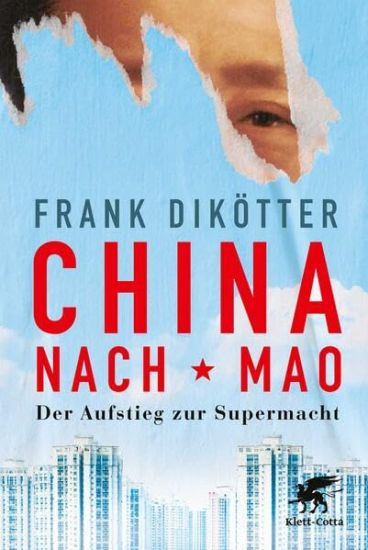
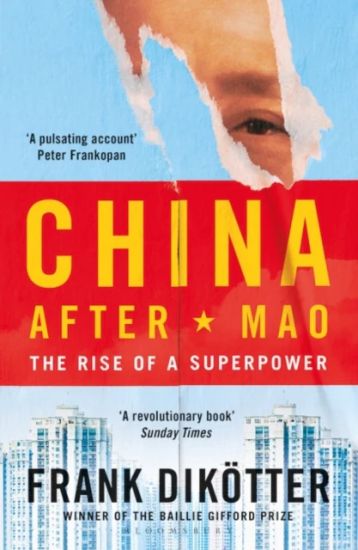
China After Mao

China After Mao

Frank Dikötter

BLOOMSBURY PUBLISHING PLC
2023
nidottu

Halvin toimitettuna 18,70 €

'A revolutionary book' Sunday Times'A pulsating account' Peter Frankopan*A SPECTATOR AND NEW STATESMAN BOOK OF THE YEAR*How did the People’s Republic of China transform from a backwater economy in the 1970s into the world superpower of today? Drawing on hundreds of previously unseen archival documents, award-winning historian Frank Dikötter recasts our understanding of an era that both the regime and foreign admirers alike celebrate as an economic miracle. In a fascinating tale spanning five decades, he examines the country’s economic transformation alongside the regime’s determined suppression of dissent, its increasing hostility towards the West and its development into a thoroughly entrenched dictatorship led by Xi Jinping – one equipped with a sprawling security apparatus and the most sophisticated surveillance system in the world.‘Essential reading for anyone who wants to know what has shaped today’s China and what the Chinese Communist Party’s choices mean for the rest of the world’ New Statesman‘A blow-by-blow account of the uneven, reactive and sometimes chaotic course of economic policies . . . An important corrective’ Financial Times‘Dikötter has been mining Chinese primary sources for decades . . . A clear-eyed and detailed account’ Observer
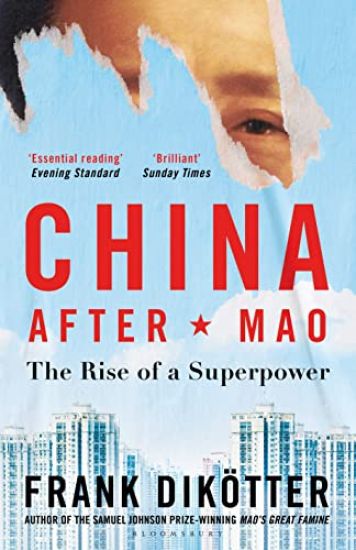
China After Mao: The Rise of a Superpower

China After Mao: The Rise of a Superpower

Frank Dikötter

BLOOMSBURY PUBLISHING
2022
sidottu
"A blow-by-blow account ... An important corrective to the conventional view of China's rise."--Financial TimesFrom internationally renowned historian Frank Dik tter, winner of the Samuel Johnson Prize, a myth--shattering history of China from the death of Chairman Mao to Xi Jinping. Through decades of direct experience of the People's Republic combined with extraordinary access to hundreds of hitherto unseen documents in communist party archives, the author of The People's Trilogy offers a riveting account of China's rise from the disaster of the Cultural Revolution. He takes us inside the country's unprecedented four-decade economic transformation--from rural villages to industrial metropoles and elite party conclaves--that vaulted the nation from 126th -largest economy in the world to second -largest. A historian at the pinnacle of his field, Dik tter challenges much of what we think we know about how this happened. Casting aside the image of a society marching unwaveringly toward growth, in lockstep to the beat of the party drum, he recounts instead a fascinating tale of contradictions, illusions, and palace intrigue, of disasters narrowly averted, shadow banking, anti-corruption purges, and extreme state wealth existing alongside everyday poverty. He examines China's navigation of the 2008 financial crash, its increasing hostility towards perceived Western interference, and its development into a thoroughly entrenched dictatorship with a sprawling security apparatus and the most sophisticated surveillance system in the world. As this magisterial book makes clear, the communist party's goal was never to join the democratic world, but to resist it--and ultimately defeat it.
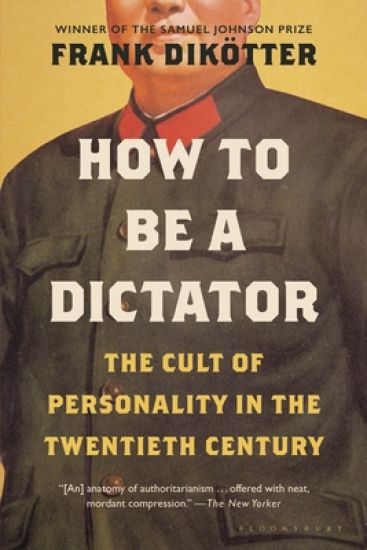
How to Be a Dictator: The Cult of Personality in the Twentieth Century

How to Be a Dictator: The Cult of Personality in the Twentieth Century

Frank Dikötter

BLOOMSBURY PUBLISHING
2022
nidottu

Halvin toimitettuna 21,10 €

From the Samuel Johnson Prize-winning author of China After Mao, a sweeping and timely study of twentieth-century dictators and the development of the modern cult of personality. No dictator can rule through fear and violence alone. Naked power can be grabbed and held temporarily, but it never suffices in the long term. In the twentieth century, as new technologies allowed leaders to place their image and voice directly into their citizens' homes, a new phenomenon appeared where dictators exploited the cult of personality to achieve the illusion of popular approval without ever having to resort to elections. In How to Be a Dictator, Frank Dik tter examines the cults and propaganda surrounding twentieth-century dictators, from Hitler and Stalin to Mao Zedong and Kim Il Sung. These men were the founders of modern dictatorships, and they learned from each other and from history to build their regimes and maintain their public images. Their dictatorships, in turn, have influenced leaders in the twenty-first century, including Vladimir Putin, Viktor Orb n, and Xi Jinping. Using a breadth of archival research and his characteristic in-depth analysis, Dik tter offers a stunning portrait of dictatorship, a guide to the cult of personality, and a map for exposing the lies dictators tell to build and maintain their regimes.
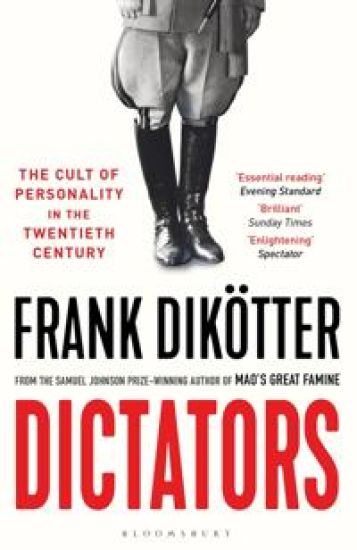
Dictators

Dictators

Frank Dikotter

Bloomsbury Publishing Ltd.
2020
pokkari

Halvin toimitettuna 20,90 €

A New Statesman, Financial Times and Economist Book of the Year 'Brilliant' NEW STATESMAN, BOOKS OF THE YEAR 'Enlightening and a good read' SPECTATOR 'Moving and perceptive' NEW STATESMAN Mussolini, Hitler, Stalin, Mao Zedong, Kim Il-sung, Ceausescu, Mengistu of Ethiopia and Duvalier of Haiti. No dictator can rule through fear and violence alone. Naked power can be grabbed and held temporarily, but it never suffices in the long term. A tyrant who can compel his own people to acclaim him will last longer. The paradox of the modern dictator is that he must create the illusion of popular support. Throughout the twentieth century, hundreds of millions of people were condemned to enthusiasm, obliged to hail their leaders even as they were herded down the road to serfdom. In How to Be a Dictator, Frank Dikoetter returns to eight of the most chillingly effective personality cults of the twentieth century. From carefully choreographed parades to the deliberate cultivation of a shroud of mystery through iron censorship, these dictators ceaselessly worked on their own image and encouraged the population at large to glorify them. At a time when democracy is in retreat, are we seeing a revival of the same techniques among some of today's world leaders? This timely study, told with great narrative verve, examines how a cult takes hold, grows, and sustains itself. It places the cult of personality where it belongs, at the very heart of tyranny.
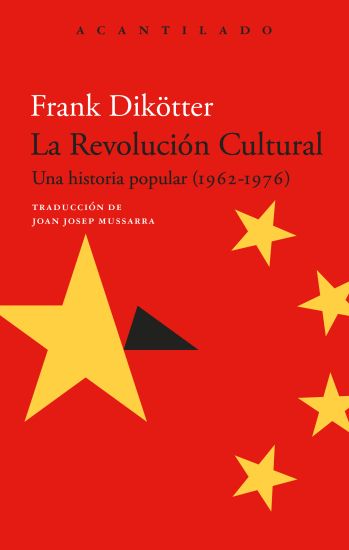
The Cultural Revolution: A People's History, 1962--1976

The Cultural Revolution: A People's History, 1962--1976

Frank Dikötter

BLOOMSBURY PUBLISHING PLC
2017
nidottu
The concluding volume--following Mao's Great Famine and The Tragedy of Liberation--in Frank Dik tter's award-winning trilogy chronicling the Communist revolution in China. After the economic disaster of the Great Leap Forward that claimed tens of millions of lives from 1958-1962, an aging Mao Zedong launched an ambitious scheme to shore up his reputation and eliminate those he viewed as a threat to his legacy. The Cultural Revolution's goal was to purge the country of bourgeois, capitalistic elements he claimed were threatening genuine communist ideology. Young students formed the Red Guards, vowing to defend the Chairman to the death, but soon rival factions started fighting each other in the streets with semiautomatic weapons in the name of revolutionary purity. As the country descended into chaos, the military intervened, turning China into a garrison state marked by bloody purges that crushed as many as one in fifty people. The Cultural Revolution: A People's History, 1962-1976 draws for the first time on hundreds of previously classified party documents, from secret police reports to unexpurgated versions of leadership speeches. After the army itself fell victim to the Cultural Revolution, ordinary people used the political chaos to resurrect the market and hollow out the party's ideology. By showing how economic reform from below was an unintended consequence of a decade of violent purges and entrenched fear, The Cultural Revolution casts China's most tumultuous era in a wholly new light.
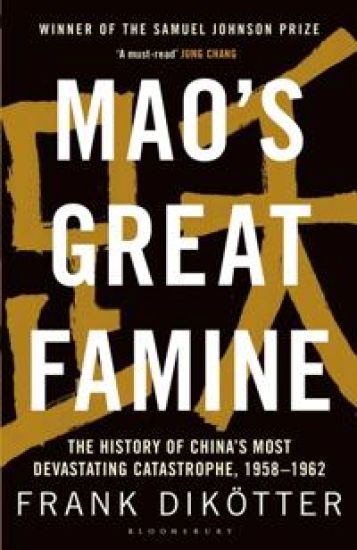
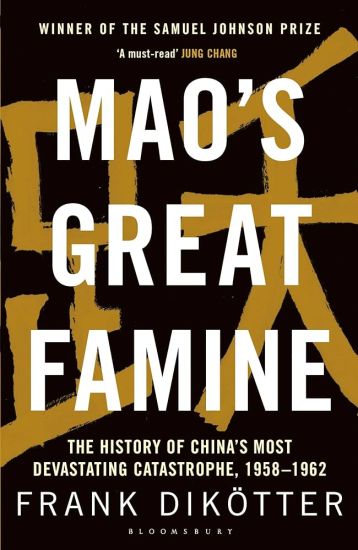
Mao's Great Famine

Mao's Great Famine

Frank Dikötter

Bloomsbury Publishing PLC
2017
nidottu

Halvin toimitettuna 22,00 €

WINNER OF THE BAILLIE GIFFORD PRIZE ‘A gripping and masterful portrait of the brutal court of Mao, based on new research but also written with great narrative verve' Simon Sebag Montefiore'Harrowing and brilliant' Ben Macintyre‘A critical contribution to Chinese history' Wall Street JournalBetween 1958 and 1962, 45 million Chinese people were worked, starved or beaten to death. Mao Zedong threw his country into a frenzy with the Great Leap Forward, an attempt to catch up with and overtake the West in less than fifteen years. It led to one of the greatest catastrophes the world has ever known. Dikotter's extraordinary research within Chinese archives brings together for the first time what happened in the corridors of power with the everyday experiences of ordinary people, giving voice to the dead and disenfranchised. This groundbreaking account definitively recasts the history of the People's Republic of China.
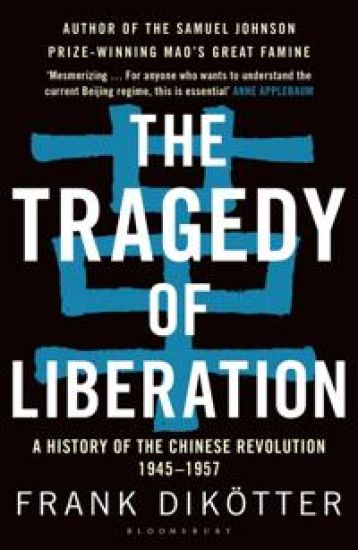
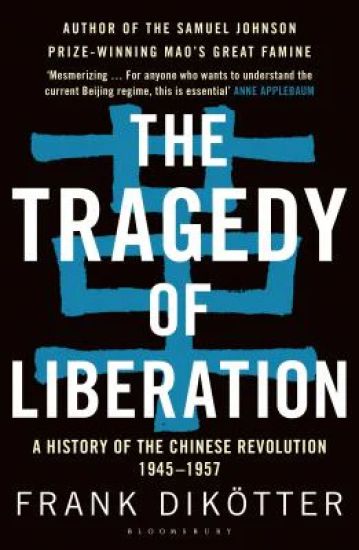
The Tragedy of Liberation

The Tragedy of Liberation

Frank Dikötter

Bloomsbury Publishing PLC
2017
nidottu

Halvin toimitettuna 22,00 €

The second installment in 'The People's Trilogy', the groundbreaking series from Samuel Johnson Prize-winning author Frank Dikötter‘For anyone who wants to understand the current Beijing regime, this is essential background reading’ Anne Applebaum‘Essential reading for all who want to understand the darkness that lies at the heart of one of the world's most important revolutions’ Guardian‘Dikötter performs here a tremendous service by making legible the hugely controversial origins of the present Chinese political order’ Timothy SnyderIn 1949 Mao Zedong hoisted the red flag over Beijing’s Forbidden City. Instead of liberating the country, the communists destroyed the old order and replaced it with a repressive system that would dominate every aspect of Chinese life. In an epic of revolution and violence which draws on newly opened party archives, interviews and memoirs, Frank Dikötter interweaves the stories of millions of ordinary people with the brutal politics of Mao’s court. A gripping account of how people from all walks of life were caught up in a tragedy that sent at least five million civilians to their deaths.
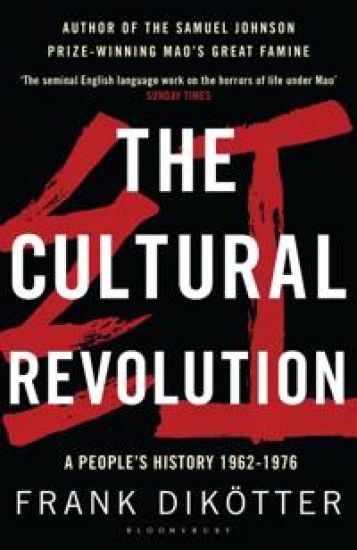
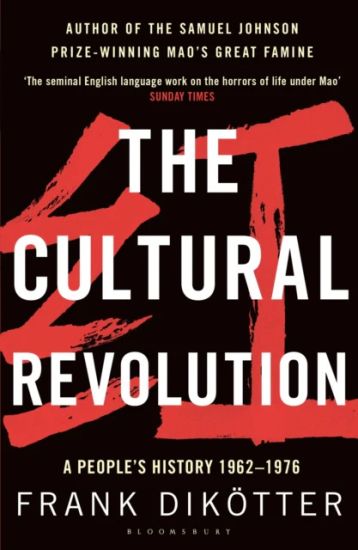
The Cultural Revolution

The Cultural Revolution

Frank Dikötter

Bloomsbury Publishing PLC
2017
nidottu

Halvin toimitettuna 20,30 €

Acclaimed by the Daily Mail as 'definitive and harrowing', this is the final volume of ‘The People’s Trilogy', begun by the Samuel Johnson prize-winning Mao's Great Famine.'The seminal English language work on the subject’ Sunday Times‘A major contribution to scholarship on modern China, one that is unequalled, certainly in the English language … both revealing and rewarding reading – for specialists and non-specialists alike' Literary ReviewAfter the economic disaster of the Great Leap Forward that claimed tens of millions of lives between 1958 and 1962, an ageing Mao launched an ambitious scheme to shore up his reputation and eliminate those he viewed as a threat to his legacy. The stated goal of the Cultural Revolution was to purge the country of bourgeois, capitalist elements he claimed were threatening genuine communist ideology. But the Chairman also used the Cultural Revolution to turn on his colleagues, some of them longstanding comrades-in-arms, subjecting them to public humiliation, imprisonment and torture. Young students formed Red Guards, vowing to defend the Chairman to the death, but soon rival factions started fighting each other in the streets with semi-automatic weapons in the name of revolutionary purity. As the country descended into chaos, the military intervened, turning China into a garrison state marked by bloody purges that crushed as many as one in fifty people. When the army itself fell victim to the Cultural Revolution, ordinary people used the political chaos to resurrect the market and hollow out the party's ideology. In short, they buried Maoism. In-depth interviews and archival research at last give voice to the people and the complex choices they faced, undermining the picture of conformity that is often understood to have characterised the last years of Mao's regime. By demonstrating that decollectivisation from below was an unintended consequence of a decade of violent purges and entrenched fear, Frank Dikötter casts China's most tumultuous era in a wholly new light. Written with unprecedented access to previously classified party documents from secret police reports to unexpurgated versions of leadership speeches, this third chapter in Frank Dikötter's extraordinarily lucid and ground-breaking 'People's Trilogy' is a devastating reassessment of the history of the People's Republic of China.