Kirjojen hintavertailu – 12 874 711 kirjaa ja 26 kauppaa

Kirjailija

Frank Furedi

Kirjat ja teokset yhdessä paikassa: 35 kirjaa, julkaisuja vuosilta 1989–2026, suosituimpiin kuuluu The War Against the Past. Vertaile teosten hintoja ja tarkista saatavuus suomalaisista kirjakaupoista.

Nimi esiintyy myös muodoissa: Frank Füredi

35 kirjaa

Kirjojen julkaisuvuodet: 1989–2026.

The War Against the Past

The War Against the Past

Frank Furedi

Polity Press
2026
nidottu
A war is being waged against the Past. Whether it's toppling statues, decolonising the curriculum or erasing terms from our vocabulary, a cultural crusade is underway designed to render the past toxic. It is condemned as enemy territory and has become the target of venomous hate. What is at stake in provoking such a strong sense of societal shame towards Western history? In this book, Frank Furedi mounts a fierce defence of the past and calls for a fight back against the delegitimization of its ideals and accomplishments. Casting the past as a story of shame has become a taken-for granted outlook permeating the educational and cultural life of western society from the top down. Its advocates may see it as a cultural imperative, but society that loses touch with its past will face a permanent crisis of identity. Squandering the wisdom provided by our historical inheritance means betraying humanity's positive achievements. Challenging this great betrayal, Furedi argues, is one of the most important battles of our time.
In Defence of Populism

In Defence of Populism

Frank Furedi

Polity Press
2026
sidottu
"Populist" is now most commonly used as a term of abuse. Populists, we are repeatedly told, are xenophobic ignoramuses offering irrational, emotive solutions to complex problems. But is this true? Frank Furedi argues that this is a self-serving narrative that owes more to the desire of elites to protect their own power and interests than it does to the truth. The widespread disdain expressed towards populism in the media and by many academics is in fact poorly-concealed contempt towards the idea of popular sovereignty and democratic decision-making. Populism is not equivalent to any specific ideology, as populist politicians vary greatly in their substantive views, but it is rather a broad disposition towards public life that stresses the value of giving the ordinary citizen a genuine voice in political decision-making. Attacks on "populism" most commonly reveal the desire of those who run our institutions to keep real authority in the hands of unaccountable elites who veil their power under the guise of "expertise". This bracing defence of basic democratic values by one of our most fearless polemicists should be read by anyone who mistakes the complacent assurances of our elite for the wisdom of our betters.
The War Against the Past

The War Against the Past

Frank Füredi

JOHN WILEY AND SONS LTD
2024
sidottu
A war is being waged against the Past. Whether it’s toppling statues, decolonising the curriculum or erasing terms from our vocabulary, a cultural crusade is underway designed to render the past toxic. It is condemned as enemy territory and has become the target of venomous hate. What is at stake in provoking such a strong sense of societal shame towards Western history? In this book, Frank Furedi mounts a fierce defence of the past and calls for a fight back against the delegitimization of its ideals and accomplishments. Casting the past as a story of shame has become a taken-for granted outlook permeating the educational and cultural life of western society from the top down. Its advocates may see it as a cultural imperative, but a society that loses touch with its past will face a permanent crisis of identity. Squandering the wisdom provided by our historical inheritance means betraying humanity’s positive achievements. Challenging this great betrayal, Furedi argues, is one of the most important battles of our time.

The Road to Ukraine

The Road to Ukraine

Frank Furedi

De Gruyter
2022
isokokoinen pokkari
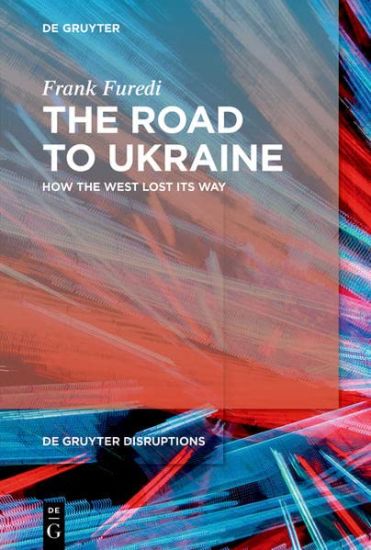
Russia’s invasion of Ukraine is the latest chapter in a series of events that have their origins in World War One. The difficult existential questions that emerged before and during this conflict still remain unresolved. Contrary to the claim that wars are not supposed to happen in Europe or that we live in the era of the End of History, the experience of Ukraine highlights the salience of the spell of the past. The failure of the West to take its past seriously has left it confused and unprepared to deal with the current crisis. Unexpectedly fashionable claims about the irrelevance of borders and of nation states have been exposed as shallow myths. The author argues that the West’s self-inflicted condition of historical amnesia has encouraged it to disregard the salience of geo-political realities. Suddenly the once fashionable claims that made up the virtues of globalisation appear threadbare. This problem, which was already evident during the global Covid pandemic has reached a crisis point in the battlefield of Ukraine. History has had its revenge on a culture that believes that what happened in the past no longer matters. The Road To Ukraine: How the West Lost Its Way argues that overcoming the state of historical amnesia is the precondition for the restoration of global solidarity.
The Road to Ukraine

The Road to Ukraine

Frank Furedi

De Gruyter
2022
sidottu
Russia’s invasion of Ukraine is the latest chapter in a series of events that have their origins in World War One. The difficult existential questions that emerged before and during this conflict still remain unresolved. Contrary to the claim that wars are not supposed to happen in Europe or that we live in the era of the End of History, the experience of Ukraine highlights the salience of the spell of the past. The failure of the West to take its past seriously has left it confused and unprepared to deal with the current crisis. Unexpectedly fashionable claims about the irrelevance of borders and of nation states have been exposed as shallow myths. The author argues that the West’s self-inflicted condition of historical amnesia has encouraged it to disregard the salience of geo-political realities. Suddenly the once fashionable claims that made up the virtues of globalisation appear threadbare. This problem, which was already evident during the global Covid pandemic has reached a crisis point in the battlefield of Ukraine. History has had its revenge on a culture that believes that what happened in the past no longer matters. The Road To Ukraine: How the West Lost Its Way argues that overcoming the state of historical amnesia is the precondition for the restoration of global solidarity.
Rajat merkitsevät

Rajat merkitsevät

Frank Furedi

Suomalaisuuden liitto
2022
nidottu
Rajat merkitsevät -teos puolustaa nimensä mukaisesti rajojen ja rajanvedon merkitystä ihmiselämälle. Se lähtee liikkeelle yleisestä havainnosta, jonka mukaan länsimaiset yhteiskunnat ovat vieraantuneet rajoista ja rajan vetämisestä, mikä näkyy inhimillistä elämää merkityksellisesti jäsentävien perustavanlaatuisten erotteluiden ja rajojen kyseenalaistamisena. Teoksessa kuvataan kulttuurisiksi ihanteiksi nousseita rajattomuutta, avoimuutta ja siihen läheisesti liittyvää arvottamisen kieltämistä, ja analysoidaan näiden poliittisia, kulttuurisia, yhteiskunnallisia ja yksilöllisiä vaikutuksia. Rajat ja rajan vetäminen osoittautuvat tärkeiksi tekijöiksi niin kansanvaltaisen ajattelutavan ylläpitämisen kuin yksilön identiteetin kehityksen kannalta.
100 Years of Identity Crisis

100 Years of Identity Crisis

Frank Furedi

De Gruyter
2021
sidottu
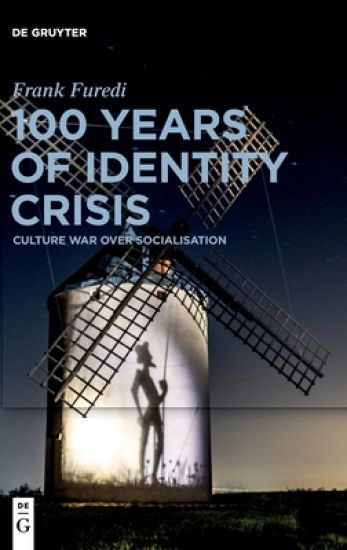
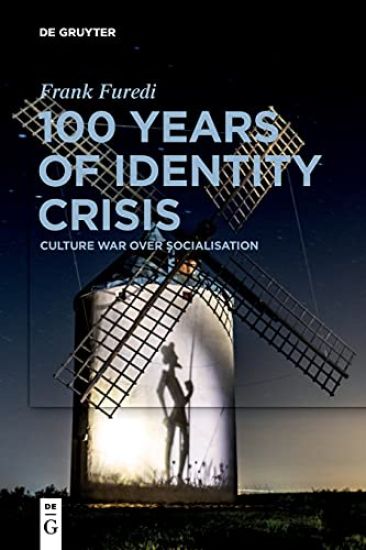
The concept of Identity Crisis came into usage in the 1940s and it has continued to dominate the cultural zeitgeist ever since. In his exploration of the historical origins of this development, Frank Furedi argues that the principal driver of the ‘crisis of identity’ was and continues to be the conflict surrounding the socialisation of young people. In turn, the politicisation of this conflict provides a terrain on which the Culture Wars and the politicisation of identity can flourish. Through exploring the interaction between the problems of socialisation and identity, this study offers a unique account of the origins and rise of the Culture Wars.
100 Years of Identity Crisis

100 Years of Identity Crisis

Frank Furedi

De Gruyter
2021
isokokoinen pokkari
The concept of Identity Crisis came into usage in the 1940s and it has continued to dominate the cultural zeitgeist ever since. In his exploration of the historical origins of this development, Frank Furedi argues that the principal driver of the ‘crisis of identity’ was and continues to be the conflict surrounding the socialisation of young people. In turn, the politicisation of this conflict provides a terrain on which the Culture Wars and the politicisation of identity can flourish. Through exploring the interaction between the problems of socialisation and identity, this study offers a unique account of the origins and rise of the Culture Wars.
Democracy Under Siege

Democracy Under Siege

Frank Furedi

John Hunt Publishing
2020
nidottu
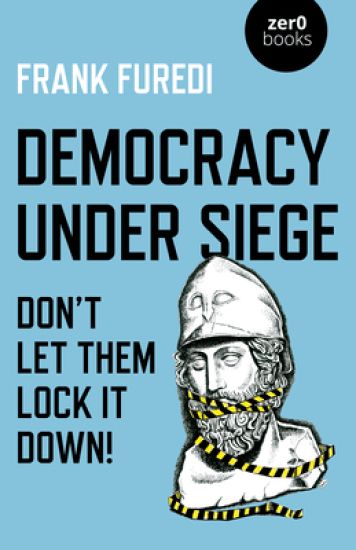
Frank Furedi examines the frequent claim that democracy is a means to an end rather than an important value in and of itself. The prevalence of this sentiment in the current era is not surprising, given that the normative foundation for democracy is fragile, and there is little cultural valuation for this outlook. Until recently, virtually every serious commentator paid lip-service to democracy. However, in recent times the classical elitist disdain for democracy and for the moral and intellectual capacity of the electorate has acquired a powerful influence over public life. Democracy Under Siege outlines the long history of anti-democratic thought, explains why hostility to democracy has gained momentum in the current era, and offers a positive affirmation of the principle and the value of democracy.
Iconoclasm, Identity Politics and the Erasure of History

Iconoclasm, Identity Politics and the Erasure of History

Alexander Adams; Frank Furedi

Imprint Academic
2020
pokkari
Iconoclasm, Identity Politics and the Erasure of History surveys the origins, uses and manifestations of iconoclasm in history, art and public culture. It examines the various causes and uses of image/property defacement as a tool of political, national, religious and artistic process. This is one of the first books to examine the outbreak of iconoclasm in Europe and North America in the summer of 2020 in the context of previous outbreaks, and it examines the implications of iconoclasm as a form of control, censorship and expression.
Why Borders Matter

Why Borders Matter

Frank Furedi

Routledge
2020
sidottu
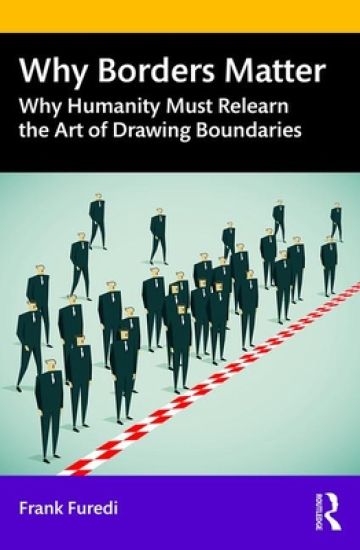
Western society has become estranged from the borders and social boundaries that have for centuries given meaning to human experience. This book argues that the controversy surrounding mass migration and physical borders runs in parallel and is closely connected to the debates surrounding the symbolic boundaries people need to guide on the issues of everyday life. Numerous commentators claim that borders have become irrelevant in the age of mass migration and globalisation. Some go so far as to argue for ‘No Borders’. And it is not merely the boundaries that divide nations that are under attack! The traditional boundaries that separate adults from children, or men from women, or humans from animals, or citizens and non-citizens, or the private from the public sphere are often condemned as arbitrary, unnatural, and even unjust. Paradoxically, the attempt to alter or abolish conventional boundaries coexists with the imperative of constructing new ones. No-Border campaigners call for safe spaces. Opponents of cultural appropriation demand the policing of language and advocates of identity politics are busy building boundaries to keep out would-be encroachers on their identity. Furedi argues that the key driver of the confusion surrounding borders and boundaries is the difficulty that society has in endowing experience with meaning. The most striking symptom of this trend is the cultural devaluation of the act of judgment, which has led to a loss of clarity about the moral boundaries in everyday life. The infantilisation of adults that runs in tandem with the adultification of children offers a striking example of the consequence of non-judgmentalism. Written in a clear and direct style, this book will appeal to students and scholars in cultural sociology, sociology of knowledge, philosophy, political theory, and cultural studies.
Why Borders Matter

Why Borders Matter

Frank Furedi

Routledge
2020
nidottu
Western society has become estranged from the borders and social boundaries that have for centuries given meaning to human experience. This book argues that the controversy surrounding mass migration and physical borders runs in parallel and is closely connected to the debates surrounding the symbolic boundaries people need to guide on the issues of everyday life. Numerous commentators claim that borders have become irrelevant in the age of mass migration and globalisation. Some go so far as to argue for ‘No Borders’. And it is not merely the boundaries that divide nations that are under attack! The traditional boundaries that separate adults from children, or men from women, or humans from animals, or citizens and non-citizens, or the private from the public sphere are often condemned as arbitrary, unnatural, and even unjust. Paradoxically, the attempt to alter or abolish conventional boundaries coexists with the imperative of constructing new ones. No-Border campaigners call for safe spaces. Opponents of cultural appropriation demand the policing of language and advocates of identity politics are busy building boundaries to keep out would-be encroachers on their identity. Furedi argues that the key driver of the confusion surrounding borders and boundaries is the difficulty that society has in endowing experience with meaning. The most striking symptom of this trend is the cultural devaluation of the act of judgment, which has led to a loss of clarity about the moral boundaries in everyday life. The infantilisation of adults that runs in tandem with the adultification of children offers a striking example of the consequence of non-judgmentalism. Written in a clear and direct style, this book will appeal to students and scholars in cultural sociology, sociology of knowledge, philosophy, political theory, and cultural studies.
How Fear Works

How Fear Works

Frank Furedi

Bloomsbury Continuum
2019
nidottu

Halvin toimitettuna 19,00 €

Frank Furedi returns to the theme of Fear in our society and culture. In 1997, Frank Furedi published a book called Culture of Fear. It was widely acclaimed as perceptive and prophetic. Now Furedi returns to his original theme, as most of what he predicted has come true. In How Fear Works, Furedi seeks to explain two interrelated themes: why has fear acquired such a morally commanding status in society today and how has the way we fear today changed from the way that it was experienced in the past? Furedi argues that one of the main drivers of the culture of fear is unravelling of moral authority. Fear appears to provide a provisional solution to moral uncertainty and is for that reason embraced by a variety of interests, parties and individuals. Furedi predicts that until society finds a more positive orientation towards uncertainty the politicisation of fear will flourish. Society is continually bombarded with the message that the threats it faces are incalculable and cannot be managed or contained. The ascendancy of this outlook has been paralleled by the cultivation of helplessness and passivity – all this has heightened people’s sense of powerlessness and anxiety. As a consequence we are constantly searching for new forms of security, both physical and ontological. What are the drivers of fear, what is the role of the media in its promotion, and who actually benefits from this culture of fear? These are some of the issues Furedi tackles to explain the current predicament. He believes that through understanding how fear works, we can encourage attitudes that will help bring about a less fearful future.
Populism and the European Culture Wars
Concern and hostility towards populism has become a distinctive feature of contemporary political culture. In Europe such concerns are frequently directed at Eurosceptics, whose opposition to the European Union is often portrayed as a cultural crime. Ancient anti-democratic claims about the gullibility, ignorance and irrationality of the masses are frequently recycled through the anti-populist condemnation of people who vote the wrong way. This book argues that the current outburst of anti-populist anxiety is symptomatic of a loss of faith in democracy and in the ability of the demos to assume the role of responsible citizens. Distrust of the people and of parliamentary sovereignty is reinforced by the concern that, on its own, liberal democracy lacks the normative foundation to inspire the loyalty and affection of ordinary citizens. Through focusing on the conflict between the European Union’s Commission and the Government of Hungary, this book explores contrasting attitudes towards national sovereignty, popular sovereignty and the question of tradition and the past as the main drivers of the culture war in Europe.
What’s Happened to the University
The radical transformation that universities are undergoing today is no less far-reaching than the upheavals that it experienced in the 1960s. However today, when almost 50 per cent of young people participate in higher education, what occurs in universities matters directly to the whole of society. On both sides of the Atlantic curious and disturbing events on campuses has become a matter of concern not just for academics but also for the general public. What is one to make of the growing trend of banning speakers? What’s the meaning of trigger warnings, cultural appropriation, micro-aggression or safe spaces? And why are some students going around arguing that academic freedom is no big deal? What's Happened To The University? offers an answer to the questions of why campus culture is undergoing such a dramatic transformation and why the term moral quarantine refers to the infantilising project of insulating students from offence and a variety of moral harms.
What’s Happened To The University?
The radical transformation that universities are undergoing today is no less far-reaching than the upheavals that it experienced in the 1960s. However today, when almost 50 per cent of young people participate in higher education, what occurs in universities matters directly to the whole of society. On both sides of the Atlantic curious and disturbing events on campuses has become a matter of concern not just for academics but also for the general public. What is one to make of the growing trend of banning speakers? What’s the meaning of trigger warnings, cultural appropriation, micro-aggression or safe spaces? And why are some students going around arguing that academic freedom is no big deal? What's Happened To The University? offers an answer to the questions of why campus culture is undergoing such a dramatic transformation and why the term moral quarantine refers to the infantilising project of insulating students from offence and a variety of moral harms.
Authority

Authority

Frank Furedi

Cambridge University Press
2013
sidottu
Concern with authority is as old as human history itself. Eve's sin was to challenge the authority of God by disobeying his rule. Frank Furedi explores how authority was contested in ancient Greece and given a powerful meaning in Imperial Rome. Debates about religious and secular authority dominated Europe through the Middle Ages and the Reformation. The modern world attempted to develop new foundations for authority – democratic consent, public opinion, science – yet Furedi shows that this problem has remained unresolved, arguing that today the authority of authority is questioned. This historical sociology of authority seeks to explain how the contemporary problems of mistrust and the loss of legitimacy of many institutions are informed by the previous attempts to solve the problem of authority. It argues that the key pioneers of the social sciences (Marx, Durkheim, Simmel, Tonnies and especially Weber) regarded this question as one of the principal challenges facing society.
Authority

Authority

Frank Furedi

Cambridge University Press
2013
pokkari
Concern with authority is as old as human history itself. Eve's sin was to challenge the authority of God by disobeying his rule. Frank Furedi explores how authority was contested in ancient Greece and given a powerful meaning in Imperial Rome. Debates about religious and secular authority dominated Europe through the Middle Ages and the Reformation. The modern world attempted to develop new foundations for authority – democratic consent, public opinion, science – yet Furedi shows that this problem has remained unresolved, arguing that today the authority of authority is questioned. This historical sociology of authority seeks to explain how the contemporary problems of mistrust and the loss of legitimacy of many institutions are informed by the previous attempts to solve the problem of authority. It argues that the key pioneers of the social sciences (Marx, Durkheim, Simmel, Tonnies and especially Weber) regarded this question as one of the principal challenges facing society.