Kirjojen hintavertailu – 12 903 725 kirjaa ja 27 kauppaa

Kirjailija

Frank R. Spellman

Kirjat ja teokset yhdessä paikassa: 149 kirjaa, julkaisuja vuosilta 1997–2026, suosituimpiin kuuluu The Science of Fluid Mechanics. Vertaile teosten hintoja ja tarkista saatavuus suomalaisista kirjakaupoista.

149 kirjaa

Kirjojen julkaisuvuodet: 1997–2026.

Energy Infrastructure Protection and Homeland Security
In the post-9/11 world, the possibility of energy infrastructure-terrorism—the use of weapons to cause devastating damage to the energy industrial sector and cause cascading effects—is very real. Energy Infrastructure Protection and Homeland Security, Second Edition, is a reference for those involved with our energy infrastructure who want quick answers to complicated questions. It is intended to help employers and employees handle security threats they must be prepared to meet on a daily basis. This updated second edition focuses on all components of the energy sector, including sites involved in producing, refining, transporting, generating, transmitting, conserving, building, distributing, maintaining, and controlling energy systems and system components. It presents common-sense methodologies in a straightforward manner and is accessible to those who have no experience with energy infrastructure or homeland security. Through this text, readers gain an understanding of the challenges of domestic preparedness and the immediate need for heightened awareness regarding the present threats faced by the energy sector as a potential terrorist target. This book provides knowledge of security principles and measures that can be implemented, adding a critical component not only to one's professional knowledge but also giving one the tools needed to combat terrorism.
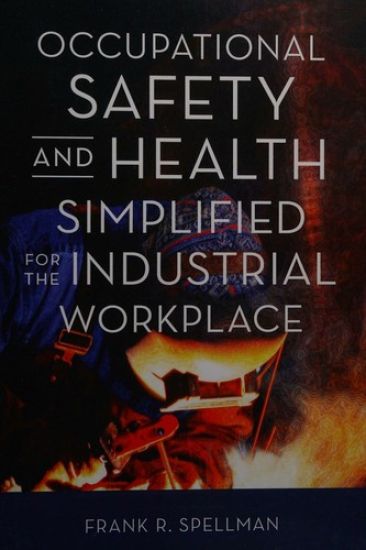
Occupational Safety and Health Simplified for the Industrial Workplace
Occupational Safety and Health Simplified for the Industrial Workplace serves industrial businesses, workplaces, and managers who want quick answers to complicated questions. It is an essential reference for everyone involved with the safety and health of workers in the industrial workplace. It makes the difficult task of complying with the 29 CFR 1910 regulations easier to manage. From general safety provisions to violence in the workplace to hazardous wastes, it examines the standards of 29 CFR 1910 one-by-one with non-technical, implementation-friendly explanations of the requirements and how to implement and fulfill them. This book provides a breakdown of the training standards for industrial applications. In addition, it shows how to prevent the leading causes of fatal accidents, which OSHA industrial standards are violated most often, and how non-Spanish–speaking managers can effectively communicate safety requirements with Spanish-speaking employees. Most importantly, this book provides answers to a broad range of compliance questions, including who is obligated to observe the law, what OSHA compliance obligations are, and how state OSHA compares to federal OSHA standards.
Safety and Environmental Management

Safety and Environmental Management

Frank R. Spellman

Bernan Press
2015
sidottu
What is required to make a workplace safe for employees and legally compliant with the Occupation Safety and Health Administration's regulations? Building on the success of the first two editions of Safety and Environmental Management, this updated and expanded third edition discusses the elements that should be included in any organization's safety plan, including sample plans to help guide managers in creating safety protocols for their own companies. In this book, author Frank Spellman covers the subjects of accident investigation, hazard communication, hazardous waste handling, confined space entry, fire and hot work safety, lockout/tagout procedures, personal protective equipment, OSHA noise requirements, and more.
Reverse Osmosis

Reverse Osmosis

Frank R. Spellman

Productivity Press
2015
sidottu
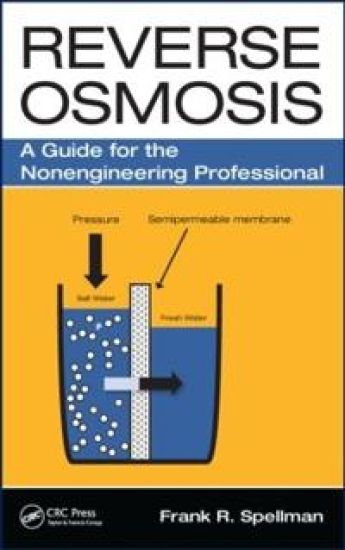
For the Nonengineering ProfessionalPerfect for anyone without a background in science or engineering who wants to take a closer look at how water is processed and treated, Reverse Osmosis: A Guide for the Nonengineering Professional relates reverse osmosis in its most basic form and addresses growing concerns about the quality of tap water. What is reverse osmosis? Not to be confused with filtration—which involves straining or size exclusion—reverse osmosis involves a diffusive mechanism and separation process that is dependent on solute concentration, pressure, and the water flux rate. This book describes all of the basic processes involved in reverse osmosis operations. Presented in a conversational style—using jargon-free language—it discusses in detail the drinking water purification, wastewater reuse, desalination processes, and other freshwater applications used to ensure the safe consumption of water. The book also places special emphasis on pharmaceuticals and personal care product (PPCP) contaminants, which are not typically removed from wastewater by conventional treatment processes, however, they can be removed by processes using sophisticated membrane filtration. The author provides a basic understanding of membrane technology, and explains the membrane treatment process. He details how the processes fit together within a drinking water or wastewater treatment system and presents concepts that make up water and wastewater treatment processes as a whole. He also highlights advances in reverse osmosis technology and discusses relevant applications. Presents a comprehensive coverage of reverse osmosisDiscusses fundamental processes and equipment used in reverse osmosisProvides technical terminology in simplified form Reverse Osmosis: A Guide for the Nonengineering Professional explains how reverse osmosis
Economics for Environmental Professionals

Economics for Environmental Professionals

Frank R. Spellman

Apple Academic Press Inc.
2015
sidottu
Environmental professionals are often called upon to find solutions to environmental degradation problems or to lead the way in planning to prevent them. Because they come mainly from the environmental and science disciplines, most environmental professionals have limited training in the fundamentals of economics. This book is designed to provide those professionals not only with the basic principles of economics for foundational purposes but also the economic pros and cons to consider when making critical decisions on environmental issues. Economics for Environmental Professionals provides a fully explanatory, quantitative, and practical introduction to a wide range of topics that make up the science of environmental economics. Moreover, it showcases the power of economic principles to explain and predict issues and current events impacting the environment. It discusses the economics relevant to the environmental mediums of air, water, and land and provides pertinent information on air toxics, hazardous wastes, and other related topics. It provides environmental professionals with the education not only to understand the nuts and bolts of economic analysis but also to conduct economic analyses. Throughout the book, the author joins economics and environmental practice with common-sense approaches and practical real-world examples. Designed to stimulate thought, the book explores strategies for maintaining a safe environment without excessive regulation and cost. With the information in this book, environmental professionals will have an understanding of the framework in which environmental problems exist, what they cost, how to pay for them, and what the payback is (if any).
Environmental Impacts of Renewable Energy

Environmental Impacts of Renewable Energy

Frank R. Spellman

Apple Academic Press Inc.
2014
sidottu
Renewable Energy Has a Good Side and a Bad Side… Evaluate BothAll energy sources affect the environment in which we live. While fossil fuels may essentially do more harm, renewable energy sources can also pose a threat to the environment. Allowing for the various renewable energy sources: solar, wind, hydro, biomass, and geothermal, Environmental Impacts of Renewable Energy examines the environmental effects of all available renewable or alternative sources, as they increasingly play a large part in our energy supply, and provides a counterargument about the benefits of renewable energy. This book discusses both the merits and the physical, mechanical, electrical, and environmental limitations of renewable sources of energy. It discusses the pros and cons of renewable energy, addresses environmental issues and concerns, and determines ways to avoid or minimize these impacts. This text contains nine chapters reviewing in depth: Renewable energy impact on the environmentMajor renewable energy typesEnvironmental health, safety, and ecological impactsImpact on tribal sacrosanct areas Environmental Impacts of Renewable Energy covers the adverse effects of major renewable energy sources. Environmental engineers working with renewable energy, environmental consultants/managers working with municipalities regarding environmental impact and land use, and undergraduate students taking related courses in environmental college programs can greatly benefit from this text.
Mathematics Manual for Water and Wastewater Treatment Plant Operators
To properly operate a waterworks or wastewater treatment plant and to pass the examination for a waterworks/wastewater operator’s license, it is necessary to know how to perform certain calculations. All operators, at all levels of licensure, need a basic understanding of arithmetic and problem-solving techniques to solve the problems they typically encounter in the workplace. Hailed on its first publication as a masterly account written in an engaging, highly readable, user-friendly style, the Mathematics Manual for Water and Wastewater Treatment Plant Operators, Second Edition has been expanded and divided into three specialized texts that contain hundreds of worked examples presented in a step-by-step format. They are ideal for all levels of water treatment operators in training and practitioners studying for advanced licensure. In addition, they provide a handy desk reference and handheld guide for daily use in making operational math computations. This first volume, Basic Mathematics for Water and Wastewater Operators, introduces and reviews fundamental concepts critical to qualified operators. Presented at a basic level, this volume reviews fractions and decimals, rounding numbers, significant digits, raising numbers to powers, averages, proportions, conversion factors, flow and detention time, and the areas and volumes of different shapes. It also explains how to keep track of units of measurement (such as inches, feet, and gallons) during the calculations. After building a strong foundation based on theoretical math concepts, the text moves on to applied math—basic math concepts applied in solving practical problems for both water and wastewater operations. The material is presented using clear explanations in manageable portions to make learning quick and easy, and illustrative real-world problems are provided that correlate to modern practice and design.
Mathematics Manual for Water and Wastewater Treatment Plant Operators - Three Volume Set
To properly operate a waterworks or wastewater treatment plant and to pass the examination for a waterworks/wastewater operator’s license, it is necessary to know how to perform certain calculations. All operators, at all levels of licensure, need a basic understanding of arithmetic and problem-solving techniques to solve the problems they typically encounter in the workplace. Hailed on its first publication as a masterly account written in an engaging, highly readable, user-friendly style, the Mathematics Manual for Water and Wastewater Treatment Plant Operators, Second Edition has been expanded and divided into three specialized texts that contain hundreds of worked examples presented in a step-by-step format. They are ideal for all levels of water treatment operators in training and practitioners studying for advanced licensure. In addition, they provide a handy desk reference and handheld guide for daily use in making operational math computations. Basic Mathematics for Water and Wastewater Operators introduces and reviews fundamental concepts critical to qualified operators. It builds a strong foundation based on theoretical math concepts, which it then applies to solving practical problems for both water and wastewater operations. Water Treatment Operations: Math Concepts and Calculations covers computations used in water treatment, and Wastewater Treatment Operations: Math Concepts and Calculations covers computations commonly used in wastewater treatment plant operations. The volumes present math operations that progressively advance to higher, more practical applications, including math operations that operators at the highest level of licensure would be expected to know and perform. To ensure correlation to modern practice and design, the volumes provide illustrative examples for commonly used waterworks and wastewater treatment operations covering unit process operations found in today’s treatment facilities. Readers working through the books systematically will acquire a definitive understanding of and skill in performing the applied water/wastewater calculations that are essential for a successful career in the water industry.
Wastewater Stabilization Ponds

Wastewater Stabilization Ponds

Frank R. Spellman; Joanne E. Drinan

CRC Press Inc
2014
sidottu
Ponds (lagoons) have been used for centuries with great success in the treatment of wastewater. Ponds created for treatment, known as stabilization ponds, model the physical and biochemical interactions that occur in natural ponds. Easy to build and manage, stabilization ponds can accommodate large fluctuations in flow, and provide results that are comparable to conventional systems at a much lower cost. Wastewater Stabilization Ponds examines the use of this natural and highly effective process. The text is centered on wastewater pond management processes and operation procedures that provide passive treatment with a minimum of energy-driven mechanical elements. It highlights the environmental principles, practices, engineering, and mathematics involved in the design and operation of conventional wastewater stabilization ponds. It also explores the major processes, procedures, and design methods relevant to wastewater treatment ponds. This includes the basic processes, in-pond design evolution and enhancements, oxygen addition, and modifications that require energy, nutrient removal, as well as effluent total suspended solids removal. Emphasizing the design, construction, and operation of wastewater ponds, the book serves as a valuable resource for anyone seeking information on pond construction and operation, knowledge of pond operation, and assistance in certification exam preparation and study. Presents a design of wastewater stabilization ponds Includes a complete description of pond process elementsProvides descriptions of pond insect macroinvertebratesIncorporates pond morphometry calculationsContains extensive pond-related math problems Sustainability and energy conservation are underlying themes throughout the text and the authors offer valuable information on potential renewable energy sources.
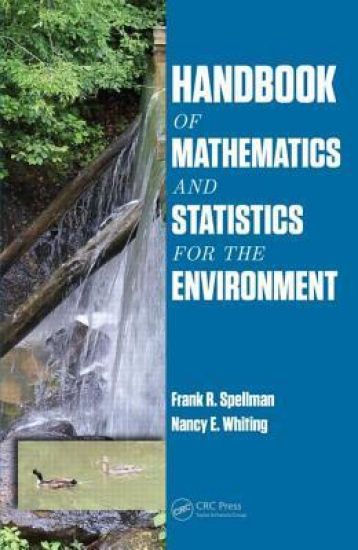
Handbook of Mathematics and Statistics for the Environment

Handbook of Mathematics and Statistics for the Environment

Frank R. Spellman; Nancy E. Whiting

CRC Press Inc
2013
sidottu
A thorough revision of the previous "Environmental Engineer’s Mathematics Handbook," this book offers readers an unusual approach to presenting environmental math concepts, emphasizing the relationship between the principles in natural processes and environmental processes. It integrates the fundamental math operations performed by environmental practitioners for air, water, wastewater, solid/hazardous wastes, biosolids, environmental economics, stormwater operations, and environmental health, safety, and welfare. New material includes quadratic equations, Quadratic equations, Boolean algebra, statistics review, fundamental fire science, basic electricity for environmental practitioners, and environmental health computations and solutions.
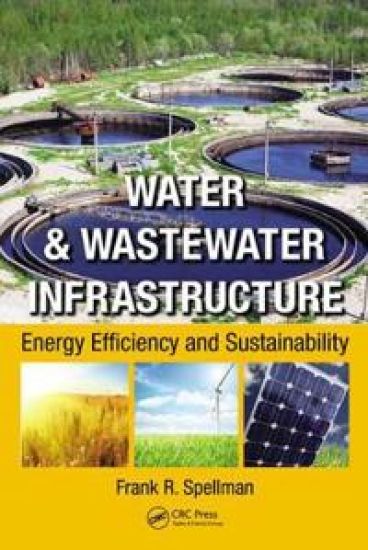
Water & Wastewater Infrastructure

Water & Wastewater Infrastructure

Frank R. Spellman

CRC Press Inc
2013
sidottu
A critical aspect of sustainability associated with water and wastewater systems is to maintain and manage infrastructure in the most efficient and economical manner while complying with environmental regulations and keeping rates at acceptable levels. Given the high cost of fuel, our growing population, and the associated increase in energy needs, it is important to address energy use and future energy availability for the treatment of the water we drink and the water we pollute. Water & Wastewater Infrastructure: Energy Efficiency and Sustainability addresses these issues, detailing the processes that can assist facilities to become more energy efficient and providing guidance to ensure their sustainability. The text begins with brief descriptions of the water and wastewater treatment industries. It then describes some of the basics of energy and discusses what planning for a sustainable energy future in water and wastewater treatment plants entails. The author explores energy-saving options and provides case studies to demonstrate how some facilities have used equipment, technology, and operating strategies to save money and reduce their impact. The energy-efficient technologies include combined heat and power (CHP), gas turbines, microturbines, reciprocating engines, steam turbines, and fuel cells. The author also addresses biomass power and biogas. The section on sustainability and renewable energy covers hydropower, solar power, and wind power as well as energy conservation measures for treating wastewater. Nine appendices provide individual case studies that present evaluations of energy conservation measures, results, payback analysis, and conclusions. This book addresses the challenges faced by water and wastewater treatment facilities by examining how they can operate in ways that provide economic and environmental benefits, save money, reduce environmental impact, and lead to sustainability.
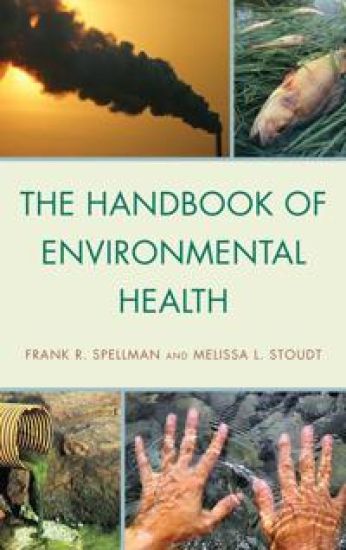
The Handbook of Environmental Health

The Handbook of Environmental Health

Frank R. Spellman; Melissa L. Stoudt

Scarecrow Press
2013
sidottu
Environmental issues, global warming, pollution, and chemical dumping, are ever present in the news. But what about the health problems these issues pose? Frank Spellman and Melissa Stoudt identify the hazardous environmental issues and explain the science behind the dangers to our health. The Handbook of Environmental Health begins with defining the most commonly used terms, clearly explained for any student to learn and understand. Then each chapter tackles a different issue, outlining its scientific concepts and relating it to our health, with case studies or scenarios to bring the concepts to life. Lastly, the chapters conclude with thought-provoking questions. The authors also provide solutions to control the factors that harm our health, making this handbook a valuable resource for any student, library, or one interested in the dangers of environmental health.
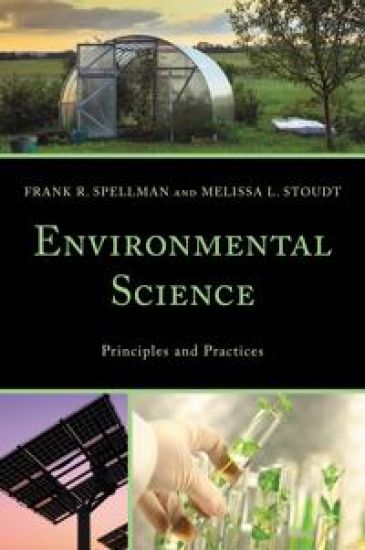
Environmental Science

Environmental Science

Frank R. Spellman; Melissa L. Stoudt

Scarecrow Press
2013
sidottu
Environmental Science: Principles and Practices provides the scientific principles, concepts, applications, and methodologies required to understand the interrelationships of the natural world, identify and analyze environmental problems both natural and manmade, evaluate the relative risks associated with these problems, and examine alternative solutions (such as renewable energy sources) for resolving and even preventing them. Frank R. Spellman and Melissa Stoudt introduce the science of the environmental mediums of air, water, soil, and biota to undergraduate students. Interdisciplinary by nature, environmental science embraces a wide array of topics. Environmental Science: Principles and Practices brings these topics together under several major themes, including 1. How energy conversions underlie all ecological processes 2. How the earth’s environment functions as an integrated system 3. How human activities alter natural systems 4. How the role of culture, social, and economic factors is vital to the development of solutions 5. How human survival depends on practical ideas of stewardship and sustainability Environmental Science: Principles and Practices is an ideal resource for students of science in the classroom and at home, in the library and the lab.
The Handbook of Geoscience

The Handbook of Geoscience

Frank R. Spellman; Melissa L. Stoudt

Scarecrow Press
2013
sidottu
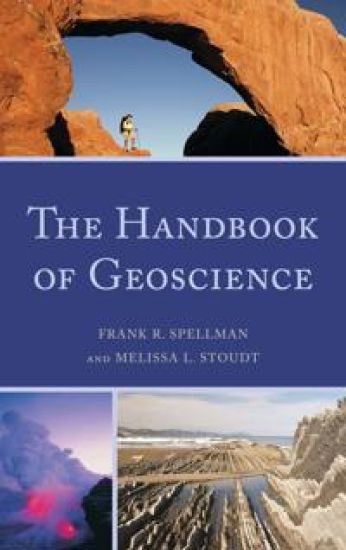
Written in an engaging and highly readable style, The Handbook of Geoscience is ideal for students, administrators, legal professionals, non-scientific professionals, and general readers with little or no science background. This handbook is a user-friendly overview of our physical, biological, and ecological environment, one that offers up-to-date coverage of the major scientific fields that form the structure of geoscience. Students who are enrolled in a geoscience course or one of its many subdisciplines will find this work an invaluable resource to support and supplement classroom instruction. The emphasis is on readability, with clear, example-driven explanations refined by more than 35 years of experience of instruction and student feedback.
The Handbook of Meteorology

The Handbook of Meteorology

Frank R. Spellman

Scarecrow Press
2012
sidottu
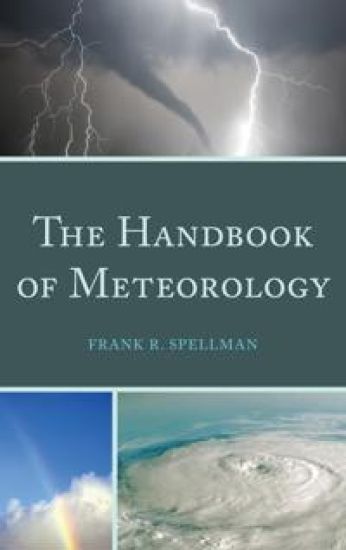
The Handbook of Meteorology gives specialists and non-specialists alike a clear understanding of the way our weather functions. It provides scientific answers to questions that arise when looking at the world around us. It starts with the basics of weather—temperature, pressure, humidity, and wind—before moving on to cover highs, lows, fronts, and storms, and finally ending with a look at weather forecasts, cloud watching, weather tools, and much more. The Handbook of Meteorology provides a condensed but all-inclusive broad sweep of meteorology, employing several illustrations to translate detailed technical information into terms that everyone can follow and readily refer to. It is a comprehensive reference for any budding meteorologist or environmental professional in the field, laboratory, or classroom.
Environmental Health and Science Desk Reference

Environmental Health and Science Desk Reference

Frank R. Spellman; Revonna M. Bieber

Government Institutes Inc.,U.S.
2012
sidottu
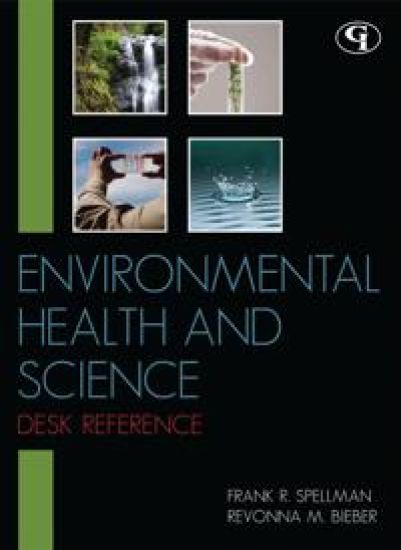
Every branch of science, every profession, and every engineering process has its own language for communication. Environmental health and environmental science are no different. To work within these major environmental fields, you must acquire a fundamental but wide-ranging vocabulary and knowledge of the components that make them up. An understanding of the tools, techniques, and key terms and concepts in the interrelated fields of environmental health and science is necessary for effective practice. In Environmental Health and Science Desk Reference, authors Frank R. Spellman and Revonna M. Bieber define and explain the terms and concepts used by environmental professionals, environmental science professionals, safety practitioners and engineers, and non-science professionals. Environmental science and health and occupational health and safety are not single topics, but rather a complex, colorful, and diversified array of interrelated subjects including all of the basic sciences, computer science, government, engineering, measurement, physics, health and disease, energy, security, disease, injury identification prevention and control, and much more. The practicing environmental specialist or student of environmental science, technology, health and safety engineering should know these topics. Without some knowledge of these topics it is difficult (if not impossible) to practice in any of the environmental fields. The authors of this comprehensive reference work have more than 35 years of practical experience in environmental health and science. They have selected and explained more than 6,000 terms in this authoritative reference. The entries range from single-sentence definitions for the simplest terms, to explanations of over 1,000 words for the most complex or important concepts. The authors demonstrate many of the entries with examples or case studies, and the reference includes more than 100 drawings and diagrams, which illustrate the most important principles of these fields. Spellman and Bieber provide an accessible guide to the language and background knowledge necessary for work in environmental fields, writing in straightforward English and avoiding technical jargon wherever possible. This is an essential reference for anyone working in environmental health, environmental science, and related fields.
The Handbook of Nature

The Handbook of Nature

Frank R. Spellman; Joan Price-Bayer

Government Institutes Inc.,U.S.
2011
sidottu
The study of nature is a complex science involving many different fields from geology and meteorology to biology, zoology, and botany. This complexity indicates nature’s broad scope of impact. It is at once beautiful and dangerous, displaying power beyond human control. An understanding of the basic principles and concepts of the study of nature is therefore both enriching and practical. In The Handbook of Nature, authors Frank R. Spellman and Joni Price-Bayer provide a comprehensive guide to the study of nature in terms the layperson can grasp easily. This accessible reference work is for the non-specialist looking for quick, accurate information on all aspects of the study of nature. The handbook is arranged thematically for a logical and user-friendly progression through the material. It includes chapters on the earth’s structure and landforms, the atmosphere and weather, water and water sources, and the many different forms of life from single-celled organisms to complex vertebrates. Along with basic natural scientific principles, the authors look closely at the consequences of human interactions with the environment we inhabit. This reference concludes with a glossary and index, and each chapter provides further resources and recommended reading. It is an essential tool for students and professionals alike.
Physical Hazard Control

Physical Hazard Control

Frank R. Spellman; Revonna M. Bieber

Government Institutes Inc.,U.S.
2011
nidottu
People deal with physical hazards every day at the workplace, in their homes, on the roadways, and in many other areas. In any situation, people face potential hazards-often more than one hazard in each situation-and these hazards often lead to serious injury. But it is possible to mitigate the effects of many of these hazards, or even prevent them altogether. In Physical Hazard Control: Preventing Injuries in the Workplace, authors Frank R. Spellman and Revonna M. Bieber focus on controlling physical hazards at work to prevent injury, illness, and death. The book explains the proper controls for many types of physical hazards, including layout and building design, safeguarding of machinery, confined space entry, noise, radiation, ergonomics, electricity, thermal stressors, hand tools, woodworking, welding, machining, mobile equipment, materials handling, and workplace violence. Discussions of engineering controls, administrative controls (including safe work practices), and the use of personal protective equipment are supplemented with real-world examples and solutions. This book presents an up-to-date, practical guide focusing on a variety of physical hazards and controls. It is an informative text for students, a quick reference for safety professionals, a refresher for those preparing for certification, and a practical guide for those who need information on how to control physical hazards in their own places of work.
Nuclear Infrastructure Protection and Homeland Security

Nuclear Infrastructure Protection and Homeland Security

Frank R. Spellman; Melissa L. Stoudt

Government Institutes Inc.,U.S.
2011
nidottu
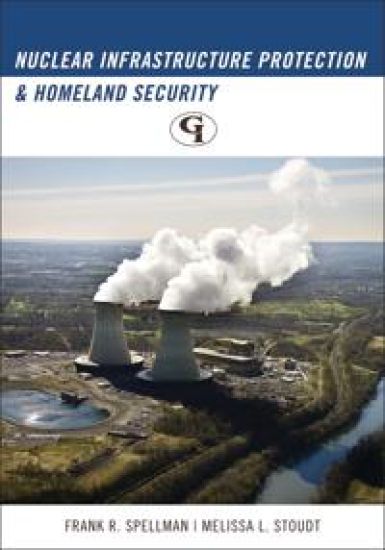
Experts agree, though it is already important, nuclear power will soon be critical to the maintenance of contemporary society. With the heightened importance of nuclear energy comes a heightened threat of terrorism. The possibility of nuclear energy infrastructure terrorism-that is, the use of weapons to cause damage to the nuclear energy industrial sector, which would have widespread, devastating effects-is very real. In Nuclear Infrastructure Protection and Homeland Security, authors Frank R. Spellman and Melissa L. Stoudt present all the information needed for nuclear infrastructure employers and employees to handle security threats they must be prepared to meet. The book focuses on three interrelated nuclear energy infrastructure segments: nuclear reactors, radioactive materials, and nuclear waste. It presents common-sense methodologies in a straightforward manner, so the text is accessible even to those with little experience with nuclear energy who are nonetheless concerned about the protection of our nuclear infrastructure. Important safety and security principles are outlined, along with security measures that can be implemented to ensure the safety of nuclear facilities.
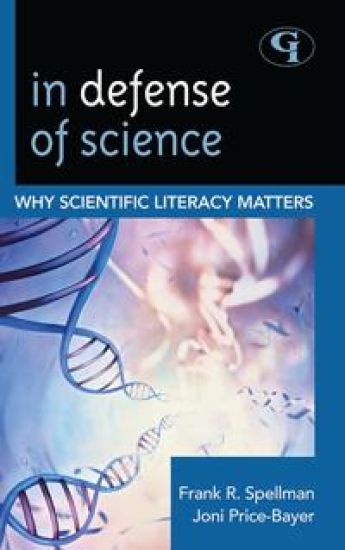
In Defense of Science

In Defense of Science

Frank R. Spellman; Joan Price-Bayer

Government Institutes Inc.,U.S.
2010
sidottu
Today, only a few people outside of the scientific community are conversant with the tradition of science and its many breakthroughs. The rest are scientifically illiterate. So say Frank R. Spellman and Joni Price-Bayer, authors of In Defense of Science: Why Scientific Literacy Matters. This book explains why ordinary citizens need to have an understanding of science, its methods, and its groundbreaking discoveries. The authors introduce the most basic scientific concepts in accessible and straightforward language. Along the way they debunk several misconceptions of science and scientists, and arrive at a view of science as an integral part of society, policy, and everyday life. The book begins with an introduction to science and its basic concepts, including a brief and entertaining history of science and scientific discoveries, before taking on current views of science in society. It surveys the many sources of our ideas of science, including pop culture, classics of literature, news media, and political discourse. Much of the information from these sources tends to mislead, and the only way to guard against such misinformation is to become scientifically literate, and promote scientific literacy in society. The book therefore delves into the reasons that so many people do not understand basic scientific principles and do not keep up with scientific breakthroughs, and finishes by examining the current state of science education. It includes many resources for further reading, and is presented in an engaging and entertaining way. It offers much food for thought for anyone concerned with science in today's world.