Kirjojen hintavertailu – 12 903 725 kirjaa ja 27 kauppaa

Kirjailija

Frank R. Spellman

Kirjat ja teokset yhdessä paikassa: 149 kirjaa, julkaisuja vuosilta 1997–2026, suosituimpiin kuuluu The Science of Fluid Mechanics. Vertaile teosten hintoja ja tarkista saatavuus suomalaisista kirjakaupoista.

149 kirjaa

Kirjojen julkaisuvuodet: 1997–2026.

In Defense of Science

In Defense of Science

Frank R. Spellman; Joan Price-Bayer

Government Institutes Inc.,U.S.
2010
nidottu
Today, only a few people outside of the scientific community are conversant with the tradition of science and its many breakthroughs. The rest are scientifically illiterate. So say Frank R. Spellman and Joni Price-Bayer, authors of In Defense of Science: Why Scientific Literacy Matters. This book explains why ordinary citizens need to have an understanding of science, its methods, and its groundbreaking discoveries. The authors introduce the most basic scientific concepts in accessible and straightforward language. Along the way they debunk several misconceptions of science and scientists, and arrive at a view of science as an integral part of society, policy, and everyday life. The book begins with an introduction to science and its basic concepts, including a brief and entertaining history of science and scientific discoveries, before taking on current views of science in society. It surveys the many sources of our ideas of science, including pop culture, classics of literature, news media, and political discourse. Much of the information from these sources tends to mislead, and the only way to guard against such misinformation is to become scientifically literate, and promote scientific literacy in society. The book therefore delves into the reasons that so many people do not understand basic scientific principles and do not keep up with scientific breakthroughs, and finishes by examining the current state of science education. It includes many resources for further reading, and is presented in an engaging and entertaining way. It offers much food for thought for anyone concerned with science in today's world.
Spellman's Standard Handbook for Wastewater Operators (3 Volume Set)
Hailed on first publication as a straightforward, practical, and to-the-point account of wastewater principles, practices, and operations for general readers, students, and wastewater operators in training and for all levels of operators at any level of licensure, Spellman’s Standard Handbook for Wastewater Operators, Volumes I, II, and III almost instantly became the standard resource for this field. The second edition continues the tradition, exploring important aspects of wastewater operations and operator preparation for licensure examinations. Each volume has been upgraded, updated, and expanded to include additional pertinent information to better prepare each qualified user for professional licensure. More than just a study guide or readily accessible source of information for preparing wastewater personnel for operator certification and licensure, this three-volume manual and troubleshooting guide compiles wastewater treatment information, data, operations material, process control procedures, safety and health information, new trends in wastewater treatment administration and technology, and numerous sample problem-solving practice sets. Drawing on Frank Spellman’s expertise and experience, this book provides: Instant access to information that aids in the efficient operation of a wastewater treatment plantBasic information and sample problem sets needed to prepare for state licensing and certification examinationsUser-friendly, straightforward fundamental reference material organized into three focused volumesContrary to popular belief, treating wastewater is not just a science, but both an art and a science. It requires technical expertise, experience, and an understanding of a broad range of available technologies. With coverage ranging from pumping and screening influent to treating the waste stream and managing biosolids, this three-volume set provides easy-to-understand information. Though formatted at three separate levels, overlap between each volume not only ensures continuity and a smooth read form volume to volume, but makes each one a handheld, stand-alone reference that presents essential information in a precise, efficient, and effective manner.
Spellman's Standard Handbook for Wastewater Operators
Compact and practical, Spellman's Standard Handbook for Wastewater Operators: Volume III, Advanced Level, Second Edition rounds out the revision of this three-volume set. Together, these three volumes prepare operators to obtain licensure and operate wastewater treatment plants properly. This volume presents applied math and chemistry by way of real-world problems, covers equipment maintenance, and explains apparatus used in the laboratory and in the field. The third and final volume in the handbook features: Updated information on the latest technologyRevised and restructured table of contentsUpdated problems, examples, and figuresThe three volumes are designed to build on each other, providing increasingly advanced information. For persons preparing for operator's licensing, this is critical, because wastewater treatment is a complex process. For licensed veteran operators, continuous review is also critical, because wastewater treatment is a dynamic, ever-changing field. Spellman's Standard Handbooks provide the vehicle for reaching these goals. Treating wastewater successfully demands technical expertise, experience, and a broad range of available technologies — an operator needs to be a generalist — as well as an appreciation and understanding of the fundamental environmental and health reasons for the process involved — an operator also needs to be a specialist. Filling its mission to enhance the understanding, awareness, and abilities of practicing and future operators, this volume provides the vehicle for the continuous learning and reviewing required by the evolving, dynamic, and complex process of water treatment.
Spellman's Standard Handbook for Wastewater Operators
Up to date and current with the latest technology, Spellman's Standard Handbook for Wastewater Operators: Volume II, Intermediate Level, Second Edition provides a study guide and resource in a compact format. This second of three volumes contains a compilation of wastewater treatment information, data, operational material, process control procedures and problem solving, safety and health information, new trends in wastewater treatment administration and technology, and numerous sample problem-solving practice sets, many based on actual tests. New in the Second Edition: Chapter on operator safetyReorganized table of contentsHomework problems, examples, and figuresWhile the handbook does not discuss the specific content of the examination, it reviews the job-related knowledge identified by the examination developers as essential for minimal competency. More than just a study guide, although it is immediately obvious to readers that the material presented will help them pass licensing exams, the book is designed for practical use and application. Building on the success of the first edition, the second edition contains revised and reorganized information that, if used wisely, helps readers obtain a passing score on certification exams and solve problems on the job.
Spellman's Standard Handbook for Wastewater Operators
Retaining the same successful and proven format used in the bestselling first edition, Spellman’s Standard Handbook for Wastewater Operators: Volume I, Fundamental Level, Second Edition contains the necessary information to successfully study for and pass currently administered certification examinations. Primarily designed to provide a readily accessible, user-friendly source of information for review in preparing for the first levels of licensure, this volume also sets the stage for Volumes II and III. Revised and expanded with additional information and example problems, changes to this volume include: A new chapter on basic microbiologyMore than double the amount of water hydraulics and pumping informationMore operational computation problems and examples in all major topic areasThe book provides review questions and answers as well as a comprehensive practice examination for measuring the level of knowledge attained through study, on the job experience, and other sources. By using the final examination as a measuring stick, readers can determine strong and weak points. Appendix C contains a formula sheet to be used for reference when taking the final examination. Constructed in a way that allows readers to build their knowledge base, step by step, page by page, as they progress through the material, the handbook represents a basic summary of expert information and includes references to many other sources. Also available as a volume in Spellman's Standard Handbook for Wastewater Operators, Second Edition (3 Volume Set)
Geography for Nongeographers

Geography for Nongeographers

Frank R. Spellman

Government Institutes Inc.,U.S.
2010
nidottu
Geography is a multidisciplinary field which looks at both physical and social aspects of the world. The broad scope of the field makes it a daunting area for those who do not have a specific background in it. Geography for Non-Geographers thus introduces readers to the most important aspects of geography and how they affect us. It covers all areas of geography, from physical geography to climate and weather to human and cultural geography. Geography for Non-Geographers is presented in an accessible and straightforward manner, explaining scientific concepts in the most basic way possible. Along with basic geographical principles, the text provides a clear, concise presentation of the consequences of the physical interactions with the environment we inhabit. Each chapter ends with a chapter review test to help evaluate mastery of the concepts presented. Readers acquire an understanding of and skill in geographical principles, adding a critical component to their professional knowledge.
The Handbook of Safety Engineering

The Handbook of Safety Engineering

Frank R. Spellman; Nancy E. Whiting

Government Institutes Inc.,U.S.
2009
sidottu
Safety professionals know that the best solution to preventing accidents in the workplace boils down to engineering out the hazards. If there isn't any hazard or exposure, there can't be any accident. If you accept the premise that the ultimate method for protecting workers on the job requires the removal or engineering-out of hazards in the workplace, this text is for you. The Handbook of Safety Engineering: Principles and Applications provides instruction in basic engineering principles, the sciences, cyber operations, math operations, mechanics, fire science (water hydraulics, etc.), electrical safety, and the technical and administrative aspects of the safety profession in an accessible and straightforward way. It serves students of safety and practitioners in the field—especially those studying for professional certification examinations—by placing more emphasis on engineering aspects and less on regulatory and administrative requirements. This practical handbook will serve as an important reference guide for students, professors, industrial hygienists, senior level undergraduate and graduate students in safety and industrial engineering, science and engineering professionals, safety researchers, engineering designers, human factor specialists, and all other safety practitioners.
Chemical Infrastructure Protection and Homeland Security

Chemical Infrastructure Protection and Homeland Security

Frank R. Spellman; Revonna M. Bieber

Government Institutes Inc.,U.S.
2009
nidottu
The malicious acts against or within the chemical industrial sector pose a significant threat to both the employees working in the industry, to the communities around them, and to the nation they serve. This new book, the third in a series on critical infrastructure and homeland security, helps chemical manufacturers and processors prevent the devastating effects of such an attack by providing sound security principles and measures that they can implement in their chemical facilities. Addressing the security threats chemical production managers, chemical import managers, design engineers, and others must be prepared to meet on a daily basis, this book encourages a concerted effort to incorporate security upgrades in existing systems or to plan security in all new chemical processing sites. It addresses issues of monitoring, response, critical infrastructure redundancy, and recovery to minimize risk to the facility, the infrastructure, and the surrounding community.
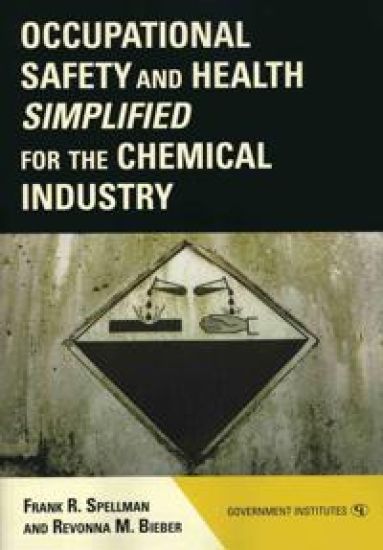
Occupational Safety and Health Simplified for the Chemical Industry

Occupational Safety and Health Simplified for the Chemical Industry

Frank R. Spellman; Revonna M. Bieber

Government Institutes Inc.,U.S.
2009
nidottu
Identifying safety risks inherent to the chemical industry, this new book identifies steps that safety managers can implement in their facilities to minimize the occurrence and severity of accidents. Drawing together in one volume everything employers need to know about applicable OSHA (Occupational Safety and Health Administration) standards, this book provides expert, easy-to-read insight into interpreting OSHA's chemical manufacturing standards, training requirements, and Hazard Communication Standard. Intended as a reference tool for use in the office and on the production floor, this book allows safety managers to quickly understand complicated OSHA requirements. It removes much of the confusion and stress from the compliance process by providing detailed examples of various required documents and processes. For added convenience, the authors include a sample Hazard Communication Program, a comprehensive and easy-to-use sample chemical hygiene plan, a sample chemical safety program, and a sample chemical industry emergency response plan, all of which conform to OSHA standards.
Geology for Nongeologists

Geology for Nongeologists

Frank R. Spellman

Government Institutes Inc.,U.S.
2009
nidottu
Geology for Nongeologists introduces basic concepts in geology: how rocks, minerals, and fossils are classified, how wind, ice, and water have shaped the earth, how mountains are formed, and how volcanoes, geysers, earthquakes, glaciers, and groundwater work to modify the physical structure of Earth. Primarily designed as an information source, and intended to be a non-technical survey for those with little background in science, this book is presented in a reader-friendly style. Written in straightforward and accessible English, this book provides a broad look at a multidisciplinary field that incorporates aspects of biology, chemistry, physics, ecology, geography, meteorology, pedology, and many other areas of science. This book fills the gap between general introductory science texts and advanced environmental science books. Books on the subject are typically geared toward professionals in these fields. This makes undertaking a study of geology daunting to those without a specific background in science. However, this complexity also indicates geology's broad impact. Because geology so widely affects us, sometimes in profound ways, it is important to understand its basic concepts. This book presents information that everyone needs to know about geology and about how science and scientists work. The author uses illustrative problems in terms of commonly used geological parameters, and each chapter ends with a chapter review test. Readers discover a new appreciation for their surroundings and a broader outlook on their environment.
Physics for Nonphysicists

Physics for Nonphysicists

Frank R. Spellman

Government Institutes Inc.,U.S.
2009
nidottu
Environmental professionals who look beyond their specialties and acquire knowledge in a variety of sciences not only make solving on-the-job problems easier for themselves, but they also increase their employment opportunities. This fifth book in the "non-specialist" series provides both professionals and students with a clear, concise overview of the most important aspects of physics in a way that anyone, even those who have never taken a formal physics course, can relate to. Starting with the basic principles of measurement, conversion factors, and math operations, the author explores the topics of motion and force, work and energy, gravity, atoms, heat, sound, light and color, and basic electricity. Each chapter examines the jargon, concepts, key concerns, and applications of physics in action and ends with a chapter review test.
The Science of Air

The Science of Air

Frank R. Spellman

CRC Press Inc
2008
sidottu
Hailed on first publication as a masterful review of the topic, The Science of Air: Concepts and Applications quickly became a standard resource in the field. Clearly written and user-friendly, the second edition continues to provide the scientific underpinnings of the essence of air. Major expansions include: Air math and physicsAir flow parametersIndoor air qualityRegulatory updates related to indoor and outdoor air qualityUpdated air pollution control technologies The text follows a pattern that is nontraditional, using a paradigm based on real-world experience. It covers air resource utilization and air protection, contains regulatory updates related to air quality, and provides an update on pollution control technologies. In addition to the discussion of numerous mitigation and remediation procedures, this authoritative resource includes an expanded section on the fundamentals of air chemistry and physics, making it an indispensable text for those tasked with compliance to air pollution laws. The common thread woven through the fabric of this text is air resource utilization and its protection. Numerous examples exist on how understanding the science of air can assist in understanding global climate change, air pollution, radon, indoor air quality, and acid rain. To solve these problems and understand the issues related to air, air pollution control practitioners need a broad base of scientific information from which to draw — The Science of Air fills this critical need.
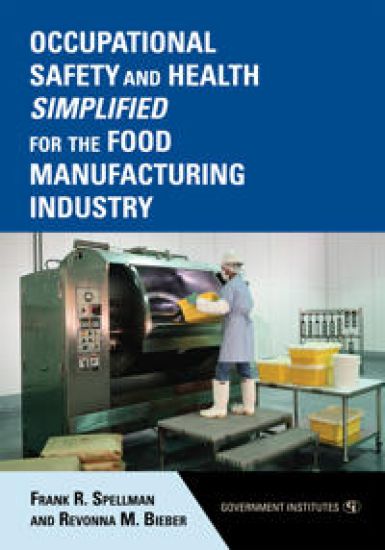
Occupational Safety and Health Simplified for the Food Manufacturing Industry

Occupational Safety and Health Simplified for the Food Manufacturing Industry

Frank R. Spellman; Revonna M. Bieber

Government Institutes Inc.,U.S.
2008
nidottu
The success of any food manufacturer's safety program depends on how accurately a facility interprets the laws and how it handles the hazards that workers face on a daily basis. This resource provides industry managers, safety directors, and workers with straightforward answers to complicated OSHA questions. Referencing FDA, USDA, and other regulatory standards as applicable, the authors explain the requirements of the twelve major Occupational Safety and Health Administration standards in Code of Federal Regulations (CFR) Title 29 Part 1910 (general industry) and Part 1928 (agriculture) for food worker safety and provides examples to help ensure compliance with all applicable standards. The book examines the most serious health hazards in the industry, including inhalation of flavorings, radiation, and amputations, and identify ways to prevent accidents from occurring. They will address both industry-wide safety concerns and segment-specific hazards for meatpacking, poultry processing, fruit and vegetable canning, and food flavoring, and find information to help them overcome the language and cultural barriers of the food industry's growing Hispanic workforce to ensure adequate protection for all. A complete sample food manufacturing safety program that meets OSHA requirements and a comprehensive checklist for completing self-audits are included.
Biology for Nonbiologists

Biology for Nonbiologists

Frank R. Spellman

Government Institutes Inc.,U.S.
2007
nidottu
The list keeps growing! The latest in Government Institutes' "non-specialist" series, Biology for Nonbiologists continues the tradition established by Toxicology for Non-Toxicologists and Chemistry for Nonchemists, by providing environmental and occupational-safety-and-health practitioners and students with a comprehensive overview of the principles and concepts of modern biology. Covering everything from basic chemistry principles and the consequences of biology's interaction with the environment to basic biological principles and applications, this convenient handbook provides a quick course on the science of biology. You'll gain an understanding of and skill in biological principles and learn key biology concepts, concerns, and practices without spending weeks in a classroom. Biology for Nonbiologists focuses on three areas: environmental biology and ecology as they apply to environmental regulatory compliance programs, human biology, and community and ecosystem dynamics. However, it also covers all major biological themes, including the cellular basis for life, the interactions of organisms, and the evolutionary process of all beings. The author explains scientific concepts with little reference to mathematics and physical science and little technical language, making the text easier to understand and more engaging for non-science readers. To further demystify the science, Spellman also lists and defines essential biology terms and terms not often used in the environmental and safety fields. Special study aids, including end-of-chapter reviews and checkmarks that highlight important points, enhance learning and allow readers to evaluate their understanding of the concepts presented.
Environmental Management of Concentrated Animal Feeding Operations (CAFOs)
Clean and environmentally sound disposal of animal waste in the quantities that Concentrated Animal Feeding Operations (CAFOs) produce can only be described as a challenge. Designed to provide practical information, Environmental Management of Concentrated Animal Feeding Operations (CAFOs) covers the concepts and practices involved in the operation and maintenance of CAFOs, paying particular attention to regulatory requirements and compliance and Best Available Technology (BAT) practices. Presenting an overview of federal, state, and local regulations and discussing US Department of Agriculture's CNMP, the book includes information and data that can be used for planning and designing waste management systems and system components as well as for selecting waste handling equipment. The authors describe the various types of manure/wastewater storage and handling systems and, using data derived from the NRCS/USDA, focus on the costs involved in the operational needs of these systems. They describe soil agricultural waste interactions and those soil properties and characteristics that affect soil sustainability and limitations for a farmstead. They also discuss the pollutants associated with livestock and poultry operations, the pathways by which the pollutants reach surface water, and their impacts on the environment and human health. Pulling information from a wide range of sources, the book's coverage moves from regulations to social and ethical issues, and on to specific technologies for a particular species. This comprehensive resource is tailored to the information needs of the practicing agronomist, rural community authorities, and other personnel involved in animal feeding operations.
Water Infrastructure Protection and Homeland Security

Water Infrastructure Protection and Homeland Security

Frank R. Spellman

Government Institutes Inc.,U.S.
2007
nidottu
This thoughtful book provides a much-needed look at the vulnerabilities and security of our nation's water sources. Written as a result of 9/11 and in response to the critical needs of water/wastewater plant managers, plant engineers, design engineers, and utility managers, it addresses the need to incorporate security upgrades in existing facility systems and careful planning in all new construction sites. Each chapter provides professional guidance on designing, operating, maintaining, and mitigating threats to water/wastewater systems, including both treatment/distribution and treatment/collection systems, to ensure state-of-the-art security. The author covers all aspects of monitoring, response, critical infrastructure redundancy, and recovery and provides other strategic information, including methodologies for vulnerability assessments, specialized remote monitoring equipment, and U. S. EPA's security toolbox items. No matter what your background, if you are responsible for protecting a water source, your facility stands to gain from the principles described in this book.
Chemistry for Nonchemists

Chemistry for Nonchemists

Frank R. Spellman

Government Institutes Inc.,U.S.
2006
nidottu
To effectively deal with any chemical-based problem, including pollution, environmental, health and safety professionals must have at least a rudimentary understanding of the basic concepts of chemistry. This book provides such professionals with an introductory reference that will help them to understand the fundamental principles of chemistry and to understand those principles as they apply to the environmental compliance programs that regulate workplace activity. Written for anyone whose work involves environmental management, planning, impact assessment, protection, or compliance, or whose responsibilities include designing, implementing, and evaluating a health and safety program, Chemistry for Nonchemists provides a detailed overview of chemistry and its principles, chemical nomenclature, chemical reactions, and their application to regulatory compliance programs under the various environmental, health and safety laws. This book will help readers understand the "laws" of chemistry and the ramifications of out-of-control chemistry. The book begins with a review of the periodic table, a look at chemical structure and bonding, and an explanation of key terms. The author, a 35-year environmental veteran, then focuses on the fundamentals of organic and inorganic chemistry, the chemistry of water, and chemical reactions as they apply to environmental compliance programs. From there, he moves to more advanced discussions of solvents and solutes and concludes with in-depth examinations of advanced sampling and analysis, the complex reactions of metals, and chemistry's role in risk assessment.
Environmental Engineer's Mathematics Handbook

Environmental Engineer's Mathematics Handbook

Frank R. Spellman; Nancy E. Whiting

CRC Press Inc
2004
sidottu
Advanced mathematics used in engineering is studied here in this text which examines the relationship between the principles in natural processes and those employed in engineered processes. The text covers principles, practices and the mathematics involved in the design and operation of environmental engineering works. It also presents engineering modelling tools and environmental algorithm examples. Major subjects covered in this book include:* modelling * algorithms * air and water pollution assessment and control calculations Providing concepts, definitions, descriptions, and derivations in an intuitive manner, it is both a textbook and reference tool for practitioners involved in the protection of air, water, and land resources.
Stormwater Discharge Management

Stormwater Discharge Management

Frank R. Spellman; Joanne E. Drinan

Government Institutes Inc.,U.S.
2003
nidottu
This comprehensive resource provides engineers, managers, compliance specialists, construction professionals, and students with the tool they need to understand and comply with the requirements of the Code of Federal Regulations (CFR) Title 40 Part 122 stormwater regulations. This guide covers the full spectrum of stormwater issues, including the new Stormwater Phase II Rule, which mandated compliance March 10, 2003.
Blueprint Reading

Blueprint Reading

Frank R. Spellman

CRC Press Inc
2002
nidottu
Experience has shown that when maintenance operators can understand and properly use blueprints and schematics they have little difficulty in correctly interpreting and using plant unit process drawings. Blueprint Reading bridges the gap between available training materials and the information water and wastewater maintenance operators need to know. It covers basic principles of blueprint reading and deals with principles and applications of schematics and symbols. Each chapter presents essential, practical knowledge vital to understanding and interpreting plant operations and that enhances the reader's ability to properly maintain plant systems.