Kirjojen hintavertailu – 12 859 829 kirjaa ja 27 kauppaa
Kirjailija
Franklin E. Zimring
Kirjat ja teokset yhdessä paikassa: 28 kirjaa, julkaisuja vuosilta 1989–2020, suosituimpiin kuuluu Punishment and Democracy. Vertaile teosten hintoja ja tarkista saatavuus suomalaisista kirjakaupoista.
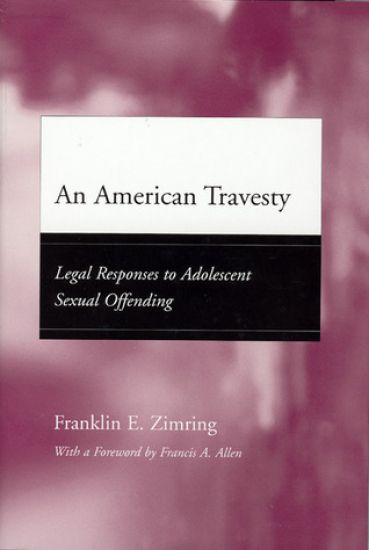
"An American Travesty" is the first scholarly book in half a century to analyze the justice system's response to sexual misconduct by children and adolescents in the United States. Writing with a refreshing dose of common sense, Franklin E. Zimring discusses our society's failure to consider the developmental status of adolescent sex offenders. Too often, he argues, the American legal system ignores age and developmental status when adjudicating young sexual offenders, in many cases responding as they would to an adult.
"Getting tough on crime" has been one of the favorite rallying cries of American politicians in the last two decades, and "getting tough" on repeat offenders has been particularly popular. "Three strikes and you're out" laws, which effectively impose a 25-years-to-life sentence at the moment of a third felony conviction, have been passed in 26 states. California's version of the "three strikes" law, enacted in 1994, was broader and more severe than measures considered or passed in any other state. Punishment and Democracy is the first examination of the actual impact this law has had. Franklin Zimring, Sam Kamin, and Gordon Hawkins look at the origins of the law in California, compare it to other crackdown laws, and analyze the data collected on crime rates in Los Angeles, San Diego, and San Francisco in the year before and the two years after the law went into effect. They show that the "three strikes" law was a significant development in criminal justice policy making, not only at the state level, but also at the national level. They conclude with an examination of the trend toward populist initiatives driving penal policy. The importance of the subject and the stature of the authors make this book required reading for policy analysts, criminal justice scholars, elected officials, and indeed any American seeking to know more about "get-tough" criminal sentencing.
This book is the most comprehensive treatment of the politics and the impact of the 'get tough' criminal sentencing legislation in the US. It includes a major empirical study of the celebrated California 'three strikes' law, the law that imposed a 25-years to life imprisonment the moment of a third felony conviction. 'Three Strikes' is the single most important assault on criminal recidivists in the twentieth century. This book tells the story of how such a revolutionary shift in punishment policy became law, the impact of that legislation on criminal punishments and crime rates in California, and the broad implications of Three Strikes for the ways in which punishment policy is made in democratic governments.
The phenomenal growth of penal confinement in the United States in the last quarter of the twentieth century is still a public policy mystery. While there is unanimous condemnation of the practice, there is no consensus on the causes nor any persuasive analysis of what is likely to happen in the coming decades. In The Insidious Momentum of American Mass Incarceration, Franklin E. Zimring seeks a comprehensive understanding of when, how, and why the United States became the world leader in incarceration to further determine how the use of confinement can realistically be reduced. To do this, Zimring first profiles the growth of imprisonment after 1970, emphasizing the important roles of both the federal system and the distribution of power and fiscal responsibility among the levels of government in American states. He also examines the changes in law enforcement, prosecution and criminal sentencing that ignited the 400% increase in rates of imprisonment in the single generation after 1975. Finally, Zimring then proposes a range of strategies that can reduce prison population and promote rational policies of criminal punishment. Arguing that the most powerful enemy to reducing excess incarceration is simply the mundane features of state and local government, such as elections of prosecutors and state support for prison budgets, this book challenges the convential ways we consider the issue of mass incarceration in the United States and how we can combat the rising numbers.
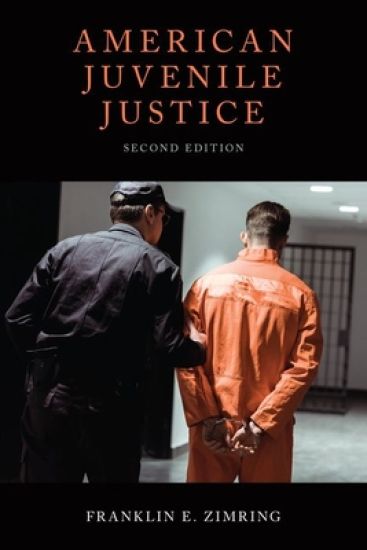
American Juvenile Justice is a definitive volume for courses on the criminology and policy analysis of adolescence. The focus is on the principles and policy of a separate and distinct system of juvenile justice. The book opens with an introduction of the creation of adolescence, presenting a justification for the category of the juvenile or a period of partial responsibility before full adulthood. Subsequent sections include empirical investigations of the nature of youth criminality and legal policy toward youth crime. At the heart of the book is an argument for a penal policy that recognizes diminished responsibility and a youth policy that emphasizes the benefits of letting the maturing process continue with minimal interruption. In this updated and expanded second edition, Zimring has included four new chapters with examinations on important topics including, US Supreme Court decisions of life sentences for minors, the elected use of juvenile courts over criminal court, punitive sex offender registration for juveniles, and appropriate tactics for juvenile justice reform.
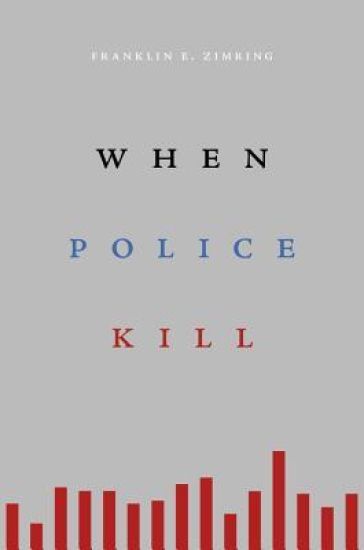
“A remarkable book.”—Malcolm Gladwell, San Francisco ChronicleDeaths of civilians at the hands of on-duty police are in the national spotlight as never before. How many killings by police occur annually? What circumstances provoke police to shoot to kill? Who dies? The lack of answers to these basic questions points to a crisis in American government that urgently requires the attention of policy experts. When Police Kill is a groundbreaking analysis of the use of lethal force by police in the United States and how its death toll can be reduced. Franklin Zimring compiles data from federal records, crowdsourced research, and investigative journalism to provide a comprehensive, fact-based picture of how, when, where, and why police resort to deadly force. Of the 1,100 killings by police in the United States in 2015, he shows, 85 percent were fatal shootings and 95 percent of victims were male. The death rates for African Americans and Native Americans are twice their share of the population. Civilian deaths from shootings and other police actions are vastly higher in the United States than in other developed nations, but American police also confront an unusually high risk of fatal assault. Zimring offers policy prescriptions for how federal, state, and local governments can reduce killings by police without risking the lives of officers. Criminal prosecution of police officers involved in killings is rare and only necessary in extreme cases. But clear administrative rules could save hundreds of lives without endangering police officers.“Roughly 1,000 Americans die each year at the hands of the police…The civilian body count does not seem to be declining, even though violent crime generally and the on-duty deaths of police officers are down sharply…Zimring’s most explosive assertion—which leaps out…—is that police leaders don’t care…To paraphrase the French philosopher Joseph de Maistre, every country gets the police it deserves.”—Bill Keller, New York Times“If you think for one second that the issue of cop killings doesn’t go to the heart of the debate about gun violence, think again. Because what Zimring shows is that not only are most fatalities which occur at the hands of police the result of cops using guns, but the number of such deaths each year is undercounted by more than half!…[A] valuable and important book…It needs to be read.”—Mike Weisser, Huffington Post
"... It's the most entertaining book I've read this year." - Steve Chapman, Columnist and Editorial Writer, The Chicago Tribune There are no pretentious pronouncements about public policy or dry conclusions from social science in these pages ... because it is a report from what Frank Zimring calls "my second career, and everybody else's second career, the hard work of becoming an adult in the modern world." Why is a piranha swimming in your pool a better illustration of how people get over-committed than a giant man eating shark? (Consult chapter 3.) What should you say when your eight-year-old asks whether you would save him or his sister if the lifeboat only had room for one? (See chapter 5.) Why are professors who hate to teach at their home campus positively lustful when invited to lecture somewhere else? (Chapter 11 explains.) When you finally succeed in giving up cigarettes, how should you feel about those who still smoke? (See chapter 2.) Why do so many of the people lined up to visit world famous landmarks look so unhappy to be there? (Chapter 20 reveals the secret.) "Frank Zimring has gained renown as a penetrating thinker and a tireless scholar, but Memos from Midlife reveals what his friends have always known: He is also a charming and thought-provoking companion with a devilish sense of humor. Addressing a range of unconventional topics, from 'the arrogance of nostalgia' to Portnoy's real complaint, he provides both illumination and fun, as well as guidance on living wisely and well. It's the most entertaining book I've read this year." - Steve Chapman Columnist and Editorial Writer The Chicago Tribune A new collection of compelling and humorous essays, in the Journeys & Memoirs Series from Quid Pro Books.
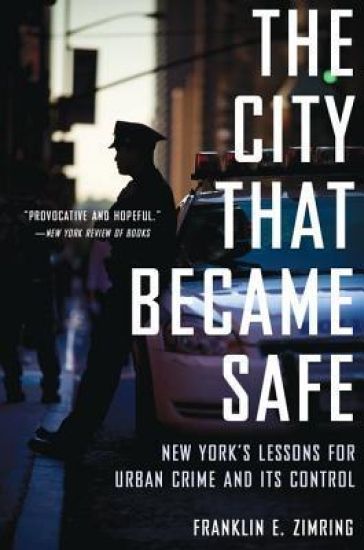
The forty-percent drop in crime that occurred across the U. S. from 1991 to 2000 remains largely an unsolved mystery. Even more puzzling is the eighty-percent drop over nineteen years in New York City. Twice as long and twice as large, it is the largest crime decline on record. In The City That Became Safe, Franklin E. Zimring seeks out the New York difference through a comprehensive investigation into the city's falling crime rates. The usual understanding is that aggressive police created a zero-tolerance law enforcement regime that drove crime rates down. Is this political sound bite true-are the official statistics generated by the police accurate? Though zero-tolerance policing and quality-of-life were never a consistent part of the NYPD's strategy, Zimring shows the numbers are correct and argues that some combination of more cops, new tactics, and new management can take some credit for the decline That the police can make a difference at all in preventing crime overturns decades of conventional wisdom from criminologists, but Zimring also points out what most experts have missed: the New York experience challenges the basic assumptions driving American crime- and drug-control policies. New York has shown that crime rates can be greatly reduced without increasing prison populations. New York teaches that targeted harm reduction strategies can drastically cut down on drug related violence even if illegal drug use remains high. And New York has proven that epidemic levels of violent crime are not hard-wired into the populations or cultures of urban America. This careful and penetrating analysis of how the nation's largest city became safe rewrites the playbook on crime and its control for all big cities.
The 40% drop in crime that occurred across the U. S. from 1991 to 2000 largely remains an unsolved mystery. Even more puzzling then is the crime rate drop in New York City, which lasted twice long and was twice as large. This 80% drop in crime over nineteen years represents the largest crime decline on record. In The City that Became Safe, Franklin Zimring sets off in search of the New York difference through a detailed and comprehensive statistical investigation into the city's falling crime rates and possible explanations. If you listen to City Hall, aggressive police created a zero tolerance law enforcement regime that drove crime rates down. Is this self-serving political sound bite true? Are the official statistics generated by the police accurate? Zimring shows the numbers are correct and argues that some combination of more cops, new tactics, and new management can take some credit for the decline, but zero tolerance policing and quality of life were never a consistent part of the NYPD's strategy. That the police can make a difference in preventing crime overturns decades of conventional wisdom for criminologists, but Zimring points out the New York experience challenges the major assumptions dominating American crime and drug control policies that most everyone else has missed. First, imprisonment in actually New York decreased significantly from 1990 to 2009 and was well below the national average, proving that it is possible to have substantially less crime without increases in incarceration. Second, the NYPD sharply reduced drug violence (over 90%) without any reduction in hard drug use. In other words, they won the war on drug violence without winning the war on drugs. Finally, the stability of New York's population, economy, education, demographics, or immigration patterns calls into question the long-accepted cultural and structural causes of violence in America's cities. That high rates of crime are not hard wired into modern city life is welcome news for policy makers, criminal justice officials, and urban dwellers everywhere.
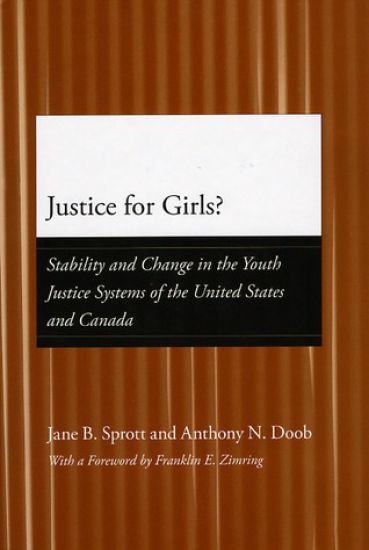
For over a century, as women have fought for and won greater freedoms, concern over an epidemic of female criminality, especially among young women, has followed. Fear of this crime wave - despite a persistent lack of evidence of its existence - has played a decisive role in the development of the youth justice systems in the United States and Canada. "Justice for Girls?" is a comprehensive comparative study of the way these countries have responded to the hysteria over 'girl crime' and how it has affected the treatment of both girls and boys. Tackling a century of historical evidence and crime statistics, Jane B. Sprott and Anthony N. Doob carefully trace the evolution of approaches to the treatment of young offenders. Seeking to keep youths out of adult courts, both countries have built their systems around rehabilitation. But, as Sprott and Doob reveal, the myth of the 'girl crime wave' led to a punitive system where young people are dragged into court for minor offenses and girls are punished far more severely than boys. Thorough, timely, and persuasive, "Justice for Girls?" will be vital to anyone working with troubled youths.
Today, two-thirds of the world's nations have abolished the death penalty, either officially or in practice, due mainly to the campaign to end state executions led by Western European nations. Will this success spread to Asia, where over 95 percent of executions now occur? Do Asian values and traditions support capital punishment, or will development and democratization end executions in the world's most rapidly developing region? David T. Johnson, an expert on law and society in Asia, and Franklin E. Zimring, a senior authority on capital punishment, combine detailed case studies of the death penalty in Asian nations with cross-national comparisons to identify the critical factors for the future of Asian death penalty policy. The clear trend is away from reliance on state execution and many nations with death penalties in their criminal codes rarely use it. Only the hard-line authoritarian regimes of China, Vietnam, Singapore, and North Korea execute with any frequency, and when authoritarian states experience democratic reforms, the rate of executions drops sharply, as in Taiwan and South Korea. Debunking the myth of "Asian values," Johnson and Zimring demonstrate that politics, rather than culture or tradition, is the major obstacle to the end of executions. Carefully researched and full of valuable lessons, The Next Frontier is the authoritative resource on the death penalty in Asia for scholars, policymakers, and advocates around the world.
Today, two-thirds of the world's nations have abolished the death penalty, either officially or in practice, due mainly to the campaign to end state executions led by Western European nations. Will this success spread to Asia, where over 95 percent of executions now occur? Do Asian values and traditions support capital punishment, or will development and democratization end executions in the world's most rapidly developing region? David T. Johnson, an expert on law and society in Asia, and Franklin E. Zimring, a senior authority on capital punishment, combine detailed case studies of the death penalty in Asian nations with cross-national comparisons to identify the critical factors for the future of Asian death penalty policy. The clear trend is away from reliance on state execution and many nations with death penalties in their criminal codes rarely use it. Only the hard-line authoritarian regimes of China, Vietnam, Singapore, and North Korea execute with any frequency, and when authoritarian states experience democratic reforms, the rate of executions drops sharply, as in Taiwan and South Korea. Debunking the myth of "Asian values," Johnson and Zimring demonstrate that politics, rather than culture or tradition, is the major obstacle to the end of executions. Carefully researched and full of valuable lessons, The Next Frontier is the authoritative resource on the death penalty in Asia for scholars, policymakers, and advocates around the world.
Many theories - from the routine to the bizarre - have been offered up to explain the crime decline of the 1990s. Was it record levels of imprisonment? An abatement of the crack cocaine epidemic? More police using better tactics? Or even the effects of legalized abortion? And what can we expect from crime rates in the future? Franklin E. Zimring here takes on the experts, and counters with the first in-depth portrait of the decline and its true significance. The major lesson from the 1990s is that relatively superficial changes in the character of urban life can be associated with up to 75% drops in the crime rate. Crime can drop even if there is no major change in the population, the economy or the schools. Offering the most reliable data available, Zimring documents the decline as the longest and largest since World War II. It ranged across both violent and non-violent offenses, all regions, and every demographic. All Americans, whether they live in cities or suburbs, whether rich or poor, are safer today. Casting a critical and unerring eye on current explanations, this book demonstrates that both long-standing theories of crime prevention and recently generated theories fall far short of explaining the 1990s drop. A careful study of Canadian crime trends reveals that imprisonment and economic factors may not have played the role in the U. S. crime drop that many have suggested. There was no magic bullet but instead a combination of factors working in concert rather than a single cause that produced the decline. Further - and happily for future progress, it is clear that declines in the crime rate do not require fundamental social or structural changes. Smaller shifts in policy can make large differences. The significant reductions in crime rates, especially in New York, where crime dropped twice the national average, suggests that there is room for other cities to repeat this astounding success. In this definitive look at the great American crime decline, Franklin E. Zimring finds no pat answers but evidence that even lower crime rates might be in store.
Historically, it has been difficult to measure the impact of policies and programs designed to address juvenile crime. The most commonly used strategies for combating juvenile delinquency have primarily relied on intuition and fads. However, the promising research documented in "Changing Lives" presents methods that can directly remedy these deficiencies in our juvenile justice system. Peter W. Greenwood demonstrates here that as crime rates have fallen, researchers have identified connections between specific risk factors and criminal behavior. At the same time, program developers have discovered a wide array of innovative interventions. The result of all this activity has been the revelation of a few prevention models that reduce crime much more cost-effectively than popular approaches such as tougher sentencing, the D. A. R. E. campaign, boot camps, and "scared straight" programs. "Changing Lives" expertly presents the most promising of these prevention programs, their histories, the quality of evidence to support their effectiveness, the public policy programs involved in bringing them into wider use, and the potential for investments and developmental research to increase the range and quality of programs.
Many theories--from the routine to the bizarre--have been offered up to explain the crime decline of the 1990s. Was it record levels of imprisonment? An abatement of the crack cocaine epidemic? More police using better tactics? Or even the effects of legalized abortion? And what can we expect from crime rates in the future? Franklin E. Zimring here takes on the experts, and counters with the first in-depth portrait of the decline and its true significance. The major lesson from the 1990s is that relatively superficial changes in the character of urban life can be associated with up to 75% drops in the crime rate. Crime can drop even if there is no major change in the population, the economy or the schools. Offering the most reliable data available, Zimring documents the decline as the longest and largest since World War II. It ranged across both violent and non-violent offenses, all regions, and every demographic. All Americans, whether they live in cities or suburbs, whether rich or poor, are safer today. Casting a critical and unerring eye on current explanations, this book demonstrates that both long-standing theories of crime prevention and recently generated theories fall far short of explaining the 1990s drop. A careful study of Canadian crime trends reveals that imprisonment and economic factors may not have played the role in the U. S. crime drop that many have suggested. There was no magic bullet but instead a combination of factors working in concert rather than a single cause that produced the decline. Further--and happily for future progress-- it is clear that declines in the crime rate do not require fundamental social or structural changes. Smaller shifts in policy can make large differences. The significant reductions in crime rates, especially in New York, where crime dropped twice the national average, suggests that there is room for other cities to repeat this astounding success. In this definitive look at the great American crime decline, Franklin E. Zimring finds no pat answers but evidence that even lower crime rates might be in store.
American Juvenile Justice is a definitive volume for courses on the criminology and policy analysis of adolescence. The focus is on the principles and policy of a separate and distinct system of juvenile justice. The book opens with an introduction of the creation of adolescence, presenting a justification for the category of the juvenile or a period of partial responsibility before full adulthood. Subsequent sections include empirical investigations of the nature of youth criminality and legal policy toward youth crime. At the heart of the book is an argument for a penal policy that recognizes diminished responsibility and a youth policy that emphasizes the benefits of letting the maturing process continue with minimal interruption. The book concludes with applications of the core concerns to five specific problem areas in current juvenile justice: teen pregnancy, transfer to criminal court, minority overrepresentation, juvenile gun use, and youth homicide.
Why does the United States continue to employ the death penalty when fifty other developed democracies have abolished it? Why does capital punishment become more problematic each year? How can the death penalty conflict be resolved? In Contradictions in American Capital Punishment, Frank Zimring reveals that the seemingly insoluble turmoil surrounding the death penalty reflects a deep and long-standing division in American values, a division that he predicts will soon bring about the end of capital punishment in our country. On the one hand, execution would seem to violate our nation's highest legal principles of fairness and due process. It sets us increasingly apart from our allies and indeed is regarded by European nations as a barbaric and particularly egregious form of American exceptionalism. On the other hand, the death penalty represents a deeply held American belief in violent social justice that sees the hangman as an agent of local control and safeguard of community values. Zimring uncovers the most troubling symptom of this attraction to vigilante justice in the lynch mob. He shows that the great majority of executions in recent decades have occurred in precisely those Southern states where lynchings were most common a hundred years ago. It is this legacy, Zimring suggests, that constitutes both the distinctive appeal of the death penalty in the United States and one of the most compelling reasons for abolishing it. Impeccably researched and engagingly written, Contradictions in American Capital Punishment casts a clear new light on America's long and troubled embrace of the death penalty.
"An American Travesty" is the first scholarly book in half a century to analyze the justice system's response to sexual misconduct by children and adolescents in the United States. Writing with a refreshing dose of common sense, Franklin E. Zimring discusses our society's failure to consider the developmental status of adolescent sex offenders. Too often, he argues, the American legal system ignores age and developmental status when adjudicating young sexual offenders, in many cases responding as they would to an adult.