Kirjojen hintavertailu – 12 903 725 kirjaa ja 27 kauppaa

Kirjailija

Fred Espenak

Kirjat ja teokset yhdessä paikassa: 27 kirjaa, julkaisuja vuosilta 2008–2023, suosituimpiin kuuluu Eclipse Almanac 2051 to 2060 - Color Edition. Vertaile teosten hintoja ja tarkista saatavuus suomalaisista kirjakaupoista.

27 kirjaa

Kirjojen julkaisuvuodet: 2008–2023.

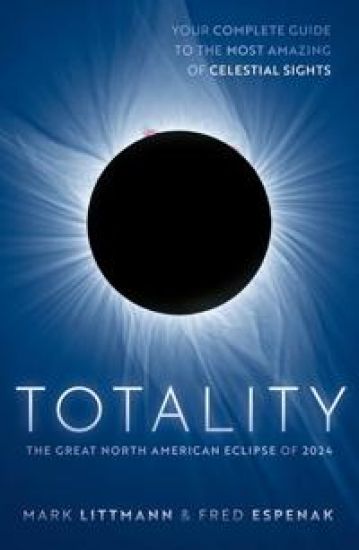
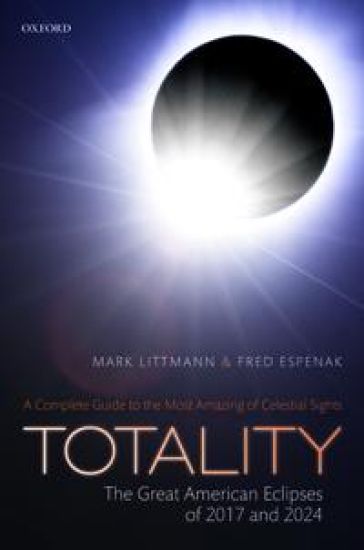
Totality

Totality

Mark Littmann; Fred Espenak

Oxford University Press
2023
nidottu
Praise for the previous edition 'A relaxed, well-written and information-packed expedition discovering the history of eclipses' - The Sky at Night A complete guide to the most stunning of celestial sights, a total eclipse of the Sun Totality: The Great North American Eclipse of 2024 is the most comprehensive source of information, photographs, and illustrations to help readers understand and safely enjoy all aspects of solar eclipses. It includes information on how best to photograph and video record an eclipse, as well as abundant maps, diagrams, and charts, as well as covering the science, history, mythology, and folklore of eclipses. This new edition focuses especially on the eclipse of April 8, 2024 that passes across Mexico, the United States, and Canada, including detailed maps, precise locations, and weather prospects.
Eclipse Almanac 2051 to 2060 - Color Edition

Eclipse Almanac 2051 to 2060 - Color Edition

Fred Espenak

Astropixels Publishing
2020
nidottu
Eclipse Almanac 2051 to 2060 is a concise reference for every eclipse of the Sun and the Moon over a 10-year period. This compendium identifies when and where each of these events will be seen. Particular details about each eclipse are included, as well as a 25-year table looking further into the future. Section 1 presents solar eclipses including an explanation of why they occur, types of solar eclipses (partial, annular, and total), and the visual appearance of each. Global maps depict the geographic regions of visibility of each of the 23 solar eclipses. Section 2 covers lunar eclipses with an explanation on why they occur, types of lunar eclipses (penumbral, partial, and total), and the visual appearance of each. Detailed figures illustrate each of the 23 lunar eclipses including the Moon's path through Earth's shadows, and a map identifying the geographic regions of visibility of every eclipse. Section 3 lists the date and time of the Moon's phases over the decade. New Moon and Full Moon phases coinciding with solar and lunar eclipses are identified. Eclipse Almanac 2051 to 2060 is part of a five volume series that covers fifty years of eclipses from 2021 through 2070.
Eclipse Almanac 2021 to 2030 - Color Edition

Eclipse Almanac 2021 to 2030 - Color Edition

Fred Espenak

Astropixels Publishing
2020
nidottu
Eclipse Almanac 2021 to 2030 is a concise reference for every eclipse of the Sun and the Moon over a 10-year period. This compendium identifies when and where each of these events will be seen. Particular details about each eclipse are included, as well as a 25-year table looking further into the future. Section 1 presents solar eclipses including an explanation of why they occur, types of solar eclipses (partial, annular, and total), and the visual appearance of each. Global maps depict the geographic regions of visibility of each of the 22 solar eclipses. Section 2 covers lunar eclipses with an explanation on why they occur, types of lunar eclipses (penumbral, partial, and total), and the visual appearance of each. Detailed figures illustrate each of the 22 lunar eclipses including the Moon's path through Earth's shadows, and a map identifying the geographic regions of visibility of every eclipse. Section 3 lists the date and time of the Moon's phases over the decade. New Moon and Full Moon phases coinciding with solar and lunar eclipses are identified. Eclipse Almanac 2021 to 2030 is part of a five volume series that covers fifty years of eclipses from 2021 through 2070.
Eclipse Almanac 2061 to 2070 - Color Edition

Eclipse Almanac 2061 to 2070 - Color Edition

Fred Espenak

Astropixels Publishing
2020
nidottu
Eclipse Almanac 2061 to 2070 is a concise reference for every eclipse of the Sun and the Moon over a 10-year period. This compendium identifies when and where each of these events will be seen. Particular details about each eclipse are included, as well as a 25-year table looking further into the future. Section 1 presents solar eclipses including an explanation of why they occur, types of solar eclipses (partial, annular, and total), and the visual appearance of each. Global maps depict the geographic regions of visibility of each of the 23 solar eclipses. Section 2 covers lunar eclipses with an explanation on why they occur, types of lunar eclipses (penumbral, partial, and total), and the visual appearance of each. Detailed figures illustrate each of the 22 lunar eclipses including the Moon's path through Earth's shadows, and a map identifying the geographic regions of visibility of every eclipse. Section 3 lists the date and time of the Moon's phases over the decade. New Moon and Full Moon phases coinciding with solar and lunar eclipses are identified. Eclipse Almanac 2061 to 2070 is part of a five volume series that covers fifty years of eclipses from 2021 through 2070.
Eclipse Almanac 2031 to 2040 - Color Edition

Eclipse Almanac 2031 to 2040 - Color Edition

Fred Espenak

Astropixels Publishing
2020
nidottu
Eclipse Almanac 2031 to 2040 is a concise reference for every eclipse of the Sun and the Moon over a 10-year period. This compendium identifies when and where each of these events will be seen. Particular details about each eclipse are included, as well as a 25-year table looking further into the future. Section 1 presents solar eclipses including an explanation of why they occur, types of solar eclipses (partial, annular, and total), and the visual appearance of each. Global maps depict the geographic regions of visibility of each of the 22 solar eclipses. Section 2 covers lunar eclipses with an explanation on why they occur, types of lunar eclipses (penumbral, partial, and total), and the visual appearance of each. Detailed figures illustrate each of the 23 lunar eclipses including the Moon's path through Earth's shadows, and a map identifying the geographic regions of visibility of every eclipse. Section 3 lists the date and time of the Moon's phases over the decade. New Moon and Full Moon phases coinciding with solar and lunar eclipses are identified. Eclipse Almanac 2031 to 2040 is part of a five volume series that covers fifty years of eclipses from 2021 through 2070.
Eclipse Almanac 2041 to 2050 - Black and White Edition
Eclipse Almanac 2041 to 2050 is a concise reference for every eclipse of the Sun and the Moon over a 10-year period. This compendium identifies when and where each of these events will be seen. Particular details about each eclipse are included, as well as a 25-year table looking further into the future. Section 1 presents solar eclipses including an explanation of why they occur, types of solar eclipses (partial, annular, and total), and the visual appearance of each. Global maps depict the geographic regions of visibility of each of the 22 solar eclipses. Section 2 covers lunar eclipses with an explanation on why they occur, types of lunar eclipses (penumbral, partial, and total), and the visual appearance of each. Detailed figures illustrate each of the 22 lunar eclipses including the Moon's path through Earth's shadows, and a map identifying the geographic regions of visibility of every eclipse. Section 3 lists the date and time of the Moon's phases over the decade. New Moon and Full Moon phases coinciding with solar and lunar eclipses are identified. Eclipse Almanac 2041 to 2050 is part of a five volume series that covers fifty years of eclipses from 2021 through 2070.
Eclipse Almanac 2061 to 2070 - Black and White Edition
Eclipse Almanac 2061 to 2070 is a concise reference for every eclipse of the Sun and the Moon over a 10-year period. This compendium identifies when and where each of these events will be seen. Particular details about each eclipse are included, as well as a 25-year table looking further into the future. Section 1 presents solar eclipses including an explanation of why they occur, types of solar eclipses (partial, annular, and total), and the visual appearance of each. Global maps depict the geographic regions of visibility of each of the 23 solar eclipses. Section 2 covers lunar eclipses with an explanation on why they occur, types of lunar eclipses (penumbral, partial, and total), and the visual appearance of each. Detailed figures illustrate each of the 22 lunar eclipses including the Moon's path through Earth's shadows, and a map identifying the geographic regions of visibility of every eclipse. Section 3 lists the date and time of the Moon's phases over the decade. New Moon and Full Moon phases coinciding with solar and lunar eclipses are identified. Eclipse Almanac 2061 to 2070 is part of a five volume series that covers fifty years of eclipses from 2021 through 2070.
Eclipse Almanac 2051 to 2060 - Black and White Edition
Eclipse Almanac 2051 to 2060 is a concise reference for every eclipse of the Sun and the Moon over a 10-year period. This compendium identifies when and where each of these events will be seen. Particular details about each eclipse are included, as well as a 25-year table looking further into the future. Section 1 presents solar eclipses including an explanation of why they occur, types of solar eclipses (partial, annular, and total), and the visual appearance of each. Global maps depict the geographic regions of visibility of each of the 23 solar eclipses. Section 2 covers lunar eclipses with an explanation on why they occur, types of lunar eclipses (penumbral, partial, and total), and the visual appearance of each. Detailed figures illustrate each of the 23 lunar eclipses including the Moon's path through Earth's shadows, and a map identifying the geographic regions of visibility of every eclipse. Section 3 lists the date and time of the Moon's phases over the decade. New Moon and Full Moon phases coinciding with solar and lunar eclipses are identified. Eclipse Almanac 2051 to 2060 is part of a five volume series that covers fifty years of eclipses from 2021 through 2070.
Eclipse Almanac 2041 to 2050 - Color Edition

Eclipse Almanac 2041 to 2050 - Color Edition

Fred Espenak

Astropixels Publishing
2020
nidottu
Eclipse Almanac 2041 to 2050 is a concise reference for every eclipse of the Sun and the Moon over a 10-year period. This compendium identifies when and where each of these events will be seen. Particular details about each eclipse are included, as well as a 25-year table looking further into the future. Section 1 presents solar eclipses including an explanation of why they occur, types of solar eclipses (partial, annular, and total), and the visual appearance of each. Global maps depict the geographic regions of visibility of each of the 22 solar eclipses. Section 2 covers lunar eclipses with an explanation on why they occur, types of lunar eclipses (penumbral, partial, and total), and the visual appearance of each. Detailed figures illustrate each of the 22 lunar eclipses including the Moon's path through Earth's shadows, and a map identifying the geographic regions of visibility of every eclipse. Section 3 lists the date and time of the Moon's phases over the decade. New Moon and Full Moon phases coinciding with solar and lunar eclipses are identified. Eclipse Almanac 2041 to 2050 is part of a five volume series that covers fifty years of eclipses from 2021 through 2070.
Eclipse Almanac 2031 to 2040 - Black and White Edition
Eclipse Almanac 2031 to 2040 is a concise reference for every eclipse of the Sun and the Moon over a 10-year period. This compendium identifies when and where each of these events will be seen. Particular details about each eclipse are included, as well as a 25-year table looking further into the future. Section 1 presents solar eclipses including an explanation of why they occur, types of solar eclipses (partial, annular, and total), and the visual appearance of each. Global maps depict the geographic regions of visibility of each of the 22 solar eclipses. Section 2 covers lunar eclipses with an explanation on why they occur, types of lunar eclipses (penumbral, partial, and total), and the visual appearance of each. Detailed figures illustrate each of the 23 lunar eclipses including the Moon's path through Earth's shadows, and a map identifying the geographic regions of visibility of every eclipse. Section 3 lists the date and time of the Moon's phases over the decade. New Moon and Full Moon phases coinciding with solar and lunar eclipses are identified. Eclipse Almanac 2031 to 2040 is part of a five volume series that covers fifty years of eclipses from 2021 through 2070.
Eclipse Almanac 2021 to 2030 - Black and White Edition
Eclipse Almanac 2021 to 2030 is a concise reference for every eclipse of the Sun and the Moon over a 10-year period. This compendium identifies when and where each of these events will be seen. Particular details about each eclipse are included, as well as a 25-year table looking further into the future. Section 1 presents solar eclipses including an explanation of why they occur, types of solar eclipses (partial, annular, and total), and the visual appearance of each. Global maps depict the geographic regions of visibility of each of the 22 solar eclipses. Section 2 covers lunar eclipses with an explanation on why they occur, types of lunar eclipses (penumbral, partial, and total), and the visual appearance of each. Detailed figures illustrate each of the 22 lunar eclipses including the Moon's path through Earth's shadows, and a map identifying the geographic regions of visibility of every eclipse. Section 3 lists the date and time of the Moon's phases over the decade. New Moon and Full Moon phases coinciding with solar and lunar eclipses are identified. Eclipse Almanac 2021 to 2030 is part of a five volume series that covers fifty years of eclipses from 2021 through 2070.
21st Century Canon of Solar Eclipses - Deluxe Black and White Edition
The 21st Century Canon of Solar Eclipses - Deluxe Black and White Edition contains maps and data for all 224 solar eclipses occurring during the 100-year period from 2001 through 2100. The eclipse predictions are based on the Jet Propulsion Lab's DE405 - a computer ephemeris used for calculating high precision coordinates of the Sun and Moon for hundreds of years into the past and future. Section 1 of the Canon presents fundamental concepts including eclipse classification the visual appearance of each type of eclipse, safe eclipse viewing tips, and how duration changes with distance from the central line. Section 2 discusses the eclipse the predictions, the constants used, time measurement and Delta T. A statistical analysis of eclipse frequency, extremes in eclipse magnitude, greatest central duration and quincena combinations are covered in Section 3. A concise explanation of the data contained in the solar eclipse catalog (Appendix A) and detailed descriptions of the solar eclipse maps (Appendices B, C and D) appear in Sections 4 and 5. The primary content of the 21st Century Canon resides in the four appendices. Appendix A is a comprehensive catalog listing the essential characteristics of each eclipse. These include the calendar date and time of greatest eclipse, Delta T, lunation number, Saros series, gamma, eclipse magnitude, geographic coordinates of greatest eclipse, Sun's altitude and azimuth, central path width and central line duration. Appendix B is an atlas of maps depicting the geographic regions of visibility of each eclipse. The zones of partial and central eclipse are plotted using an orthographic (global) map projection. The 224 maps are arranged twelve to a page permitting the assessment of eclipse visibility from any location on Earth. Appendix C zeros in on full-page maps each solar eclipse. Curves of Maximum Time and Curves of Eclipse Magnitude permit the estimation of time and magnitude from any geographic location. Finally, Appendix D plots the track of every central eclipse (total, annular and hybrid) on large scale maps to allow the identification of countries and major cities within each eclipse path. The 21st Century Canon of Solar Eclipses - Deluxe Black and White Edition is the modern successor to the NASA publication "Fifty Year Canon of Solar Eclipses". It is available in both black & white and color editions.

Totality -- The Great American Eclipses of 2017 and 2024

Totality -- The Great American Eclipses of 2017 and 2024

Mark Littmann; Fred Espenak

Oxford University Press
2017
sidottu
Totality: The Great American Eclipses is a complete guide to the most stunning of celestial sights, total eclipses of the Sun. It focuses on the eclipses of August 21, 2017 and April 8, 2024 that pass across the United States. The U. S. mainland has not experienced a total solar eclipse since 1979. This book provides information, photographs, and illustrations to help the public understand and safely enjoy all aspects of these eclipses including: § How to observe a total eclipse of the Sun § How to photograph and video record an eclipse § Why solar eclipses happen § The earliest attempts to understand and predict eclipses § The mythology and folklore of eclipses § The response of animals to total solar eclipses § The response of man to total eclipses through time § How scientists used total eclipses to understand how the Sun works § How astronomers used a total solar eclipse in 1919 to confirm Einstein's general theory of relativity § Weather prospects for the 2017 eclipse § Detailed maps of the path of totality for the 2017 eclipse and the eclipses of 2018 through 2024 § Precise local times for the eclipses of 2017 and 2024 (the next total solar eclipse to visit the U. S.) § Color and black-and-white photographs, diagrams, and charts to illustrate and explain total solar eclipses § Global maps of total solar eclipses from 2017 to 2045 and lists of total and annual solar eclipses from 1970 through 2070