Kirjailija
Friedrich Nietzsche
Kirjat ja teokset yhdessä paikassa: 921 kirjaa, julkaisuja vuosilta 1885–2026, suosituimpiin kuuluu Näin puhui Zarathustra. Vertaile teosten hintoja ja tarkista saatavuus suomalaisista kirjakaupoista.
921 kirjaa
Kirjojen julkaisuvuodet: 1885–2026.
Reproduktion des Originals: Allzumenschliches von Friedrich Nietzsche
Reproduction of the original: Beyond Good and Evil by Friedrich Nietzsche
Reproduction of the original: The Dawn of Day by Friedrich Nietzsche
Vi frygtløse er Friedrich Nietzsches nyskrevne femte bog til genudgivelsen i juni 1887 af de fire bøger i Den muntre videnskab fra 1882. Konsekvensen af, at ”Gud er død”, er for Nietzsche et Europa præget af had og frygt hos de mange svage i ånden, med fanatisme til følge: "Men vi frygtløse, vi denne tidsalders mere åndelige mennesker, vi kender vor fordel godt nok til netop som de mere åndelige at leve uden frygt for denne tid." Med den sjældne "frie ånds" særegne vid og viden træder Nietzsche op mod denne tid med bidende sarkasme i sine konstant afprøvende, omtænkende aforismer. Vi må indse, at der, hvor vi tror os mest os selv – i vores egen bevidsthed – er vi i virkeligheden mindst os selv. Bevidsthed er næsten kun et socialt fænomen, begrænset som den er af sprog. Vi må overvinde os selv, og komme væk fra mennesket med dets flokmentalitet og middelmådighed og skabe et nyt formål, en ny sundhed. Vi må gå ud fra den personlige erfaring, erkende, at krop og tænkning ikke kan adskilles. Vi må gå imod det mekaniske verdensbillede og ikke tro, at vi kan sætte livet på formel – hverken religiøst eller videnskabeligt. Oversat, indledt og med noter af Niels Henningsen.
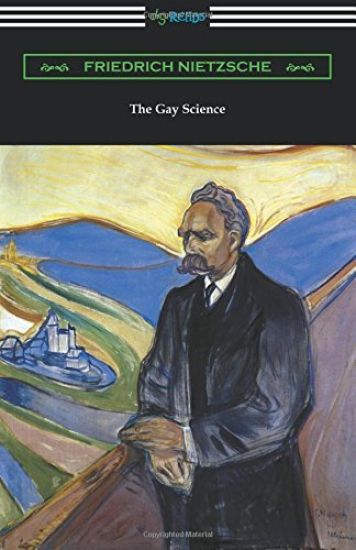
The Gay Science: With a Prelude in Rhymes and an Appendix of Songs
Friedrich Nietzsche
Digireads.com
2018
nidottu
First published in 1882 and revised in 1887, "The Gay Science" was written at the peak of Nietzsche's intellectual abilities. It includes a large number of poems and an appendix of songs, all written with the intent of encouraging freedom of the mind. With praise for the benefits of science, intellectual discipline, and skepticism, "The Gay Science" also exhibits an enthusiastic affirmation of life, drawing from the influence of the Provencal tradition. Nietzsche additionally explores the notion of power and the idea of eternal recurrence, though not in a systematic way. This work is noted for one of Nietzsche's most famous quotations, "God is Dead", a phrase which figuratively expresses the idea that the Enlightenment had killed the possibility for a rational belief in God by modern society. Described by the philosopher himself as "perhaps my most personal book", this work is worthy of attention from anyone with an interest in moral philosophy and the most essential themes and views of Friedrich Nietzsche. This edition is printed on premium acid-free paper, follows the translation of Thomas Common, and includes an introduction by Willard Huntington Wright.
Uit onvrede over de tijd waarin hij leefde, maar uit liefde voor zijn medemens, liet Nietzsche zijn Zarathoestra, tussen 1883 en 1885, zich in vier boekdelen over de zin van de mensheid en haar betekenisvolle lotsbestemming uitspreken. In dit eerste deel schetst hij het beeld van de ondergang van het kleinmenselijke en houdt hij ons, de nog onbekende en onbeminde, mogelijkheden van de grootmenselijke overgang voor. Menswording als een bewust gewild en gedurfd evolutieproces, daar gaat dit boek over, waarin het dierlijke en het kleingeestige dat in ieder van ons nog volop aanwezig is, het pad dient te effenen voor de komst van de Grote Mens. Een mens die ten volle mens weet te zijn door de beide betekenissen van Zarathoestra's naam waar te maken: de mens als lichtbrenger en kamelendrijver...
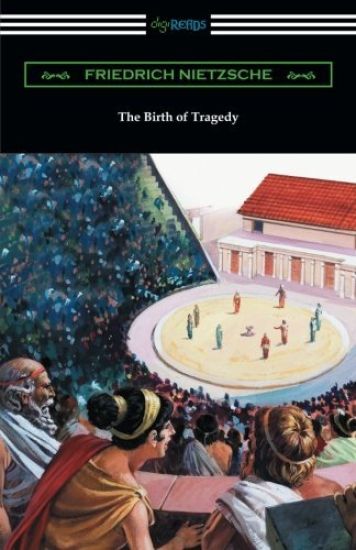
The Birth of Tragedy: (Translated by William A. Haussmann)
Friedrich Nietzsche
Digireads.com
2018
nidottu
German philosopher, Friedrich Nietzsche was one the most controversial figures of the 19th century. His evocative writings on religion, morality, culture, philosophy, and science were often polemic attacks against the established views of his time. First published in 1872, "The Birth of Tragedy" is the author's classic work on dramatic theory. It was the author's first published work in which he exhibited his enthusiasm for the dramatic works of Aeschylus and Sophocles. In the dramatic works of classical antiquity, Nietzsche found a life-affirming philosophy arising from what is otherwise a tragic and meaningless world. Introduced here is the intellectual dichotomy between the Dionysian and the Apollonian dramatic traditions. The sons of Zeus, Apollo and Dionysus, respectively represented the traits of reason and emotion. Nietzsche argues that the conflict between these two characteristics is central to the human condition and the brilliance with which the Ancient Greeks dealt with this conflict was the principal quality contributing to their excellence. Harshly criticized in its time, Nietzsche would later recognize, in a prefatory essay, the work as a product of youthful naivet when he reissued it in 1886. This edition is printed on premium acid-free paper and follows the translation of William A. Haussmann.
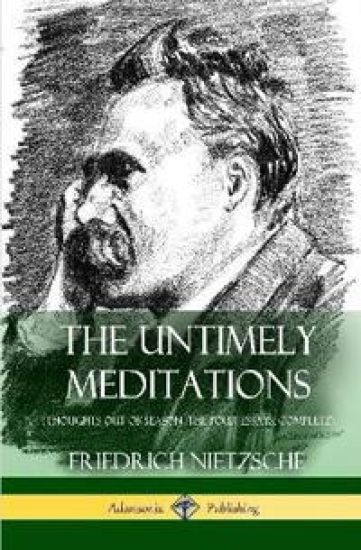
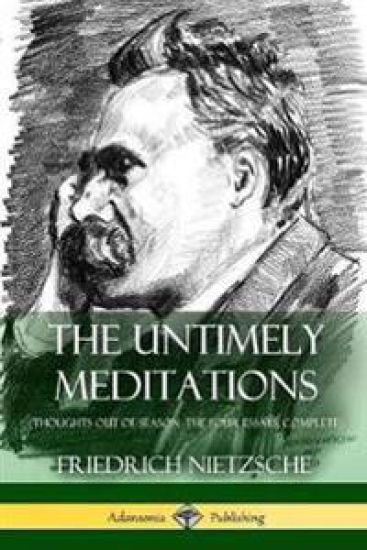
The Untimely Meditations (Thoughts Out of Season -The Four Essays, Complete) (Hardcover)
Friedrich Nietzsche; Anthony Ludovici; Adrian Collins
Lulu.com
2018
sidottu
The Untimely Meditations comprises of four essays, which are presented here in the high-quality translations of Anthony Ludovici and Adrian Collins. These early writings by Nietzsche displays much of the promise which was to unfurl later in the philosopher's life. These four essays, all different in subject and tone yet tangentially related, are also known by the title Thoughts Out of Season, and were originally published in two parts between 1873 and 1876. In each essay, Nietzsche examines aspects of modern culture and art. In the first, third and final essays he singles out a single personage as representative or influential upon of the present day, subjecting each to a philosophic critique. The first two essays are openly polemical and critical, whilst the final two offer a non-hostile and complimenting tone, with parts praising their subjects.
The Untimely Meditations (Thoughts Out of Season -The Four Essays, Complete)
Friedrich Nietzsche; Anthony Ludovici; Adrian Collins
Lulu.com
2018
pokkari
The Untimely Meditations comprises of four essays, which are presented here in the high-quality translations of Anthony Ludovici and Adrian Collins. These early writings by Nietzsche displays much of the promise which was to unfurl later in the philosopher's life. These four essays, all different in subject and tone yet tangentially related, are also known by the title Thoughts Out of Season, and were originally published in two parts between 1873 and 1876. In each essay, Nietzsche examines aspects of modern culture and art. In the first, third and final essays he singles out a single personage as representative or influential upon of the present day, subjecting each to a philosophic critique. The first two essays are openly polemical and critical, whilst the final two offer a non-hostile and complimenting tone, with parts praising their subjects.
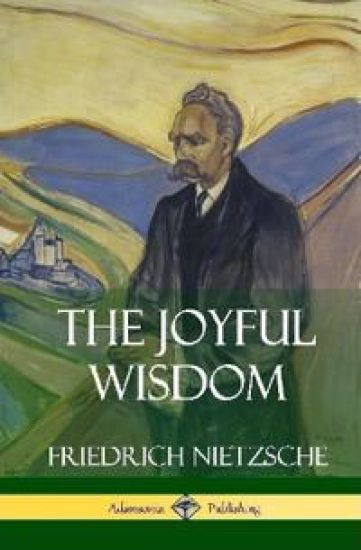
This edition of The Joyful Wisdom boasts an authoritative English translation by Thomas Common, which brings Nietzsche's poetry and philosophy to vivid comprehension. Initially published in 1882 and also known by its alternate title The Gay Science, the arguments within this book are primarily occupied with the philosophical concept that God has died. It is in this publication that Nietzsche first makes his famous statement that God is dead; a phrase which was to become associated with the philosopher during and after his lifetime. For his own part, Nietzsche identifies these writings as being of an intensely personal nature, the poems within expressing feelings at the core of his being. Definitively part of the philosopher's middle period, this work encapsulates the praise of science and intellectual prowess which characterized Nietzsche in the early 1880s. A strong alignment with skepticism and a commitment to innovation with the scientific method, are strongly praised by the philosopher.
This hardcover edition of The Joyful Wisdom boasts an authoritative English translation by Thomas Common, which brings Nietzsche's poetry and philosophy to vivid comprehension. Initially published in 1882 and also known by its alternate title The Gay Science, the arguments within this book are primarily occupied with the philosophical concept that God has died. It is in this publication that Nietzsche first makes his famous statement that God is dead; a phrase which was to become associated with the philosopher during and after his lifetime. For his own part, Nietzsche identifies these writings as being of an intensely personal nature, the poems within expressing feelings at the core of his being. Definitively part of the philosopher's middle period, this work encapsulates the praise of science and intellectual prowess which characterized Nietzsche in the early 1880s. A strong alignment with skepticism and a commitment to innovation with the scientific method, are strongly praised by the philosopher.
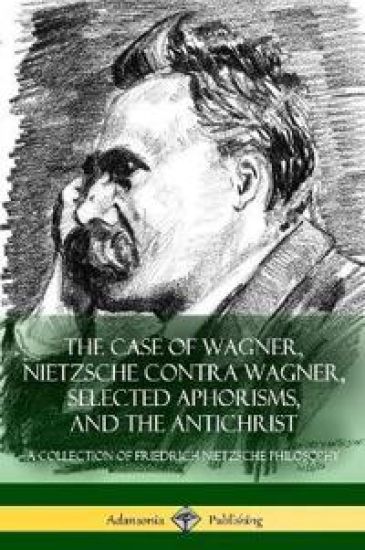
The Case of Wagner, Nietzsche Contra Wagner, Selected Aphorisms, and The Antichrist
Friedrich Nietzsche; H L Mencken; Anthony Ludovici
Lulu.com
2018
pokkari
Nietzsche's classic critique of the composer Wagner is paired with three other works, including The Antichrist, in translations to English which render the philosopher's arguments vividly cogent. First published in 1888, The Case for Wagner is a selection of essays and aphorisms levy a variety of criticisms, with Nietzsche ironically making a comparison between Wagner and a French composer, Georges Bizet. The Antichrist comprises a total of sixty-two short chapters, each containing a distinct philosophical argument or angle upon the targets of Christianity, organised religion, and those who masquerade as faithful but are in actuality anything but. This edition also includes a selection of aphorisms penned by Nietzsche, many of which effectively summarize points he visited in his philosophy.
The Case of Wagner, Nietzsche Contra Wagner, Selected Aphorisms, and The Antichrist
Friedrich Nietzsche; H L Mencken; Anthony Ludovici
Lulu.com
2018
sidottu
In this hardcover edition, Nietzsche's classic critique of the composer Wagner is paired with three other works, including The Antichrist, in translations to English which render the philosopher's arguments vividly cogent. First published in 1888, The Case for Wagner is a selection of essays and aphorisms levy a variety of criticisms, with Nietzsche ironically making a comparison between Wagner and a French composer, Georges Bizet. The Antichrist comprises a total of sixty-two short chapters, each containing a distinct philosophical argument or angle upon the targets of Christianity, organised religion, and those who masquerade as faithful but are in actuality anything but. This edition also includes a selection of aphorisms penned by Nietzsche, many of which effectively summarize points he visited in his philosophy.
On the Genealogy of Morality, the classic three essay treatise of Friedrich Nietzsche, is considered by scholars to be one of the author's philosophic masterworks. This astounding work represents the maturity of Nietzsche's ideas, and consists of three distinct essays. In each, Nietzsche isolates and expands upon ideas he expressed in Beyond Good and Evil. Nietzsche juxtaposes ideas of weakness and strength, and notions of human preconception as generated over millenia of hierarchy inclusive of slavery, to demonstrate an evolution of ideas beyond traditional duality. This text controversially introduces the 'blond beast' - a a forebear for Nietzsche's posthumous association with Nazism and racial superiority. Nietzsche demonstrates how people with allegiance to ascetic ideals gained traction in society. He proceeds to discount science as an opposing influence, together with historians and idle thinkers, advocating for criticism of what is accepted as truth, and a replacement for flawed definitions.
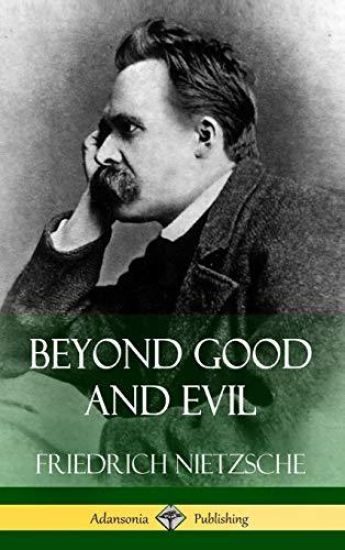
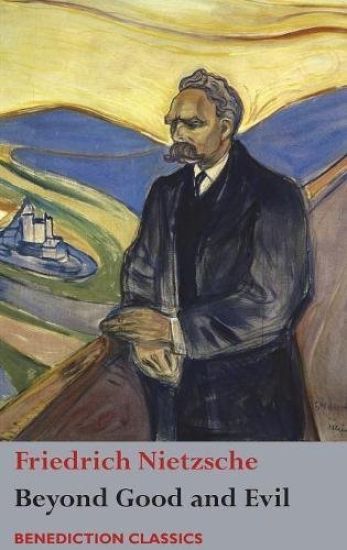
Beyond Good and Evil: Prelude to a Philosophy of the Future is a seminal work of moral philosophy by Friedrich Nietzsche, presented here in hardcover form. First published in 1886, it expands on the ideas put forth by an earlier work, Thus Spoke Zarathustra. The tone this text carries is more critical, polemical and argumentative, its words representing the fierce maturing of Nietzsche's ideas. In Beyond Good and Evil, Nietzsche boldly claims that earlier philosophers are lacking in good critical sense, basing their ideas upon a wide, uncontested acceptance of the dogmatic principles of ordinary morals, virtues and vices. The first claim Nietzsche makes is that his forebears and contemporaries have founded grand metaphysical systems upon the faith that good people are the opposite of evil people. This, as opposed to both poles of duality being a different expression of the same impulses more directly and plainly expressed by the evil man.
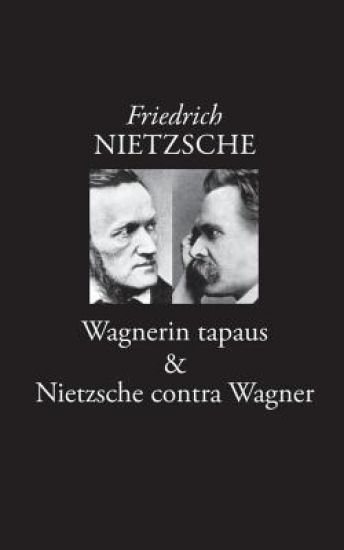
Nietzsche iskee Wagneriin kuin tuhat salamaa! Mutta vuonna 1888 ilmestynyt Wagnerin tapaus ei tee selvää jälkeä ainoastaan suuresta säveltäjästä, vaan samalla koko modernista ajasta, jonka >>opettavaisimpana tapauksena>> Nietzsche Wagneria piti. Hurja vivisektio paljastaa armottomasti modernin sielun rappeutuneet sisuskalut. Tämän kirjan lähellä on tulenteko kielletty: räjähdysvaara! Nietzsche contra Wagner on traagisen filosofin viimeinen sotahuuto. Vuoden 1888 lopulla Nietzsche valikoi, kokosi ja muokkasi varhaisemmista kirjoituksistaan tämän pikku kirjasen, jonka sanoma on selvä: Nietzsche ja Wagner ovat antipodeja.
Twilight of the Idols and The Anti-Christ (Translated by Thomas Common with Introductions by Willard Huntington Wright)
Friedrich Nietzsche
Digireads.com
2018
pokkari
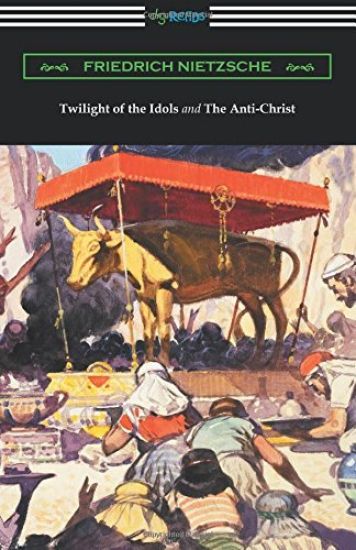
One of the most controversial and inflammatory philosophers in western civilization, Friedrich Nietzsche summarized his extraordinary ideas in "The Twilight of the Idols." Appropriately subtitled "How One Philosophizes with a Hammer," this work is a polemic on many of the ideas of his day, especially what he describes as the 'The Problem of Socrates' and 'The Four Great Errors.' Through the process of self-deception Nietzsche discusses the tendency of man to confuse cause and effect. By examining the concepts of accountability and free will, as they relate to vice and morality, Nietzsche attacks the prevalent philosophical systems of his time. Written in just over a week, "The Twilight of the Idols," prepares readers for the principles addressed in "The Anti-Christ." Also written in 1888, it expands on Nietzsche's blatant disagreements with institutional Christianity. Written to deliberately provoke the reader, Nietzsche's philosophy is perhaps most shocking not in its frank negativity concerning nearly all aspects of humanity, but in the profound depth of its understanding of human nature and the optimism which subtly affirms the capabilities and possibilities of mankind. This edition is printed on premium acid-free paper and is translated by Thomas Common with introductions by Willard Huntington Wright.
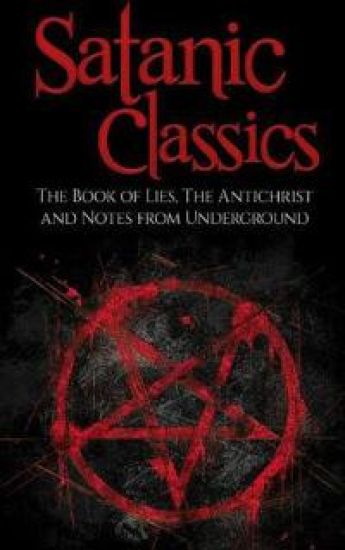
Three master works from the official Church of Satan reading list: The Book of Lies by Aleister Crowley, The Anti-Christ by Friedrich Nietzsche and Notes from Underground Fyodor Dostoyevsky.
Nietzsche, though primarily a philosopher, wrote widely on art, philology, history, religion, tragedy, culture, and science. In 1886, at the height of his powers, he published Beyond Good and Evil. Here he examines much of the best of human thought--dogmatic philosophy, Judeo-Christian morality, science and democracy - and finds it lacking. Rejecting "slave-morality" he presents his prescient vision of the future of philosophy with poetry and passion. Beyond Good and Evil is a modern classic: essential reading for anyone wishing to understand modern thought and modern society.