Kirjojen hintavertailu – 12 859 819 kirjaa ja 27 kauppaa

Kirjailija

Friedrich Nietzsche

Kirjat ja teokset yhdessä paikassa: 921 kirjaa, julkaisuja vuosilta 1885–2026, suosituimpiin kuuluu Näin puhui Zarathustra. Vertaile teosten hintoja ja tarkista saatavuus suomalaisista kirjakaupoista.

921 kirjaa

Kirjojen julkaisuvuodet: 1885–2026.

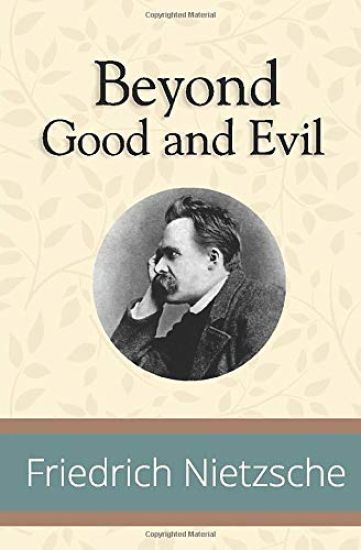
Beyond Good and Evil

Beyond Good and Evil

Friedrich Nietzsche

Sde Classics
2019
pokkari
Insanity in individuals is something rare-but in groups, parties, nations, and epochs it is the rule. Nietzsche's famous work Beyond Good and Evil follows up on the morality ideas presented in his prior publication, Thus Spoke Zarathustra (1883), and further challenges the accepted standards previous philosophers held surrounding morality. This nine part work, which includes an entire chapter (Chapter IV) of short aphorisms, has become a mainstay in philosophical thinking.
Beyond Good and Evil

Beyond Good and Evil

Friedrich Nietzsche

Pharos Books Private Limited
2019
pokkari

Halvin toimitettuna 25,10 €

"There is no such thing as moral phenomena, but only a moral interpretation of phenomena" ― Friedrich Nietzsche, Beyond Good and Evil Beyond Good and Evil: Prelude to a Philosophy of the Future (1886) by the famous philosopher Friedrich Nietzsche is a remarkable work which offers a treatise on ""Perspective of life"". ""Perspective of life"", according to Nietzche, is ""beyond good and evil"", refuting the existence of a universal morality for all human beings. This works discusses and exposes the deficiencies of so-called ""philosophers"" and identifies the qualities of the ""new philosophers"" which are imagination, self-assertion, danger, originality, and the ""creation of values"". It also contests some of the key presuppositions of the old philosophic tradition like ""self-consciousness"", ""knowledge"", ""truth"", and ""free will". The book interestingly offers the ""will to power"" as an explanation of all behavior.
Unpublished Fragments (Spring 1885–Spring 1886)

Unpublished Fragments (Spring 1885–Spring 1886)

Friedrich Nietzsche

Stanford University Press
2019
pokkari

Halvin toimitettuna 34,60 €

This volume of The Complete Works provides the first English translation of all Nietzsche's unpublished notes from April 1885 to the summer of 1886, the period in which he wrote his breakthrough philosophical books Beyond Good and Evil and On the Genealogy of Morality. Keen to reinvent himself after Thus Spoke Zarathustra, the philosopher used these unpublished notes to chart his search for a new philosophical voice. The notebooks contain copious drafts of book titles; critical retrospection on his earlier projects; a critique of the feminine; prophetic commentary on Germany; and forays into metaphysics, epistemology, ethics, aesthetics, and language. They also reveal his deep concern for Europe and its future and a burgeoning presence of the Dionysian. We learn what Nietzsche was reading and from whom he borrowed, and we find a considerable portion of notes and fragments from the non-book "Will to Power," though here they are unembellished and unmediated. Richly annotated and accompanied by a detailed translator's afterword, this landmark volume sheds light on the controversy surrounding the Nachlass of the 1880s.
Unpublished Fragments (Spring 1885–Spring 1886)

Unpublished Fragments (Spring 1885–Spring 1886)

Friedrich Nietzsche

STANFORD UNIVERSITY PRESS
2019
sidottu
This volume of The Complete Works provides the first English translation of all Nietzsche's unpublished notes from April 1885 to the summer of 1886, the period in which he wrote his breakthrough philosophical books Beyond Good and Evil and On the Genealogy of Morality. Keen to reinvent himself after Thus Spoke Zarathustra, the philosopher used these unpublished notes to chart his search for a new philosophical voice. The notebooks contain copious drafts of book titles; critical retrospection on his earlier projects; a critique of the feminine; prophetic commentary on Germany; and forays into metaphysics, epistemology, ethics, aesthetics, and language. They also reveal his deep concern for Europe and its future and a burgeoning presence of the Dionysian. We learn what Nietzsche was reading and from whom he borrowed, and we find a considerable portion of notes and fragments from the non-book "Will to Power," though here they are unembellished and unmediated. Richly annotated and accompanied by a detailed translator's afterword, this landmark volume sheds light on the controversy surrounding the Nachlass of the 1880s.
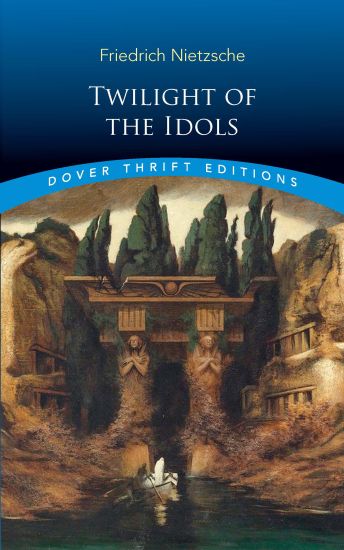
Twilight of the Idols

Twilight of the Idols

Friedrich Nietzsche

Dover Publications Inc.
2019
nidottu

Halvin toimitettuna 9,90 €

Nietzsche's ""grand declaration of war,"" Twilight of the Idols was written while the philosopher was at the peak of his powers. Blazing with provocative, inflammatory rhetoric, this 1888 polemic examines what we worship and why. Intended by the author as a general introduction to his philosophy, it assails the ""idols"" of Western philosophy and culture, including Socratic rationality and Christian morality.
The Will to Power

The Will to Power

Friedrich Nietzsche

Dover Publications Inc.
2019
nidottu

Halvin toimitettuna 18,90 €

Throughout his career, 19th-century philosopher Friedrich Wilhelm Nietzsche explored the concept of the will to power, interpreting it variously as a psychological, biological, and metaphysical principle. This posthumously published volume collects his notes on the force that drives humans toward achievement, dominance, and creative activity. Its reflections on art, morality, Christianity, nihilism, and other topics offer absorbing glimpses into the mind of a great thinker.
Selected Short Stories of Nietzsche

Selected Short Stories of Nietzsche

Friedrich Nietzsche

General Press
2019
sidottu
Nietzsche is one of the most popular of modern philosophers. He believed in the power of individuals to lift themselves beyond perceived limits and free themselves of all the conventional confines. His ideas have had a great influence on many Western schools of philosophy. Nietzsche believed in accepting the reality of this world and trying to rise above oneself here, being great in this life, instead of living in dreams of another life. He did not believe in the idea of giving up the pursuit of greatness in the current existence in the hope of a better life after death in some other world. He believed in the idea of the overman or superman, in which each person should to raise oneself to higher levels by one's own effort. The works of Friedrich Nietzsche have fascinated readers around the world ever since the publication of his first book more than a hundred years ago. This is the collections of his selected short stories.
On Truth and Untruth

On Truth and Untruth

Friedrich Nietzsche

Harper Perennial Modern Classics
2019
nidottu
“We continue to live within the intellectual shadow cast by Nietzsche.”—New York Times Book ReviewReissued for the age of "fake news," On Truth and Untruth charts Nietzsche’s evolving thinking on truth, which has exerted a powerful influence over modern and contemporary thought. This original collection features the complete text of the celebrated early essay “On Truth and Lies in a Nonmoral Sense” (”a keystone in Nietzsche’s thought”—Stanford Encyclopedia of Philosophy), as well as selections from the great philosopher’s entire career, including key passages from The Gay Science, Beyond Good and Evil, On the Genealogy of Morals, The Will to Power, Twilight of the Idols, and The Antichrist. In times of crisis, the great works of philosophy help us make sense of the world. The Harper Perennial Resistance Library is a special five-book series highlighting short classic works of independent thought that illuminate the nature of truth, humanity's dangerous attraction to authoritarianism, the influence of media and mass communication, and the philosophy of resistance—all critical in understanding today's politically charged world.
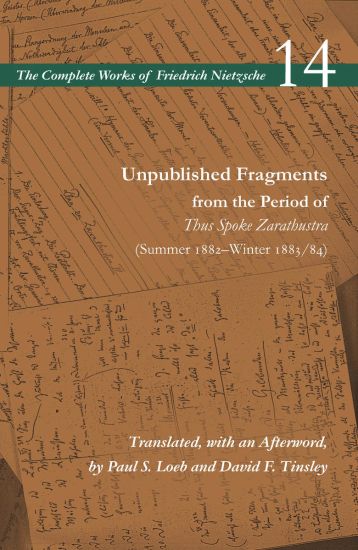
Unpublished Fragments from the Period of Thus Spoke Zarathustra (Summer 1882–Winter 1883/84)
With this latest book in the series, Stanford continues its English-language publication of the famed Colli-Montinari edition of Nietzsche's complete works, which include the philosopher's notebooks and early unpublished writings. Scrupulously edited so as to establish a new standard for the field, each volume includes an Afterword that presents and contextualizes the material therein. This volume provides the first English translation of Nietzsche's unpublished notebooks from 1882–1884, the period in which he was composing the book that he considered his best and most important work, Thus Spoke Zarathustra. Crucial transitional documents in Nietzsche's intellectual development, the notebooks mark a shift into what is widely regarded as the philosopher's mature period. They reveal his long-term design of a fictional tetralogy charting the philosophical, pedagogical, and psychological journeys of his alter-ego, Zarathustra. Here, in nuce, appear Zarathustra's teaching about the death of God; his discovery that the secret of life is the will to power; and his most profound and most frightening thought—that his own life, human history, and the entire cosmos will eternally return. During this same period, Nietzsche was also composing preparatory notes for his next book, Beyond Good and Evil, and the notebooks are especially significant for the insight they provide into his evolving theory of drives, his critical ideas about the nature and history of morality, and his initial thoughts on one of his best-known concepts, the superhuman (Übermensch).
Unpublished Fragments from the Period of Thus Spoke Zarathustra (Summer 1882–Winter 1883/84)

Unpublished Fragments from the Period of Thus Spoke Zarathustra (Summer 1882–Winter 1883/84)

Friedrich Nietzsche

Stanford University Press
2019
pokkari

Halvin toimitettuna 34,60 €

With this latest book in the series, Stanford continues its English-language publication of the famed Colli-Montinari edition of Nietzsche's complete works, which include the philosopher's notebooks and early unpublished writings. Scrupulously edited so as to establish a new standard for the field, each volume includes an Afterword that presents and contextualizes the material therein. This volume provides the first English translation of Nietzsche's unpublished notebooks from 1882–1884, the period in which he was composing the book that he considered his best and most important work, Thus Spoke Zarathustra. Crucial transitional documents in Nietzsche's intellectual development, the notebooks mark a shift into what is widely regarded as the philosopher's mature period. They reveal his long-term design of a fictional tetralogy charting the philosophical, pedagogical, and psychological journeys of his alter-ego, Zarathustra. Here, in nuce, appear Zarathustra's teaching about the death of God; his discovery that the secret of life is the will to power; and his most profound and most frightening thought—that his own life, human history, and the entire cosmos will eternally return. During this same period, Nietzsche was also composing preparatory notes for his next book, Beyond Good and Evil, and the notebooks are especially significant for the insight they provide into his evolving theory of drives, his critical ideas about the nature and history of morality, and his initial thoughts on one of his best-known concepts, the superhuman (Übermensch).
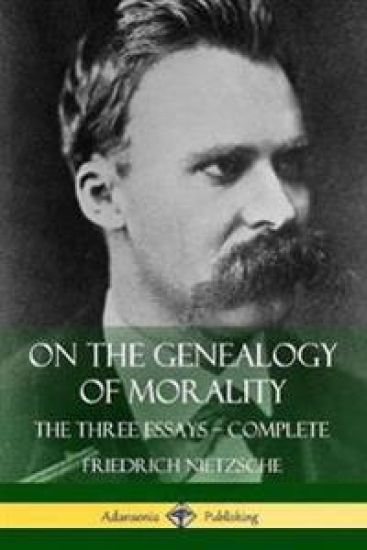
On the Genealogy of Morality: The Three Essays – Complete with Notes
On the Genealogy of Morality, the classic three essay treatise of Friedrich Nietzsche, is considered by scholars to be one of the author's philosophic masterworks. This astounding work represents the maturity of Nietzsche's ideas, and consists of three distinct essays. In each, Nietzsche isolates and expands upon ideas he expressed in Beyond Good and Evil. Nietzsche juxtaposes ideas of weakness and strength, and notions of human preconception as generated over millenia of hierarchy inclusive of slavery, to demonstrate an evolution of ideas beyond traditional duality. This text controversially introduces the 'blond beast' - a a forebear for Nietzsche's posthumous association with Nazism and racial superiority. Nietzsche demonstrates how people with allegiance to ascetic ideals gained traction in society. He proceeds to discount science as an opposing influence, together with historians and idle thinkers, advocating for criticism of what is accepted as truth, and a replacement for flawed definitions.
Således talte Zarathustra - en bog for alle og for ingen
"Her er den profetiske og visionære tone dominerende, og i stedet for at fordømme den verden der findes, besynger Zarathustra den verden, der skal komme. Han indfører en vision om det hinsidige, og denne vision virker tilbage som en nedvurdering af det jordiske liv ... Nietzsches ganske brede popularitet skyldes formodentlig ikke mindst, at han er så ganske enestående citérbar, og i den henseende er der intet der overgår »Zarathustra«. Undertiden virker det som om, hver anden sætning er skrevet med henblik på at blive citeret. Specielt vil yndere af politisk helt igennem ukorrekte udtalelser her finde et sandt skatkammer. Alene af den grund skal »Zarathustras« popularitet og aktualitet nok vise sig at være holdbar langt ind i næste årtusinde." Asger Brandt, Kristeligt Dagblad
The Will to Power

The Will to Power

Friedrich Nietzsche

Digireads.com
2019
nidottu
First released in 1901, about one year after Nietzsche's death, "The Will to Power" is a collection of Nietzsche's unedited and unpublished writings. Though the title and all of the ideas are of the radical philosopher's own invention, the order and selection of Nietzsche's notebooks are due to the organization of his sister. As a result of his poor health, Nietzsche used his remaining energy to write a different work, leaving "The Will to Power" in the earliest stages of writing. The topics he explores vary widely and include nihilism, religion, morality, the theory of knowledge, and art. Some ideas are reflected in the works Nietzsche managed to complete in his lifetime, while others show his progression from those ideas in his earlier life. Overall, "The Will to Power" is an opportunity to read the intellectual journaling of one of the nineteenth century's most brilliant thinkers. Collected together here are both posthumously published volumes I and II as translated by Anthony M. Ludovici. This edition is printed on premium acid-free paper.
Thus Spake Zarathustra

Thus Spake Zarathustra

Friedrich Nietzsche

Lector House
2019
muu
This book is a result of an effort made by us towards making a contribution to the preservation and repair of original classic literature. In an attempt to preserve, improve and recreate the original content, we have worked towards: 1. Type-setting & Reformatting: The complete work has been re-designed via professional layout, formatting and type-setting tools to re-create the same edition with rich typography, graphics, high quality images, and table elements, giving our readers the feel of holding a 'fresh and newly' reprinted and/or revised edition, as opposed to other scanned & printed (Optical Character Recognition - OCR) reproductions. 2. Correction of imperfections: As the work was re-created from the scratch, therefore, it was vetted to rectify certain conventional norms with regard to typographical mistakes, hyphenations, punctuations, blurred images, missing content/pages, and/or other related subject matters, upon our consideration. Every attempt was made to rectify the imperfections related to omitted constructs in the original edition via other references. However, a few of such imperfections which could not be rectified due to intentional\unintentional omission of content in the original edition, were inherited and preserved from the original work to maintain the authenticity and construct, relevant to the work. We believe that this work holds historical, cultural and/or intellectual importance in the literary works community, therefore despite the oddities, we accounted the work for print as a part of our continuing effort towards preservation of literary work and our contribution towards the development of the society as a whole, driven by our beliefs. We are grateful to our readers for putting their faith in us and accepting our imperfections with regard to preservation of the historical content. HAPPY READING

Schopenhauer kasvattajana

Schopenhauer kasvattajana

Friedrich Nietzsche

Books on Demand
2019
pokkari

Halvin toimitettuna 26,00 €

Friedrich Nietzschen >>Epäajanmukaisia tutkisteluja>> ilmestyi neljässä osassa vuosina 1873-1876. Sen kolmas osa, >>Schopenhauer kasvattajana>>, ilmestyi 1874. Sitä kirjoittaessaan Nietzsche oli jo alkanut vieraantua suuren pessimistin filosofiasta, mutta ei itse filosofista: Schopenhauer on Nietzschelle ennen kaikkea innostava esikuva, jonka kasvattava vaikutus ei perustu opetuksiin ja dogmeihin, vaan inhimilliseen esimerkkiin, siihen, kuinka hän eli ja millainen ihminen hän oli.
Beyond Good and Evil

Beyond Good and Evil

Friedrich Nietzsche

Digireads.com
2019
pokkari

Halvin toimitettuna 19,40 €

German philosopher, Friedrich Nietzsche was one the most controversial figures of the 19th century. His evocative writings on religion, morality, culture, philosophy, and science were often polemic attacks against the established views of his time. First published in 1886, "Beyond Good and Evil" is a work that draws upon and expands the ideas that Nietzsche first addressed in his previous work, "Thus Spoke Zarathustra." Nietzsche contrasts the concepts of good and evil as they were viewed in ancient times with the modern interpretations of them. As he asserts, the initial form of morality arises from the warrior nature of the ruling castes of ancient civilizations, who viewed themselves as good because of their wealth and power in contrast to the weakness of those that they enslaved. He further describes how the recasting of these ancient values through religion has given rise to a new "slave" morality, which defines goodness by a set of virtues which are contradictory to those of the ruling classes. Ultimately "Beyond Good and Evil" is a harsh criticism of philosophical systems that described a good person as the opposite of an evil one rather than just a relative expression of the impulses inherent in all men. This edition is printed on premium acid-free paper, is translated by Helen Zimmern, and includes an introduction by Thomas Common.