Kirjailija
Fyodor Dostoevsky
Kirjat ja teokset yhdessä paikassa: 443 kirjaa, julkaisuja vuosilta 1981–2026, suosituimpiin kuuluu The Great Mystery Collection. Vertaile teosten hintoja ja tarkista saatavuus suomalaisista kirjakaupoista.
Nimi esiintyy myös muodoissa: Fyodor _ Dostoevsky
443 kirjaa
Kirjojen julkaisuvuodet: 1981–2026.
Poverty-stricken and cut off from society, former law student Rodion Romanovich Raskolnikov leads a desolate life in a dreary little room in St Petersburg. Having abandoned all hopes of sustaining himself through work, he now obsesses over the idea of changing his fortunes through an act of extreme violence: the killing of an elderly pawnbroker. His mind baulks at the horror of his plan, but when he hears that his sister Dunya is about to agree to a loveless marriage in order to escape the advances of her employer, his disgust for the world becomes unbounded, and his feelings of rebellion and revenge push him closer and closer to the edge of the precipice. A masterpiece of psychological insight, Dostoevsky’s 1866 novel features some of its author’s most memorable characters – from the temperamental protagonist Raskolnikov to the amoral sensualist Svidrigailov and the immoral lawyer Luzhin. Presented here in a sparkling new translation by Roger Cockerell, Crime and Punishment is a towering work in nineteenth-century Russian fiction and a landmark of world literature.
The narrator-referred to in this SparkNote as the Underground Man-introduces himself. He describes himself as sick, wicked, and unattractive, and notes that he has a problem with his liver. He refuses to treat this ailment out of spite, although he understands that keeping his problems from doctors does the doctors themselves no harm. The Underground Man explains that, during his many years in civil service, he was wicked, but that he considers this wickedness a kind of compensation for the fact that he never accepted bribes. He almost immediately revises this claim, however, admitting that he never achieved genuine wickedness toward his customers, but only managed to be rude and intimidating as a kind of game. We learn that the Underground Man has retired early from his civil service job after inheriting a modest sum of money. He only held onto his low-ranking job so that he would be able to afford food, not because he got any satisfaction from it. He notes that he is filled with conflicting impulses: wickedness, sentimentality, self-loathing, contempt for others. His intense consciousness of these opposing elements has paralyzed him. He has settled into his miserable corner of the world, incapable of wickedness and incapable of action, loathing himself even as he congratulates himself on his own intelligence and sensitivity. He adds that the weather in St. Petersburg is probably bad for his health, but that he will stay there anyway, out of spite.
One of the most renowned novels of 19th century 'Crime And Punishment, by Fyodor Mikhailovich Dostoevsky, revolves around the tragic story of Raskolnikov, a handsome and intelligent man who is gripped by anxiety and has isolated himself from others. His wrapped philosophical outlook drives him to commit murder of a old pawnbroker. Was this for the betterment of the society? Surprised by his sense of guilt and terrified of the consequences of his actions, Raskolnikov wanders through the slums of pre-revolutionary St. Petersburg trying to escape the ever-suspicious Porfiry, the official investigating the crime. Will Raskolnikov confess his crime? An Exceptional psychological drama has undergone many film adaptations, and still continues to remain as a literary sensation.

The Eternal Husband (Warbler Classics Annotated Edition)
Fyodor Dostoevsky; Patrick Maxwell
Warbler Classics
2022
pokkari
The Eternal Husband, one of Dostoevsky's lesser-known novels, is thought by many critics to be among his most powerful and perfect works. Pavel Pavlovitch is the "eternal husband," which Velchaninov, his wife's former lover, defines as a buffoon doomed to be nothing more than an appendage to his wife. The psychological duel at the heart of the story drives this tale of obsession, revenge, and the search for redemption. A brutal slow-boiler of escalating confrontation, The Eternal Husband pulses with Dostoevsky's dark brilliance and insight into the human heart. This Warbler Classics edition includes an afterword by Patrick Maxwell and a detailed biographical timeline.

Notes from Underground (Warbler Classics Annotated Edition)
Fyodor Dostoevsky
Warbler Classics
2021
pokkari
Notes from Underground is widely considered the forerunner of modernist literature and one of Dostoevsky's greatest literary achievements. The novel recounts the thoughts and encounters of a civil servant known only as The Underground Man who has quit his job and lives in a basement flat on the outskirts of St. Petersburg, surviving on a small inheritance. His humiliation turns to an inward-turning aggression that further reinforces his alienation from mainstream society. Includes a contribution by Patrick Maxwell, the letter that Dostoevsky wrote to his brother on the day he was to be executed, a biographical timeline, and suggested reading.
About Dostoevsky’s Notes from Underground “The novels of Dostoevsky are seething whirlpools, gyrating sandstorms, waterspouts that hiss and boil and suck us in. They are composed purely and wholly of the stuff of the soul. Against our wills we are drawn in, whirled round, blinded, suffocated, and at the same time filled with a giddy rapture. . . . Men are at the same time villains and saints; their acts are at once beautiful and despicable. . . . It is all the same to him whether you are noble or simple, a tramp or a great lady. Whoever you are, you are the vessel of this perplexed liquid, this cloudy, yeasty, precious stuff, the soul.” —Virginia Woolf

Demons, also known as The Possessed or The Devils, is a dark masterpiece that evokes a world where the lines between and good and evil long ago became blurred. Pyotr Verkhovensky and Nikolai Stavrogin are the leaders of a Russian revolutionary cell. Their aim is to overthrow the Tsar, destroy society and seize power for themselves. Together they train terrorists who are willing to go to any lengths to achieve their goals - even if the mission means suicide. But when it seems their motley group is about to be discovered, will their recruits be willing to kill one of their own circle in order to cover their tracks? As the ensuing investigation and trial reveal the true identity of the murderer, Dostoyevsky's and everyone's faith in humanity is tested. Partly based on the real-life case of a student murdered by his fellow revolutionaries, Dostoyevsky's sprawling novel is a powerful and prophetic, yet lively and often comic depiction of nineteenth-century Russia, and a savage indictment of the madness and nihilism of those who use violence to serve their beliefs.
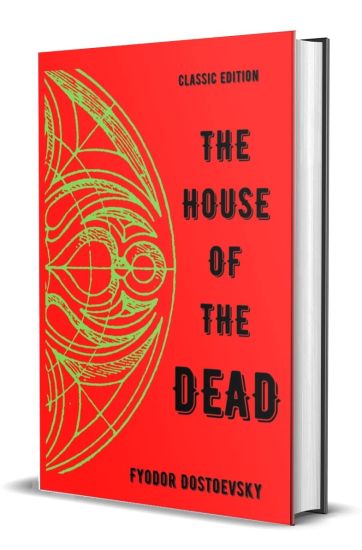

Welcome to the 7 Best Short Stories book serieswere we present to you the best works of remarkable authors. This edition is dedicated to the russian author Fyodor Dostoevsky. Dostoevskys literary works explore human psychology in the troubled political,

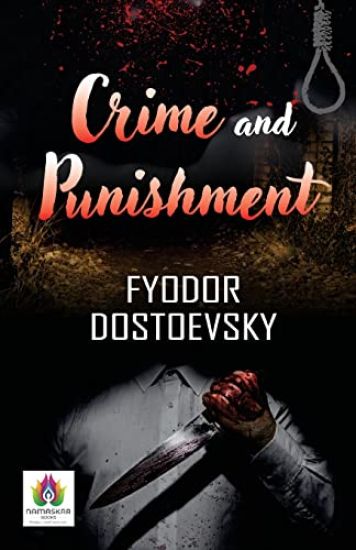
Crime and Punishment is a novel by the Russian author Fyodor Dostoevsky. It is the second of Dostoevsky's full-length novels following his return from ten years of exile in Siberia. Crime and Punishment is considered the first great novel of his ""mature"" period of writing. The novel is often cited as one of the supreme achievements in literature. Crime and Punishment focuses on the mental anguish and moral dilemmas of Rodion Raskolnikov, an impoverished ex-student in Saint Petersburg who formulates a plan to kill an unscrupulous pawnbroker for her money. Before the killing, Raskolnikov believes that with the money he could liberate himself from poverty and go on to perform great deeds. However, once it is done he finds himself racked with confusion, paranoia, and disgust for his actions. His justifications disintegrate completely as he struggles with guilt and horror and confronts the real-world consequences of his deed.