Kirjojen hintavertailu – 12 859 819 kirjaa ja 27 kauppaa
Kirjailija
Fyodor Dostoevsky
Kirjat ja teokset yhdessä paikassa: 443 kirjaa, julkaisuja vuosilta 1981–2026, suosituimpiin kuuluu The Great Mystery Collection. Vertaile teosten hintoja ja tarkista saatavuus suomalaisista kirjakaupoista.
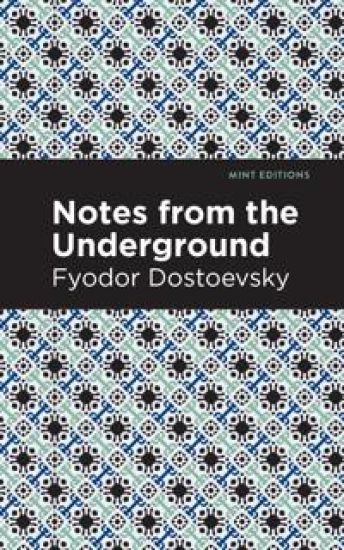
“It may seem paradoxical to speak of such insights as liberating, or to find in the Underground Man’s impassioned rejection of rational humanitarianism a call to arms. Yet each age we live through as individuals demands a certain kind of book- just as each era thieves the last with a magpie’s lust for the gewgaws of thought. Oddly enough, now I come to look at Notes again- and examine it in the round- I discover that my revised impression of it as a text at once jejune and cynical, callow as well as wise, is not, perhaps, too far from reality.” -Will Self ““(Dostoevsky)... is the man more than any other who has created modern prose, and intensified it to its present-day pitch.” -James Joyce Notes from the Underground is Fyodor Dostoevsky’s ninth novel, and considered to be one of the first examples of the existential novel. In this radically inventive work, an alienated former minor administrator in nineteenth-century Russia has broken away from society and withdrawn into an underground identity. With its piercing insight into political, social, and moral issues, this classic is one of the most provocative work of literature ever written. In the first half of the novel, the unnamed narrator, a cynical recluse in 1860’s St. Petersburg, attacks the ideologies of inherent laws of self-interest; he is crippled with self-loathing, and bound by his contempt of certain political attitudes of his day. He welcomes any psychic or physical pain in his life as he believe it rails against the complacency of modern society. The second half, entitled “Apropos of the Wet Snow”, the narrator relates his alienated relationships he experiences with others, including old school chums and a prostitute named Liza, who is only demeaned in his misanthropic mind. A singular document of the depravity of human consciousness, this is one of the most powerful pieces of literature ever written. With an eye-catching new cover, and professionally typeset manuscript, this edition of Notes from the Underground is both modern and readable.
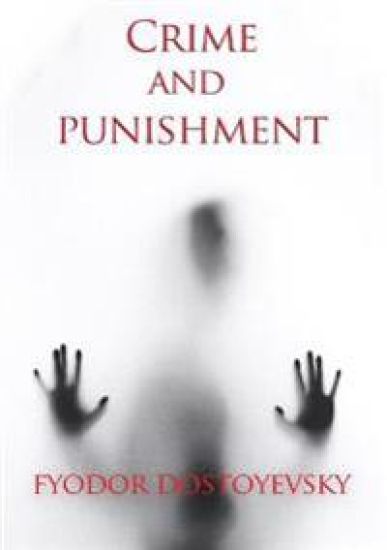
Fyodor Dostoevsky's classic tale of Rodion Raskolnikov, the murder he commits as an exploration of the human condition, and the crushing criminal and psychological consequences. The two years before he wrote Crime and Punishment (1866) had been bad ones for Dostoyevsky. His wife and brother had died the magazine he and his brother had started, Epoch, collapsed under its load of debt and he was threatened with debtor's prison. With an advance that he managed to wangle for an unwritten novel, he fled to Wiesbaden, hoping to win enough at the roulette table to get himself out of debt. Instead, he lost all his money he had to pawn his clothes and beg friends for loans to pay his hotel bill and get back to Russia. One of his begging letters went to a magazine editor, asking for an advance on yet another unwritten novel - which he described as Crime and Punishment. One of the supreme masterpieces of world literature, Crime and Punishment catapulted Dostoyevsky to the forefront of Russian writers and into the ranks of the world's greatest novelists. Drawing upon experiences from his own prison days, the author recounts in feverish, compelling tones the story of Raskolnikov, an impoverished student tormented by his own nihilism, and the struggle between good and evil. Believing that he is above the law, and convinced that humanitarian ends justify vile means, he brutally murders an old woman - a pawnbroker whom he regards as "stupid, ailing, greedy...good for nothing." This extraordinary, unforgettable work is reprinted here in the authoritative Constance Garnett translation. Others novels and novellas by Dostoevsky are: Poor Folk (novella)The Double (novella)The Landlady (novella)Netochka Nezvanova (unfinished)Uncle's Dream (novella)The Village of StepanchikovoHumiliated and InsultedThe House of the DeadNotes from Underground (novella)Crime and PunishmentThe Gambler (novella)The IdiotThe Eternal Husband (novella)Demons (also titled: The Possessed, The Devils)The AdolescentThe Brothers KaramazovAbout the Author: Fyodor Mikailovich Dostoevsky's life was as dark and dramatic as the great novels he wrote. He was born in Moscow in 1821. A short first novel, Poor Folk (1846) brought him instant success, but his writing career was cut short by his arrest for alleged subversion against Tsar Nicholas I in 1849. In prison he was given the "silent treatment" for eight months (guards even wore velvet soled boots) before he was led in front a firing squad. Dressed in a death shroud, he faced an open grave and awaited execution, when suddenly, an order arrived commuting his sentence. He then spent four years at hard labor in a Siberian prison, where he began to suffer from epilepsy, and he returned to St. Petersburg only a full ten years after he had left in chains. His prison experiences coupled with his conversion to a profoundly religious philosophy formed the basis for his great novels. But it was his fortuitous marriage to Anna Snitkina, following a period of utter destitution brought about by his compulsive gambling, that gave Dostoevsky the emotional stability to complete Crime and Punishment (1866), The Idiot (1868-69), The Possessed (1871-72), and The Brothers Karamazov (1879-80). When Dostoevsky died in 1881, he left a legacy of masterworks that influenced the great thinkers and writers of the Western world and immortalized him as a giant among writers of world literature.
"Long live the underground " ― Fyodor Dostoyevsky, Notes from the Underground Notes from the Underground (1864) by Fyodor Dostoevsky renders the story of a man who is disenchanted with society and has withdrawn into an underground existence. The unnamed narrator explains his views through a series of journal notes and fragments of his diary. The book is split into two parts. The first part is a diary kept by him describing his life which highlights his views on the world and his hatred for it. The second part contains his interactions with various people which subsequently led to his nihilistic philosophy about life.
Crime and Punishment is a novel by the Russian author Fyodor Dostoevsky. Crime and Punishment is considered the first great novel of his "mature" period of writing. Since its publication, it has been acclaimed as one of the supreme achievements in world literature. A sensation in its day, Crime and Punishment has left an indelible stamp on the world of literature. An impoverished ex-student,"Rodion Raskolnikov", who formulates a plan to kill an unscrupulous pawnbroker for her money. Before the killing, Raskolnikov believes that with the money he could liberate himself from poverty and go on to perform great deeds. However, once it is done he finds himself racked with confusion, paranoia, and disgust for what he has done. His justifications disintegrate completely as he struggles with guilt and horror and confronts the real-world consequences of his deed