Kirjojen hintavertailu – 12 859 818 kirjaa ja 27 kauppaa

Kirjailija

G. K. Chesterton

Kirjat ja teokset yhdessä paikassa: 2 054 kirjaa, julkaisuja vuosilta 1900–2026, suosituimpiin kuuluu A Miscellany of Poems by G. K. Chesterton. Vertaile teosten hintoja ja tarkista saatavuus suomalaisista kirjakaupoista.

Nimi esiintyy myös muodoissa: G K Chesterton, G.K. Chesterton, G.K Chesterton, G. K Chesterton

2 054 kirjaa

Kirjojen julkaisuvuodet: 1900–2026.

Charles Dickens

Charles Dickens

G K Chesterton

Outlook Verlag
2023
pokkari
This work has been selected by scholars as being culturally important, and is part of the knowledge base of civilization as we know it. This work is in the "public domain in the United States of America, and possibly other nations. Within the United States, you may freely copy and distribute this work, as no entity (individual or corporate) has a copyright on the body of the work. Scholars believe, and we concur, that this work is important enough to be preserved, reproduced, and made generally available to the public. We appreciate your support of the preservation process, and thank you for being an important part of keeping this knowledge alive and relevant.
Charles Dickens

Charles Dickens

G K Chesterton

Outlook Verlag
2023
sidottu
This work has been selected by scholars as being culturally important, and is part of the knowledge base of civilization as we know it. This work is in the "public domain in the United States of America, and possibly other nations. Within the United States, you may freely copy and distribute this work, as no entity (individual or corporate) has a copyright on the body of the work. Scholars believe, and we concur, that this work is important enough to be preserved, reproduced, and made generally available to the public. We appreciate your support of the preservation process, and thank you for being an important part of keeping this knowledge alive and relevant.
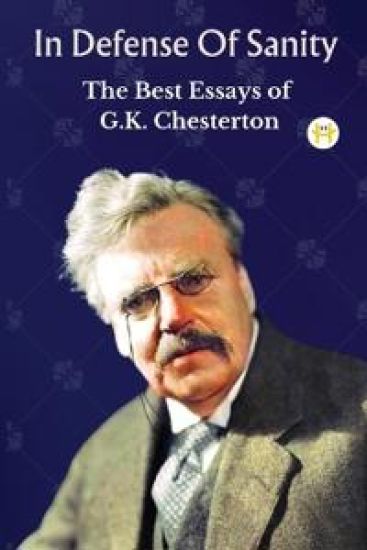
In Defense Of Sanity: The Best Essays of G.K. Chesterton
"In Defense of Sanity: The Best Essays of G. K. Chesterton" is a captivating collection of G. K. Chesterton's most insightful and witty essays. Covering a wide range of topics, from literature to faith and politics, Chesterton's timeless wisdom shines through. These essays offer a refreshing perspective on the complexities of the modern world, championing traditional values and common sense. With humor and clarity, Chesterton's work continues to inspire and challenge readers to embrace enduring truths in a fast-paced world.
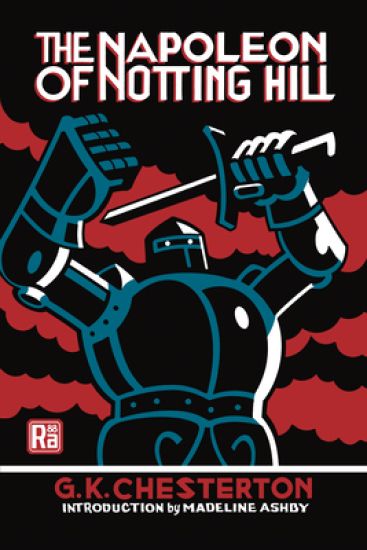
The Napoleon of Notting Hill

The Napoleon of Notting Hill

G.K. Chesterton; Madeline Ashby

MIT PRESS LTD
2023
nidottu
A satire set in a future England, in which a neomedievalist contest among London neighborhoods takes a disastrous turn. When Auberon Quin, a prankster nostalgic for Merrie Olde England, becomes king of that country in 1984, he mandates that each of London’s neighborhoods become an independent state, complete with unique local costumes. Everyone goes along with the conceit until young Adam Wayne, a born military tactician, takes the game too seriously . . . and becomes the Napoleon of Notting Hill. War ensues throughout the city—fought with sword and halberd! G. K. Chesterton (1874–1936) was an English author, poet, critic, and newspaper columnist known for his brilliant, epigrammatic paradoxes. His best-known character is the priest-detective Father Brown, featured in over fifty stories published between 1910 and 1936, who solves mysteries and crimes thanks to his understanding of spiritual and philosophic truths; and his best-known novel is The Man Who Was Thursday (1908), a metaphysical thriller. In addition to The Napoleon of Notting Hill, his first novel, he wrote several other near-future satires of England.
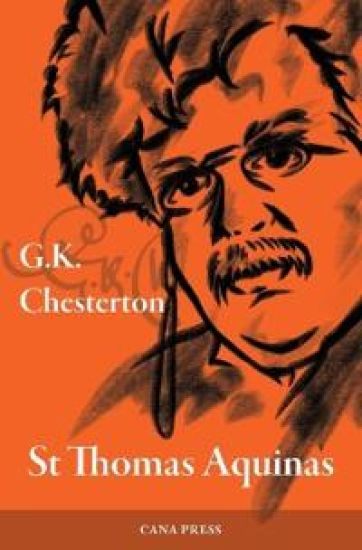
Saint Thomas Aquinas

Saint Thomas Aquinas

G K Chesterton

Cana Press
2022
pokkari
Chesterton's biography of St Thomas Aquinas is the picture of a saintly genius - by a literary artist who himself had claims to intellectual splendour and heroic goodness. It has been praised by professional scholars who appreciate Chesterton's grasp of St Thomas' thought, as well as by ordinary readers who admire his flair for presenting the richness of this thought in such a compelling way. Yet it is not a conventional biography, abounding in facts and figures. It is, rather, a vehicle for illuminating St Thomas's life and his vast achievement in penetrating the truths of the Christian faith informed by reason. Our confused age is desperate for such transcendental wisdom. It calls out for high reason in the midst of irrationality and loss of faith, Christian realism in the face of utopian expectations, and Christian hope in response to prophecies of doom. Chesterton's biography remains unrivalled for its revelation of St Thomas's mind and heart. It bears out his insight that "each generation is converted by the saint who contradicts it most." Karl Schmude, President of the Australian Chesterton society and co-founder of Campion College Australia
The Collected Poems of G. K. Chesterton

The Collected Poems of G. K. Chesterton

G K Chesterton

Forgotten Books
2021
pokkari
This book takes you on a journey to solve mysteries, fight dragons, debate religion, and quarrel among politicians in the parliament. It will have you smiling at its witty sarcasm, tearing up over its nostalgic rhythm, and frowning in perplexion at its mind-twisting ideas "Chesterton was the best writer of the 20th century. He said something about everything and he said it better than anybody else." Writes Dale Ahlquist, an American author. This collection is timelessly invaluable. Here's what Ahlquist has to say about people first being introduced to Chesterton's works." They are amazed by what they have discovered. They are thankful to have discovered it. And they are almost angry it has taken so long for them to make the discovery." It has a ballad to hum your children to sleep, a poem to dissect in your literary thesis, a sonnet to enjoy on Christmas Eve by the fire, and everything else to dream of about poetry and literature." The gods lie dead where the leaves lie red, For the flame of the sun is flown, The gods lie cold where the leaves lie gold, And a child comes forth alone." Chesterton, A Child of the Snows
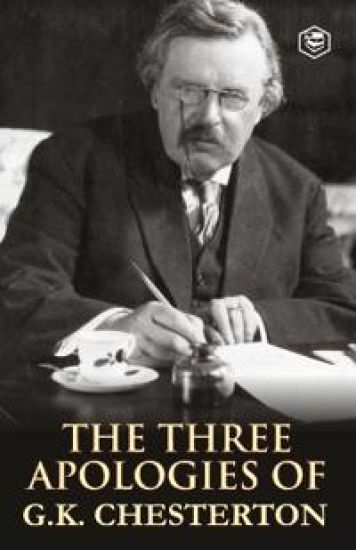
The Three Apologies of G.K. Chesterton: Heretics, Orthodoxy & The Everlasting Man
The three great apologies of G. K. Chesterton in one volume: Heretics, Orthodoxy & The Everlasting Man. Gilbert Keith Chesterton has become synonymous with modern Christian apologetics. But his impact goes beyond just those interested in a defense of Christian thought. His writings have influenced such diverse authors as C. S. Lewis, Marshall McLuhan, and Jorge Luis Borges, and remains a subtle and unseen presence in contemporary Catholic thought. At his funeral, Ronald Knox said "All of this generation has grown up under Chesterton's influence so completely that we do not even know when we are thinking Chesterton." Before his conversion from atheism to knowing God, C. S. Lewis, the author of Mere Christianity & The Great Divorce, said "in reading Chesterton, as in reading MacDonald, I did not know what I was letting myself in for. A young man who wishes to remain a sound atheist cannot be too careful of his reading. There are traps everywhere -" Chesterton wrote in a time when materialism and new forms of political theory were soon to cause havoc in the western world. His was a voice calling for restraint - pointing back to the fundamentals of Christian doctrine, the purpose and value of which was being lost in the noise and commotion of the post industrial age. Describing the rush towards less familiar and attractive ideologies, Chesterton wrote: "In the matter of reforming things, as distinct from deforming them, there is one plain and simple principle; a principle which will probably be called a paradox. There exists in such a case a certain institution or law; let us say, for the sake of simplicity, a fence or gate erected across a road. The more modern type of reformer goes gaily up to it and says, 'I don't see the use of this; let us clear it away.' To which the more intelligent type of reformer will do well to answer: 'If you don't see the use of it, I certainly won't let you clear it away. Go away and think. Then, when you can come back and tell me that you do see the use of it, I may allow you to destroy it.'" Chesterton was a man who continually showed us the use of orthodoxy in Christianity - most of all in his three great apologies: Heretics, Orthodoxy & The Everlasting Man. In Heretics, he first points to the flaws in the beliefs of the moderns. In Orthodoxy, he defends the values handed down through millennium of Christian dogma. In The Everlasting Man, he tells the grand story of Christianity itself and the often ignored miracle of its appearance in the life of man. Chesterton was a great debater, often trading blows with modern thinkers such as George Bernard Shaw, H. G. Wells, Bertrand Russell and Clarence Darrow. He became known as the "prince of paradox," He was also a prolific writer, producing biographies on St. Augustine and St. Francis, and touched on many of the varieties of religion in his writings. He wrote fiction as well, authoring the famous Father Brown books and the Man Who Was Thursday. Chesterton was certainly not the imitation of Christ in his personal life. A large man fond of food and drink, he was almost childlike in wonder of the magic of the world, while expressing the wit of an ancient. He gave no secret doctrine or systematic theology, but his "goodness" and basic "common sense" led many to the Church. One commenter stated: first you read C. S. Lewis, then Chesterton, then you become Catholic. Despite his less than temperate life, he is now under investigation by the Church for Beatification: such was his impact.

The Man Who Was Thursday A Nightmare by G. K. Chesterton: The Man Who Was Thursday A Nightmare by G. K. Chesterton

The Man Who Was Thursday A Nightmare by G. K. Chesterton: The Man Who Was Thursday A Nightmare by G. K. Chesterton

Harry Plantinga; David Widger; G. K. Chesterton

Createspace Independent Publishing Platform
2018
nidottu
In Edwardian era London, Gabriel Syme is recruited at Scotland Yard to a secret anti-anarchist police corps. Lucian Gregory, an anarchistic poet, lives in the suburb of Saffron Park. Syme meets him at a party and they debate the meaning of poetry. Gregory argues that revolt is the basis of poetry. Syme demurs, insisting the essence of poetry is not revolution but law. He antagonises Gregory by asserting that the most poetical of human creations is the timetable for the London Underground. He suggests Gregory isn't really serious about anarchism, which so irritates Gregory that he takes Syme to an underground anarchist meeting place, revealing his public endorsement of anarchy is a ruse to make him seem harmless, when in fact he is an influential member of the local chapter of the European anarchist council. The central council consists of seven men, each using the name of a day of the week as a cover; the position of Thursday is about to be elected by Gregory's local chapter. Gregory expects to win the election but just before, Syme reveals to Gregory after an oath of secrecy, that he is a secret policeman. Fearful that Syme may use his speech in evidence of a prosecution, Gregory's weakened words fail to convince the local chapter that he is sufficiently dangerous for the job. Syme makes a rousing anarchist speech and wins the vote. He is sent immediately as the chapter's delegate to the central council. In his efforts to thwart the council, Syme eventually discovers that the other five members are also undercover detectives; each was employed just as mysteriously and assigned to defeat the Council. They soon find out they were fighting each other and not real anarchists; such was the mastermind plan of their president, Sunday. In a surreal conclusion, Sunday is unmasked as only seeming to be terrible; in fact, he is a force of good like the detectives. Sunday is unable to give an answer to the question of why he caused so much trouble and pain for the detectives. Gregory, the only real anarchist, seems to challenge the good council. His accusation is that they, as rulers, have never suffered like Gregory and their other subjects and so their power is illegitimate. Syme refutes the accusation immediately, because of the terrors inflicted by Sunday on the rest of the council. The dream ends when Sunday is asked if he has ever suffered. His last words, "can ye drink of the cup that I drink of?", is the question Jesus asks St. James and St. John in the Gospel of Mark, chapter 10, vs 38-39, to challenge their commitment in becoming his disciples.
What's Wrong with the World: G.K. Chesterton

What's Wrong with the World: G.K. Chesterton

G. K. Chesterton

Createspace Independent Publishing Platform
2017
nidottu
What's Wrong with the World by G. K. Chesterton. What's Wrong with the World opens with an analysis of the predicament of modern humanity, too obsessed in the great age of political idealism with visions of the future. I originally called this book "What is Wrong," and it would have satisfied your sardonic temper to note the number of social misunderstandings that arose from the use of the title. Many a mild lady visitor opened her eyes when I remarked casually, "I have been doing 'What is Wrong' all this morning." And one minister of religion moved quite sharply in his chair when I told him (as he understood it) that I had to run upstairs and do what was wrong, but should be down again in a minute. Exactly of what occult vice they silently accused me I cannot conjecture, but I know of what I accuse myself; and that is, of having written a very shapeless and inadequate book, and one quite unworthy to be dedicated to you. As far as literature goes, this book is what is wrong and no mistake.
Love and freindship [i.e. friendship]: and other early works. By: Jane Austen, with a preface By: G. K. Chesterton: Love and Freindship is a juvenile
Love and Freindship sic] is a juvenile story by Jane Austen, dated 1790. From the age of eleven until she was eighteen, Austen wrote her tales in three notebooks. These still exist, one in the Bodleian Library and the other two in the British Museum. They contain, among other works, Love and Freindship, written when she was fourteen, and The History of England, written when she was fifteen. This presents a glimpse into the life of Laura from Isabel's perspective. Isabel asks Laura to tell the "misfortunes and adventures" of her life to Isabel's daughter Marianne (Austen 516). Isabel argues that because Laura is turning 55, she is past the danger of "disagreeable lovers" and "obstinate fathers" (Austen 516). This initial letter sets up the rest of Austen's narrative through Laura's letters to Marianne. Letter The Second Laura to Isabel This consists of a reply from Laura to Isabel. Laura initially disagrees with Isabel's assessment that she is safe from "misfortunes" simply because of her advanced age (Austen 516). Laura agrees to write to Marianne and detail her life experiences to "satisfy the curiosity of Marianne" and to teach her useful lessons (Poplawski 183). The useful lessons are lessons learned from the misfortunes caused by "disagreeable lovers" and "obstinate fathers" (Poplawski 183). Poplawski highlights the importance of the relationship between females and their lovers and also between females and their fathers as a means through which Austen is able to criticise stereotypical female behaviour. As seen throughout the work, these two relationships are constantly criticised by satirical anecdotes. Janetta's relations with her father and with her lover, Capitan M'Kenzie in the twelfth letter, shows Austen mocking the fickleness of family ties and romantic relationships.... Jane Austen ( 16 December 1775 - 18 July 1817) was an English novelist known primarily for her six major novels, which interpret, critique and comment upon the British landed gentry at the end of the 18th century. Austen's plots often explore the dependence of women on marriage in the pursuit of favourable social standing and economic security. Her works critique the novels of sensibility of the second half of the 18th century and are part of the transition to 19th-century literary realism.... Gilbert Keith Chesterton, KC*SG (29 May 1874 - 14 June 1936), better known as G. K. Chesterton, was an English writer, poet, philosopher, dramatist, journalist, orator, lay theologian, biographer, and literary and art critic. Chesterton is often referred to as the "prince of paradox". Time magazine has observed of his writing style: "Whenever possible Chesterton made his points with popular sayings, proverbs, allegories-first carefully turning them inside out."
Orthodoxie - Orthodoxy: Neu übersetzt und herausgegeben von Dieter Hattrup

Orthodoxie - Orthodoxy: Neu übersetzt und herausgegeben von Dieter Hattrup

G. K. Chesterton

Createspace Independent Publishing Platform
2016
nidottu
Gilbert K. Chesterton lebte von 1874 bis 1936. Er war ein Meister der Feder, die er mit heiterem Anliegen f hrte. Immerzu ermahnt er den Leser: Nimm dein Leben ernst Verweigere ihm nicht die Zustimmung Sein Anliegen kommt in diesem fr hen Buch von 1908 mit dem martialischen Titel 'Orthodoxie' brillant und humoristisch zum Vorschein. Entweder man mag Chesterton, oder man mag ihn nicht, ein Wechsel der Meinung ist zu Lebzeiten nicht m glich, weil Chesterton ein Lebensgef hl ist. Da ich von Geburt an auf seiner Seite stehe, mache ich gern auf seine B cher aufmerksam, hier ganz einfach, indem ich das Buch 'Orthodoxy' noch einmal bersetze und es elektronisch in deutscher Sprache zug nglich mache. Das ist meine Art des Lobes. Besonders war es mir ein Anliegen, den englischen Humor f r das deutsche Ohr zu retten, was nicht leicht, aber m glich ist. Englischer Humor, das ist bissiger Sarkasmus in h flichster Form. Chesterton verspr ht ihn reichlich gegen alle Zeitgenossen, die er beim Namen nennt, besonders aber gegen seinen Lieblingsfeind George B. Shaw. Die Einteilung des Buches in neun Kapitel stammt von Chesterton. Diese habe ich nat rlich beibehalten. Die weitere Einteilung in Abschnitte und ihre Numerierung stammt von mir, da im Zeitalter elektronischer Texte nur noch eine interne Gliederung sinnvoll ist; die Seiteneinteilung macht kaum noch Sinn. Die Merkmale dieser bersetzung in reformbefreiter Sprache sind: - Neue bersetzung aus dem Jahr 2013. - Die sch nsten Worte sind fett gedruckt. So hat man gleich eine Bl tenlese der gefl gelten Worte zur Hand. - Englischer und deutscher Text sind gleich lang. - Der englische Text steht gleich hinter dem deutschen Text. Das erm glicht die berpr fung anhand des Originals. - Kein gek rzter, sondern der volle Text - Fairer Preis, da ich Monate an dem Buch gebastelt habe