

Kirjailija
G. K. Chesterton
Kirjat ja teokset yhdessä paikassa: 2 054 kirjaa, julkaisuja vuosilta 1900–2026, suosituimpiin kuuluu A Miscellany of Poems by G. K. Chesterton. Vertaile teosten hintoja ja tarkista saatavuus suomalaisista kirjakaupoista.
Nimi esiintyy myös muodoissa: G K Chesterton, G.K. Chesterton, G.K Chesterton, G. K Chesterton
2 054 kirjaa
Kirjojen julkaisuvuodet: 1900–2026.
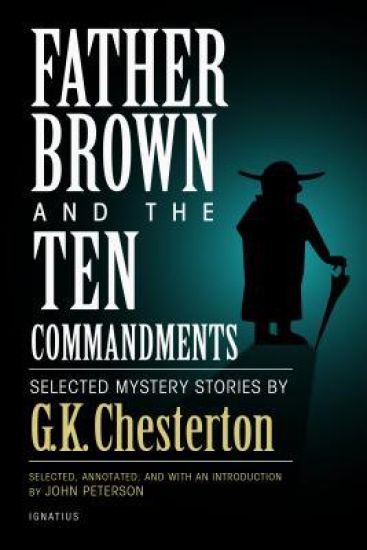
This is a unique collection of ten of Chesterton's famous Father Brown stories which puts special emphasis on the role that Brown's Catholic faith, and the Ten Commandments, played in helping him solve the murder mysteries. As Dorothy Sayers once wrote, Chesterton was -the first man of our time to introduce the great name of God into a detective story ... to enlarge the boundaries of the detective story by making it deal with death and real wickedness and real, that is to say, divine judgment.- When Chesterton introduced his priest-detective Brown to the world of detective fiction, he brought a new dimension to that world. This was the dimension of sin, as distinct from crime. The key to Chesterton's radical approach is that the criminal is not necessarily the worst sinner in the story, nor is his crime its guiltiest offense. The priest is most interested in God's Commandments, not in the legal code of the State. Thus Chesterton opened up the wider possibilities of the Decalogue with crimes against the Sabbath, for example, or outrages of covetousness, dishonor to one's parents, or idolatry. This edition includes generous footnotes (not available in other editions) which help to clarify the literary and historical allusions made by Father Brown. It is based on the texts of the original editions by Chesterton for assurance of complete authenticity, and is set in easily readable type. These are excellent short detective yarns in the classic British tradition of Sherlock Holmes - puzzling concoctions of mysterious crimes, dubious suspects and ambiguous clues. They are among the very best of the Father Brown stories.
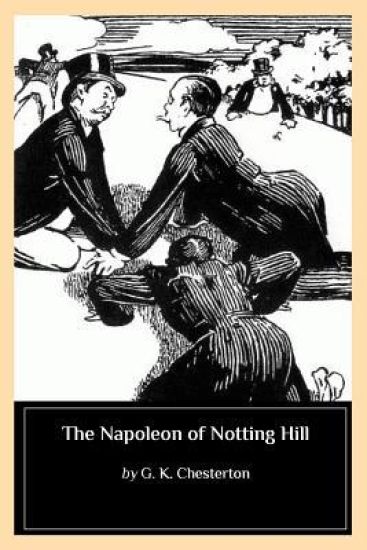
The Napoleon of Notting Hill
G. K. Chesterton
Createspace Independent Publishing Platform
2017
nidottu
The Napoleon of Notting Hill
G. K. Chesterton
Createspace Independent Publishing Platform
2017
nidottu
Nothing more strangely indicates an enormous and silent evil of modern society than the extraordinary use which is made nowadays of the word "orthodox." In former days the heretic was proud of not being a heretic. It was the kingdoms of the world and the police and the judges who were heretics. He was orthodox. He had no pride in having rebelled against them; they had rebelled against him. The armies with their cruel security, the kings with their cold faces, the decorous processes of State, the reasonable processes of law-all these like sheep had gone astray. The man was proud of being orthodox, was proud of being right. If he stood alone in a howling wilderness he was more than a man; he was a church. He was the centre of the universe; it was round him that the stars swung. All the tortures torn out of forgotten hells could not make him admit that he was heretical. But a few modern phrases have made him boast of it. He says, with a conscious laugh, "I suppose I am very heretical," and looks round for applause. The word "heresy" not only means no longer being wrong; it practically means being clear-headed and courageous. The word "orthodoxy" not only no longer means being right; it practically means being wrong. All this can mean one thing, and one thing only. It means that people care less for whether they are philosophically right. For obviously a man ought to confess himself crazy before he confesses himself heretical. The Bohemian, with a red tie, ought to pique himself on his orthodoxy. The dynamiter, laying a bomb, ought to feel that, whatever else he is, at least he is orthodox.
The Wisdom of Father Brown: Large Print Edition
G. K. Chesterton
Createspace Independent Publishing Platform
2017
nidottu
La Sabiduria del padre Brown
G. K. Chesterton
Createspace Independent Publishing Platform
2017
nidottu
La Sabidur a del Padre Brown" es un libro que nos presenta a el singular Padre de apellido Brown. Este curita es un personaje de ficci n creado por el novelista ingl s G. K. Chesterton. Es el protagonista de unas cincuenta historias cortas recopiladas posteriormente en cinco libros. Para crear este personaje Chesterton se insipir en el padr John O Connor, cuyo p rroco de Bradford, Yorkshire, quien estuvo relacionado con la conversaci n al catolicismo de Chesterton en 1922. Esta es una breve narraci n y cronolog a de aventuras que se encuentran inmersas en el mundo polic aco y de espionaje. Ahora bien, cuando escucha la palabra espionaje, se imagina a un fornido y misterioso detective como protagonista. Sin embargo; en esta original historia, el autor del libro sorprende al p blico lector con un sacerdote algo gordinfl n pero muy acertado en sus hip tesis como personaje principal.
Heretics Gilbert Keith Chesterton
G. K. Chesterton
Createspace Independent Publishing Platform
2017
nidottu
Though he was on the whole a fun loving and gregarious man, during adolescence Chesterton was troubled by thoughts of suicide. In Christianity he found answers to many of the dilemmas and paradoxes of life. Throughout Heretics he provides a very personal critique of contemporary religious notions. His consistently engaging but often wayward humour is mixed liberally with daring flights of fancy and some startling turns of thought. A highly original collection of essays, providing an invaluable contribution to one of the major debates of the last century - one that continues to exercise leading thinkers in the present one.
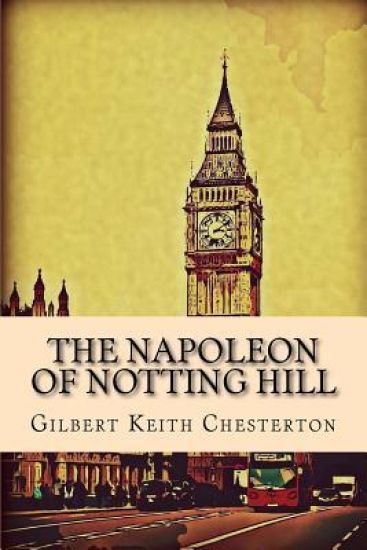
The Napoleon of Notting Hill
G. K. Chesterton
Createspace Independent Publishing Platform
2017
nidottu
The dreary succession of randomly selected Kings of England is broken up when Auberon Quin, who cares for nothing but a good joke, is chosen. To amuse himself, he institutes elaborate costumes for the provosts of the districts of London. All are bored by the King's antics except for one earnest young man who takes the cry for regional pride seriously - Adam Wayne, the eponymous Napoleon of Notting Hill.
St. Francis of Assisi: Classic literature
G. K. Chesterton
Createspace Independent Publishing Platform
2017
nidottu
The Man Who Was Thursday: A Nightmare is a novel by G. K. Chesterton, first published in 1907. The book is sometimes referred to as a metaphysical thriller. Gilbert Keith Chesterton, (29 May 1874 - 14 June 1936), better known as G. K. Chesterton, was an English writer, poet, philosopher, dramatist, journalist, orator, lay theologian, biographer, and literary and art critic. Chesterton is often referred to as the "prince of paradox". Time magazine has observed of his writing style: "Whenever possible Chesterton made his points with popular sayings, proverbs, allegories- rst carefully turning them inside out." Chesterton is well known for his ctional priest-detective Father Brown, and for his reasoned apologetics. Even some of those who disagree with him have recognised the wide appeal of such works as Orthodoxy and The Everlasting Man. Chesterton, as a political thinker, cast aspersions on both Progressivism and Conservatism, saying, "The whole modern world has divided itself into Conservatives and Progressives. The business of Progressives is to go on making mistakes. The business of the Conservatives is to prevent the mistakes from being corrected." George Bernard Shaw, Chesterton's "friendly enemy" according to Time, said of him, "He was a man of colossal genius." Biographers have identi ed him as a successor to such Victorian authors as Matthew Arnold, Thomas Carlyle, Cardinal John Henry Newman, and John Ruskin. Chesterton loved to debate, often engaging in friendly public disputes with such men as George Bernard Shaw, H. G. Wells, Bertrand Russell and Clarence Darrow. This classic title has been published by RADLEY BOOKS. Each RADLEY CLASSIC is a meticulously restored, luxurious and faithful reproduction of a classic book; produced with elegant text layout, clarity of presentation, and stylistic features that make reading a true pleasure. Special attention is given to legible fonts and adequate letter sizing, correct line length for readability, generous margins and triple lead (lavish line separation); plus we do not allow any mistakes/changes/additions to creep into the author's words. Visit RADLEY BOOKS at www.radleybooks.com (or search RADLEY CLASSIC on Amazon) to see more classic book titles in this series.
The Donnington Affair Gilbert Keith Chesterton
G. K. Chesterton
Createspace Independent Publishing Platform
2017
nidottu
In the October 1914 issue of the British magazine The Premier, Sir Max Pemberton published the first part of this story, inviting a number of writers, including Chesterton, to use their talents to solve the mystery of the murder described. Chesterton's solution followed in the form of a Father Brown story in the November issue.
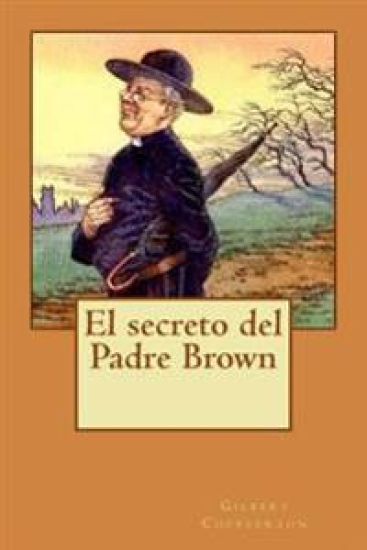
El secreto del Padre Brown
G. K. Chesterton
Createspace Independent Publishing Platform
2017
nidottu
El Padre J. Brown es un personaje de ficci n creado por el novelista ingl s G. K. Chesterton (1874 - 1936). Es el protagonista de unas cincuenta historias cortas recopiladas posteriormente en cinco libros. Para crear este personaje Chesterton se inspir en el Padre John O'Connor (1870 - 1952), cura p rroco de Bradford, Yorkshire, quien estuvo relacionado con la conversi n al catolicismo de Chesterton en 1922. De esta vinculaci n dej constancia el propio O'Connor en su libro de 1937 Father Brown on Chesterton.
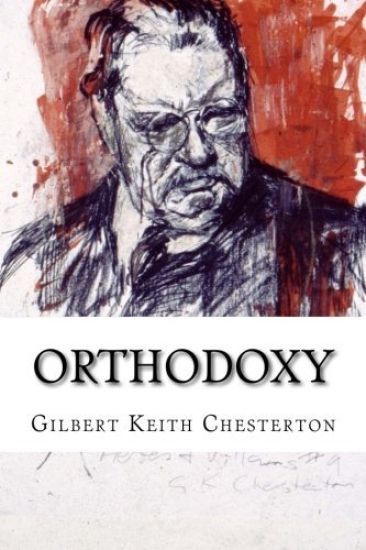
Orthodoxy Gilbert Keith Chesterton
G. K. Chesterton
Createspace Independent Publishing Platform
2017
nidottu
Orthodoxy (1908) is a book by G. K. Chesterton that has become a classic of Christian apologetics. Chesterton considered this book a companion to his other work, Heretics. In the book's preface Chesterton states the purpose is to "attempt an explanation, not of whether the Christian Faith can be believed, but of how he personally has come to believe it." In it, Chesterton presents an original view of Christian religion. He sees it as the answer to natural human needs, the "answer to a riddle" in his own words, and not simply as an arbitrary truth received from somewhere outside the boundaries of human experience.