
Kirjailija
G. K. Chesterton
Kirjat ja teokset yhdessä paikassa: 2 054 kirjaa, julkaisuja vuosilta 1900–2026, suosituimpiin kuuluu A Miscellany of Poems by G. K. Chesterton. Vertaile teosten hintoja ja tarkista saatavuus suomalaisista kirjakaupoista.
Nimi esiintyy myös muodoissa: G K Chesterton, G.K. Chesterton, G.K Chesterton, G. K Chesterton
2 054 kirjaa
Kirjojen julkaisuvuodet: 1900–2026.
THIS IS NOT A HASTILY ASSEMBLED OCR SCAN OR "FACSIMILE EDITION" OF THIS WORK. EVERY LETTER AND WORD OF THE ORIGINAL HAS BEEN RESET AND CAREFULLY PROOFED FOR ACCURACY." In reading Chesterton..., I did not know what I was letting myself in for. A young man who wishes to remain a sound atheist cannot be too careful of his reading. There are traps everywhere - 'Bibles laid open, millions of surprises, ' as Herbert says, 'fine nets and stratagems.' God is, if I may say it, very unscrupulous." - C. S. LewisA delightful series of 35 essays by the great Christian apologist, G. K. Chesterton (1874-1936). His wit, wisdom and deeply felt humanism are clearly on display in this fine series of every-day reflections that give real meaning to what it means to think as an Englishman. His humor is never bombastic or obvious. It is the tone and tenor of his writings that constantly surprise and illuminate. It is a way of thinking that few possess with such grace and wonder. As C. S. Lewis would later say, "His humour was of the kind I like best..., humour which is not in any way separable from the argument but is rather (as Aristotle would say) the "bloom" on dialectic itself."




The Ballad of St. Barbara, and Other Verses
G. K. Chesterton
Createspace Independent Publishing Platform
2015
nidottu






A Short History of England
G. K. Chesterton
Createspace Independent Publishing Platform
2015
nidottu

"Because children have abounding vitality, because they are in spirit fierce and free, therefore they want things repeated and unchanged. They always say, "Do it again"; and the grown-up person does it again until he is nearly dead. For grown-up people are not strong enough to exult in monotony. But perhaps God is strong enough to exult in monotony. It is possible that God says every morning, "Do it again" to the sun; and every evening, "Do it again" to the moon. It may not be automatic necessity that makes all daisies alike; it may be that God makes every daisy separately, but has never got tired of making them. It may be that He has the eternal appetite of infancy; for we have sinned and grown old, and our Father is younger than we." --- G. K. Chesterton, Orthodoxy Orthodoxy (1908) is a book by G. K. Chesterton that has become a classic of Christian apologetics. Chesterton considered this book a companion to his other work, Heretics. In the book's preface Chesterton states the purpose is to "attempt an explanation, not of whether the Christian faith can be believed, but of how he personally has come to believe it." In it, Chesterton presents an original view of Christian religion. He sees it as the answer to natural human needs, the "answer to a riddle" in his own words, and not simply as an arbitrary truth received from somewhere outside the boundaries of human experience. The book was written when Chesterton was an Anglican. He converted to Catholicism 14 years later. The title, Orthodoxy, is meant to avoid such sectarian questions.
The Man Who Was Thursday: A Nightmare is a novel by G. K. Chesterton, first published in 1908. The book is sometimes referred to as a metaphysical thriller. In a surreal turn-of-the-century London, Gabriel Syme, a poet, is recruited to a secret anti-anarchist taskforce at Scotland Yard. Lucian Gregory, an anarchist poet, is the only poet in Saffron Park, until he loses his temper in an argument over the purpose of poetry with Gabriel Syme, who takes the opposite view. After some time, the frustrated Gregory finds Syme and leads him to a local anarchist meeting-place to prove that he is a true anarchist. Instead of the anarchist Gregory getting elected, the officer Syme uses his wits and is elected as the local representative to the worldwide Central Council of Anarchists. The Council consisting of seven men, each using the name of a day of the week as a code name; Syme is given the name of Thursday... Details The work is prefixed with a poem written to Edmund Clerihew Bentley, revisiting the pair's early history and the challenges presented to their early faith by the times. Like most of Chesterton's fiction, the story includes some Christian allegory. Chesterton, a Protestant at this time (he joined the Roman Catholic Church about 15 years later), suffered from a brief bout of depression during his college days, and claimed afterwards he wrote this book as an unusual affirmation that goodness and right were at the heart of every aspect of the world. However, he insisted: "The book ... was not intended to describe the real world as it was, or as I thought it was, even when my thoughts were considerably less settled than they are now. It was intended to describe the world of wild doubt and despair which the pessimists were generally describing at that date; with just a gleam of hope in some double meaning of the doubt, which even the pessimists felt in some fitful fashion". The costumes the detectives don towards the end of the book represent what was created on their respective day. Sunday, "the sabbath" and "the peace of God," sits upon a throne in front of them. The name of the girl Syme likes, Rosamond, is derived from "Rosa Mundi," meaning "Rose of the World" in Latin, and a title given to Christ. The Man Who Was Thursday inspired the Irish Republican politician Michael Collins with the idea "if you didn't seem to be hiding nobody hunted you out."
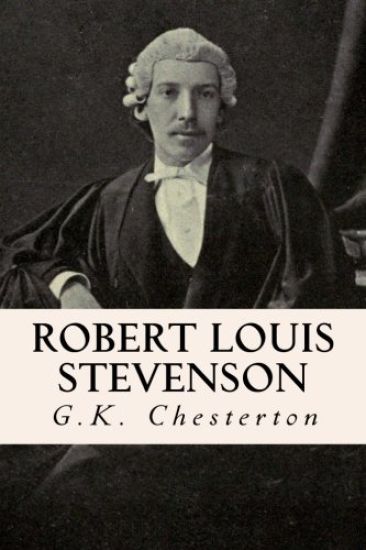
IN this Robert Louis Stevenson biography I propose to follow a somewhat unusual course; or to sketch what may be considered a rather eccentric outline. It can only be justified in practice; and I have a healthy fear that my practice will not justify it. Nevertheless, I have not adopted it without considerable thought, and even doubt, about the best way of dealing with a real and practical problem. G. K. Chesterton Robert Louis Balfour Stevenson (13 November 1850 - 3 December 1894) was a Scottish novelist, poet, essayist, musician and travel writer. His most famous works are Treasure Island, Kidnapped, Strange Case of Dr Jekyll and Mr Hyde, and A Child's Garden of Verses. Stevenson was a literary celebrity during his lifetime, and now ranks as the 26th most translated author in the world. His works have been admired by many other writers, including Jorge Luis Borges, Bertolt Brecht, Marcel Proust, Arthur Conan Doyle, Henry James, Cesare Pavese, Emilio Salgari, Ernest Hemingway, Rudyard Kipling, Jack London, Vladimir Nabokov, J. M. Barrie, and G. K. Chesterton, who said that Stevenson "seemed to pick the right word up on the point of his pen, like a man playing spillikins" Stevenson was visiting a cousin in England in late 1873 when he met two people who became very important to him-Sidney Colvin and Fanny (Frances Jane) Sitwell. Sitwell was a 34-year-old woman with a son, who was separated from her husband. She attracted the devotion of many who met her, including Colvin, who eventually married her in 1901. Stevenson was also drawn to her, and they kept up a heated correspondence over several years in which he wavered between the role of a suitor and a son (he addressed her as "Madonna"). Colvin became Stevenson's literary adviser and was the first editor of Stevenson's letters after his death. Soon after their first meeting, he had placed Stevenson's first paid contribution in The Portfolio-an essay titled "Roads". Stevenson was soon active in London literary life, becoming acquainted with many of the writers of the time, including Andrew Lang, Edmund Gosse, and Leslie Stephen, the editor of the Cornhill Magazine who took an interest in Stevenson's work. Stephen in turn introduced him to a more important friend while visiting Edinburgh in 1875. He took Stevenson with him to visit a patient at the Edinburgh Infirmary named William Ernest Henley, an energetic and talkative man with a wooden leg. Henley became a close friend and occasional literary collaborator, until a quarrel broke up the friendship in 1888. Henley is often seen as the model for Long John Silver in Treasure Island. Stevenson was sent to Menton on the French Riviera in November 1873 to recuperate after his health failed. He returned in better health in April 1874 and settled down to his studies, but he returned to France several times after that. He made long and frequent trips to the neighborhood of the Forest of Fontainebleau, staying at Barbizon, Grez-sur-Loing, and Nemours and becoming a member of the artists' colonies there, as well as to Paris to visit galleries and the theatres. 36] He qualified for the Scottish bar in July 1875, and his father added a brass plate to the Heriot Row house reading "R. L. Stevenson, Advocate". His law studies did influence his books, but he never practised law; 37] all his energies were spent in travel and writing. One of his journeys was a canoe voyage in Belgium and France with Sir Walter Simpson, a friend from the Speculative Society, a frequent travel companion, and the author of The Art of Golf (1887). This trip was the basis of his first travel book An Inland Voyage.

The Wild Knight and Other Poems
G. K. Chesterton
Createspace Independent Publishing Platform
2015
nidottu
The Appetite of Tyranny: Including Letters to an Old Garibaldian
G. K. Chesterton
Createspace Independent Publishing Platform
2015
nidottu