
Kirjailija
G. K. Chesterton
Kirjat ja teokset yhdessä paikassa: 2 054 kirjaa, julkaisuja vuosilta 1900–2026, suosituimpiin kuuluu A Miscellany of Poems by G. K. Chesterton. Vertaile teosten hintoja ja tarkista saatavuus suomalaisista kirjakaupoista.
Nimi esiintyy myös muodoissa: G K Chesterton, G.K. Chesterton, G.K Chesterton, G. K Chesterton
2 054 kirjaa
Kirjojen julkaisuvuodet: 1900–2026.


The Man Who Knew Too Much and other stories is a book of detective stories by English writer G. K. Chesterton. Is the main protagonist is Horne Fisher. In the final story, "The Vengeance of the Statue", Fisher notes: "The Prime Minister is my father's friend. The Foreign Minister married my sister. The Chancellor of the Exchequer is my first cousin." Because of these intimate relationships with the leading political figures in the land, Fisher knows too much about the private politics behind the public politics of the day. This knowledge is a burden to him in the eight stories, because he is able to uncover the injustices and corruptions of the murders in each story, but in most cases the real killer gets away with the killing because to bring him openly to justice would create a greater chaos: starting a war, reinciting Irish rebellions or removing public faith in the government.

What's Wrong with the World
G. K. Chesterton
Createspace Independent Publishing Platform
2014
nidottu
The Man Who Was Thursday: A Nightmare
G. K. Chesterton
Createspace Independent Publishing Platform
2014
nidottu

The Club of Queer Trades is a collection of stories by G. K. Chesterton first published in 1905. Each story in the collection is centered on a person who is making his living by some novel and extraordinary means (a "queer trade", using the word "queer" in the sense of "peculiar"). To gain admittance one must have invented a unique means of earning a living and the subsequent trade being the main source of income.
The Napoleon of Notting Hill
G. K. Chesterton
Createspace Independent Publishing Platform
2014
nidottu

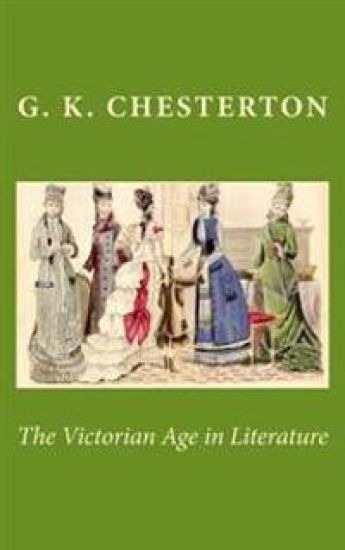
The Victorian Age in Literature
G. K. Chesterton
Createspace Independent Publishing Platform
2014
nidottu
"I was born a Victorian; and sympathise not a little with the serious Victorian Spirit." In this engaging and extremely personal account G K Chesterton expounds his views on Victorian literature. Many of his opinions reflect the conventions of the age; however of the Victorian novel he refreshingly comments "it is an art in which women are quite beyond controversy". Equally uncompromising about poets and poetry he does not hesitate to call Tennyson "a provincial Virgil". This book is an important landmark in our understanding of an age which produced some of Britain's most widely enjoyed literature.

A Short History of England
G. K. Chesterton
Createspace Independent Publishing Platform
2014
nidottu
The Wisdom of Father Brown
G. K. Chesterton
Createspace Independent Publishing Platform
2014
nidottu
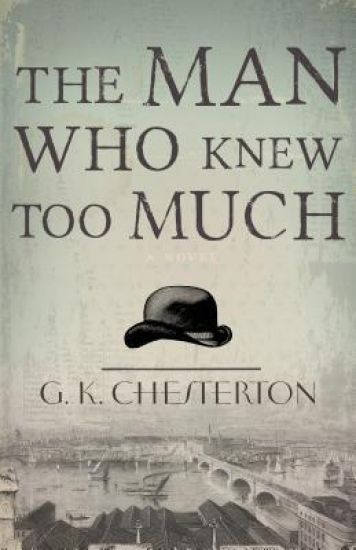
"Modern intelligence won't accept anything on authority. But it will accept anything without authority. That's exactly what has happened here." -- Horne Fisher in The Man Who Knew Too Much From the creator of the Father Brown mysteries come nine short stories, eight of which trace the activities of Horne Fisher, "the man who knew too much," and his trusted friend Harold March, a political journalist. Horne is a socialite who uses his keen mind and powerful gifts of deduction to investigate crimes committed on the sprawling country estates of the aristocracy. The other story, "The Trees of Pride," revolves around the fictional character Squire Vane. Much loved for their wit and sense of wonder, these stories offer a fascinating portrait of upper-crust society in pre-World War I England. Highly regarded as a biting social commentator, Chesterton fully displays his humorous and insightful comparisons through his colorful and poetic prose.
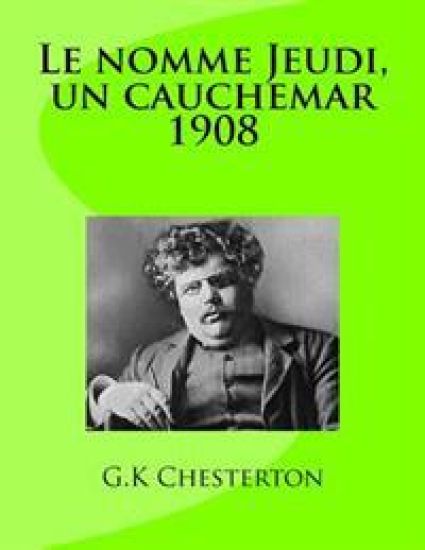
Le nomme Jeudi, un cauchemar 1908
G. K. Chesterton
Createspace Independent Publishing Platform
2014
nidottu
la suite d'une discussion propos de l'ordre et du chaos avec Lucien Gregory, un po te anarchiste, Gabriel Syme, lui-m me po te et policier, infiltre une soci t secr te anarchiste en y prenant, la place de Gregory, la fonction d sign e sous le nom de Jeudi. Il rencontre ensuite les autres membres du conseil de cette soci t , pr sid par Dimanche, individu massif et prot iforme l'allure de surhomme: ce sont les nomm s Lundi, Mardi, Mercredi, Vendredi et Samedi. Entra n dans diverses p rip ties, Syme d couvre, travers diff rents jeux de masques o l'identit pr cise de chacun des membres semble s' vanouir (hormis dans le cas de Dimanche qui demeure insaisissable), qu'ils sont eux-m mes des infiltr s qui ont tous t recrut s par un individu myst rieux que personne n'a jamais vu. Il n'y a donc jamais eu de soci t secr te anarchiste, et les six infiltr s s'interrogent pr sent sur les v ritables intentions de Dimanche. Ils se mettent sa recherche pour d couvrir qui celui-ci est r ellement et qui ils sont eux-m mes sous leurs diff rents masques. Apr s une course-poursuite dos d' l phant travers Londres et en ballon, Dimanche finit par r unir une f te tous les protagonistes, et il leur d voile l'arch type biblique qu'ils incarnent, symbolis pour chacun d'entre eux par leur surnom, qui est un jour de la semaine. Survient enfin le V ritable Anarchiste, Lucien Gregory, le destructeur et contradicteur, qui d fie l'assembl des sept anges du ciel et est finalement r fut par Syme qui, se tournant vers Dimanche, lui demande: Avez-vous jamais souffert ? Dimanche dispara t alors et Syme se retrouve soudain dans la situation de d part du roman, discutant avec Gregory dans les rues de Londres, sans avoir eu conscience de s' tre veill d'un cauchemar, mais transfigur par ses aventures.