Kirjailija
Georg Lukács
Kirjat ja teokset yhdessä paikassa: 45 kirjaa, julkaisuja vuosilta 1971–2025, suosituimpiin kuuluu Georg Lukacs: Selected Correspondence, 1902–1920. Vertaile teosten hintoja ja tarkista saatavuus suomalaisista kirjakaupoista.
Nimi esiintyy myös muodoissa: Georg Lukacs, Georg Lukàcs
45 kirjaa
Kirjojen julkaisuvuodet: 1971–2025.
Out of the chaos following Lenin's death and the mounting fury against Lukács and his freshly penned History and Class Consciousness (1923), this book bears an assessment of Lenin as "the only theoretical equal to Marx." Lukács shows, with unprecedented clarity, how Lenin's historical interventions-from his vanguard politics and repurposing of the state to his detection of a new, imperialist stage of capitalism-advanced the conjunction of theory and practice, class consciousness and class struggle. A postscript from 1967 reflects on how this picture of Lenin, which both shattered failed Marxism and preserved certain prejudices of its day, became even more inspirational after the oppressions of Stalin. Lukács's study remains indispensable to an understanding of the contemporary significance of Lenin's life and work.

Georg Lukács Werkauswahl 02. Die Theorie des Romans
Georg Lukács
Georg Lukács Werkauswahl in Einzelbänden
2009
nidottu
In an essay of prophetic vision, Lukacs defines a critical realism: 'anyone who wants to become more intimately acquainted with the prehistory of the important ideologies of the [nineteen-] twenties and thirties ...will be helped by a critical reading of this book.'
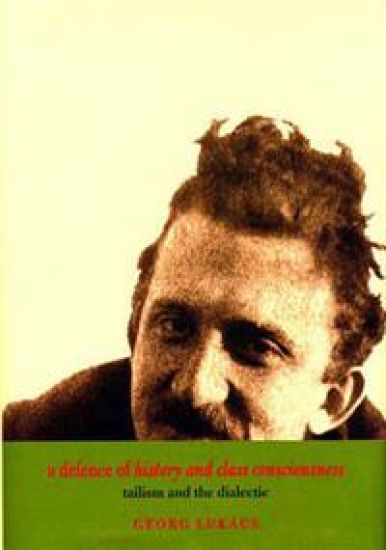
In the mid 1920s Lukács wrote a sustained and passionate response to Stalin's onslaught on his earlier seminal work History and Class Consciousness. Unpublished at the time, Lukács himself thought that the text had been destroyed. However, a group of researchers recently found the manuscript gathering dust in the newly opened archives of the CPSU in Moscow. Now for the first time, this fascinating, polemical and intense text is available in English. It is a crucial part of a hidden intellectual history and will transform interpretations of Lukács's oeuvre.
Deals with German realists in the 19th century and includes chapters on Heinrich von Kleist, Eichendorff, Georg Buchner, Heinrich Heine, Gottfried Keller and Wilhelm Raabe. This is the first English edition.
Description currently unavailable
With a new introduction by Dr Gary Day, De Montfort University, Leicester, UK An argument for literary realism as opposed to modernism, contrasting Mann and Kafka. The book also argues for socialist as opposed to critical realism in literature.
Description currently unavailable
Studies in European Realism
Georg Lukacs
THE MERLIN PRESS LTD
1991
nidottu
Halvin toimitettuna 27,10 €
A great 20th century literary critic discusses the 19th century European novel.
Description currently unavailable
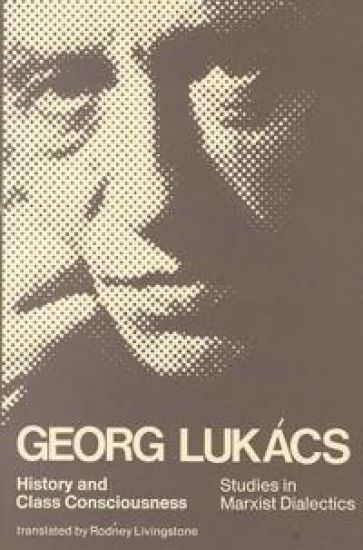
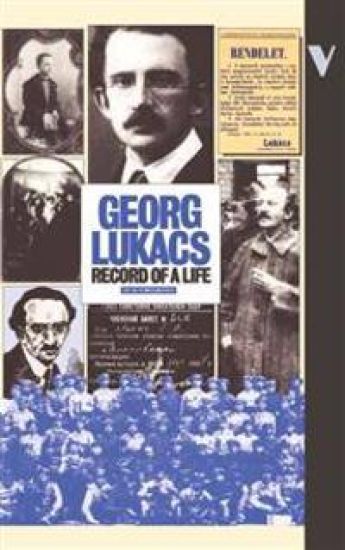
This revealing autobiography of the Hungarian Marxist philosopher Georg Lukács is centered on a series of interviews that he gave in 1969 and 1971, shortly before his death on 4 June 1971. Stimulated by the sympathetic yet incisive questioning of the interviewer, the Hungarian essayist István Eörsi, Lukács discusses at length the course of his life, his years of political struggle, and his formation and role as a Marxist intellectual. From a highly evocative account of his childhood and school years, Lukács proceeds to discuss his political awakening; the debates within the socialist movement over the First World War form the prelude to an assessment of Tactics and Ethics, written in 1919; from there the discussion turns to Lukács's early major contribution to Marxist philosophy, History and Class Consciousness. After considering at length the years of emigration in Vienna and the Soviet Union, Lukács finally recalls his return to Hungary after the Second World War, and his new position as a revolutionary left critic of actually existing socialism. "By socialist democracy," he wrote in 1970, "I understand democracy in ordinary life, as it appears in the Workers' Soviets of 1871, 1905 and 1917, as it once existed in the socialist countries, and in which form it must be re-animated." This Record of a Life, which includes an introduction by István Eörsi, furnishes a compelling tribute to a remarkable man.
"Det finns ingen oskyldig världsåskådning". Det är utgångspunkten för Lukács' uppgörelse med den tyska irrationalismen. Tänkare som Nietzsche, Dilthey, Simmel, Heidegger, Jaspers, Weber, Mannheim med flera bidrog alla enligt Lukács till att bereda vägen för den tyska irrationalismens högsta stadium, Hitler och den tyska nazismen.
Originally published in the 1930s, these essays on realism, expressionism, and modernism in literature present Lukacs's side of the controversy among Marxist writers and critics now known as the Lukacs-Brecht debate. The book also includes an exchange of letters between LukA!cs, writing in exile in the Soviet Union, and the German Communist novelist, Anna Seghers, in which they discuss realism, the European literary heritage, and the situation of the artist in capitalist culture.
I denna volym återfinns Lukács' viktigaste litteraturkritiska uppsatser från 1930-talet. Här lanserar och utvecklar han sin berömda teori om realismens seger. Det som enligt honom gör den klassiska borgerliga berättartraditionen oöverträffad är att den - oberoende av och ofta mot författarnas politiska uppfattningar -- på ett fullödigt sätt låter det borgerliga samhällets motsättningar träda fram.
"If we are to understand not only the direct impact of Marx on the development of German thought but also his sometimes extremely indirect influence, an exact knowledge of Hegel, of both his greatness and his limitation, is absolutely indispensable."- from the preface"If we are to understand not only the direct impact of Marx on the development of German thought but also his sometimes extremely indirect influence, an exact knowledge of Hegel, of both his greatness and his limitation, is absolutely indispensable."- from the preface. It is well known that Hegel exerted a major influence on the development of Marx's thought. This circumstance led Lukacs, one of the chief Marxist theoreticians of this century, to embark on his exploration of Hegelian antecedents in the German intellectual tradition, their concrete expression in the work of Hegel himself, and later syntheses of seemingly contradictory modes of though. Four phases of Hegel's intellectual development are examined: "Hegel's early republican phase," "the crisis in Hegel's views on society and the earliest beginnings of his dialectical method," "rationale and defense of objective idealism," and "the breach with Schelling and The Phenomenology of Mind." Lukacs completed this study in 1938, but because of the imminent outbreak of war, it was not published until the late 1940s. A revised German edition appeared in 1954, and it is this text that is the basis of this first English translation of the work.