Kirjojen hintavertailu – 12 859 818 kirjaa ja 27 kauppaa

Kirjailija

Georg Lukács

Kirjat ja teokset yhdessä paikassa: 45 kirjaa, julkaisuja vuosilta 1971–2025, suosituimpiin kuuluu Georg Lukacs: Selected Correspondence, 1902–1920. Vertaile teosten hintoja ja tarkista saatavuus suomalaisista kirjakaupoista.

Nimi esiintyy myös muodoissa: Georg Lukacs, Georg Lukàcs

45 kirjaa

Kirjojen julkaisuvuodet: 1971–2025.

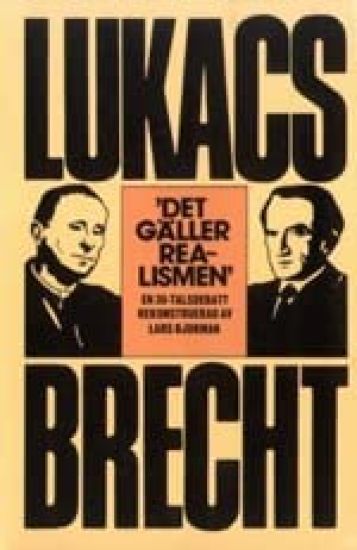
Det gäller realismen : en 30-talsdebatt rekonstruerad av Lars Bjurman

Det gäller realismen : en 30-talsdebatt rekonstruerad av Lars Bjurman

Georg Lukács; Bertolt Brecht; Lars Bjurman

Arkiv förlag/A-Z förlag
1975
nidottu
Den här volymen innehåller några av de viktigaste av den ungerske litteraturteoretikern Georg (György) Lukács essäer om realismen i litteraturen. Syftet med att översätta dem är att ge underlag för något som idag ter sig angelägnare än en polemik mot Lukács värderingar, nämligen en teoretisk kritik av en hegeliansk filosofi och estetik som med sin vidhängande spegelteori fortfarande spökar i den marxistiska litteraturdebatten, inte bara inom den sfär där Lukács själv nu är ställd åt sidan som politisk revisionist. Bertolt Brechts texter i den här volymen innehåller element till en sådan kritik. De flesta av dem hänför sig till den så kallade expressionismdebatten 1938, som Brecht i verkligheten inte deltog i - hans inlägg publicerades först tio år efter hans död, i Östtyskland 1966 - men dessa mer eller mindre direkta repliker till Lukács har här kompletterats med texter som visar vad motsättningen gäller. "Det gäller realismen" - men därunder, bortom de dåvarande estetiska stridslinjerna, avtecknar sig en alltjämt aktuell motsättning mellan marxismen som världsåskådning och en marxism som försöker göra "realiteten gällande gentemot ideologierna". Obs! Osprättad bok så ta fram brevkniven!
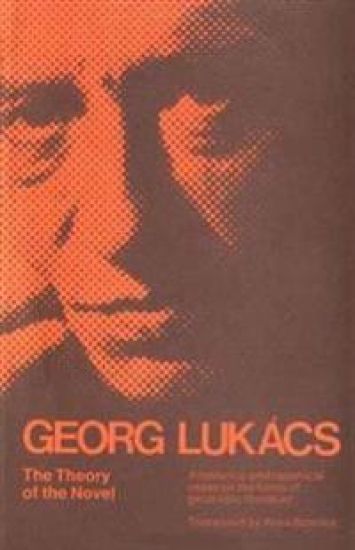
The Theory of the Novel

The Theory of the Novel

Georg Lukács

MIT Press
1974
pokkari
Georg Lukacs wrote The Theory of the Novel in 1914-1915, a period that also saw the conception of Rosa Luxemburg's Spartacus Letters, Lenin's Imperialism: The Highest Stage of Capitalism, Spengler's Decline of the West, and Ernst Bloch's Spirit of Utopia. Like many of Lukacs's early essays, it is a radical critique of bourgeois culture and stems from a specific Central European philosophy of life and tradition of dialectical idealism whose originators include Kant, Hegel, Novalis, Marx, Kierkegaard, Simmel, Weber, and Husserl. The Theory of the Novel marks the transition of the Hungarian philosopher from Kant to Hegel and was Lukacs's last great work before he turned to Marxism-Leninism.
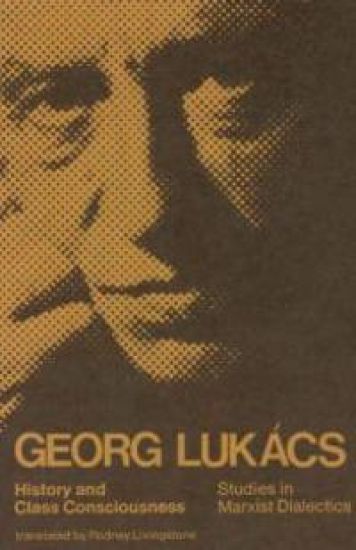
History and Class Consciousness

History and Class Consciousness

Georg Lukács

MIT Press
1972
pokkari
This is the first time one of the most important of Lukacs' early theoretical writings, published in Germany in 1923, has been made available in English. The book consists of a series of essays treating, among other topics, the definition of orthodox Marxism, the question of legality and illegality, Rosa Luxemburg as a Marxist, the changing function of Historic Marxism, class consciousness, and the substantiation and consciousness of the Proletariat. Writing in 1968, on the occasion of the appearance of his collected works, Lukacs evaluated the influence of this book as follows:"For the historical effect of History and Class Consciousness and also for the actuality of the present time one problem is of decisive importance: alienation, which is here treated for the first time since Marx as the central question of a revolutionary critique of capitalism, and whose historical as well as methodological origins are deeply rooted in Hegelian dialectic. It goes without saying that the problem was omnipresent. A few years after History and Class Consciousness was published, it was moved into the focus of philosophical discussion by Heidegger in his Being and Time, a place which it maintains to this day largely as a result of the position occupied by Sartre and his followers. The philologic question raised by L. Goldmann, who considered Heidegger's work partly as a polemic reply to my (admittedly unnamed) work, need not be discussed here. It suffices today to say that the problem was in the air, particularly if we analyze its background in detail in order to clarify its effect, the mixture of Marxist and Existentialist thought processes, which prevailed especially in France immediately after the Second World War. In this connection priorities, influences, and so on are not particularly significant. What is important is that the alienation of man was recognized and appreciated as the central problem of the time in which we live, by bourgeois as well as proletarian, by politically rightist and leftist thinkers. Thus, History and Class Consciousness exerted a profound effect in the circles of the youthful intelligentsia."
Solzhenitsyn

Solzhenitsyn

Georg Lukács

MIT Press
1971
pokkari
Georg Lukacs's most recent work of literary criticism, on the Nobel Prize winner Alexander Solzhenitsyn, hails the Russian author as a major force in redirecting socialist realism toward the level it once occupied in the 1920s when Soviet writers portrayed the turbulent transition to socialist society. In the first essay Lukacs compares the novella One Day in the Life of Ivan Denisovich to short pieces by "bourgeois" writers Conrad and Hemingway and explains the nature of Solzhenitsyn's criticism of the Stalinist period implied in the situation, characters, and their interaction. He also briefly describes Matriona's House, An Incident at the Kretchetovka Station, and For the Good of the Cause-stories that depict various aspects of life in Stalinist Russia. In the second, longer section, Lukacs greets Solzhenitsyn's novels The First Circle and Cancer Ward, which were published outside Russia, as representing "a new high point in contemporary world literature." These books mark Solzhenitsyn as heir to the best tendencies in postrevolutionary socialist realism and to the literary tradition of Tolstoy and Dostoevsky. Moreover, from the point of view of the development of the novel, Lukacs finds the Russian author to be a successful exponent of innovative methods originating in Thomas Mann's The Magic Mountain. The central problem of contemporary socialist realism is a predominant theme in the book: how to come to critical terms with the legacy of Stalin. The enthusiasm with which Lukacs acclaims Solzhenitsyn will not surprise those who have followed his persistent refusal to endorse the so-called socialist realist writers of the Stalinist era. He outlines the aspects of Solzhenitsyn's creative method that allows him to cross the ideological boundaries of the Stalinist tradition, yet he finds a basic pessimism in Solzhenitsyn's work that makes him a "plebeian" rather than a socialist writer. Of Ivan Denisovich and the future of socialist realist literature, Lukacs urges: "If socialist writers were to reflect upon their task, if they were again to feel an artistic responsibility towards the great problems of the present, powerful forces could be unleashed leading in the direction of relevant socialist literature. In this process of transformation and renewal, which signifies an abrupt departure from the socialist realism of the Stalin era, the role of landmark on the road to the future falls to Solzhenitsyn's story."
Historia och klassmedvetande

Historia och klassmedvetande

Georg Lukács

Arkiv förlag/A-Z förlag
1971
nidottu
Innehåll: Vad är ortodox marxism? Rosa Luxemburg som marxist Klassmedvetande Reifikationen och proletariatets medvetande Den historiska materialismens förändrade funktion Legalitet och illegalitet Kritiska kommentarer till Rosa Luxemburgs kritik av ryska revolutionen Metodologiska aspekter på organisationsfrågan