Kirjojen hintavertailu – 12 859 828 kirjaa ja 27 kauppaa

Kirjailija

George Berkeley

Kirjat ja teokset yhdessä paikassa: 300 kirjaa, julkaisuja vuosilta 1960–2026, suosituimpiin kuuluu A Letter to T----- P---, Esq; From the Author of Siris. Containing Some Farther Remarks on the Virtues of Tar-Water, and the Methods for Preparing and Using It.. Vertaile teosten hintoja ja tarkista saatavuus suomalaisista kirjakaupoista.

300 kirjaa

Kirjojen julkaisuvuodet: 1960–2026.

A Letter to T----- P---, Esq; From the Author of Siris. Containing Some Farther Remarks on the Virtues of Tar-water, and the Methods for Preparing and Using It
The 18th century was a wealth of knowledge, exploration and rapidly growing technology and expanding record-keeping made possible by advances in the printing press. In its determination to preserve the century of revolution, Gale initiated a revolution of its own: digitization of epic proportions to preserve these invaluable works in the largest archive of its kind. Now for the first time these high-quality digital copies of original 18th century manuscripts are available in print, making them highly accessible to libraries, undergraduate students, and independent scholars. Medical theory and practice of the 1700s developed rapidly, as is evidenced by the extensive collection, which includes descriptions of diseases, their conditions, and treatments. Books on science and technology, agriculture, military technology, natural philosophy, even cookbooks, are all contained here.++++The below data was compiled from various identification fields in the bibliographic record of this title. This data is provided as an additional tool in helping to insure edition identification: ++++British LibraryT038200The author of Siris = George Berkeley. T----- P--- = Thomas Prior of Rathdowney. Dublin: printed by George Faulkner, 1744. 24p.; 12
Three Dialogues Between Hylas And Philonous In Opposition To Sceptics And Atheists
Three dialogues between Hylas and Philonous in opposition to sceptics and atheists presents a conversational exploration of how reality is understood and what can truly be known. Through a sequence of intellectual debates, the work challenges the assumption that the physical world exists independently of perception. Instead of accepting that objects have an existence outside the mind, the discussion argues that everything known is shaped through ideas formed by sensory experience. The work also examines how doubt can influence thought, urging readers to reconsider their certainty about the external world. By contrasting intuitive belief with philosophical reasoning, the book encourages deeper reflection on what people assume to be true simply because it feels familiar. The unfolding arguments guide the reader toward the realization that perception and reality are inseparable, proposing that the world is not independent of the mind but sustained through the act of perceiving. The dialogue invites readers to examine how assumptions shape understanding and how reality may be far less material than it appears.
The Querist

The Querist

George Berkeley

Double 9 Books
2025
pokkari
The querist presents a series of philosophical questions that addresses the socio-economic challenges facing Ireland, focusing on the nature of wealth, poverty, and industry. Through these carefully posed queries, the work encourages reflection on whether prosperity which can coexist with widespread idleness, the root causes of poverty in a society where basic needs are met, and how government policies might effectively promote industry and economic growth. The treatise questions conventional ideas about money, luxury, and resource distribution, urging readers to consider the moral implications of economic behavior. Berkeley emphasizes the role of sound governance in fostering a productive society and economic stability. His inquiries lay the groundwork for economic theory intertwined with ethical considerations, reflecting his broader philosophical outlook. The work blends practical concerns about Ireland's economy with a vision for social reform, highlighting the interconnectedness of economic practices and the moral responsibility in building a prosperous and just nation.
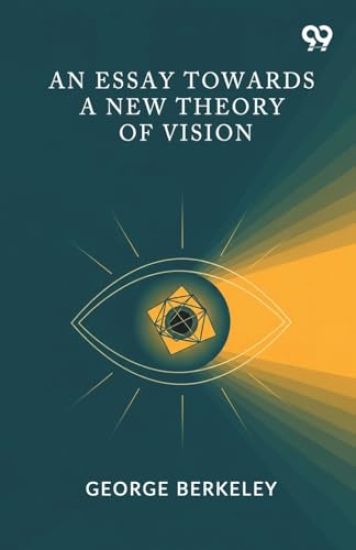
An Essay Towards A New Theory Of Vision

An Essay Towards A New Theory Of Vision

George Berkeley

Double 9 Books
2025
pokkari
An essay towards: A new theory of vision examines how the human mind learns to interpret what the eyes receive, arguing that sight alone does not reveal distance, size, or spatial relationships. The work proposes that vision is not a direct gateway to understanding the external world but a process shaped by experience, where the mind connects visual sensations with memories formed through touch and movement. Instead of seeing distance instantly, individuals learn it gradually by comparing what they see with what they have physically interacted with. The essay explains that visual perception develops through repeated associations, allowing the mind to interpret depth, location, and magnitude from subtle cues such as changes in eye position or differences in clarity. The writing emphasizes that perception is not mechanical but an active mental construction influenced by judgment and habit. Through practical examples, the text highlights the idea that the senses do not operate independently but support one another. The work encourages readers to reconsider assumptions about how knowledge enters the mind and suggests that reality is understood through accumulated learning rather than immediate visual truth.
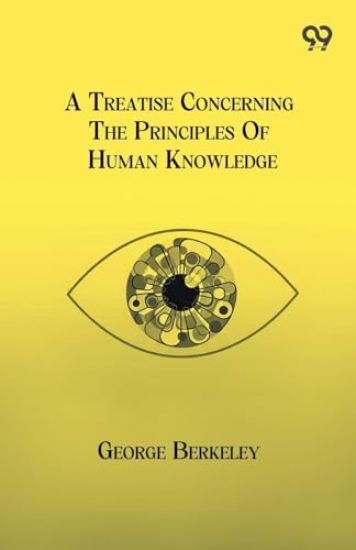
A Treatise Concerning The Principles Of Human Knowledge
A treatise concerning the principles of human knowledge examines the roots of knowledge and the reality that shapes perception. The book delves into the question of true existence, proposing that the outside world is not formed of material objects independent of observation but consists entirely of ideas linked to perceiving minds. It challenges traditional philosophy by urging that material things cannot be thought of apart from direct experience and that abstract ideas, when separated from sensory contact, give rise to confusion and skepticism. The narrative explores the belief that reality is inherently bound to perception-the existence of anything is conditional upon its being perceived, a concept that redefines how truth and understanding are constructed. Through this work, arguments about the limits of abstraction and the dangers of misusing language are proposed, urging readers to look past surface words to the core of ideas. The treatise maintains that knowledge is sustained only in the interplay between mind and experience, and appeals to both common-sense reasoning and spiritual reflection to resolve longstanding philosophical dilemmas.