
Kirjailija
George Berkeley
Kirjat ja teokset yhdessä paikassa: 300 kirjaa, julkaisuja vuosilta 1960–2026, suosituimpiin kuuluu A Letter to T----- P---, Esq; From the Author of Siris. Containing Some Farther Remarks on the Virtues of Tar-Water, and the Methods for Preparing and Using It.. Vertaile teosten hintoja ja tarkista saatavuus suomalaisista kirjakaupoista.
300 kirjaa
Kirjojen julkaisuvuodet: 1960–2026.


The Analyst A Discourse Addressed To An Infidel Mathematician
George Berkeley
Kessinger Pub
2004
pokkari
Eine Abhandlung über die Prinzipien der menschlichen Erkenntnis
George Berkeley
Meiner Felix Verlag GmbH
2004
nidottu
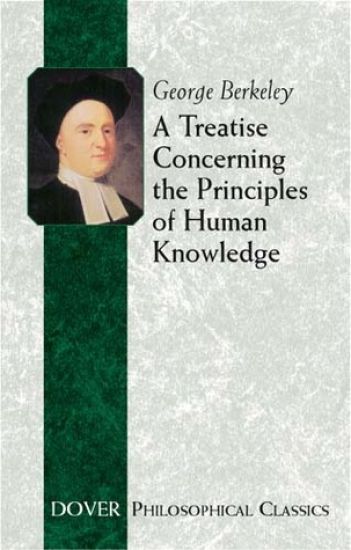
A Treatise Concerning the Principles of Human Knowledge
George Berkeley
Dover Publications Inc.
2004
nidottu
This volume sets Berkeley’s philosophy in its historical context by providing selections from: firstly, works that deeply influenced Berkeley as he formed his main doctrines; secondly, works that illuminate the philosophical climate in which those doctrines were formed; and thirdly, works that display Berkeley’s subsequent philosophical influence. The first category is represented by selections from Descartes, Malebranche, Bayle, and Locke; the second category includes extracts from such thinkers as Regius, Lanion, Arnauld, Lee, and Norris; while reactions to Berkeley, both positive and negative, are drawn from a wide range of thinkers - Leibniz, Baxter, Hume, Diderot, Voltaire, Reid, Kant, Herder, and Mill.
This volume sets Berkeley's philosophy in its historical context by providing selections from: firstly, works that deeply influenced Berkeley as he formed his main doctrines; secondly, works that illuminate the philosophical climate in which those doctrines were formed; and thirdly, works that display Berkeley's subsequent philosophical influence. The first category is represented by selections from Descartes, Malebranche, Bayle, and Locke; the second category includes extracts from such thinkers as Regius, Lanion, Arnauld, Lee, and Norris; while reactions to Berkeley, both positive and negative, are drawn from a wide range of thinkers - Leibniz, Baxter, Hume, Diderot, Voltaire, Reid, Kant, Herder, and Mill.
The Oxford Philosophical Texts series consists of authoritative teaching editions of canonical texts in the history of philosophy from the ancient world down to modern times. Each volume provides a clear, well laid out text together with a comprehensive introduction by a leading specialist, giving the student detailed critical guidance on the intellectual context of the work and the structure and philosophical importance of the main arguments. Endnotes are supplied which provide further commentary on the arguments and explain unfamiliar references and terminology, and a full bibliography and index are also included. The series aims to build up a definitive corpus of key texts in the Western philosophical tradition, which will form a reliable and enduring resource for students and teachers alike. The Three Dialogues between Hylas and Philonous (1713) were designed as a vivid and accessible presentation of the remarkable picture of reality that Berkeley had first presented three years earlier, in his Principles of Human Knowledge. His striking claim there, as here, was that physical things consist of nothing but ideas in minds. Berkeley uses this thesis as the ground for a new argument for the existence of God, and the dialogue form enables him to raise and respond to many of the natural objections to his position. The text printed in this volume is that of the 1734 edition of the Dialogues, generally agreed to represent Berkeley's mature thought. It is supplemented by a comprehensive introduction which looks in detail at the structure and main arguments of the work and the relationship between the Dialogues and the Principles, and also discusses Berkeley's life, influences, and general philosophy. In addition the volume includes an analysis of the text, a glossary, detailed endnotes, and a full bibliography with guidance on further reading. Published alongside the Principles (also edited by Jonathan Dancy), this new edition of Berkeley's most engaging text provides the student with a thorough introduction to the central ideas of one of the worlds greatest philosophers.

A Treatise Concerning the Principles of Human Knowledge
George Berkeley
Oxford University Press
1998
nidottu
The Oxford Philosophical Texts series consists of authoritative teaching editions of canonical texts in the history of philosophy from the ancient world down to modern times. Each volume provides a clear, well laid out text together with a comprehensive introduction by a leading specialist, giving the student detailed critical guidance on the intellectual context of the work and the structure and philosophical importance of the main arguments. Endnotes are supplied which provide further commentary on the arguments and explain unfamiliar references and terminology, and a full bibliography and index are also included. The series aims to build up a definitive corpus of key texts in the Western philosophical tradition, which will form a reliable and enduring resource for students and teachers alike. In his Principles of Human Knowledge Berkeley makes the striking claim that physical things consist of nothing but ideas, and so do not exist outside the mind. This establishes Berkeley as the founder of the idealist tradition in philosophy. Berkeley argues vigorously that once we correct our understanding of the physical, we can find a new proof of the existence of God, refute sceptical attacks on human knowledge, and resolve many difficulties and paradoxes raised by the advance of science. The text printed in this volume is the 1734 edition of the Principles which is generally agreed to represent Berkeley's mature thought. Also included are the four important letters between George Berkeley and Samuel Johnson, written in 1729-30. The text is supplemented by a comprehensive introduction which looks at the structure and main arguments of the text, as well as discussing Berkeley's life, influences, and general philosophy. In addition the volume includes an analysis of the text, a glossary, detailed notes, and a full bibliography with guidance on further reading. This new edition of Berkeley's most famous work, published alongside his other masterpiece, the Three Dialogues (also edited by Jonathan Dancy) provides the student with a thorough introduction to the central ideas of one of the world's greatest philosophers.
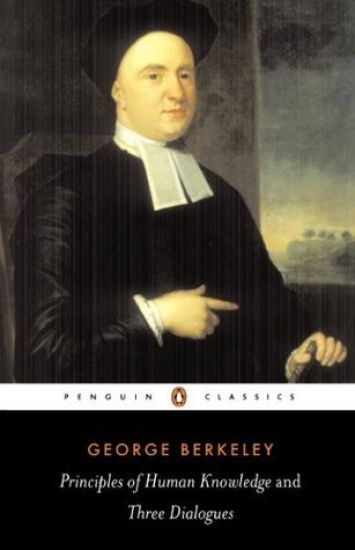
Principles of Human Knowledge and Three Dialogues
George Berkeley
Penguin Classics
1988
pokkari
Halvin toimitettuna 17,00 €
One of the greatest British philosophers, Bishop Berkeley (1685-1753) was the founder of the influential doctrine of Immaterialism - the belief that there is no reality outside the mind, and that the existence of material objects depends upon their being perceived. The Principles of Human Knowledge eloquently outlines this philosophical concept, and argues forcefully that the world consists purely of finite minds and ideas, and of an infinite spirit, God. A denial of all non-spiritual reality, Berkeley's theory was at first heavily criticized by his contemporaries, who feared its ideas would lead to scepticism and atheism. The Three Dialogues provide a powerful response to these fears.

Versuch über eine neue Theorie des Sehens und die Theorie des Sehens oder der visuellen Sprache verteidigt und erklärt
George Berkeley
Felix Meiner
1987
sidottu

Treatise Concerning the Principles of Human Knowledge
George Berkeley
Hackett Publishing Co, Inc
1982
pokkari
Halvin toimitettuna 22,00 €
Kenneth Winkler's esteemed edition of Berkeley's Principles is based on the second edition (London, 1734), the last one published in Berkeley's lifetime. Life other members of Hackett's philosophical classics series, it features editorial elements found to be of particular value to students and their teachers: analytical table of contents; chronology of the author's life; selected bibliography; note on the text; glossary; and index.
"Three Dialogues Between HylasPhilonous".
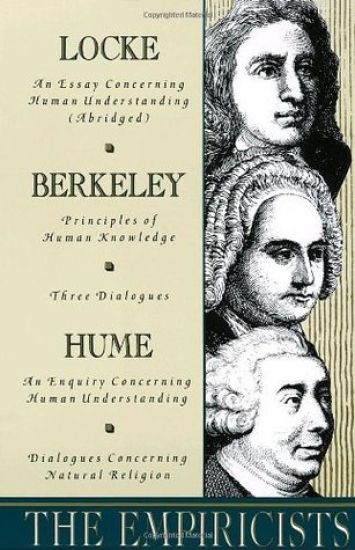
The Empiricists
John Locke; George Berkeley; David Hume
Bantam Dell Publishing Group, Div of Random House, Inc
1960
pokkari
This volume includes the major works of the British Empiricists, philosophers who sought to derive all knowledge from experience. All essays are complete except that of Locke, which Professor Richard Taylor of Brown University has skillfully abridged.