Kirjailija
George Gordon Byron
Kirjat ja teokset yhdessä paikassa: 476 kirjaa, julkaisuja vuosilta 1864–2026, suosituimpiin kuuluu Manfred. Vertaile teosten hintoja ja tarkista saatavuus suomalaisista kirjakaupoista.
476 kirjaa
Kirjojen julkaisuvuodet: 1864–2026.
Don Juan, is many of the old classic books which have been considered important throughout the human history. They are now extremely scarce and very expensive antique. So that this work is never forgotten we republish these books in high quality, using the original text and artwork so that they can be preserved for the present and future generations. This whole book has been reformatted, retyped and designed. These books are not made of scanned copies of their original work and hence the text is clear and readable.
Childe Harold’s Pilgrimage (1812-1818) is a book length poem by British Romantic Lord Byron. Published in cantos, the narrative poem is arranged in four parts, each following the journey of Harold, a character based on Byron himself. Childe Harold’s Pilgrimage established Byron’s reputation as a leading poet of his era, laying the foundation for many of the elements of Romantic poetry—melancholy, sublime and beautiful landscapes, a wandering hero—that would inspire generations of writers, artists, and musicians to come. Harold, a young and deeply unsatisfied man, wanders across a Europe divided by war. In Spain and Portugal, he observes the horrible aftermath of French occupation. While in Greece, though inspired by its classical architecture and immense beauty, he is overcome with grief by the daily realities of life under the control of the Ottoman Empire. Harold makes his way to Belgium, where he visits the battlefield at Waterloo before departing for Switzerland by way of the Rhine. Toward the end of his pilgrimage, Harold travels from Venice throughout Italy, observing its natural wonders and musing on its storied history. Childe Harold’s Pilgrimage—part fictional narrative, part autobiography—is a moving map of a young man’s mind and a continent’s historical experience. It is both a record of Romanticism’s influence on literature and psychology and a testament to the profound influence of trauma and conflict on the individuals and cultures of nineteenth century Europe. With a beautifully designed cover and professionally typeset manuscript, this edition of Lord Byron’s Childe Harold’s Pilgrimage is a classic of English literature and Romanticism reimagined for modern readers.

Don Juan is a satirical poem inspired by the Spanish libertine, who’s known for his romantic trysts, frequent adventures and salacious activities throughout the land. George Gordon reinvents the character, by subverting expectations and changing the narrative. The character of Don Juan has an infamous legacy tied to his relations with women. According to Gordon, his exploits began as a teenager when he engaged in an extramarital affair with a 23-year-old woman. When the pair are discovered, Juan is exiled and forced to travel abroad. This leads to many adventures, where he finds himself in one peculiar situation after another. Despite the obstacles, Juan is never too far from a woman’s love and affection. With Don Juan, George Gordon delivers a vibrant and entertaining take on a literary classic. He infuses humor into a series of hapless tales taking the reader on a nonstop adventure. It’s an enduring legend that’s been adapted and reimagined for hundreds of years. With an eye-catching new cover, and professionally typeset manuscript, this edition of Don Juan is both modern and readable.
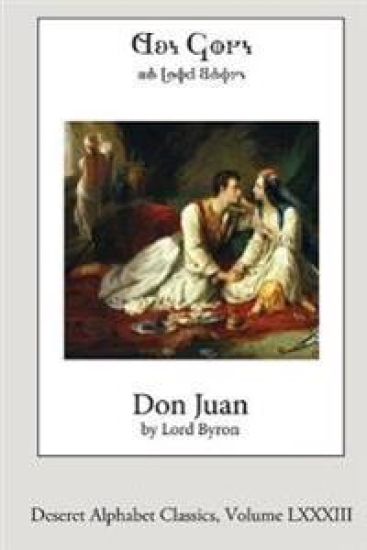
George Gordon Byron, 6th Baron Byron (1788-1824) was an English peer. He's best known today for his poetry but also dabbled in politics and died supporting the Greek War of Independence. In his day, he had a scandalous reputation because of his irregular home life and radical politics. "Byronic" heroes-dark, brooding, and dangerous-were a staple of Romantic literature and named for him. Byron is also notable for fathering the English mathematician Ada Lovelace (1815-1852), his only (legitimate) offspring. "Don Juan" is considered Byron's magnum opus: a long, satirical poem about life, social mores, literary and political in-fighting-and occasionally Don Juan. Byron borrows the name only (not even the name's pronunciation ) from Spanish folklore. His Don Juan is not a heartless seducer, but a beautiful young man who cannot help having women fall in love with him as he travels the Europe of his day. This book is in the Deseret Alphabet, a phonetic alphabet for writing English developed in the mid-19th century at the University of Deseret (now the University of Utah).
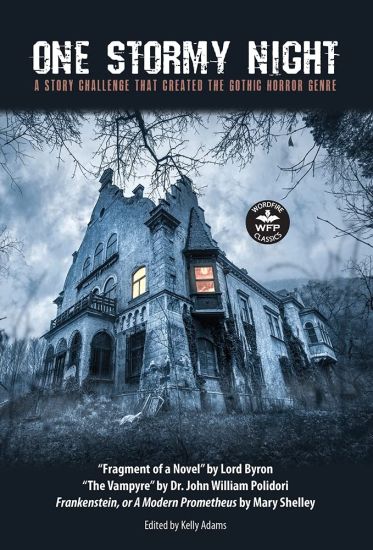
One Stormy Night
Mary Shelley; George Gordon Byron; John William Polidori
Wordfire Press
2021
pokkari
One Stormy Night
Mary Shelley; George Gordon Byron; John William Polidori
Wordfire Press
2021
sidottu
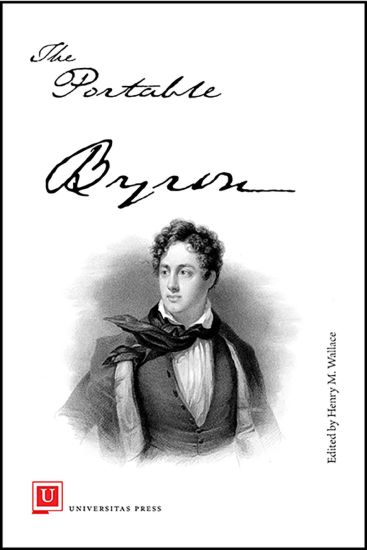
A comprehensive selection from the entire poetical output of perhaps the best-known English-language author since Shakespeare, as well as from his diaries, letters, articles, and plays. The volume is divided into 10 thematical chapters and 8 "interludes." Each chapter is subdivided into various headings. Some texts contain Byron's original footnotes, but the editor has added 176 explanatory notes, which will be very helpful to today's readers. A 14-page year-by-year and month-by-month chronology of Byron's life is placed before the first chapter.
Don Juan is a satirical poem inspired by the Spanish libertine, who’s known for his romantic trysts, frequent adventures and salacious activities throughout the land. George Gordon reinvents the character, by subverting expectations and changing the narrative. The character of Don Juan has an infamous legacy tied to his relations with women. According to Gordon, his exploits began as a teenager when he engaged in an extramarital affair with a 23-year-old woman. When the pair are discovered, Juan is exiled and forced to travel abroad. This leads to many adventures, where he finds himself in one peculiar situation after another. Despite the obstacles, Juan is never too far from a woman’s love and affection. With Don Juan, George Gordon delivers a vibrant and entertaining take on a literary classic. He infuses humor into a series of hapless tales taking the reader on a nonstop adventure. It’s an enduring legend that’s been adapted and reimagined for hundreds of years. With an eye-catching new cover, and professionally typeset manuscript, this edition of Don Juan is both modern and readable.
Childe Harold’s Pilgrimage (1812-1818) is a book length poem by British Romantic Lord Byron. Published in cantos, the narrative poem is arranged in four parts, each following the journey of Harold, a character based on Byron himself. Childe Harold’s Pilgrimage established Byron’s reputation as a leading poet of his era, laying the foundation for many of the elements of Romantic poetry—melancholy, sublime and beautiful landscapes, a wandering hero—that would inspire generations of writers, artists, and musicians to come. Harold, a young and deeply unsatisfied man, wanders across a Europe divided by war. In Spain and Portugal, he observes the horrible aftermath of French occupation. While in Greece, though inspired by its classical architecture and immense beauty, he is overcome with grief by the daily realities of life under the control of the Ottoman Empire. Harold makes his way to Belgium, where he visits the battlefield at Waterloo before departing for Switzerland by way of the Rhine. Toward the end of his pilgrimage, Harold travels from Venice throughout Italy, observing its natural wonders and musing on its storied history. Childe Harold’s Pilgrimage—part fictional narrative, part autobiography—is a moving map of a young man’s mind and a continent’s historical experience. It is both a record of Romanticism’s influence on literature and psychology and a testament to the profound influence of trauma and conflict on the individuals and cultures of nineteenth century Europe. With a beautifully designed cover and professionally typeset manuscript, this edition of Lord Byron’s Childe Harold’s Pilgrimage is a classic of English literature and Romanticism reimagined for modern readers.

Reprint of the original, first published in 1869.
Don Juan is a satiric poem by Lord Byron, based on the legend of Don Juan, which Byron reverses, portraying Juan not as a womanizer but as someone easily seduced by women. It is a variation on the epic form. Byron himself called it an "Epic Satire" (Don Juan, c. xv, v. 790). Modern critics generally consider it Byron's masterpiece, with a total of over sixteen thousand individual lines of verse. Byron completed 16 cantos, leaving an unfinished 17th canto before his death in 1824. Byron claimed he had no ideas in his mind as to what would happen in subsequent cantos as he wrote his work. When the first two cantos were published anonymously in 1819, the poem was criticized for its 'immoral content', though it was also immensely popular. (wikipedia.org)
This book has been considered by academicians and scholars of great significance and value to literature. This forms a part of the knowledge base for future generations. So that the book is never forgotten we have represented this book in a print format as the same form as it was originally first published. Hence any marks or annotations seen are left intentionally to preserve its true nature.