Kirjojen hintavertailu – 12 859 824 kirjaa ja 27 kauppaa

Kirjailija

George MacDonald

Kirjat ja teokset yhdessä paikassa: 1 736 kirjaa, julkaisuja vuosilta 1848–2026, suosituimpiin kuuluu Malcolm. Vertaile teosten hintoja ja tarkista saatavuus suomalaisista kirjakaupoista.

1 736 kirjaa

Kirjojen julkaisuvuodet: 1848–2026.

Guild court: a London story, By George MacDonald A NOVEL (Illustrated)

Guild court: a London story, By George MacDonald A NOVEL (Illustrated)

George MacDonald

Createspace Independent Publishing Platform
2016
nidottu
George MacDonald (10 December 1824 - 18 September 1905) was a Scottish author, poet, and Christian minister. He was a pioneering figure in the field of fantasy literature and the mentor of fellow writer Lewis Carroll. His writings have been cited as a major literary influence by many notable authors including W. H. Auden, C. S. Lewis, J. R. R. Tolkien, Walter de la Mare, E. Nesbit and Madeleine L'Engle. C. S. Lewis wrote that he regarded MacDonald as his "master": "Picking up a copy of Phantastes one day at a train-station bookstall, I began to read. A few hours later," said Lewis, "I knew that I had crossed a great frontier." G. K. Chesterton cited The Princess and the Goblin as a book that had "made a difference to my whole existence". Elizabeth Yates wrote of Sir Gibbie, "It moved me the way books did when, as a child, the great gates of literature began to open and first encounters with noble thoughts and utterances were unspeakably thrilling." Even Mark Twain, who initially disliked MacDonald, became friends with him, and there is some evidence that Twain was influenced by MacDonald. Christian author Oswald Chambers (1874-1917) wrote in Christian Disciplines, vol. 1, (pub. 1934) that "it is a striking indication of the trend and shallowness of the modern reading public that George MacDonald's books have been so neglected". In addition to his fairy tales, MacDonald wrote several works on Christian apologetics including several that defended his view of Christian Universalism
Malcol, By George MacDonald (Classics)

Malcol, By George MacDonald (Classics)

George MacDonald

Createspace Independent Publishing Platform
2016
nidottu
MISS HORN "Na, na; I hae nae feelin's, I'm thankfu' to say. I never kent ony guid come o' them. They're a terrible sicht i' the gait." "Naebody ever thoucht o' layin' 't to yer chairge, mem." "'Deed, I aye had eneuch adu to du the thing I had to du, no to say the thing 'at naebody wad du but mysel'. I hae had nae leisur' for feelin's an' that," insisted Miss Horn. But here a heavy step descending the stair just outside the room attracted her attention, and checking the flow of her speech perforce, with three ungainly strides she reached the landing....... George MacDonald (10 December 1824 - 18 September 1905) was a Scottish author, poet, and Christian minister. He was a pioneering figure in the field of fantasy literature and the mentor of fellow writer Lewis Carroll. His writings have been cited as a major literary influence by many notable authors including W. H. Auden, C. S. Lewis, J. R. R. Tolkien, Walter de la Mare, E. Nesbit and Madeleine L'Engle. C. S. Lewis wrote that he regarded MacDonald as his "master": "Picking up a copy of Phantastes one day at a train-station bookstall, I began to read. A few hours later," said Lewis, "I knew that I had crossed a great frontier." G. K. Chesterton cited The Princess and the Goblin as a book that had "made a difference to my whole existence". Elizabeth Yates wrote of Sir Gibbie, "It moved me the way books did when, as a child, the great gates of literature began to open and first encounters with noble thoughts and utterances were unspeakably thrilling." Even Mark Twain, who initially disliked MacDonald, became friends with him, and there is some evidence that Twain was influenced by MacDonald. Christian author Oswald Chambers (1874-1917) wrote in Christian Disciplines, vol. 1, (pub. 1934) that "it is a striking indication of the trend and shallowness of the modern reading public that George MacDonald's books have been so neglected". In addition to his fairy tales, MacDonald wrote several works on Christian apologetics including several that defended his view of Christian Universalism......
The Marquis of Lossie, By George MacDonald (World's Classics)

The Marquis of Lossie, By George MacDonald (World's Classics)

George MacDonald

Createspace Independent Publishing Platform
2016
nidottu
The Marchioness of Lossie, as she was now called, for the family was one of the two or three in Scotland in which the title descends to an heiress, had left Lossie House almost immediately upon her father's death, under the guardianship of a certain dowager countess. Lady Bellair had taken her first to Edinburgh, and then to London. Tidings of her Mal........... George MacDonald (10 December 1824 - 18 September 1905) was a Scottish author, poet, and Christian minister. He was a pioneering figure in the field of fantasy literature and the mentor of fellow writer Lewis Carroll. His writings have been cited as a major literary influence by many notable authors including W. H. Auden, C. S. Lewis, J. R. R. Tolkien, Walter de la Mare, E. Nesbit and Madeleine L'Engle. C. S. Lewis wrote that he regarded MacDonald as his "master": "Picking up a copy of Phantastes one day at a train-station bookstall, I began to read. A few hours later," said Lewis, "I knew that I had crossed a great frontier." G. K. Chesterton cited The Princess and the Goblin as a book that had "made a difference to my whole existence". Elizabeth Yates wrote of Sir Gibbie, "It moved me the way books did when, as a child, the great gates of literature began to open and first encounters with noble thoughts and utterances were unspeakably thrilling." Even Mark Twain, who initially disliked MacDonald, became friends with him, and there is some evidence that Twain was influenced by MacDonald. Christian author Oswald Chambers (1874-1917) wrote in Christian Disciplines, vol. 1, (pub. 1934) that "it is a striking indication of the trend and shallowness of the modern reading public that George MacDonald's books have been so neglected". In addition to his fairy tales, MacDonald wrote several works on Christian apologetics including several that defended his view of Christian Universalism............
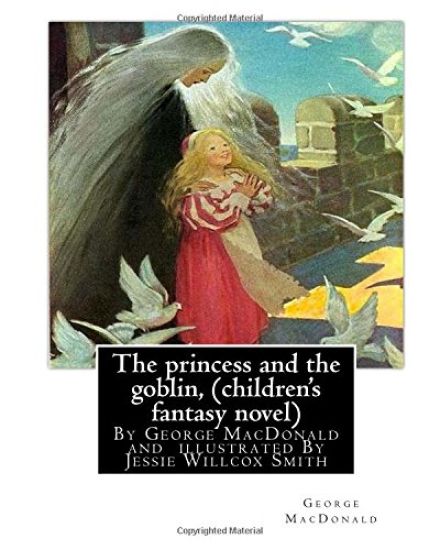
The princess and the goblin, By George MacDonald (children's fantasy novel): illustrated By Jessie Willcox Smith (September 6, 1863 - May 3, 1935) was
The Princess and the Goblin is a children's fantasy novel by George MacDonald. It was published in 1872 by Strahan & Co. The sequel to this book is The Princess and Curdie. Anne Thaxter Eaton writes in A Critical History of Children's Literature that The Princess and the Goblin and its sequel "quietly suggest in every incident ideas of courage and honor." Jeffrey Holdaway, in the New Zealand Art Monthly, said that both books start out as "normal fairytales but slowly become stranger", and that they contain layers of symbolism similar to that of Lewis Carroll's work. Eight-year-old Princess Irene lives a lonely life in a castle in a wild, desolate, mountainous kingdom, with only her nursemaid "Lootie" for company. Her father the king is normally absent, and her mother is dead. Unknown to her, the nearby mines are inhabited by a race of goblins, long banished from the kingdom and now anxious to take revenge on their human neighbors. One rainy day, the princess explores the castle and discovers a beautiful, mysterious lady, who identifies herself as Irene's namesake and great-great-grandmother. The next day, Princess Irene persuades her nursemaid to take her outside. After dark they are chased by goblins and rescued by the young miner 'Curdie', whom Irene befriends. At work with the rest of the miners, Curdie overhears the goblins talking, and their conversation reveals to Curdie the secret weakness of goblin anatomy: they have very soft, vulnerable feet. Curdie sneaks into the Great Hall of the goblin palace to eavesdrop on their general meeting, and hears that the goblins intend to flood the mine if a certain other part of their plan should fail. He later conveys this news to his father. In the palace, Princess Irene injures her hand, which her great-great-grandmother heals. A week later Irene is about to see her great-great-grandmother again, but is frightened by a long-legged cat and escapes up the mountain; whereupon the light from her great-great-grandmother's tower leads her home, where her great-great-grandmother gives Irene a ring attached to a thread invisible except to herself, which thereafter connects her constantly to home. When Curdie explores the goblins' domain, he is discovered by the goblins and stamps on their feet with great success; but when he tries to stamp on the Queen's feet she is uninjured due to her stone shoes. The goblins imprison Curdie, thinking he will die of starvation; but Irene's magic thread leads her to his rescue, and Curdie steals one of the goblin queen's stone shoes. Irene takes Curdie to see her great-great-grandmother and be introduced; but she is only visible to Irene. Curdie later learns that the goblins are digging a tunnel in the mines towards the king's palace, where they plan to abduct the Princess and marry her to goblin prince Harelip. Curdie warns the palace guards about this, but is imprisoned instead and contracts a fever through a wound in his leg, until Irene's great-great-grandmother heals the wound. Meanwhile, the goblins break through the palace floor and come to abduct the princess; but Curdie escapes from his prison room and stamps on the goblins' feet. Upon the goblins' retreat, Irene is believed a captive; but Curdie follows the magic thread to her refuge at his own house, and restores her to the king. When the goblins flood the mines, the water enters the palace, and Curdie warns the others; but the goblins are drowned. The king asks him to serve as a bodyguard; but Curdie refuses, saying he cannot leave his mother and father, and instead accepts a new red petticoat for his mother, as a reward. Jessie Willcox Smith (September 6, 1863 - May 3, 1935) was one of the most prominent female illustrators in the United States during the Golden Age of American illustration.
Lilith: a romance, By George MacDonald, fantasy novel (second edition)

Lilith: a romance, By George MacDonald, fantasy novel (second edition)

George MacDonald

Createspace Independent Publishing Platform
2016
nidottu
Lilith is a fantasy novel written by Scottish writer George MacDonald and first published in 1895. Its importance was recognized in its later revival in paperback by Ballantine Books as the fifth volume of the celebrated Ballantine Adult Fantasy series in September 1969. Lilith is considered among the darkest of MacDonald's works, and among the most profound. It is a story concerning the nature of life, death, and salvation. In the story, MacDonald mentions a cosmic sleep that heals tortured souls, preceding the salvation of all. MacDonald was a Christian universalist, believing that all will eventually be saved. However, in this story, divine punishment is not taken lightly, and salvation is hard-won. Mr. Vane, the protagonist of Lilith, owns a library that seems to be haunted by the former librarian, who looks much like a raven from the brief glimpses he catches of the wraith. After finally encountering the supposed ghost, the mysterious Mr. Raven, Vane learns that Raven had known his father; indeed, Vane's father had visited the strange parallel universe from which Raven comes and goes and now resides therein. Vane follows Raven into the world through a mirror (this symbolistic realm is described as "the region of the seven dimensions", a term taken from Jacob Boehme). Inside the world, Vane learns of a house of beds where the dreamers sleep until the end of the world in death: a good death, in which life is found. Vane's grandfather refused to sleep there and is, instead, forced to do battle with skeletons in a haunted wood. After a treacherous journey through a valley (where the moon is the only thing to keep him safe), Mr. Vane meets the Little Ones, children who never grow up, remaining pure children or becoming selfish and getting bigger and dumber, turning into "bags" or bad giants. After conversing with Lona, the eldest of the children, Mr. Vane decides to help them, and sets off to gather more information, although the Raven (who is also Adam) has warned Mr. Vane that he needs to sleep along with the dreamers before he can really help them. While on his journey, he meets Lilith, Adam's first wife and the princess of Bulika. Vane, although nearly blinded by Lilith's beauty and charms, eventually leads the Little Ones in a battle against Bulika. Lona, Vane's love, turns out to be Lilith's daughter, and is killed by her own mother. Lilith, however, is captured and brought to Adam and Eve at the house of death, where they struggle to make her open her hand, fused shut, in which she holds the water the Little Ones need to grow. Only when she gives it up can Lilith join the sleepers in blissful dreams, free of sin. After a long struggle, Lilith bids Adam cut her hand from her body; it is done, Lilith sleeps, and Vane is sent to bury the hand; water flows from the hole and washes the land over. Vane is then allowed to join the Little Ones, already asleep, in their dreaming. He takes his bed, next to Lona's, and finds true life in death.... George MacDonald (10 December 1824 - 18 September 1905) was a Scottish author, poet, and Christian minister. ...
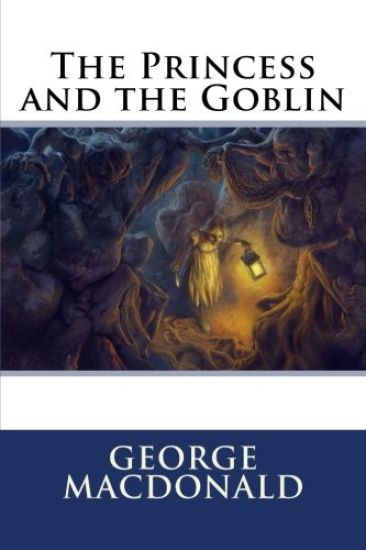
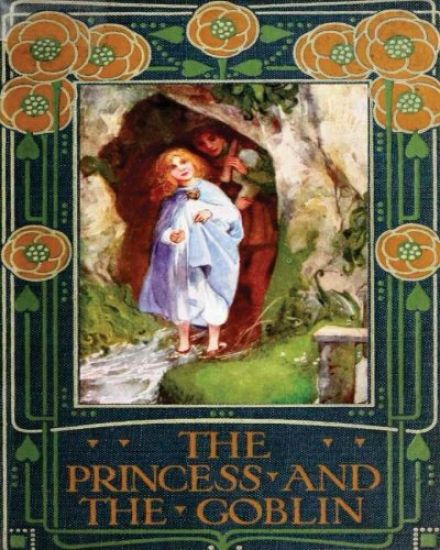
The Princess and the Goblin

The Princess and the Goblin

George MacDonald

Createspace Independent Publishing Platform
2016
nidottu
George MacDonald (10 December 1824 - 18 September 1905) was a Scottish author, poet, and Christian minister. He was a pioneering figure in the field of fantasy literature and the mentor of fellow writer Lewis Carroll. His writings have been cited as a major literary influence by many notable authors including W. H. Auden, C. S. Lewis, J. R. R. Tolkien, 1] Walter de la Mare, E. Nesbit and Madeleine L'Engle. C. S. Lewis wrote that he regarded MacDonald as his "master" "Picking up a copy of Phantastes one day at a train-station bookstall, I began to read. A few hours later," said Lewis, "I knew that I had crossed a great frontier." G. K. Chesterton cited The Princess and the Goblin as a book that had "made a difference to my whole existence".
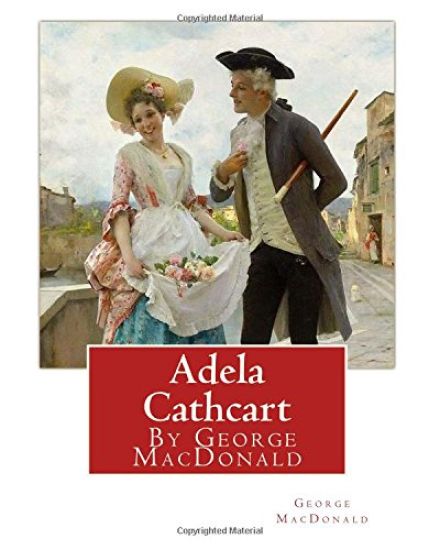
Adela Cathcart, By George MacDonald

Adela Cathcart, By George MacDonald

George MacDonald

Createspace Independent Publishing Platform
2016
nidottu
George MacDonald (10 December 1824 - 18 September 1905) was a Scottish author, poet, and Christian minister. He was a pioneering figure in the field of fantasy literature and the mentor of fellow writer Lewis Carroll. His writings have been cited as a major literary influence by many notable authors including W. H. Auden, C. S. Lewis, J. R. R. Tolkien, Walter de la Mare, E. Nesbit and Madeleine L'Engle. C. S. Lewis wrote that he regarded MacDonald as his "master": "Picking up a copy of Phantastes one day at a train-station bookstall, I began to read. A few hours later," said Lewis, "I knew that I had crossed a great frontier." G. K. Chesterton cited The Princess and the Goblin as a book that had "made a difference to my whole existence". Elizabeth Yates wrote of Sir Gibbie, "It moved me the way books did when, as a child, the great gates of literature began to open and first encounters with noble thoughts and utterances were unspeakably thrilling." Even Mark Twain, who initially disliked MacDonald, became friends with him, and there is some evidence that Twain was influenced by MacDonald. Christian author Oswald Chambers (1874-1917) wrote in Christian Disciplines, vol. 1, (pub. 1934) that "it is a striking indication of the trend and shallowness of the modern reading public that George MacDonald's books have been so neglected". In addition to his fairy tales, MacDonald wrote several works on Christian apologetics including several that defended his view of Christian Universalism. George MacDonald was born on 10 December 1824 at Huntly, Aberdeenshire, Scotland. His father, a farmer, was one of the MacDonalds of Glen Coe, and a direct descendant of one of the families that suffered in the massacre of 1692. The Doric dialect of the Aberdeenshire area appears in the dialogue of some of his non-fantasy novels. MacDonald grew up in the Congregational Church, with an atmosphere of Calvinism. But MacDonald never felt comfortable with some aspects of Calvinist doctrine; indeed, legend has it that when the doctrine of predestination was first explained to him, he burst into tears (although assured that he was one of the elect). Later novels, such as Robert Falconer and Lilith, show a distaste for the idea that God's electing love is limited to some and denied to others. MacDonald graduated from the University of Aberdeen, and then went to London, studying at Highbury College for the Congregational ministry.....
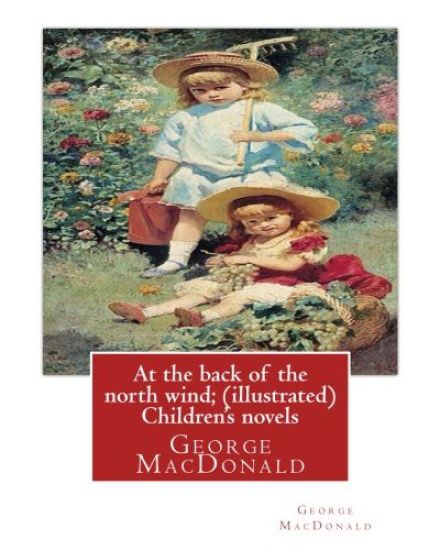
At the back of the north wind; by George MacDonald ( ILUSTRATED ) Children's novels

At the back of the north wind; by George MacDonald ( ILUSTRATED ) Children's novels

George MacDonald

Createspace Independent Publishing Platform
2016
nidottu
At the Back of the North Wind is a children's book by George MacDonald. It was serialized in the children's magazine Good Words for the Young beginning in 1868 and was published in book form in 1871. It is a fantasy centered on a boy named Diamond and his adventures with the North Wind. Diamond travels together with the mysterious Lady North Wind through the nights. The book includes the fairy tale Little Daylight, which has been pulled out as an independent work, or separately, added to other collections of his fairy tales. Plot introduction The book tells the story of a young boy named Diamond. He is a very sweet little boy who makes joy everywhere he goes. He fights despair and gloom and brings peace to his family. One night, as he is trying to sleep, Diamond repeatedly plugs up a hole in the loft (also his bedroom) wall to stop the wind from blowing in. However, he soon finds out that this is stopping the North Wind from seeing through her window. Diamond befriends her, and North Wind lets him fly with her, taking him on several adventures. Though the North Wind does good deeds and helps people, she also does seemingly terrible things. On one of her assignments, she must sink a ship. Yet everything she does that seems bad leads to something good. The North Wind seems to be a representation of Pain and Death working according to God's will for something good. In this book, MacDonald touches on many theological and philosophical questions, especially concerning theodicy. Today, it is considered one of his masterpieces. According to MacDonald's son and biographer Greville MacDonald, there are many similarities between Diamond and MacDonald's own son Maurice, who died young. Diamond seems to represent Christ, always trying to help others while not completely belonging to this world. George MacDonald (10 December 1824 - 18 September 1905) was a Scottish author, poet, and Christian minister. He was a pioneering figure in the field of fantasy literature and the mentor of fellow writer Lewis Carroll. His writings have been cited as a major literary influence by many notable authors including W. H. Auden, C. S. Lewis, J. R. R. Tolkien, Walter de la Mare, E. Nesbit and Madeleine L'Engle. C. S. Lewis wrote that he regarded MacDonald as his "master": "Picking up a copy of Phantastes one day at a train-station bookstall, I began to read. A few hours later," said Lewis, "I knew that I had crossed a great frontier." G. K. Chesterton cited The Princess and the Goblin as a book that had "made a difference to my whole existence". Elizabeth Yates wrote of Sir Gibbie, "It moved me the way books did when, as a child, the great gates of literature began to open and first encounters with noble thoughts and utterances were unspeakably thrilling." Even Mark Twain, who initially disliked MacDonald, became friends with him, and there is some evidence that Twain was influenced by MacDonald. Christian author Oswald Chambers (1874-1917) wrote in Christian Disciplines, vol. 1, (pub. 1934) that "it is a striking indication of the trend and shallowness of the modern reading public that George MacDonald's books have been so neglected". In addition to his fairy tales, MacDonald wrote several works on Christian apologetics including several that defended his view of Christian Universalism. George MacDonald was born on 10 December 1824 at Huntly, Aberdeenshire, Scotland. His father, a farmer, was one of the MacDonalds of Glen Coe, and a direct descendant of one of the families that suffered in the massacre of 1692. The Doric dialect of the Aberdeenshire area appears in the dialogue of some of his non-fantasy novels. MacDonald grew up in the Congregational Church, with an atmosphere of Calvinism....
David Elginbrod, is an 1863 novel by George MacDonald: It is MacDonald's first realistic novel.
David Elginbrod is an 1863 novel by George MacDonald. It is MacDonald's first realistic novel. Plot introduction--A novel of Scottish country life, in the dialect of Aberdeen. A story of humble life, centering in two saintly personalities, a dignified and pious Scottish peasant, and his daughter. A vein of mysticism runs through the story, and mesmerism and electro-biology are introduced. Literary significance and criticism A novel which is the work of a man of genius. It will attract the highest class of readers. -Times. There are many beautiful passages and descriptions in this book. The characters are extremely well drawn. --Athen um. A clever novel. The incidents are exciting, and the interest is maintained to the close. It may be doubted if Sir Walter Scott himself ever painted a Scotch fireside with more truth. -Morning Post. David Elginbrod is the finest character we have met in fiction for many a day. The descriptions of natural scenery are vivid, truthful, and artistic; the general reflections are those of a refined, thoughtful, and poetical philosopher, and the whole moral atmosphere of the book la lofty, pure, and invigorating. -Globe. George MacDonald (10 December 1824 - 18 September 1905) was a Scottish author, poet, and Christian minister. He was a pioneering figure in the field of fantasy literature and the mentor of fellow writer Lewis Carroll. His writings have been cited as a major literary influence by many notable authors including W. H. Auden, C. S. Lewis, J. R. R. Tolkien, Walter de la Mare, E. Nesbit and Madeleine L'Engle. C. S. Lewis wrote that he regarded MacDonald as his "master": "Picking up a copy of Phantastes one day at a train-station bookstall, I began to read. A few hours later," said Lewis, "I knew that I had crossed a great frontier." G. K. Chesterton cited The Princess and the Goblin as a book that had "made a difference to my whole existence". Elizabeth Yates wrote of Sir Gibbie, "It moved me the way books did when, as a child, the great gates of literature began to open and first encounters with noble thoughts and utterances were unspeakably thrilling." Even Mark Twain, who initially disliked MacDonald, became friends with him, and there is some evidence that Twain was influenced by MacDonald. 4] Christian author Oswald Chambers (1874-1917) wrote in Christian Disciplines, vol. 1, (pub. 1934) that "it is a striking indication of the trend and shallowness of the modern reading public that George MacDonald's books have been so neglected". In addition to his fairy tales, MacDonald wrote several works on Christian apologetics including several that defended his view of Christian Universalism........
Annals of a quiet neighbourhood, By George MacDonald, novel (illustrated)

Annals of a quiet neighbourhood, By George MacDonald, novel (illustrated)

George MacDonald

Createspace Independent Publishing Platform
2016
nidottu
An abridged version of George MacDonald's book, "Annals of a Quiet Neighborhood" which was first published in 1865 as a serial in the "Sunday Magazine" in England. A work of faith and hope, repentance and redemption, this novel, set in Marshmallows, a rural location in Victorian England, is the story of a young vicar, Harry Walton, beginning work in his first parish. As he wins the confidence and affection of his parishioners he also comes to know the web of entanglements and sorrows that bind many of them, including the lovely and evasive young woman who lives with her mother and niece in stately Oldcastle Hall, the center of some of the neighborhood's longest hidden secrets. George MacDonald (10 December 1824 - 18 September 1905) was a Scottish author, poet, and Christian minister. He was a pioneering figure in the field of fantasy literature and the mentor of fellow writer Lewis Carroll. His writings have been cited as a major literary influence by many notable authors including W. H. Auden, C. S. Lewis, J. R. R. Tolkien, Walter de la Mare, E. Nesbit and Madeleine L'Engle. C. S. Lewis wrote that he regarded MacDonald as his "master": "Picking up a copy of Phantastes one day at a train-station bookstall, I began to read. A few hours later," said Lewis, "I knew that I had crossed a great frontier." G. K. Chesterton cited The Princess and the Goblin as a book that had "made a difference to my whole existence". Elizabeth Yates wrote of Sir Gibbie, "It moved me the way books did when, as a child, the great gates of literature began to open and first encounters with noble thoughts and utterances were unspeakably thrilling." Even Mark Twain, who initially disliked MacDonald, became friends with him, and there is some evidence that Twain was influenced by MacDonald. Christian author Oswald Chambers (1874-1917) wrote in Christian Disciplines, vol. 1, (pub. 1934) that "it is a striking indication of the trend and shallowness of the modern reading public that George MacDonald's books have been so neglected". In addition to his fairy tales, MacDonald wrote several works on Christian apologetics including several that defended his view of Christian Universalism
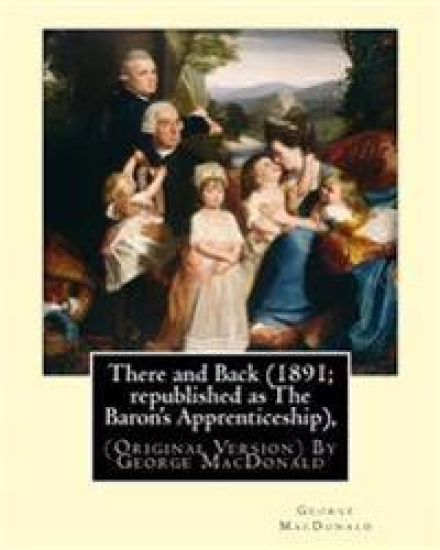
There and Back (1891; republished as The Baron's Apprenticeship),: (Original Version) By George MacDonald
Some of the readers of this tale will be glad to know that the passage with which it ends is a real dream; and that, with but three or four changes almost too slight to require acknowl- edging, I have given it word for word as the friend to whom it came set it down for me. Iv the sure hope of ever lasting brotherhood, I offer this book to Ronald Mac Donald, mj son and friend, my pupil, fellow-student, and fellow-work- man. ... George MacDonald (10 December 1824 - 18 September 1905) was a Scottish author, poet, and Christian minister. He was a pioneering figure in the field of fantasy literature and the mentor of fellow writer Lewis Carroll. His writings have been cited as a major literary influence by many notable authors including W. H. Auden, C. S. Lewis, J. R. R. Tolkien, Walter de la Mare, E. Nesbit and Madeleine L'Engle. C. S. Lewis wrote that he regarded MacDonald as his "master": "Picking up a copy of Phantastes one day at a train-station bookstall, I began to read. A few hours later," said Lewis, "I knew that I had crossed a great frontier." G. K. Chesterton cited The Princess and the Goblin as a book that had "made a difference to my whole existence". Elizabeth Yates wrote of Sir Gibbie, "It moved me the way books did when, as a child, the great gates of literature began to open and first encounters with noble thoughts and utterances were unspeakably thrilling." Even Mark Twain, who initially disliked MacDonald, became friends with him, and there is some evidence that Twain was influenced by MacDonald. Christian author Oswald Chambers (1874-1917) wrote in Christian Disciplines, vol. 1, (pub. 1934) that "it is a striking indication of the trend and shallowness of the modern reading public that George MacDonald's books have been so neglected". In addition to his fairy tales, MacDonald wrote several works on Christian apologetics including several that defended his view of Christian Universalism.........
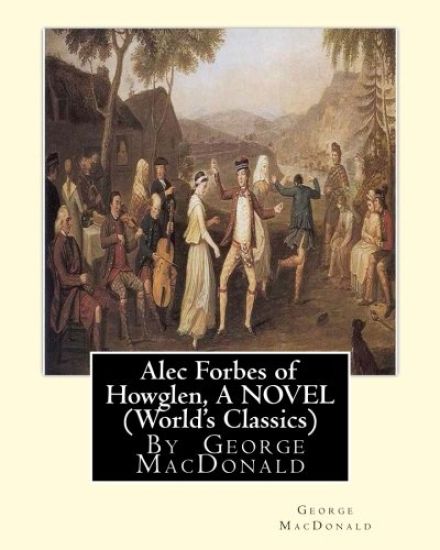
Alec Forbes of Howglen, By George MacDonald A NOVEL (World's Classics)

Alec Forbes of Howglen, By George MacDonald A NOVEL (World's Classics)

George MacDonald

Createspace Independent Publishing Platform
2016
nidottu
Alec Forbes of Howglen is a novel by George MacDonald, first published in 1865 and is primarily concerned with Scottish country life. The 'Howglen' described in the novel is probably a reference to George MacDonald's childhood home in Huntly, Scotland, 'The Farm.' The 'Glamour' river, on which the town of the novel is situated, has been immortalized in the names of modern-day streets in Huntly, as well as a children's park near the site of the old MacDonald family Mill. Literary significance and criticism No account of this story would give any idea of the profound interest that pervades the work from the first page to the last. -Athen um A novel of uncommon merit, Sir Walter Scott said he would advise no man to try to read 'Clarissa Harlowe' out loud in company if he wished to keep his character for manly superiority to tears. We fancy a good many hardened old novel-readers will feel a rising in the throat as they follow the fortunes of Alec and Annie. -Pall Mall Gazette. This book is full of good thought and good writing. Dr. Mac Donald looks in his stories more to the souls of men and women than to their social outside. He reads life and nature like a true poet. -Examiner The whole story is one of surpassing excellence and beauty." -Daily News Alec Forbes...is very enjoyable, and the character of Annie Anderson is one of the most delightful I have ever met with in fiction. -Charles Lutwidge Dodgson George MacDonald (10 December 1824 - 18 September 1905) was a Scottish author, poet, and Christian minister. He was a pioneering figure in the field of fantasy literature and the mentor of fellow writer Lewis Carroll. His writings have been cited as a major literary influence by many notable authors including W. H. Auden, C. S. Lewis, J. R. R. Tolkien, Walter de la Mare, E. Nesbit and Madeleine L'Engle. C. S. Lewis wrote that he regarded MacDonald as his "master": "Picking up a copy of Phantastes one day at a train-station bookstall, I began to read. A few hours later," said Lewis, "I knew that I had crossed a great frontier." G. K. Chesterton cited The Princess and the Goblin as a book that had "made a difference to my whole existence". Elizabeth Yates wrote of Sir Gibbie, "It moved me the way books did when, as a child, the great gates of literature began to open and first encounters with noble thoughts and utterances were unspeakably thrilling." Even Mark Twain, who initially disliked MacDonald, became friends with him, and there is some evidence that Twain was influenced by MacDonald. Christian author Oswald Chambers (1874-1917) wrote in Christian Disciplines, vol. 1, (pub. 1934) that "it is a striking indication of the trend and shallowness of the modern reading public that George MacDonald's books have been so neglected". In addition to his fairy tales, MacDonald wrote several works on Christian apologetics including several that defended his view of Christian Universalism...
Lilith: A Romance

Lilith: A Romance

George MacDonald

Lulu.com
2016
nidottu
When Mr. Vale stumbles upon a large mirror in a house he recently inherited, he is thrown into a world of conflict and intrigue. Strange creatures abound and all fear the enigmatic ruler, Lilith. On his travels, the hero encounters the Little Ones who are desperately afraid of Lilith and seek someone to be their champion against her.
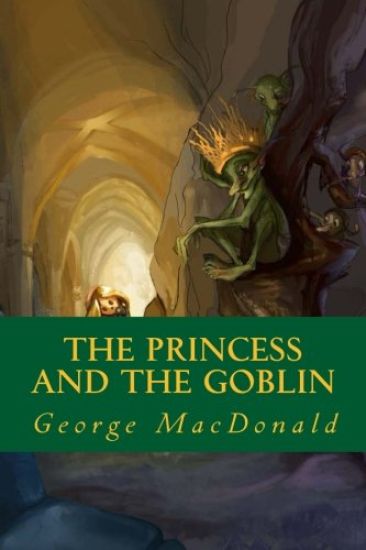
The Princess and the Goblin

The Princess and the Goblin

George MacDonald

Createspace Independent Publishing Platform
2016
nidottu
The Princess and the Goblin is a children's fantasy novel by George MacDonald. It was published in 1872 by Strahan & Co. The sequel to this book is The Princess and Curdie. Anne Thaxter Eaton writes in A Critical History of Children's Literature that The Princess and the Goblin and its sequel "quietly suggest in every incident ideas of courage and honor." Jeffrey Holdaway, in the New Zealand Art Monthly, said that both books start out as "normal fairytales but slowly become stranger", and that they contain layers of symbolism similar to that of Lewis Carroll's work. Eight-year-old Princess Irene lives a lonely life in a castle in a wild, desolate, mountainous kingdom, with only her nursemaid "Lootie" for company. Her father the king is normally absent, and her mother is dead. Unknown to her, the nearby mines are inhabited by a race of goblins, long banished from the kingdom and now anxious to take revenge on their human neighbors. One rainy day, the princess explores the castle and discovers a beautiful, mysterious lady, who identifies herself as Irene's namesake and great-great-grandmother. The next day, Princess Irene persuades her nursemaid to take her outside. After dark they are chased by goblins and rescued by the young miner 'Curdie', whom Irene befriends. At work with the rest of the miners, Curdie overhears the goblins talking, and their conversation reveals to Curdie the secret weakness of goblin anatomy: they have very soft, vulnerable feet. Curdie sneaks into the Great Hall of the goblin palace to eavesdrop on their general meeting, and hears that the goblins intend to flood the mine if a certain other part of their plan should fail. He later conveys this news to his father. In the palace, Princess Irene injures her hand, which her great-great-grandmother heals. A week later Irene is about to see her great-great-grandmother again, but is frightened by a long-legged cat and escapes up the mountain; whereupon the light from her great-great-grandmother's tower leads her home, where her great-great-grandmother gives Irene a ring attached to a thread invisible except to herself, which thereafter connects her constantly to home. When Curdie explores the goblins' domain, he is discovered by the goblins and stamps on their feet with great success; but when he tries to stamp on the Queen's feet she is uninjured due to her stone shoes. The goblins imprison Curdie, thinking he will die of starvation; but Irene's magic thread leads her to his rescue, and Curdie steals one of the goblin queen's stone shoes. Irene takes Curdie to see her great-great-grandmother and be introduced; but she is only visible to Irene. Curdie later learns that the goblins are digging a tunnel in the mines towards the king's palace, where they plan to abduct the Princess and marry her to goblin prince Harelip. Curdie warns the palace guards about this, but is imprisoned instead and contracts a fever through a wound in his leg, until Irene's great-great-grandmother heals the wound. Meanwhile, the goblins break through the palace floor and come to abduct the princess; but Curdie escapes from his prison room and stamps on the goblins' feet. Upon the goblins' retreat, Irene is believed a captive; but Curdie follows the magic thread to her refuge at his own house, and restores her to the king. When the goblins flood the mines, the water enters the palace, and Curdie warns the others; but the goblins are drowned. The king asks him to serve as a bodyguard; but Curdie refuses, saying he cannot leave his mother and father, and instead accepts a new red petticoat for his mother, as a reward.