

Kirjailija
George MacDonald
Kirjat ja teokset yhdessä paikassa: 1 736 kirjaa, julkaisuja vuosilta 1848–2026, suosituimpiin kuuluu Malcolm. Vertaile teosten hintoja ja tarkista saatavuus suomalaisista kirjakaupoista.
1 736 kirjaa
Kirjojen julkaisuvuodet: 1848–2026.

The Princess and the Curdie
George MacDonald
Createspace Independent Publishing Platform
2016
nidottu
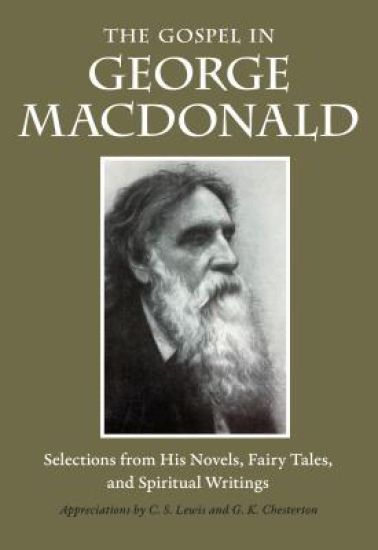
If you don’t have the time to read all the novels of George MacDonald, the great Scottish storyteller who inspired C. S. Lewis, G. K. Chesterton, Mark Twain, W. H. Auden, and J. R. R. Tolkien, this anthology is a great place to start. These selections from MacDonald’s novels, fairy tales, and sermons reveal the profound and hopeful Christian vision that infuses his fantasy worlds and other fiction. Newcomers will find in these pages a rich, accessible sampling. George MacDonald enthusiasts will be pleased to find some of the writer’s most compelling stories and wisdom in one volume. Drawn from books including Sir Gibbie, The Princess and the Goblin, Lilith, and At the Back of the North Wind, the selections are followed by reflections from G. K. Chesterton and C. S. Lewis and accompanied by classic illustrations of Maurice Sendak (print edition only).

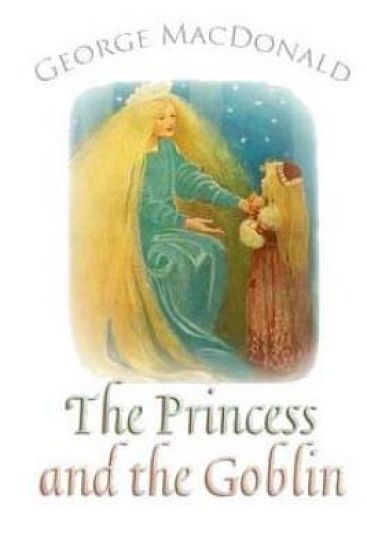
The Princess and the Goblin
George MacDonald
Createspace Independent Publishing Platform
2016
nidottu
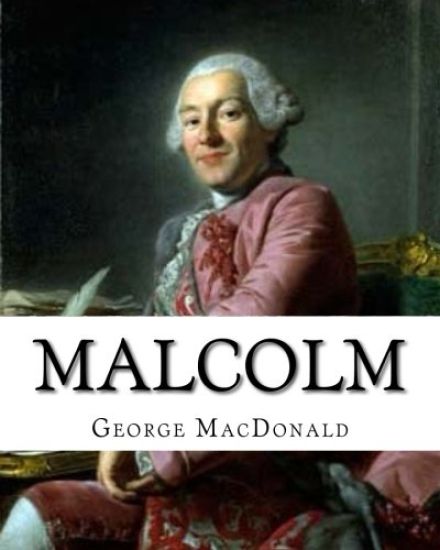
Malcolm, By: George MacDonald, A NOVEL Romance (World's Classics): George MacDonald (10 December 1824 - 18 September 1905) was a Sc
George MacDonald
Createspace Independent Publishing Platform
2016
nidottu
" NA, na; I hae nae feelin's, I'm thankfu' to say. I never kent ony giiid come o' them. They're a terrible sicht i' the gait." " Naebody ever thoucht o' layin' 't to yer chairge, mem." " 'Deed, I aye had eneuch adu to du the thing I had to du, no to say the thing 'at naebody wad du but mysel'. I hae had nae leisur' for feelin's an' that," insisted Miss Horn. But here a heavy step descending the stair just outside the room attracted her attention, and checking the flow of her speech perforce, with three ungainly strides she reached the landing. "Watty Witherspail Watty " she called after the footsteps down the stair. " Yes, mem," answered a gruff voice from below. " Watty, whan ye fess the bit boxie, jist pit a hemmer an' a puckle nails i' your pooch to men' the hen-hoose-door. The tane maun be atten't till as weel's the tither." "The bit boxie" was the coffin of her third cousin Griselda Campbell, whose body lay on the room on her left hand as she called down the stair. Into that on her right Miss Horn now re-entered, to rejoin Mrs Mellis, the wife of the principal draper in the town, who had called ostensibly to condole with her, but really to see the corpse. " Aih she was taen yoong " sighed the visitor, with long-drawn tones and a shake of the head, implying that therein lay ground of complaint, at which poor mortals dared but hint. "No that yoong," returned Miss Horn. "She was upo' the edge o' aucht an' thirty." " Weel, she had a sair time o' V No that sair, sae far as I see-an' wha sud ken better? She's had a bien doon-sittin' (sheltered quarters), and sud hae had as lang's I was to the fore. Na, na; it was nowther sae young nor yet sae sair." " Aih but she was a patient cratur wi' a' flesh," persisted Mrs Mellis, as if she would not willingly be foiled in the attempt to extort for the dead some syllable of acknowledgment from the lips of her late companion...... George MacDonald (10 December 1824 - 18 September 1905) was a Scottish author, poet, and Christian minister. He was a pioneering figure in the field of fantasy literature and the mentor of fellow writer Lewis Carroll. His writings have been cited as a major literary influence by many notable authors including W. H. Auden, C. S. Lewis, J. R. R. Tolkien, Walter de la Mare, E. Nesbit and Madeleine L'Engle. C. S. Lewis wrote that he regarded MacDonald as his "master": "Picking up a copy of Phantastes one day at a train-station bookstall, I began to read. A few hours later," said Lewis, "I knew that I had crossed a great frontier." G. K. Chesterton cited The Princess and the Goblin as a book that had "made a difference to my whole existence". Elizabeth Yates wrote of Sir Gibbie, "It moved me the way books did when, as a child, the great gates of literature began to open and first encounters with noble thoughts and utterances were unspeakably thrilling." Even Mark Twain, who initially disliked MacDonald, became friends with him, and there is some evidence that Twain was influenced by MacDonald. Christian author Oswald Chambers (1874-1917) wrote in Christian Disciplines, vol. 1, (pub. 1934) that "it is a striking indication of the trend and shallowness of the modern reading public that George MacDonald's books have been so neglected". In addition to his fairy tales, MacDonald wrote several works on Christian apologetics including several that defended his view of Christian Universalism.
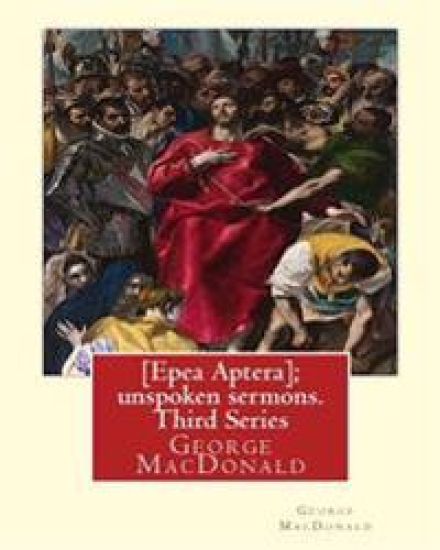
[Epea Aptera]; unspoken sermons. Third Series. By: George MacDonald: George MacDonald (10 December 1824 - 18 September 1905) was a Scottish author, po
George MacDonald
Createspace Independent Publishing Platform
2016
nidottu
George MacDonald (10 December 1824 - 18 September 1905) was a Scottish author, poet, and Christian minister. He was a pioneering figure in the field of fantasy literature and the mentor of fellow writer Lewis Carroll. His writings have been cited as a major literary influence by many notable authors including W. H. Auden, C. S. Lewis, J. R. R. Tolkien, Walter de la Mare, E. Nesbit and Madeleine L'Engle. C. S. Lewis wrote that he regarded MacDonald as his "master": "Picking up a copy of Phantastes one day at a train-station bookstall, I began to read. A few hours later," said Lewis, "I knew that I had crossed a great frontier." G. K. Chesterton cited The Princess and the Goblin as a book that had "made a difference to my whole existence". Elizabeth Yates wrote of Sir Gibbie, "It moved me the way books did when, as a child, the great gates of literature began to open and first encounters with noble thoughts and utterances were unspeakably thrilling." Even Mark Twain, who initially disliked MacDonald, became friends with him, and there is some evidence that Twain was influenced by MacDonald. Christian author Oswald Chambers (1874-1917) wrote in Christian Disciplines, vol. 1, (pub. 1934) that "it is a striking indication of the trend and shallowness of the modern reading public that George MacDonald's books have been so neglected". In addition to his fairy tales, MacDonald wrote several works on Christian apologetics including several that defended his view of Christian Universalis
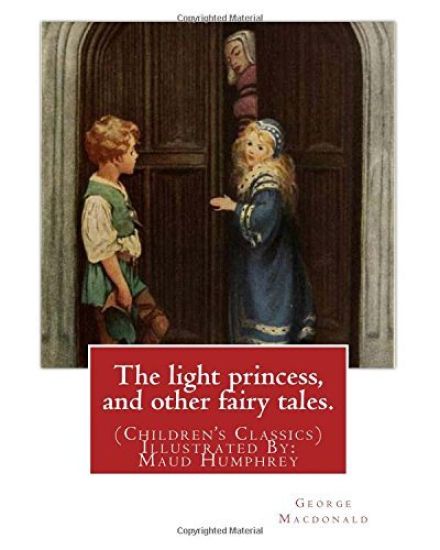
The light princess, and other fairy tales. By: George Macdonald: (Children's Classics) Illustrated By: Maud Humphrey (March 30, 1868 - 1940) was a com
Maud Humphrey; George MacDonald
Createspace Independent Publishing Platform
2016
nidottu
I have never concealed the fact that I regarded him as my master . . . The quality that had enchanted me in his imaginative works turned out to be the quality of the real universe, the divine, magical, terrifying and ecstatic reality in which we all live." --C. S. Lewis "One of the most remarkable writers of the nineteenth century" --W. H. Auden THE LIGHT PRINCESS When the Light Princess was born, somebody screwed up an invitation to her christening and left out her evil aunt. Who was a witch That evil aunt vented her spleen by casting a spell on the Princess that left her immune to gravity. Which was a strange (and often inconvenient ) way for things to be -- more than once the wind caught hold of her while she slept, and you can go the most amazing places on the wind if you have no weight. Then, when the princess got to be a young woman, she met a young prince and fell in love -- and the results of that love are the very essence of this tale . . . Also included in this volume are "The Giant's Heart," "The Golden Key," "Cross Purposes," and "The Shadows... Maud Humphrey (March 30, 1868 - 1940) was a commercial illustrator, water colorist, and suffragette from the United States. She was also the mother of actor Humphrey Bogart and would frequently use her young son as a model.... George MacDonald (10 December 1824 - 18 September 1905) was a Scottish author, poet, and Christian minister. He was a pioneering figure in the field of fantasy literature and the mentor of fellow writer Lewis Carroll. His writings have been cited as a major literary influence by many notable authors including W. H. Auden, C. S. Lewis, J. R. R. Tolkien, Walter de la Mare, E. Nesbit and Madeleine L'Engle. C. S. Lewis wrote that he regarded MacDonald as his "master": "Picking up a copy of Phantastes one day at a train-station bookstall, I began to read. A few hours later," said Lewis, "I knew that I had crossed a great frontier." G. K. Chesterton cited The Princess and the Goblin as a book that had "made a difference to my whole existence". Elizabeth Yates wrote of Sir Gibbie, "It moved me the way books did when, as a child, the great gates of literature began to open and first encounters with noble thoughts and utterances were unspeakably thrilling." Even Mark Twain, who initially disliked MacDonald, became friends with him, and there is some evidence that Twain was influenced by MacDonald. Christian author Oswald Chambers (1874-1917) wrote in Christian Disciplines, vol. 1, (pub. 1934) that "it is a striking indication of the trend and shallowness of the modern reading public that George MacDonald's books have been so neglected". In addition to his fairy tales, MacDonald wrote several works on Christian apologetics including several that defended his view of Christian Universalis
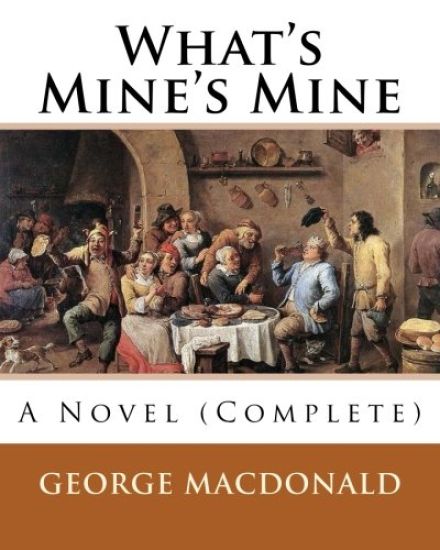
What's Mine's Mine (1886), By: George MacDonald (Original Classics) Complete: A Novel
George MacDonald
Createspace Independent Publishing Platform
2016
nidottu
It was one well-known in the country, but Rob had filled it after his fancy with imaginative turns and spiritual hints, unappreciable by the tall child of seventeen walking by Ian's side. There was not among the maidens of the poor village one who would not have understood it better than she. It took her fancy notwithstanding, partly, perhaps, from its unlikeness to any story she had ever heard before. Her childhood had been starved on the husks of new fairy-tales, all invention and no imagination, than which more unnourishing food was never offered to God's children....... George MacDonald (10 December 1824 - 18 September 1905) was a Scottish author, poet, and Christian minister. He was a pioneering figure in the field of fantasy literature and the mentor of fellow writer Lewis Carroll. His writings have been cited as a major literary influence by many notable authors including W. H. Auden, C. S. Lewis, J. R. R. Tolkien, Walter de la Mare, E. Nesbit and Madeleine L'Engle. C. S. Lewis wrote that he regarded MacDonald as his "master": "Picking up a copy of Phantastes one day at a train-station bookstall, I began to read. A few hours later," said Lewis, "I knew that I had crossed a great frontier." G. K. Chesterton cited The Princess and the Goblin as a book that had "made a difference to my whole existence". Elizabeth Yates wrote of Sir Gibbie, "It moved me the way books did when, as a child, the great gates of literature began to open and first encounters with noble thoughts and utterances were unspeakably thrilling." Even Mark Twain, who initially disliked MacDonald, became friends with him, and there is some evidence that Twain was influenced by MacDonald. Christian author Oswald Chambers (1874-1917) wrote in Christian Disciplines, vol. 1, (pub. 1934) that "it is a striking indication of the trend and shallowness of the modern reading public that George MacDonald's books have been so neglected". In addition to his fairy tales, MacDonald wrote several works on Christian apologetics including several that defended his view of Christian Universalism..
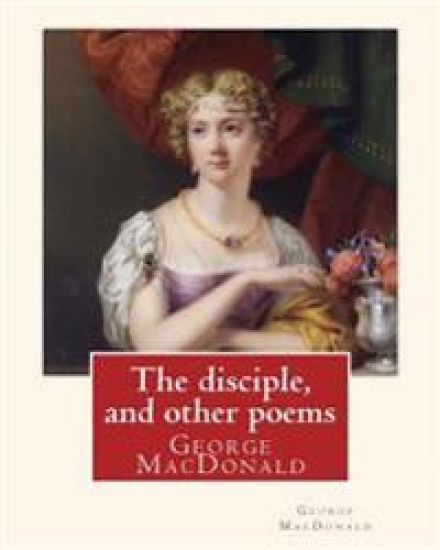
The disciple, and other poems. By: George MacDonald: George MacDonald (10 December 1824 - 18 September 1905) was a Scottish author, poet, and Christia
George MacDonald
Createspace Independent Publishing Platform
2016
nidottu
George MacDonald (10 December 1824 - 18 September 1905) was a Scottish author, poet, and Christian minister. He was a pioneering figure in the field of fantasy literature and the mentor of fellow writer Lewis Carroll. His writings have been cited as a major literary influence by many notable authors including W. H. Auden, C. S. Lewis, J. R. R. Tolkien, Walter de la Mare, E. Nesbit and Madeleine L'Engle. C. S. Lewis wrote that he regarded MacDonald as his "master": "Picking up a copy of Phantastes one day at a train-station bookstall, I began to read. A few hours later," said Lewis, "I knew that I had crossed a great frontier." G. K. Chesterton cited The Princess and the Goblin as a book that had "made a difference to my whole existence". Elizabeth Yates wrote of Sir Gibbie, "It moved me the way books did when, as a child, the great gates of literature began to open and first encounters with noble thoughts and utterances were unspeakably thrilling." Even Mark Twain, who initially disliked MacDonald, became friends with him, and there is some evidence that Twain was influenced by MacDonald. Christian author Oswald Chambers (1874-1917) wrote in Christian Disciplines, vol. 1, (pub. 1934) that "it is a striking indication of the trend and shallowness of the modern reading public that George MacDonald's books have been so neglected". In addition to his fairy tales, MacDonald wrote several works on Christian apologetics including several that defended his view of Christian Universalis

At the Back of the North Wind
George MacDonald
Createspace Independent Publishing Platform
2016
nidottu
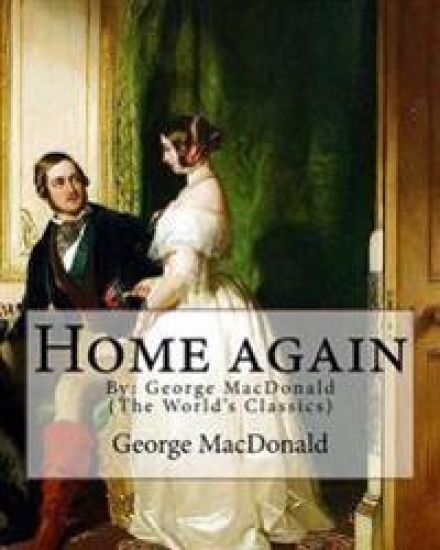
Home again, By: George MacDonald (The World's Classics): George MacDonald (10 December 1824 - 18 September 1905) was a Scottish author
George MacDonald
Createspace Independent Publishing Platform
2016
nidottu
George MacDonald (10 December 1824 - 18 September 1905) was a Scottish author, poet, and Christian minister. He was a pioneering figure in the field of fantasy literature and the mentor of fellow writer Lewis Carroll. His writings have been cited as a major literary influence by many notable authors including W. H. Auden, C. S. Lewis, J. R. R. Tolkien, Walter de la Mare, E. Nesbit and Madeleine L'Engle. C. S. Lewis wrote that he regarded MacDonald as his "master": "Picking up a copy of Phantastes one day at a train-station bookstall, I began to read. A few hours later," said Lewis, "I knew that I had crossed a great frontier." G. K. Chesterton cited The Princess and the Goblin as a book that had "made a difference to my whole existence". Elizabeth Yates wrote of Sir Gibbie, "It moved me the way books did when, as a child, the great gates of literature began to open and first encounters with noble thoughts and utterances were unspeakably thrilling." Even Mark Twain, who initially disliked MacDonald, became friends with him, and there is some evidence that Twain was influenced by MacDonald. Christian author Oswald Chambers (1874-1917) wrote in Christian Disciplines, vol. 1, (pub. 1934) that "it is a striking indication of the trend and shallowness of the modern reading public that George MacDonald's books have been so neglected". In addition to his fairy tales, MacDonald wrote several works on Christian apologetics including several that defended his view of Christian Universalis
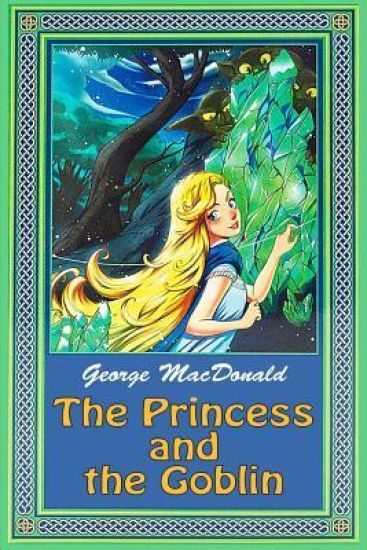
The Princess and the Goblin
George MacDonald
Createspace Independent Publishing Platform
2016
nidottu
The Princess and the Goblin
George MacDonald
Createspace Independent Publishing Platform
2016
nidottu
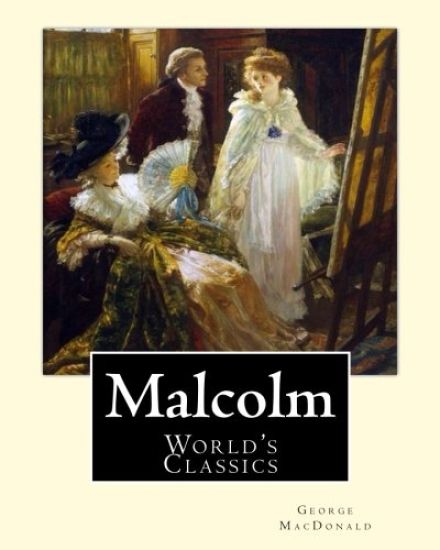
Malcolm, By: George MacDonald, (World's Classics): George MacDonald (10 December 1824 - 18 September 1905) was a Scottish author, p
George MacDonald
Createspace Independent Publishing Platform
2016
nidottu
" NA, na; I hae nae feelin's, I'm thankfu' to say. I never kent ony giiid come o' them. They're a terrible sicht i' the gait." " Naebody ever thoucht o' layin' 't to yer chairge, mem." " 'Deed, I aye had eneuch adu to du the thing I had to du, no to say the thing 'at naebody wad du but mysel'. I hae had nae leisur' for feelin's an' that," insisted Miss Horn. But here a heavy step descending the stair just outside the room attracted her attention, and checking the flow of her speech perforce, with three ungainly strides she reached the landing. "Watty Witherspail Watty " she called after the footsteps down the stair. " Yes, mem," answered a gruff voice from below. " Watty, whan ye fess the bit boxie, jist pit a hemmer an' a puckle nails i' your pooch to men' the hen-hoose-door. The tane maun be atten't till as weel's the tither." "The bit boxie" was the coffin of her third cousin Griselda Campbell, whose body lay on the room on her left hand as she called down the stair. Into that on her right Miss Horn now re-entered, to rejoin Mrs Mellis, the wife of the principal draper in the town, who had called ostensibly to condole with her, but really to see the corpse. " Aih she was taen yoong " sighed the visitor, with long-drawn tones and a shake of the head, implying that therein lay ground of complaint, at which poor mortals dared but hint. "No that yoong," returned Miss Horn. "She was upo' the edge o' aucht an' thirty." " Weel, she had a sair time o' V No that sair, sae far as I see-an' wha sud ken better? She's had a bien doon-sittin' (sheltered quarters), and sud hae had as lang's I was to the fore. Na, na; it was nowther sae young nor yet sae sair." " Aih but she was a patient cratur wi' a' flesh," persisted Mrs Mellis, as if she would not willingly be foiled in the attempt to extort for the dead some syllable of acknowledgment from the lips of her late companion...... George MacDonald (10 December 1824 - 18 September 1905) was a Scottish author, poet, and Christian minister. He was a pioneering figure in the field of fantasy literature and the mentor of fellow writer Lewis Carroll. His writings have been cited as a major literary influence by many notable authors including W. H. Auden, C. S. Lewis, J. R. R. Tolkien, Walter de la Mare, E. Nesbit and Madeleine L'Engle. C. S. Lewis wrote that he regarded MacDonald as his "master" "Picking up a copy of Phantastes one day at a train-station bookstall, I began to read. A few hours later," said Lewis, "I knew that I had crossed a great frontier." G. K. Chesterton cited The Princess and the Goblin as a book that had "made a difference to my whole existence". Elizabeth Yates wrote of Sir Gibbie, "It moved me the way books did when, as a child, the great gates of literature began to open and first encounters with noble thoughts and utterances were unspeakably thrilling." Even Mark Twain, who initially disliked MacDonald, became friends with him, and there is some evidence that Twain was influenced by MacDonald. Christian author Oswald Chambers (1874-1917) wrote in Christian Disciplines, vol. 1, (pub. 1934) that "it is a striking indication of the trend and shallowness of the modern reading public that George MacDonald's books have been so neglected". In addition to his fairy tales, MacDonald wrote several works on Christian apologetics including several that defended his view of Christian Universalism.
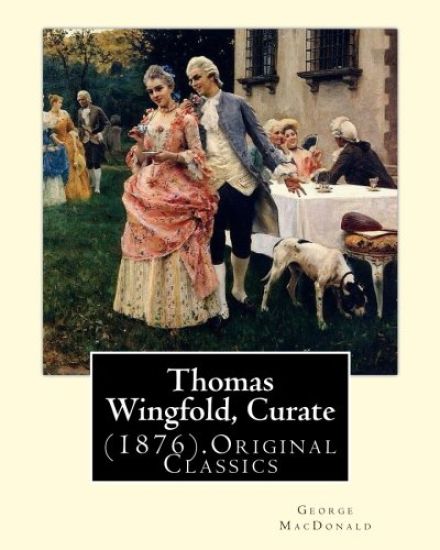
Thomas Wingfold, Curate (1876). By: George MacDonald (Original Classics): George MacDonald was one of the foremost fantasy writers of the 19th century
George MacDonald
Createspace Independent Publishing Platform
2016
nidottu
George MacDonald (10 December 1824 - 18 September 1905) was a Scottish author, poet, and Christian minister. He was a pioneering figure in the field of fantasy literature and the mentor of fellow writer Lewis Carroll. His writings have been cited as a major literary influence by many notable authors including W. H. Auden, C. S. Lewis, J. R. R. Tolkien, Walter de la Mare, E. Nesbit and Madeleine L'Engle. C. S. Lewis wrote that he regarded MacDonald as his "master" "Picking up a copy of Phantastes one day at a train-station bookstall, I began to read. A few hours later," said Lewis, "I knew that I had crossed a great frontier." G. K. Chesterton cited The Princess and the Goblin as a book that had "made a difference to my whole existence". Elizabeth Yates wrote of Sir Gibbie, "It moved me the way books did when, as a child, the great gates of literature began to open and first encounters with noble thoughts and utterances were unspeakably thrilling." Even Mark Twain, who initially disliked MacDonald, became friends with him, and there is some evidence that Twain was influenced by MacDonald. Christian author Oswald Chambers (1874-1917) wrote in Christian Disciplines, vol. 1, (pub. 1934) that "it is a striking indication of the trend and shallowness of the modern reading public that George MacDonald's books have been so neglected". In addition to his fairy tales, MacDonald wrote several works on Christian apologetics including several that defended his view of Christian Universalism.
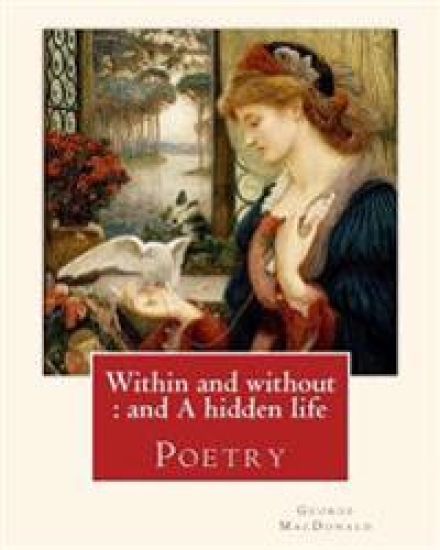
Within and without: and A hidden life. By: George MacDonald: Poetry
George MacDonald
Createspace Independent Publishing Platform
2016
nidottu
George MacDonald (10 December 1824 - 18 September 1905) was a Scottish author, poet, and Christian minister. He was a pioneering figure in the field of fantasy literature and the mentor of fellow writer Lewis Carroll. His writings have been cited as a major literary influence by many notable authors including W. H. Auden, C. S. Lewis, J. R. R. Tolkien, Walter de la Mare, E. Nesbit and Madeleine L'Engle. C. S. Lewis wrote that he regarded MacDonald as his "master": "Picking up a copy of Phantastes one day at a train-station bookstall, I began to read. A few hours later," said Lewis, "I knew that I had crossed a great frontier." G. K. Chesterton cited The Princess and the Goblin as a book that had "made a difference to my whole existence". Elizabeth Yates wrote of Sir Gibbie, "It moved me the way books did when, as a child, the great gates of literature began to open and first encounters with noble thoughts and utterances were unspeakably thrilling." Even Mark Twain, who initially disliked MacDonald, became friends with him, and there is some evidence that Twain was influenced by MacDonald. Christian author Oswald Chambers (1874-1917) wrote in Christian Disciplines, vol. 1, (pub. 1934) that "it is a striking indication of the trend and shallowness of the modern reading public that George MacDonald's books have been so neglected". In addition to his fairy tales, MacDonald wrote several works on Christian apologetics including several that defended his view of Christian Universalis
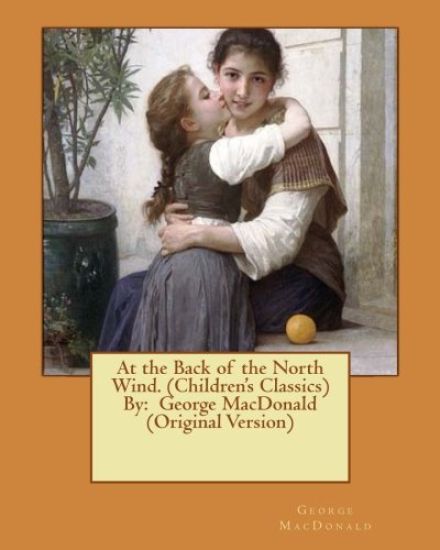
At the Back of the North Wind. (Children's Classics) By: George MacDonald (Original Version)
Jessie Willcox Smith; George MacDonald
Createspace Independent Publishing Platform
2016
nidottu
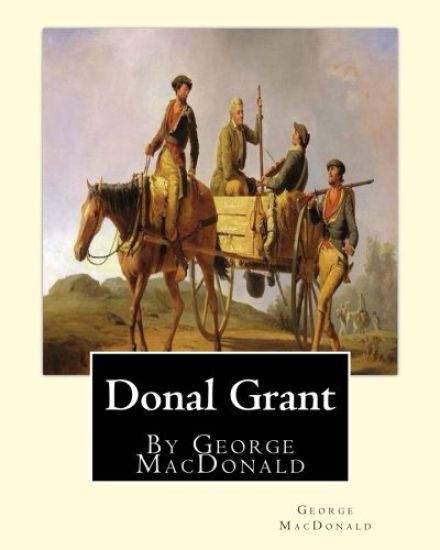
Donal Grant, By George MacDonald (Classic Books)
George MacDonald
Createspace Independent Publishing Platform
2016
nidottu
George MacDonald (10 December 1824 - 18 September 1905) was a Scottish author, poet, and Christian minister. He was a pioneering figure in the field of fantasy literature and the mentor of fellow writer Lewis Carroll. His writings have been cited as a major literary influence by many notable authors including W. H. Auden, C. S. Lewis, J. R. R. Tolkien, Walter de la Mare, E. Nesbit and Madeleine L'Engle. C. S. Lewis wrote that he regarded MacDonald as his "master": "Picking up a copy of Phantastes one day at a train-station bookstall, I began to read. A few hours later," said Lewis, "I knew that I had crossed a great frontier." G. K. Chesterton cited The Princess and the Goblin as a book that had "made a difference to my whole existence". Elizabeth Yates wrote of Sir Gibbie, "It moved me the way books did when, as a child, the great gates of literature began to open and first encounters with noble thoughts and utterances were unspeakably thrilling." Even Mark Twain, who initially disliked MacDonald, became friends with him, and there is some evidence that Twain was influenced by MacDonald. Christian author Oswald Chambers (1874-1917) wrote in Christian Disciplines, vol. 1, (pub. 1934) that "it is a striking indication of the trend and shallowness of the modern reading public that George MacDonald's books have been so neglected". In addition to his fairy tales, MacDonald wrote several works on Christian apologetics including several that defended his view of Christian Universalism. George MacDonald was born on 10 December 1824 at Huntly, Aberdeenshire, Scotland. His father, a farmer, was one of the MacDonalds of Glen Coe, and a direct descendant of one of the families that suffered in the massacre of 1692. The Doric dialect of the Aberdeenshire area appears in the dialogue of some of his non-fantasy novels. MacDonald grew up in the Congregational Church, with an atmosphere of Calvinism. But MacDonald never felt comfortable with some aspects of Calvinist doctrine; indeed, legend has it that when the doctrine of predestination was first explained to him, he burst into tears (although assured that he was one of the elect). Later novels, such as Robert Falconer and Lilith, show a distaste for the idea that God's electing love is limited to some and denied to others. MacDonald graduated from the University of Aberdeen, and then went to London, studying at Highbury College for the Congregational ministry............

Mary Marston. A NOVEL by: George MacDonald (Original Version)
George MacDonald
Createspace Independent Publishing Platform
2016
nidottu