Kirjailija
George Orwell
Kirjat ja teokset yhdessä paikassa: 1 213 kirjaa, julkaisuja vuosilta 1905–2026, suosituimpiin kuuluu Vuonna 1984. Vertaile teosten hintoja ja tarkista saatavuus suomalaisista kirjakaupoista.
1 213 kirjaa
Kirjojen julkaisuvuodet: 1905–2026.
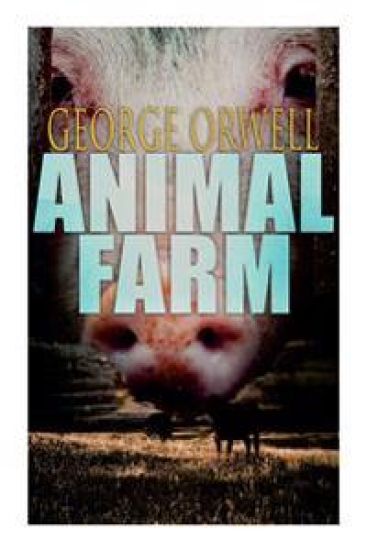
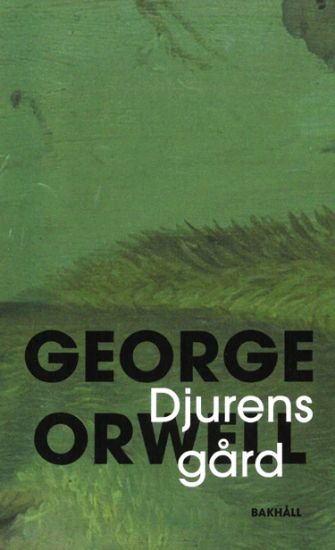
OBS! NYÖVERSÄTTNINGEN! George Orwells roman Djurens gård i nyöversättning och med efterord av Christian Ekvall. Nu är den äntligen här - den efterlängtade nyöversättningen av George Orwells Animal Farm, en av nittonhundratalets mest kända engelskspråkiga romaner och en av nittonhundratalets största litterära klassiker. Det lustiga (eller skrämmande) är att detta satiriska verk som skapades för över sjuttio år sedan fortfarande känns högaktuellt. Fenomenen och tendenserna som parodieras är lika vanliga och lika moraliskt urspårade nu som då. Boken har tidigare översatts till svenska med titeln Djurfarmen, trots att en bondgård på svenska sällan kallas farm. Fårfarm, grisfarm och minkfarm känns bekant, men inte djurfarm. Vi har därför valt att ge nyöversättningen den svenska titeln Djurens gård. Berättelsen handlar om bondgården där djuren gör uppror mot den elake, förtryckande bonden. Tillsammans försöker djuren införa frihet och rättvisa på gården. Det artar sig bra, ett tag, tills grisen Napoleon tar makten och blir envåldshärskare. I första hand skildrar boken hur Stalin tog makten i Sovjet, men i överförd bemärkelse handlar det om alla ojämlika samhällen. Orwell visste vad han talade om. Han hade själv upplevt hur den demokratiska socialismen krossades under spanska inbördeskriget och i Sovjet. Han hade sett folkets frihetskamp korrumperas av makthungriga ledare. Han sökte efter rätt form för att uttrycka denna kritik. Vad skulle fungera bäst? Skulle han skriva en rapportbok? Eller en roman? Eller ett mellanting, en dokumentärroman? Till slut kom han fram till att den perfekta formen för att åskådliggöra detta absurda maktmissbruk var en fabel, alltså att berätta historien som om den handlade om djur. Boken kom ut i augusti 1945, i världskrigets slutskede, och blev en omedelbar försäljningsframgång både i England och USA. Inom kort översattes den till ett flertal språk. På svenska kom den 1946. Den utkommer alltjämt i nya utgåvor, världen över, och på vissa håll är den alltjämt listad som förbjuden litteratur. Så sent som 2018 beslutade Kinas regering att censurera alla inlägg på nätet som refererar till den. Själv fick Orwell bara uppleva mindre är fem år av bokens framgångar, eftersom han gick bort 1950. Kort innan han dog hann han skriva klart sin andra megaklassiker - romanen 1984. George Orwells roman Djurens gård. Översättning och efterord Christian Ekvall. ISBN 978-91-7742-559-5. Högkvalitetspapper, sydda ark, klotband (=hårda pärmar och tygrygg). 128 sidor.
A new edition of Orwell's timeless dystopian classic, introduced and annotated by his biographer, D. J. TaylorSince its first publication in 1949, Orwell's devastating expose of the totalitarian mind has established itself as the most influential political satire of the modern age. Winston Smith's doomed rebellion against the all-seeing eye of Big Brother, and a world corrupted by technology and the perversion of language, is as relevant now as it ever was. This new edition includes an introduction and extensive end-notes, and an appendix containing original responses to the novel and several of Orwell's essays from the period in which Nineteen Eighty-Four was written.
A new edition of Orwell's savage satire of the Soviet Revolution, introduced and annotated by his biographer, D. J. TaylorFirst published in 1945, just as the allied forces had begun to parcel up the post-war world, Orwell's satire of the Soviet Revolution was instantly acclaimed as a Cold War classic. Set in the English countryside in the early years of the twentieth century, this is the story of a rebellion that fails, carried out by revolutionaries who all too swiftly turn into the thing they were trying to destroy. This new edition includes an introduction and extensive end-notes, and an appendix containing original responses to the novel as well as letters and documents from the period in which Animal Farm was written.
In questo libro-inchiesta Orwell descrive con obiettivit giornalistica lo sfruttamento e la disoccupazione tipiche delle cittadine minerarie dell'Inghilterra settentrionale durante gli anni Trenta, accompagnando il lettore in uno studio sociologico che s'incentra sui vari strati del proletariato e proponendo uno studio approfondito della problematica dei rapporti tra socialismo e civilt industriale. A distanza di anni, questo romanzo si rivela attuale non solo nell'analisi lucida di una societ che il progresso non ha mutato molto, ma perfino nella sua critica al socialismo, in cui mostra un'incredibile capacit di preveggenza, e nella potenzialit delle soluzioni offerte.
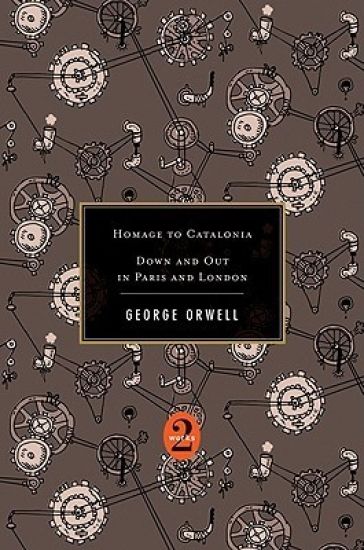
A National Review Top Ten Best Nonfiction Books of the Century “One of Orwell’s very best books and perhaps the best book that exists on the Spanish Civil War.”—The New Yorker In 1936, originally intending merely to report on the Spanish Civil War as a journalist, George Orwell found himself embroiled as a participant—as a member of the Workers’ Party of Marxist Unity. Fighting against the Fascists, he described in painfully vivid and occasionally comic detail life in the trenches—with a “democratic army” composed of men with no ranks, no titles, and often no weapons—and his near fatal wounding. As the politics became tangled, Orwell was pulled into a heartbreaking conflict between his own personal ideals and the complicated realities of political power struggles. Considered one of the finest works by a man V. S. Pritchett called “the wintry conscience of a generation,” Homage to Catalonia is both Orwell’s memoir of his experiences at the front and his tribute to those who died in what he called a fight for common decency. This edition features a new foreword by Adam Hochschild placing the war in greater context and discussing the evolution of Orwell’s views on the Spanish Civil War. “No one except George Orwell . . . made the violence and self-dramatization of Spain so burning and terrible.”— Alfred Kazin, New York Times “A wise book, one that once read will never be forgotten.”—Chicago Sunday Tribune
Down And Out In Paris And London
George Orwell
Houghton Mifflin
2021
nidottu
Halvin toimitettuna 21,30 €
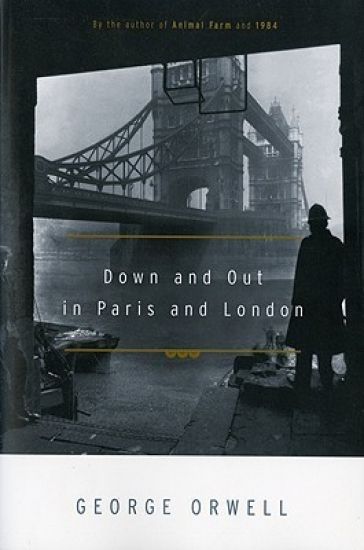
From the author of 1984, the classic semi-autobiographical story about the adventures of a penniless British writer in two cities. Down and Out in Paris and London follows the journey of a writer among the down-and-out in two great cities. Without self-pity and often with humor, this novel is Orwell at his finest—a sobering, truthful protrayal of poverty and society.
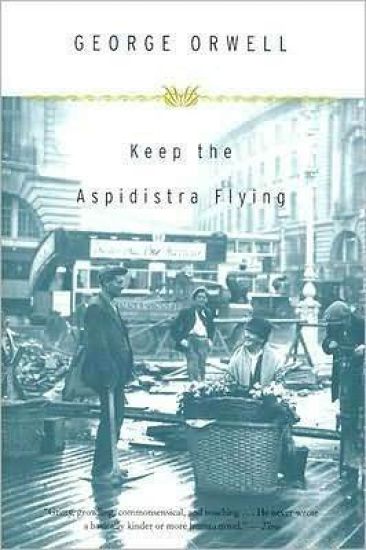
A pre-cursor to his more famous works of Animal Farm and 1984, Keep the Aspidistra Flying is Orwell’s social commentary on capitalism’s constraints. Orwell captures the struggles of an aspiring writer with almost pitch-perfect attention to psychological detail, exploring the gulf between art and life. Gordon Comstock is a poor young man who works in a grubby London bookstore and spends his evenings shivering in a rented room, trying to write. He is determined to stay free of the “money world” of lucrative jobs, family responsibilities, and the kind of security symbolized by the homely aspidistra plant that sits in every middle-class British window.
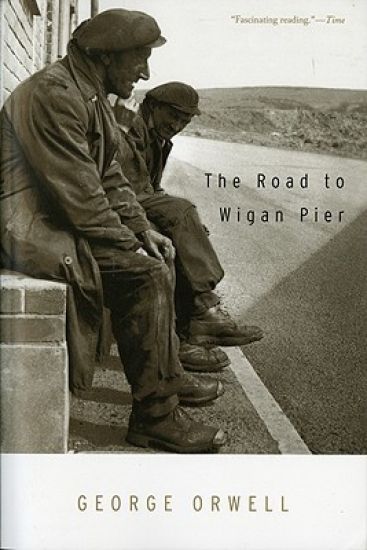
Before he authored the dystopian 1984 and the allegorical Animal Farm, George Orwell was a journalist, reporting on England's working class — an investigation that led him to examine democratic socialism. In the 1930s, the Left Book Club, a socialist group in England, sent George Orwell to investigate the poverty and mass unemployment in the industrial north of England. Once there, he went beyond the requests of the book club, to investigate the employed as well. Orwell chose to live as the coal miners did — sleeping in foul lodgings, subsisting on a meager diet, struggling to feed a family on a dismal wage, and going down into the hellish, backbreaking mines. What Orwell saw clarified his feelings about socialism, and in The Road to Wigan Pier, he pointedly tells why socialism, the only remedy to the shocking conditions he had witnessed, repelled "so many normal decent people." "Orwell's code was a simple one, based on truth and 'deceny'; he was important — and original — because he insisted on applying that code to his own Socialist comrades as well as to the class enemy... It is the best sociological reporting I know."—The New Yorker
George Orwell was first and foremost an essayist, producing throughout his life an extraordinary array of short nonfiction that reflected--and illuminated--the fraught times in which he lived. "As soon as he began to write something," comments George Packer in his foreword, "it was as natural for Orwell to propose, generalize, qualify, argue, judge--in short, to think--as it was for Yeats to versify or Dickens to invent." Facing Unpleasant Facts charts Orwell's development as a master of the narrative-essay form and unites such classics as "Shooting an Elephant" with lesser-known journalism and passages from his wartime diary. Whether detailing the horrors of Orwell's boyhood in an English boarding school or bringing to life the sights, sounds, and smells of the Spanish Civil War, these essays weave together the personal and the political in an unmistakable style that is at once plainspoken and brilliantly complex.
All Art Is Propaganda
George Orwell; Keith Gessen
Houghton Mifflin
2021
nidottu
Halvin toimitettuna 19,90 €
Orwell demonstrates in piece after piece how intent analysis of a work or body of work gives rise to trenchant aesthetic and philosophical commentary. As a critic, George Orwell cast a wide net. Equally at home discussing Charles Dickens and Charlie Chaplin, he moved back and forth across the porous borders between essay and journalism, high art and low. A frequent commentator on literature, language, film, and drama throughout his career, Orwell turned increasingly to the critical essay in the 1940s, when his most important experiences were behind him and some of his most incisive writing lay ahead. All Art Is Propaganda follows Orwell as he demonstrates in piece after piece how intent analysis of a work or body of work gives rise to trenchant aesthetic and philosophical commentary. With masterpieces such as "Politics and the English Language" and "Rudyard Kipling" and gems such as "Good Bad Books," here is an unrivaled education in, as George Packer puts it, "how to be interesting, line after line." AUTHOR: George Orwell (1903-1950) was born in India and served with the Imperial Police in Burma before joining the Republican Army in the Spanish Civil War. Orwell was the author of six novels as well as numerous essays and nonfiction works.
This beautiful edition of George Orwell's powerful work of dystopian fiction features a leatherette cover, gilt edging, and ribbon marker - a perfect gift for our times. In 1984, London is a grim city in the totalitarian state of Oceania where Big Brother is always watching you and the Thought Police can practically read your mind. Winston Smith is a man in grave danger for the simple reason that his memory still functions. Drawn into a forbidden love affair, Winston finds the courage to join a secret revolutionary organisation called The Brotherhood, dedicated to the destruction of the Party. Together with his beloved Julia, he hazards his life in a deadly match against the powers that be. AUTHOR: George Orwell (1903-1950) was born in India and served with the Imperial Police in Burma before joining the Republican Army in the Spanish Civil War. Orwell was the author of six novels as well as numerous essays and nonfiction works.
Over the course of his career, George Orwell wrote about many things, but no matter what he wrote the goal was to get at the fundamental truths of the world. He had no place for dissemblers, liars, conmen, or frauds, and he made his feelings well-known. In Orwell on Truth, excerpts from across Orwell’s career show how his writing and worldview developed over the decades, profoundly shaped by his experiences in the Spanish Civil War, and further by World War II and the rise of totalitarian states. In a world that seems increasingly like one of Orwell’s dystopias, a willingness to speak truth to power is more important than ever. With Orwell on Truth, readers get a collection of both powerful quotes and the context for them.
Homage to Catalonia is both a memoir of Orwell’s experience at the front in the Spanish Civil War and a tribute to those who died in what he called a fight for common decency. Down and Out in Paris and London chronicles the adventures of a penniless British writer who finds himself rapidly descending into the seedy heart of two great European cities. This edition brings together two powerful works from one of the finest writers of the twentieth century.
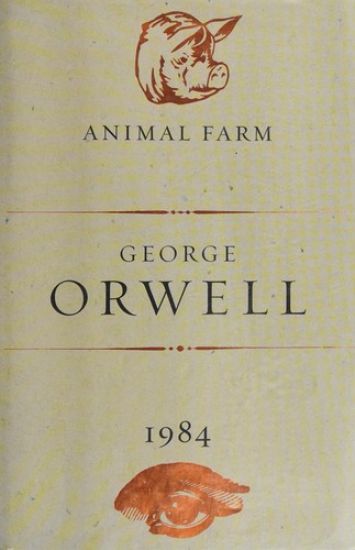
This edition features George Orwell's best known novels – 1984 and Animal Farm – with an introduction by Christopher Hitchens. In 1984, London is a grim city where Big Brother is always watching you and the Thought Police can practically read your mind. Winston Smith joins a secret revolutionary organization called The Brotherhood, dedicated to the destruction of the Party. Together with his beloved Julia, he hazards his life in a deadly match against the powers that be. Animal Farm is Orwell's classic satire of the Russian Revolution -- an account of the bold struggle, initiated by the animals, that transforms Mr. Jones's Manor Farm into Animal Farm--a wholly democratic society built on the credo that All Animals Are Created Equal. But are they?
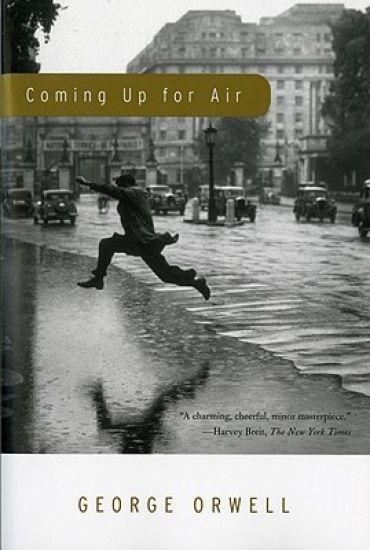
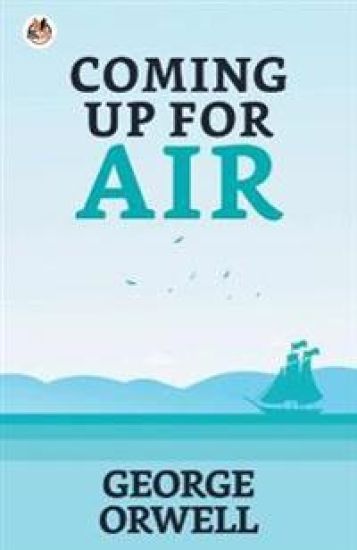
From George Orwell, the author of 1984 and Animal Farm, Coming Up for Air is the classic, comic novel about the everyday struggles of the common man and a satiric look at the trappings of middle-class suburbia. George "Tubby" Bowling is a middle-aged insurance salesman, a job at which he grimly excels, dutifully paying the mortgage on an average English suburban row house, and supporting an ungrateful family. As the years roll by, he comes to feel like a hostage to his wife and children, regarding them as wardens and himself as a prisoner. One day, after winning some money from a bet at the races, George steals away from his family to visit the village where he grew up, to fish for carp in a pool he remembers from thirty years before. The pool, alas, is gone, the village has changed beyond recognition, and the principal event of his holiday is an accidental bombing by the RAF—the perfect ending to his failed escape." A work of rare vigor and imagination."—New York Herald-Tribune Book Review
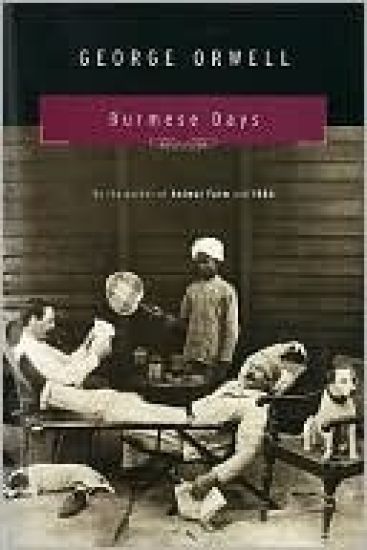
A corrupt Burmese politician uses the powers of his office to win membership in a British club