Kirjojen hintavertailu – 12 859 827 kirjaa ja 27 kauppaa

Kirjailija

George Washington

Kirjat ja teokset yhdessä paikassa: 337 kirjaa, julkaisuja vuosilta 1800–2026, suosituimpiin kuuluu History of the Voyage and Shipwreck of the U.S. Steamer Jeannette, in the Polar Seas, Together with a Full Account of the Death of Lieutenant de Long, and the Rescue of Danenhower, Melville, and Their Heroic Companions. [By H. L. Williams].. Vertaile teosten hintoja ja tarkista saatavuus suomalaisista kirjakaupoista.

337 kirjaa

Kirjojen julkaisuvuodet: 1800–2026.

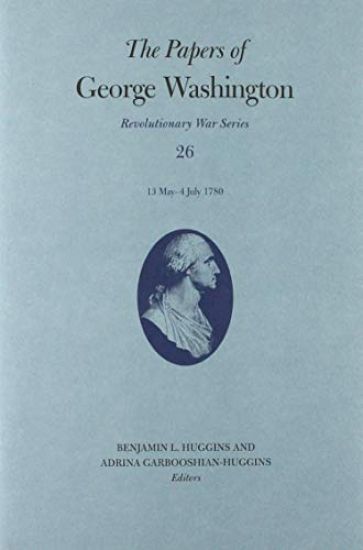
The Papers of George Washington

The Papers of George Washington

George Washington

University of Virginia Press
2019
sidottu
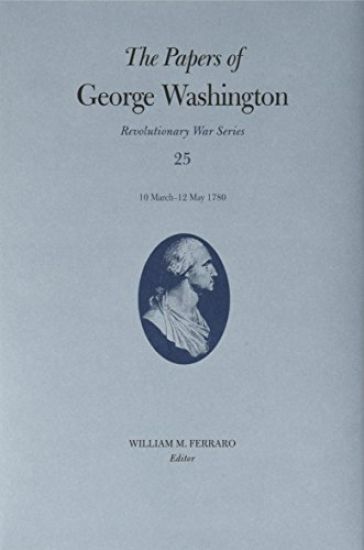
Bad weather plagued Gen. George Washington's army during its winter encampment near Morristown, N. J., far into the spring of 1780. Finances caused further woes. Commissaries lacked both cash and credit to obtain provisions, and food shortages meant restless troops. Only vigorous exertions b largely anonymous supply officers kept Washington's army intact. Recognizing these grave financial needs, Congress passed reform legislation in March, but any benefit from the new system lay in the future. Washington tried to be optimistic as he tackled present challenges. Numerous officer resignations worried the general, who felt the loss of such experienced men undercut the army's effectiveness. Sensitive about morale, he pursued negotiations for a general prisoner exchange. Talks broke down quickly, however, because British negotiators acted only on local military authority rather than on the authority of the king. To Washington, that approach failed to recognize the legitimacy of the United States as a nation. Armed conflict as well as administrative perplexities occupied Washington's thoughts. At no point could he escape the reality that soldiers fought, soldiers died, and survivors - both comrades and loved ones - grieved. Raids into the patrol areas generally east of Morristown caused significant casualties on 22 March and 16 April. A larger confrontation unfolded around Charleston, S. C., where a British expedition from New York City encircled the city and its defenders under Maj. Gen. Benjamin Lincoln. Washington sent additional reinforcements and encouraged the beleaguered Lincoln, but Charleston's surrender on 12 May eventually came as no surprise. Washington hoped for better things from a congressional ""Committee at Headquarters,"" appointed to deal directly with the principal army officers to solve vexing supply questions. Such an approach promised some good after previous verbal sniping. Additionally, Major General Lafayette returned to the United States from France to announce the coming of a French expeditionary army. The king wanted this force to serve under Washington. The possibilities for this allied command undoubtedly excited the general, who openly recently had extended himself to pay proper respect to French minister La Luzerne during that official's visit to Morristown. Army responsibilities left Washington little opportunity to address his personal business, but he doted over a carriage purchase and offered the usual futile financial advice to his stepson John Parke Custis. Legal engagements undertaken years earlier for George William Fairfax and George Mercer provoked headaches. Despite Washington's conscientious efforts, these entanglements persisted until after the war. Washington never quailed form a personal or public obligation. Very much the realist, he knew that his army faced steep odds. Determined to overcome al obstacles, he strode ahead, fully aware that he shouldered the heaviest burdens of the revolutionary cause.
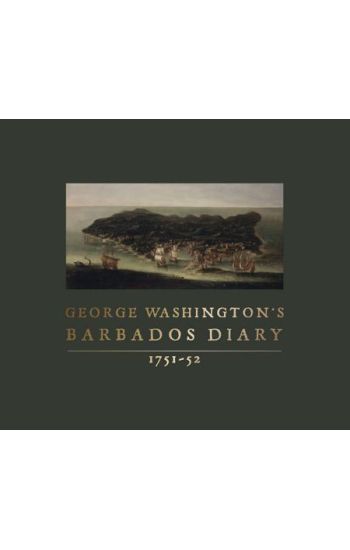
George Washington's Barbados Diary, 1751-52

George Washington's Barbados Diary, 1751-52

George Washington

University of Virginia Press
2018
sidottu
In the autumn of 1751, at the age of nineteen, George Washington sailed with his older half-brother Lawrence from Virginia to the Caribbean island of Barbados—the one and only time that the future Revolutionary War hero and president would leave the shores of continental North America. Lawrence had long been in poor health and hoped, in vain, that the island climate would prove restorative. The Washingtons landed in early November, and George spent seven weeks on Barbados, recording his impressions of everything from the exotic landscapes and local culture, to the cultivation of sugarcane and the particulars of plantation slavery, before bidding his brother adieu and embarking on the return sail to Virginia. The two sea voyages provided plenty of adventure, at times harrowing, and framed an island interlude that exposed young George to new cultures and new experiences—and also to smallpox. His exposure to the dread disease, and his resulting immunity, would prove fateful a quarter century later when the commander in chief of the ragtag American revolutionary forces blunted a threat more grave than British cannon by directing the immunization of his troops. Technological advances and fresh scholarship make this the most comprehensive and authoritative edition that has ever been-or likely will ever be-published.
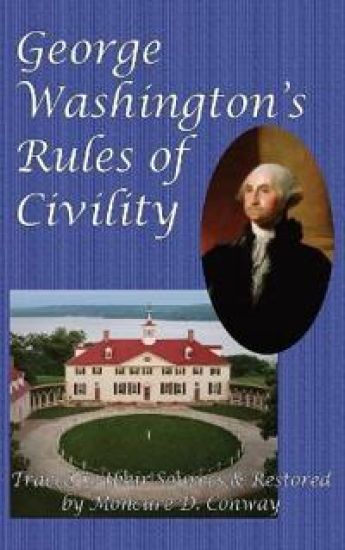
George Washington's Rules of Civility

George Washington's Rules of Civility

George Washington

Gray Rabbit Publishing
2018
sidottu
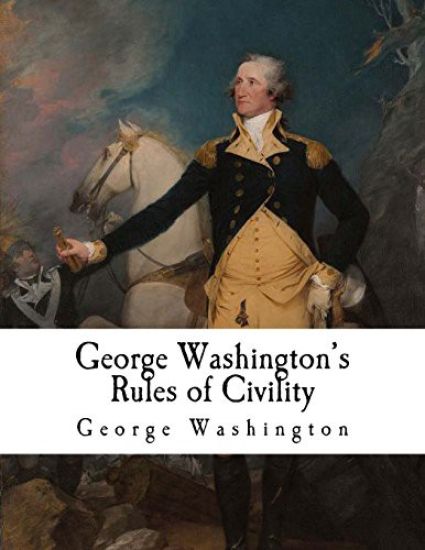
110 Rules of Civility and Decent Behavior in Company and Conversation. George Washington's Rules of Civility: Traced to their Sources and Restored by Moncure D. Conway and George Washington - 1890. Among the manuscript books of George Washington, preserved in the State Archives at Washington City, the earliest bears the date, written in it by himself, 1745. Washington was born February 11, 1731 O. S., so that while writing in this book he was either near the close of his fourteenth, or in his fifteenth, year. It is entitled "Forms of Writing," has thirty folio pages, and the contents, all in his boyish handwriting, are sufficiently curious. Amid copied forms of exchange, bonds, receipts, sales, and similar exercises, occasionally, in ornate penmanship, there are poetic selections, among them lines of a religious tone on "True Happiness." But the great interest of the book centres in the pages headed: "Rules of Civility and Decent Behaviour in Company and Conversation." The book had been gnawed at the bottom by Mount Vernon mice, before it reached the State Archives, and nine of the 110 Rules have thus suffered, the sense of several being lost.
Official Letters to the Honourable American Congress
Official Letters to the Honourable American Congress - Written during the war between the United colonies and Great Britain. Vol. 2 is an unchanged, high-quality reprint of the original edition of 1796. Hansebooks is editor of the literature on different topic areas such as research and science, travel and expeditions, cooking and nutrition, medicine, and other genres. As a publisher we focus on the preservation of historical literature. Many works of historical writers and scientists are available today as antiques only. Hansebooks newly publishes these books and contributes to the preservation of literature which has become rare and historical knowledge for the future.
The Papers of George Washington

The Papers of George Washington

George Washington

University of Virginia Press
2017
sidottu
Bad weather plagued Gen. George Washington’s army during its winter encampment near Morristown, N. J., far into the spring of 1780. Finances caused further woes. Commissaries lacked both cash and credit to obtain provisions, and food shortages meant restless troops. Only vigorous exertions b largely anonymous supply officers kept Washington’s army intact. Recognizing these grave financial needs, Congress passed reform legislation in March, but any benefit from the new system lay in the future. Washington tried to be optimistic as he tackled present challenges. Numerous officer resignations worried the general, who felt the loss of such experienced men undercut the army’s effectiveness. Sensitive about morale, he pursued negotiations for a general prisoner exchange. Talks broke down quickly, however, because British negotiators acted only on local military authority rather than on the authority of the king. To Washington, that approach failed to recognize the legitimacy of the United States as a nation. Armed conflict as well as administrative perplexities occupied Washington’s thoughts. At no point could he escape the reality that soldiers fought, soldiers died, and survivors – both comrades and loved ones – grieved. Raids into the patrol areas generally east of Morristown caused significant casualties on 22 March and 16 April. A larger confrontation unfolded around Charleston, S. C., where a British expedition from New York City encircled the city and its defenders under Maj. Gen. Benjamin Lincoln. Washington sent additional reinforcements and encouraged the beleaguered Lincoln, but Charleston’s surrender on 12 May eventually came as no surprise. Washington hoped for better things from a congressional "Committee at Headquarters," appointed to deal directly with the principal army officers to solve vexing supply questions. Such an approach promised some good after previous verbal sniping. Additionally, Major General Lafayette returned to the United States from France to announce the coming of a French expeditionary army. The king wanted this force to serve under Washington. The possibilities for this allied command undoubtedly excited the general, who openly recently had extended himself to pay proper respect to French minister La Luzerne during that official’s visit to Morristown. Army responsibilities left Washington little opportunity to address his personal business, but he doted over a carriage purchase and offered the usual futile financial advice to his stepson John Parke Custis. Legal engagements undertaken years earlier for George William Fairfax and George Mercer provoked headaches. Despite Washington’s conscientious efforts, these entanglements persisted until after the war. Washington never quailed form a personal or public obligation. Very much the realist, he knew that his army faced steep odds. Determined to overcome all obstacles, he strode ahead, fully aware that he shouldered the heaviest burdens of the revolutionary cause.
Lives Of The Heroes Of The American Revolution

Lives Of The Heroes Of The American Revolution

George Washington; John Frost

Hansebooks
2017
pokkari
Lives Of The Heroes Of The American Revolution - Comprising The Lives Of Washington And His Generals is an unchanged, high-quality reprint of the original edition of 1860. Hansebooks is editor of the literature on different topic areas such as research and science, travel and expeditions, cooking and nutrition, medicine, and other genres. As a publisher we focus on the preservation of historical literature. Many works of historical writers and scientists are available today as antiques only. Hansebooks newly publishes these books and contributes to the preservation of literature which has become rare and historical knowledge for the future.
The diary of George Washington, from 1789 to 1791
The diary of George Washington, from 1789 to 1791 is an unchanged, high-quality reprint of the original edition of 1860. Hansebooks is editor of the literature on different topic areas such as research and science, travel and expeditions, cooking and nutrition, medicine, and other genres. As a publisher we focus on the preservation of historical literature. Many works of historical writers and scientists are available today as antiques only. Hansebooks newly publishes these books and contributes to the preservation of literature which has become rare and historical knowledge for the future.