

Kirjailija
George Washington
Kirjat ja teokset yhdessä paikassa: 337 kirjaa, julkaisuja vuosilta 1800–2026, suosituimpiin kuuluu History of the Voyage and Shipwreck of the U.S. Steamer Jeannette, in the Polar Seas, Together with a Full Account of the Death of Lieutenant de Long, and the Rescue of Danenhower, Melville, and Their Heroic Companions. [By H. L. Williams].. Vertaile teosten hintoja ja tarkista saatavuus suomalaisista kirjakaupoista.
337 kirjaa
Kirjojen julkaisuvuodet: 1800–2026.
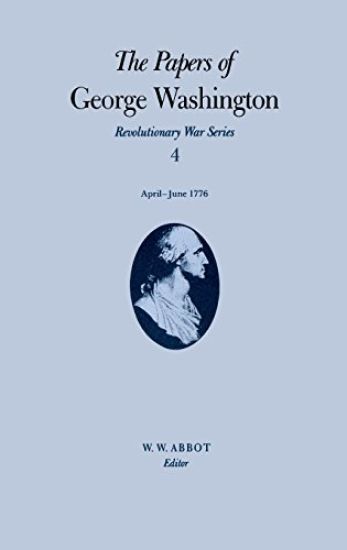
The Papers of George Washington v.4; Revolutionary War Series;Apr.-June 1776
George Washington
University of Virginia Press
2015
sidottu
Volume Four of the ""Revolutionary War Series"" completes the documentary record of Washington's first year as commander in chief of the Continental army. It opens with this final preparations to leave Cambridge following the successful siege of Boston and concludes with news that General William Howe's British army was soon to arrive at New York, an event which would mark the beginning of the New York campaign. In the interim between campaigns, Washington established his headquarters as New York and began wrestling with the perplexing problems of defending the strategically important corridor between New York and Canada formed by the Hudson River and Lake Champlain. In addition to Washington's activities as commander in chief of the Continental army, the volume includes documents and notes concerning the medal that Congress awarded him for the liberation of Boston, Washington's efforts to terminate his long and successful administration of the Custis estate, and details of his travels from Cambridge to New York and between New York and Philadelphia. As in earlier volumes of the ""Revolutionary War Series"", Washington's writings show him to be unwavering in his advocacy of American independence and in his commitment to the subordination of the military to civil authority.

George Washington's Rules of Civility Traced to their Sources
George Washington
Createspace Independent Publishing Platform
2015
nidottu

State of the Union Addresses
George Washington
Createspace Independent Publishing Platform
2015
nidottu
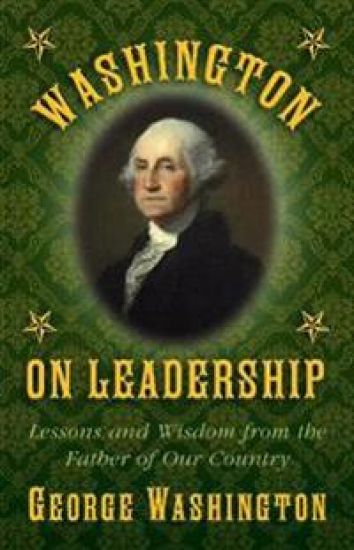
George Washington is most famous for leading America to victory during the American Revolution and being the first President of the United States. One does not have those successes without being a great leader. In Washington on Leadership, learn first-hand from the Father of Our Country about the skill, tactics, and techniques that go into great leadership. Such brilliant wisdom Washington has offered includes: ? Associate with men of good quality if you esteem your own reputation; for it is better to be alone than in bad company.” ? To be prepared for war is one of the most effective means of preserving peace.” ? It is better to offer no excuse than a bad one.” Whether discussing military tactics, life lessons, or knowledge from his forty-plus years of service for our country, George Washington is certainly a person that everyone should look up to as the basis for how to lead and the finer points of taking control for the greater good.
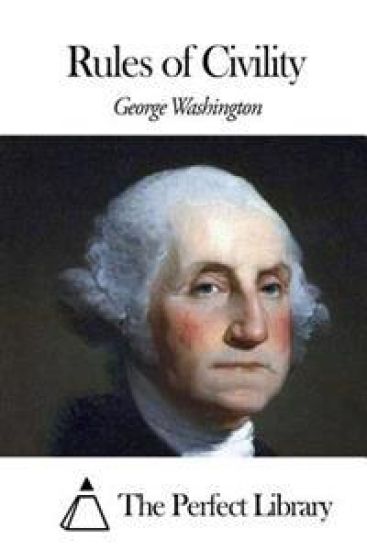
"Rules of Civility", by George Washington. George Washington was first President of the United States (1732-1799).
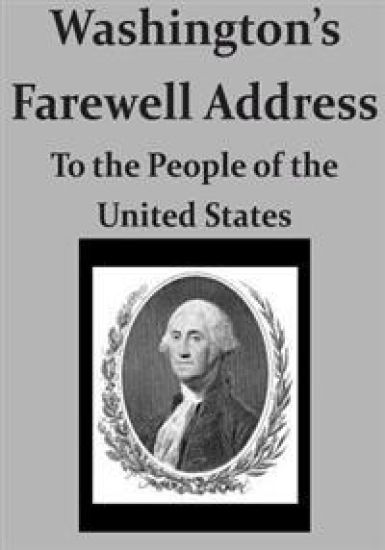
Washington's Farewell Address To the People of the United States
George Washington
Createspace Independent Publishing Platform
2014
nidottu
In September 1796, worn out by burdens of the presidency and attacks of political foes, George Washington announced his decision not to seek a third term. With the assistance of Alexander Hamilton and James Madison, Washington composed in a "Farewell Address" his political testament to the nation. Designed to inspire and guide future generations, the address also set forth Washington's defense of his administrations record and embodied a classic statement of Federalist doctrine. Washington's principal concern was for the safety of the eight year old Constitution. He believed that the stability of the Republic was threatened by the forces of geographical sectionalism, political factionalism, and interference by foreign powers in the nation's domestic affairs. He urged Americans to subordinate sectional jealousies to common national interests. Writing at a time before political parties had become accepted as vital extra constitutional, opinion-focusing agencies, Washington feared that they carried the seeds of the nation's destruction through petty factionalism. Although Washington was in no sense the father of American isolationism, since he recognized the necessity of temporary associations for "extraordinary emergencies," he did counsel against the establishment of "permanent alliances with other countries," connections that he warned would inevitably be subversive of America's national interest. Washington did not publicly deliver his Farewell Address. It first appeared on September 19, 1796, in the Philadelphia Daily American Advertiser and then in papers around the country. In January 1862, with the Constitution endangered by civil war, a thousand citizens of Philadelphia petitioned Congress to commemorate the forthcoming 130th anniversary of George Washington's birth by providing that "the Farewell Address of Washington be read aloud on the morning of that day in one or the other of the Houses of Congress." Both houses agreed and assembled in the House of Representatives chamber on February 22, 1862, where Secretary of the Senate John W. Forney rendered "The Farewell Address" very effectively, as one observer recalled. The practice of reading the Farewell Address did not immediately become a tradition. The address was first read in regular legislative sessions of the Senate in 1888 and the House in 1899. (The House continued the practice until 1984.) Since 1893 the Senate has observed Washington's birthday by selecting one of its members to read the Farewell Address. The assignment alternates between members of each political party. At the conclusion of each reading, the appointed senator inscribes his or her name and brief remarks in a black, leather- bound book maintained by the secretary of the Senate.
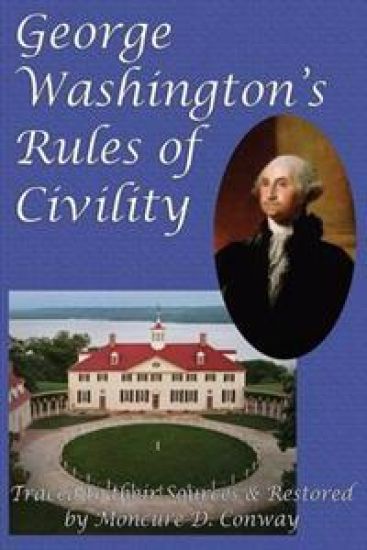
George Washington's Rules of Civility
George Washington; Moncure D Conway
Gray Rabbit Publishing
2014
pokkari
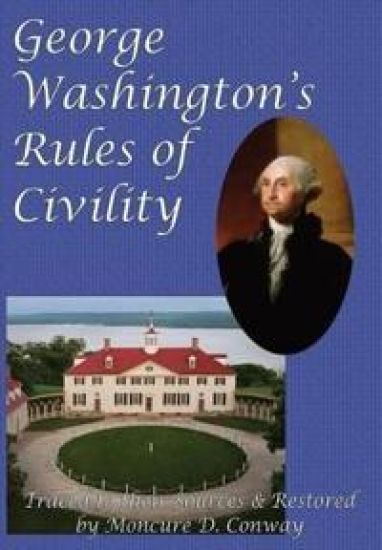
George Washington's Rules of Civility
George Washington; Moncure D Conway
Gray Rabbit Publishing
2014
sidottu
Washingtons Rules of Civility and Decent Behavior in Company and Conversation (1888)
George Washington
Literary Licensing, LLC
2014
nidottu
Washingtons Rules of Civility and Decent Behavior in Company and Conversation (1888)
George Washington
Literary Licensing, LLC
2014
sidottu
Washington's Rules of Civility and Decent Behavior in Company and Conversation is a book that was originally written by George Washington in 1745 when he was just 14 years old. The book is a collection of 110 rules of etiquette and manners that were considered important in the 18th century. These rules cover a wide range of topics, including how to behave in public, how to treat others with respect, and how to conduct oneself in a polite and courteous manner. The book was first published in 1888, more than 100 years after it was written, and has since become a classic work on the subject of etiquette and manners. The rules in the book are written in a formal and archaic style, but they are still relevant today and offer valuable insights into how to behave in social situations. Some of the rules in the book include: - ""Every action done in company ought to be with some sign of respect to those that are present."" - ""In the presence of others, sing not to yourself with a humming noise, nor drum with your fingers or feet."" - ""When you meet with one of greater quality than yourself, stop and retire, especially if it be at a door or any straight place, to give way for him to pass."" - ""In writing or speaking, give to every person his due title according to his degree and the custom of the place.""Overall, Washington's Rules of Civility and Decent Behavior in Company and Conversation is a fascinating look at the social norms of the 18th century and a valuable guide to etiquette and manners that is still relevant today. This Is A New Release Of The Original 1888 Edition. This scarce antiquarian book is a facsimile reprint of the old original and may contain some imperfections such as library marks and notations. Because we believe this work is culturally important, we have made it available as part of our commitment for protecting, preserving, and promoting the world's literature in affordable, high quality, modern editions, that are true to their original work.
The Washington-Crawford Letters
George Washington; William Crawford
Literary Licensing, LLC
2014
nidottu

Journal of My Journey Over the Mountains in the Northern Neck of Virginia Beyond the Blue Ridge, 1747-1748 (1892)
George Washington
Literary Licensing, LLC
2014
nidottu
The Journal Of Colonel George Washington, Commanding A Detachment Of Virginia Troops
George Washington
Literary Licensing, LLC
2014
nidottu
An Authenticated Copy of the Last Will and Testament of George Washington
George Washington
Literary Licensing, LLC
2014
nidottu
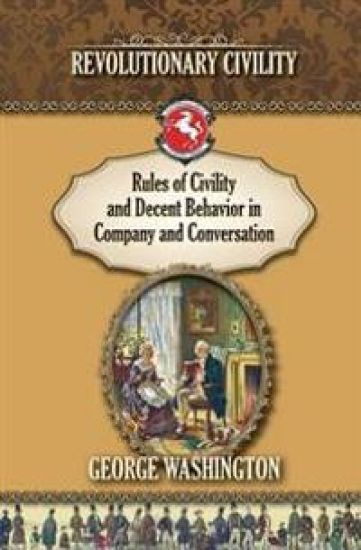
Rules of Civility and Decent Behavior In Company and Conversation: Revolutionary Civility
George Washington
Westphalia Press
2014
nidottu

Washington, G: Acts of Congress 1789
George Washington; Thomas B. Allen
Andrews McMeel Publishing
2013
Sidottu
The Journals of George Washington and His Guide, Christopher Gist: On the Mission to the French at Fort Le Boeuf in 1753
George Washington; Christopher Gist
Literary Licensing, LLC
2013
nidottu
The Journals of George Washington and His Guide, Christopher Gist: On the Mission to the French at Fort Le Boeuf in 1753
George Washington; Christopher Gist
Literary Licensing, LLC
2013
sidottu
The Journals of George Washington and His Guide, Christopher Gist: On the Mission to the French at Fort Le Boeuf in 1753 is a historical book that presents the personal accounts of George Washington and his guide, Christopher Gist, during their mission to the French at Fort Le Boeuf in 1753. The book is written by George Washington himself and provides a unique insight into his thoughts, observations and experiences during this important event in American history. The book is divided into two parts, the first being the journal of George Washington, and the second being the journal of Christopher Gist. The journals describe in detail the journey of George Washington and Christopher Gist as they traveled from Virginia to Fort Le Boeuf in Pennsylvania, a distance of over 500 miles. They were sent on this mission by the Governor of Virginia to deliver a message to the French, demanding that they leave the Ohio Valley. Throughout the journey, George Washington and Christopher Gist encountered many challenges, including harsh weather conditions, difficult terrain, and hostile Native American tribes. The journals provide a vivid description of the landscapes, people, and events that they encountered along the way. The book is a valuable historical document, as it provides a firsthand account of the events that led to the French and Indian War, which played a crucial role in the American Revolution. It also sheds light on the character and leadership qualities of George Washington, who would go on to become the first President of the United States. Overall, The Journals of George Washington and His Guide, Christopher Gist: On the Mission to the French at Fort Le Boeuf in 1753 is an interesting and informative read for anyone interested in American history, particularly the early colonial period. This is a new release of the original 1929 edition. This scarce antiquarian book is a facsimile reprint of the old original and may contain some imperfections such as library marks and notations. Because we believe this work is culturally important, we have made it available as part of our commitment for protecting, preserving, and promoting the world's literature in affordable, high quality, modern editions, that are true to their original work.