Kirjojen hintavertailu – 12 859 819 kirjaa ja 27 kauppaa

Kirjailija

George Watt

Kirjat ja teokset yhdessä paikassa: 50 kirjaa, julkaisuja vuosilta 1984–2025, suosituimpiin kuuluu The Lean Entrepreneurship Playbook. Vertaile teosten hintoja ja tarkista saatavuus suomalaisista kirjakaupoista.

50 kirjaa

Kirjojen julkaisuvuodet: 1984–2025.

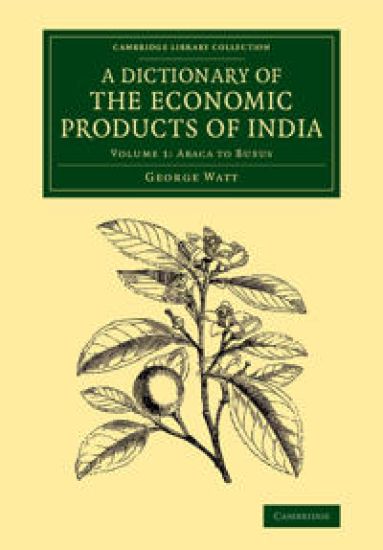
A Dictionary of the Economic Products of India: Volume 1, Abaca to Buxus
A Scottish doctor and botanist, George Watt (1851–1930) had studied the flora of India for more than a decade before he took on the task of compiling this monumental work. Assisted by numerous contributors, he set about organising vast amounts of information on India's commercial plants and produce, including scientific and vernacular names, properties, domestic and medical uses, trade statistics, and published sources. Watt hoped that the dictionary, 'though not a strictly scientific publication', would be found 'sufficiently accurate in its scientific details for all practical and commercial purposes'. First published in six volumes between 1889 and 1893, with an index volume completed in 1896, the whole work is now reissued in nine separate parts. Volume 1 (1889) opens with the prefatory matter, along with lists of works consulted, contributors and abbreviations. It contains entries from Abaca (a name in the Philippines for Manila hemp) to Buxus (a genus of evergreen shrubs).
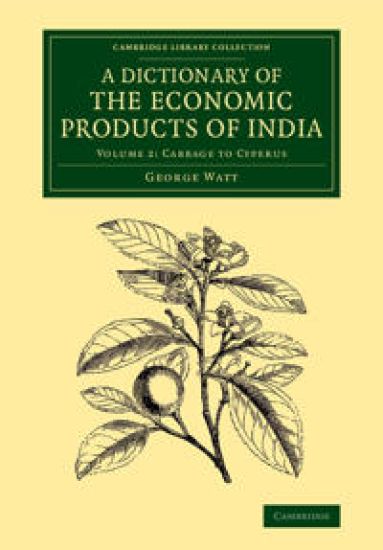
A Dictionary of the Economic Products of India: Volume 2, Cabbage to Cyperus
A Scottish doctor and botanist, George Watt (1851–1930) had studied the flora of India for more than a decade before he took on the task of compiling this monumental work. Assisted by numerous contributors, he set about organising vast amounts of information on India's commercial plants and produce, including scientific and vernacular names, properties, domestic and medical uses, trade statistics, and published sources. Watt hoped that the dictionary, 'though not a strictly scientific publication', would be found 'sufficiently accurate in its scientific details for all practical and commercial purposes'. First published in six volumes between 1889 and 1893, with an index volume completed in 1896, the whole work is now reissued in nine separate parts. Volume 2 (1889) contains entries from cabbage (introduced to India by Europeans) to Cyperus (a genus of grass-like flowering plants).
A Dictionary of the Economic Products of India: Volume 6, Pachyrhizus to Rye, Part 1
A Scottish doctor and botanist, George Watt (1851–1930) had studied the flora of India for more than a decade before he took on the task of compiling this monumental work. Assisted by numerous contributors, he set about organising vast amounts of information on India's commercial plants and produce, including scientific and vernacular names, properties, domestic and medical uses, trade statistics, and published sources. Watt hoped that the dictionary, 'though not a strictly scientific publication', would be found 'sufficiently accurate in its scientific details for all practical and commercial purposes'. First published in six volumes between 1889 and 1893, with an index volume completed in 1896, the whole work is now reissued in nine separate parts. Volume 6, Part 1 (1892) contains entries from Pachyrhizus angulatus (a large climbing herb) to rye (not indigenous to India).
A Dictionary of the Economic Products of India: Volume 6, Sabadilla to Silica, Part 2
A Scottish doctor and botanist, George Watt (1851–1930) had studied the flora of India for more than a decade before he took on the task of compiling this monumental work. Assisted by numerous contributors, he set about organising vast amounts of information on India's commercial plants and produce, including scientific and vernacular names, properties, domestic and medical uses, trade statistics, and published sources. Watt hoped that the dictionary, 'though not a strictly scientific publication', would be found 'sufficiently accurate in its scientific details for all practical and commercial purposes'. First published in six volumes between 1889 and 1893, with an index volume completed in 1896, the whole work is now reissued in nine separate parts. Volume 6, Part 2 (1893) contains entries from Sabadilla (an imported plant, the seeds of which produce a neurotoxin) to silica (used in the production of glass).
A Dictionary of the Economic Products of India: Volume 5, Linum to Oyster
A Scottish doctor and botanist, George Watt (1851–1930) had studied the flora of India for more than a decade before he took on the task of compiling this monumental work. Assisted by numerous contributors, he set about organising vast amounts of information on India's commercial plants and produce, including scientific and vernacular names, properties, domestic and medical uses, trade statistics, and published sources. Watt hoped that the dictionary, 'though not a strictly scientific publication', would be found 'sufficiently accurate in its scientific details for all practical and commercial purposes'. First published in six volumes between 1889 and 1893, with an index volume completed in 1896, the whole work is now reissued in nine separate parts. Volume 5 (1891) contains entries from Linum (the flax genus) to oyster (the subcontinent's best oyster beds were to be found 'on the coast near Karachi, Bombay and Madras').
The Innovative CIO

The Innovative CIO

Andi Mann; George Watt; Peter Matthews

APress
2012
nidottu
“Does your organization fumble when it comes to innovation? ‘The Innovative CIO’ presents a pragmatic guide to overcoming the 10 ‘innovation killers’ within your company.” --Dennis McCafferty “CIO Insight”, 1/23/2013 (www.cioinsight.com/it-management/innovation/slideshows/ten-ways-to-kill-innovation/)“Are you unwittingly stifling your employees’ entrepreneurial spirit? ‘The Innovative CIO’ discusses ‘innovation killers’ that could be holding back your small business or startup.” --Paul Shread “TIME/Business & Money”, 1/29/2013 (business.time.com/2013/01/29/removing-barriers-to-innovation/#ixzz2JSrUlD3A)The Chief Information Officer’s influence in the business organization has been waning for years. The rest of the C-suite has come to regard Information Technology as slow, costly, error-prone, boring, and unresponsive to business needs. This perception blinds company leaders to the critical value IT can deliver and threatens the competitive health and long-term survival of their enterprise. The modern CIO must reassert the operational and strategic importance of technology to the enterprise and reintegrate it with every department and level of the business from boardroom to mailroom. IT leaders must design, sell, and implement a vigorous culture of IT competence and innovation that pervades the enterprise. The culture must be rooted in bidirectional exchange across organizations and C-level policies that drive technology innovation as the engine of business innovation. The authors, international IT strategists and innovators, quantify the benefits and risks of IT innovation, survey and rank the myriad innovation opportunities from mature, new, and emerging technologies,and identify the organizational structures and processes thathave been proven to deliver ongoing innovation. Buttressing their brief with dozens of case studies and specific examples, The Innovative CIO shows you how to: Take advantage of the IT and business innovation opportunities created by new and emerging technologies Shift IT innovation from afterthought to prime mover in strategic business planning Inject IT into the dynamic core of your organization’s culture, training, structure, practice, and policy