Kirjojen hintavertailu – 12 903 735 kirjaa ja 27 kauppaa

Kirjailija

Gerald Horne

Kirjat ja teokset yhdessä paikassa: 58 kirjaa, julkaisuja vuosilta 1997–2025, suosituimpiin kuuluu W.E.B. Du Bois. Vertaile teosten hintoja ja tarkista saatavuus suomalaisista kirjakaupoista.

58 kirjaa

Kirjojen julkaisuvuodet: 1997–2025.

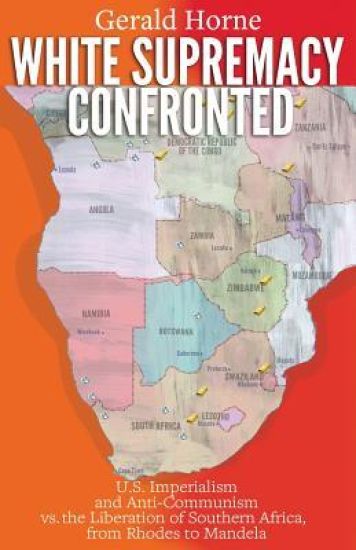
White Supremacy Confronted

White Supremacy Confronted

Gerald Horne

International Publishers Co Inc.,U.S.
2019
pokkari
Based upon exhaustive research in all presidential libraries from Hoover to Clinton, the voluminous archives of the African National Congress ANC] at Fort Hare University in South Africa, along with allied archives of the NAACP, the Ford and Rockefeller fortunes, etc., this is the most comprehensive account to date of the entangled histories of apartheid and Jim Crow that culminated in 1994 with the election of Nelson Mandela as president in Pretoria. The author traces in detail the close ties between e.g. Mandela, Robeson, and Du Bois--among others--and how their working in tandem with the socialist camp (particularly the Soviet Union and Cuba) was the deciding factor (along with the struggles of Africans and their allies on both sides of the Atlantic) in compelling the reluctant retreat of the comrades-in-arms: apartheid and Jim Crow. However, weeks after the collapse of the Berlin Wall the apartheid regime chose to free Mandela and to legalize the ANC and its close ally, the South African Communist Party--while anticommunism, a major ideological weapon of the ruling class in Washington and Pretoria alike, surged--putting the Mandela government in a weakened position in the prelude to the nation's first democratic elections in 1994 and thereafter. Also detailed in these riveting pages are the allied struggles in Namibia, Angola, Zimbabwe, Congo, Tanzania, Zambia and Mozambique, along with the massive solidarity movement in the U. S.--particularly among unions and students--that contributed mightily to victory. This is a story well worth studying as we continue to combat anticommunism--and struggle for socialism.
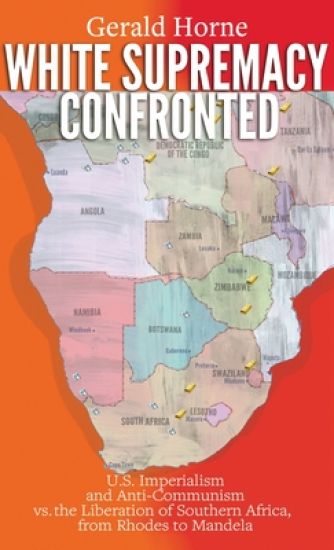
White Supremacy Confronted

White Supremacy Confronted

Gerald Horne

INTERNATIONAL PUBLISHERS CO INC.,U.S.
2019
sidottu
Based upon exhaustive research in all presidential libraries from Hoover to Clinton, the voluminous archives of the African National Congress ANC] at Fort Hare University in South Africa, along with allied archives of the NAACP, the Ford and Rockefeller fortunes, etc., this is the most comprehensive account to date of the entangled histories of apartheid and Jim Crow that culminated in 1994 with the election of Nelson Mandela as president in Pretoria. The author traces in detail the close ties between Nelson Mandela, Paul Robeson, and W. E. B. Du Bois--among others--and how their working in tandem with the socialist camp (particularly the Soviet Union and Cuba) was the deciding factor (along with the struggles of Africans and their allies on both sides of the Atlantic) in compelling the reluctant retreat of the comrades-in-arms: apartheid and Jim Crow. However, weeks after the collapse of the Berlin Wall the apartheid regime chose to free Mandela and to legalize the ANC and its close ally, the South African Communist Party--while anticommunism, a major ideological weapon of the ruling class in Washington and Pretoria alike, surged--putting the Mandela government in a weakened position in the prelude to the nation's first democratic elections in 1994 and thereafter. Also detailed in these riveting pages are the allied struggles in Namibia, Angola, Zimbabwe, Congo, Tanzania, Zambia and Mozambique, along with the massive solidarity movement in the U. S.--particularly among unions and students--that contributed mightily to victory. This is a story well worth studying as we continue to combat anticommunism--and struggle for socialism.

Dream of the Water Children – Memory and Mourning in the Black Pacific

Dream of the Water Children – Memory and Mourning in the Black Pacific

Fredrick D. Kakinami Cloyd; Karen Chau; Gerald Horne; Velina Hasu Houston

2Leaf Press
2019
nidottu
Born to an African American father and Japanese mother, Frederick D. Kakinami Cloyd, the narrator of Dream of the Water Children, finds himself not only to be a marginalized person by virtue of his heritage, but often a cultural drifter, as well. Indeed, both his family and his society treat him as if he doesn’t entirely belong to any world. Tautly written in spare, clear poetic prose, this memoir explores the specific contours of Japanese and African American cultures, as well as the broader experience of biracial and multicultural identity. To tell his story, Cloyd incorporates photographs and Japanese writing, history, and memory to convey both rich personal experience and significant historical detail. Bringing together vivid memories with a perceptive cultural eye, Dream of the Water Children brings readers closer to a biracial experience, opening up our understanding of the cultural richness and social challenges people from diverse backgrounds face.
The Apocalypse of Settler Colonialism

The Apocalypse of Settler Colonialism

Gerald Horne

Monthly Review Press,U.S.
2018
sidottu
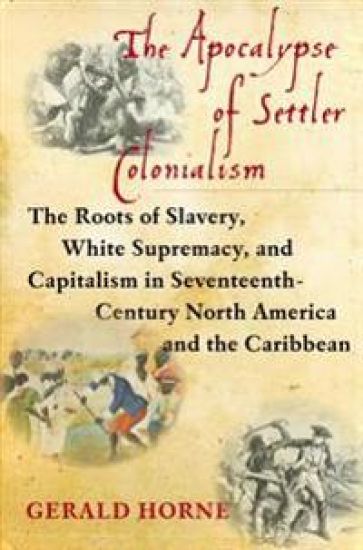
Chronicles how American culture - deeply rooted in white supremacy, slavery and capitalism - finds its origin story in the 17th century European colonization of Africa and North America, exposing the structural origins of American "looting"Virtually no part of the modern United States--the economy, education, constitutional law, religious institutions, sports, literature, economics, even protest movements--can be understood without first understanding the slavery and dispossession that laid its foundation. To that end, historian Gerald Horne digs deeply into Europe's colonization of Africa and the New World, when, from Columbus's arrival until the Civil War, some 13 million Africans and some 5 million Native Americans were forced to build and cultivate a society extolling "liberty and justice for all." The seventeenth century was, according to Horne, an era when the roots of slavery, white supremacy, and capitalism became inextricably tangled into a complex history involving war and revolts in Europe, England's conquest of the Scots and Irish, the development of formidable new weaponry able to ensure Europe's colonial dominance, the rebel merchants of North America who created "these United States," and the hordes of Europeans whose newfound opportunities in this "free" land amounted to "combat pay" for their efforts as "white" settlers. Centering his book on the Eastern Seaboard of North America, the Caribbean, Africa, and what is now Great Britain, Horne provides a deeply researched, harrowing account of the apocalyptic loss and misery that likely has no parallel in human history. The Apocalypse of Settler Colonialism is an essential book that will not allow history to be told by the victors. It is especially needed now, in the age of Trump. For it has never been more vital, Horne writes, "to shed light on the contemporary moment wherein it appears that these malevolent forces have received a new lease on life."
The Apocalypse of Settler Colonialism

The Apocalypse of Settler Colonialism

Gerald Horne

Monthly Review Press,U.S.
2018
pokkari
Chronicles how American culture - deeply rooted in white supremacy, slavery and capitalism - finds its origin story in the 17th century European colonization of Africa and North America, exposing the structural origins of American "looting"Virtually no part of the modern United States--the economy, education, constitutional law, religious institutions, sports, literature, economics, even protest movements--can be understood without first understanding the slavery and dispossession that laid its foundation. To that end, historian Gerald Horne digs deeply into Europe's colonization of Africa and the New World, when, from Columbus's arrival until the Civil War, some 13 million Africans and some 5 million Native Americans were forced to build and cultivate a society extolling "liberty and justice for all." The seventeenth century was, according to Horne, an era when the roots of slavery, white supremacy, and capitalism became inextricably tangled into a complex history involving war and revolts in Europe, England's conquest of the Scots and Irish, the development of formidable new weaponry able to ensure Europe's colonial dominance, the rebel merchants of North America who created "these United States," and the hordes of Europeans whose newfound opportunities in this "free" land amounted to "combat pay" for their efforts as "white" settlers. Centering his book on the Eastern Seaboard of North America, the Caribbean, Africa, and what is now Great Britain, Horne provides a deeply researched, harrowing account of the apocalyptic loss and misery that likely has no parallel in human history. The Apocalypse of Settler Colonialism is an essential book that will not allow history to be told by the victors. It is especially needed now, in the age of Trump. For it has never been more vital, Horne writes, "to shed light on the contemporary moment wherein it appears that these malevolent forces have received a new lease on life."
Storming the Heavens: African Americans and the Early Fight for the Right to Fly
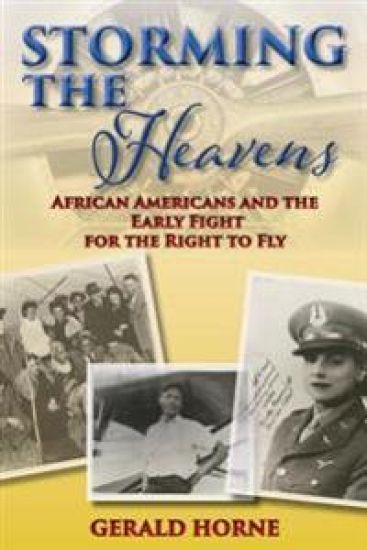
The recent Hollywood film Hidden Figures presents a portrait of how African-American women shaped the U. S. effort in aerospace during the height of Jim Crow. In Storming the Heavens, Gerald Horne presents the necessary back story to this story and goes further to detail the earlier struggle of African-Americans to gain the right to fly. This struggle involved pioneers like Bessie Coleman, who traveled to World War I era Paris in order to gain piloting skills that she was denied in her U. S. homeland; and John Robinson, from Chicago via Mississippi, who traveled to 1930s Ethiopia where he was the leading pilot for this beleaguered African nation as it withstood an invasion from fascist Italy, became the personal pilot of His Imperial Majesty, Haile Selassie and became a founder of Ethiopian Airways, which to this very day is Africa's most important carrier. Additionally, Horne adds nuance to the oft told tale of the Tuskegee Airmen but goes further to discuss the role of U. S. pilots during the Korean war in the early 1950s. He also tells the story of how and why U. S. airlines were fought when they began to fly into South Africa--and how planes from this land of apartheid were protested when they landed at U. S. airports. This riveting story climaxes with the launching of the Soviet satellite, Sputnik, in 1957 which marked a new stage in the battle for aerospace and helps to convince the U. S. that the centuries-long fixation on the "race race" was hampering the new challenge represented by the "space race." This conflict was unfolding as the battle to desegregate public schools in Little Rock, Arkansas was spotlighting, globally, the bleeding wound that was Jim Crow and sheds light on how and why depriving African-Americans of skills and education was causing the nation to fall behind. Thus, in this embattled context, barriers are broken and African-Americans who once endured inferior conditions on planes and in airports and in airport manufacturing facilities alike, gained added impetus in their decades long struggle to win the right to fly.
Facing the Rising Sun

Facing the Rising Sun

Gerald Horne

New York University Press
2018
sidottu
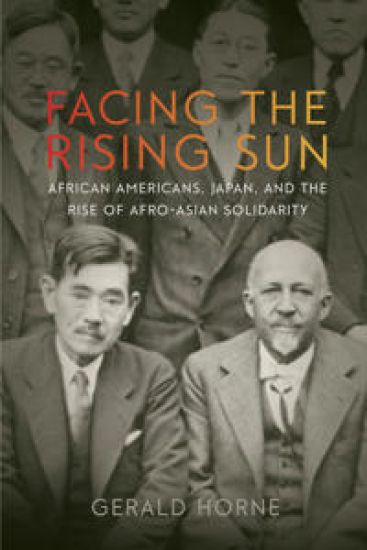
The surprising alliance between Japan and pro-Tokyo African Americans during World War II In November 1942 in East St. Louis, Illinois a group of African Americans engaged in military drills were eagerly awaiting a Japanese invasion of the U. S.— an invasion that they planned to join. Since the rise of Japan as a superpower less than a century earlier, African Americans across class and ideological lines had saluted the Asian nation, not least because they thought its very existence undermined the pervasive notion of "white supremacy." The list of supporters included Booker T. Washington, Marcus Garvey, and particularly W. E. B. Du Bois. Facing the Rising Sun tells the story of the widespread pro-Tokyo sentiment among African Americans during World War II, arguing that the solidarity between the two groups was significantly corrosive to the U. S. war effort. Gerald Horne demonstrates that Black Nationalists of various stripes were the vanguard of this trend—including followers of Garvey and the precursor of the Nation of Islam. Indeed, many of them called themselves "Asiatic", not African. Following World War II, Japanese-influenced "Afro-Asian" solidarity did not die, but rather foreshadowed Dr. Martin Luther King's tie to Gandhi's India and Black Nationalists' post-1970s fascination with Maoist China and Ho's Vietnam. Based upon exhaustive research, including the trial transcripts of the pro-Tokyo African Americans who were tried during the war, congressional archives and records of the Negro press, this book also provides essential background for what many analysts consider the coming "Asian Century." An insightful glimpse into the Black Nationalists' struggle for global leverage and new allies, Facing the Rising Sun provides a complex, holistic perspective on a painful period in African American history, and a unique glimpse into the meaning of "the enemy of my enemy is my friend."
The Rise and Fall of the Associated Negro Press

The Rise and Fall of the Associated Negro Press

Gerald Horne

University of Illinois Press
2017
nidottu
For nearly fifty years, the Chicago-based Associated Negro Press (ANP) fought racism at home and grew into an international news organization abroad. At its head stood founder Claude Barnett, one of the most influential African Americans of his day and a gifted, if unofficial, diplomat who forged links with figures as diverse as Jawaharlal Nehru, Zora Neale Hurston, and Richard Nixon. Gerald Horne weaves Barnett's fascinating life story through a groundbreaking history of the ANP, including its deep dedication to Pan-Africanism. An activist force in journalism, Barnett also helped send doctors and teachers to Africa, advised African governments, gave priority to foreign newsgathering, and saw the African American struggle in global terms. Yet Horne also confronts Barnett's contradictions. A member of the African American elite, Barnett's sympathies with black aspirations often clashed with his ethics and a powerful desire to join the upper echelons of business and government. In the end, Barnett's activist success undid his work. Horne traces the dramatic story of the ANP's collapse as the mainstream press, retreating from Jim Crow, finally covered black issues and hired African American journalists. Revelatory and entertaining, The Rise and Fall of the Associated Negro Press tells the story of a forgotten pioneer and the ambitious black institution he created.
The Rise and Fall of the Associated Negro Press

The Rise and Fall of the Associated Negro Press

Gerald Horne

University of Illinois Press
2017
sidottu
For nearly fifty years, the Chicago-based Associated Negro Press (ANP) fought racism at home and grew into an international news organization abroad. At its head stood founder Claude Barnett, one of the most influential African Americans of his day and a gifted, if unofficial, diplomat who forged links with figures as diverse as Jawaharlal Nehru, Zora Neale Hurston, and Richard Nixon. Gerald Horne weaves Barnett's fascinating life story through a groundbreaking history of the ANP, including its deep dedication to Pan-Africanism. An activist force in journalism, Barnett also helped send doctors and teachers to Africa, advised African governments, gave priority to foreign newsgathering, and saw the African American struggle in global terms. Yet Horne also confronts Barnett's contradictions. A member of the African American elite, Barnett's sympathies with black aspirations often clashed with his ethics and a powerful desire to join the upper echelons of business and government. In the end, Barnett's activist success undid his work. Horne traces the dramatic story of the ANP's collapse as the mainstream press, retreating from Jim Crow, finally covered black issues and hired African American journalists. Revelatory and entertaining, The Rise and Fall of the Associated Negro Press tells the story of a forgotten pioneer and the ambitious black institution he created.
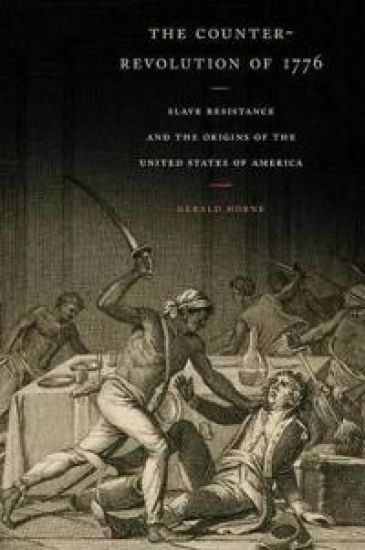
The Counter-Revolution of 1776

The Counter-Revolution of 1776

Gerald Horne

New York University Press
2016
pokkari

Halvin toimitettuna 35,80 €

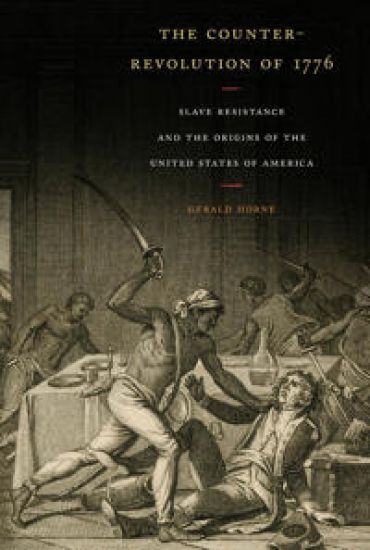
Illuminates how the preservation of slavery was a motivating factor for the Revolutionary War The successful 1776 revolt against British rule in North America has been hailed almost universally as a great step forward for humanity. But the Africans then living in the colonies overwhelmingly sided with the British. In this trailblazing book, Gerald Horne shows that in the prelude to 1776, the abolition of slavery seemed all but inevitable in London, delighting Africans as much as it outraged slaveholders, and sparking the colonial revolt. Prior to 1776, anti-slavery sentiments were deepening throughout Britain and in the Caribbean, rebellious Africans were in revolt. For European colonists in America, the major threat to their security was a foreign invasion combined with an insurrection of the enslaved. It was a real and threatening possibility that London would impose abolition throughout the colonies—a possibility the founding fathers feared would bring slave rebellions to their shores. To forestall it, they went to war. The so-called Revolutionary War, Horne writes, was in part a counter-revolution, a conservative movement that the founding fathers fought in order to preserve their right to enslave others. The Counter-Revolution of 1776 brings us to a radical new understanding of the traditional heroic creation myth of the United States.
Paul Robeson

Paul Robeson

Gerald Horne

Pluto Press
2016
pokkari

Halvin toimitettuna 27,80 €

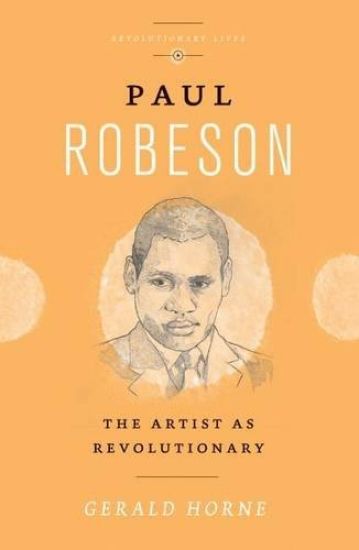
A world-famous singer and actor, a trained lawyer, an early star of American professional football and a polyglot who spoke over a dozen languages. These could be the crowning achievements of a life well-lived, yet for Paul Robeson the higher calling of social justice led him to abandon both the NFL and Hollywood and become one of the most important political activists of his generation - battling both Jim Crow and Joseph McCarthy. Gerald Horne's biography uses Robeson's remarkable and revolutionary life to tell the story of the 20th century's great political struggles: against racism, against colonialism, and for international socialism. This critical and searching account provides an opportunity for readers to comprehend the triumphs and tragedies of the revolutionary progressive movement of which Robeson was not just a part, but, perhaps, its most resonant symbol.
Paul Robeson

Paul Robeson

Gerald Horne

Pluto Press
2016
sidottu
A world-famous singer and actor, a trained lawyer, an early star of American professional football and a polyglot who spoke over a dozen languages. These could be the crowning achievements of a life well-lived, yet for Paul Robeson the higher calling of social justice led him to abandon both the NFL and Hollywood and become one of the most important political activists of his generation - battling both Jim Crow and Joseph McCarthy. Gerald Horne's biography uses Robeson's remarkable and revolutionary life to tell the story of the 20th century's great political struggles: against racism, against colonialism, and for international socialism. This critical and searching account provides an opportunity for readers to comprehend the triumphs and tragedies of the revolutionary progressive movement of which Robeson was not just a part, but, perhaps, its most resonant symbol.
Confronting Black Jacobins

Confronting Black Jacobins

Gerald Horne

Monthly Review Press,U.S.
2016
nidottu
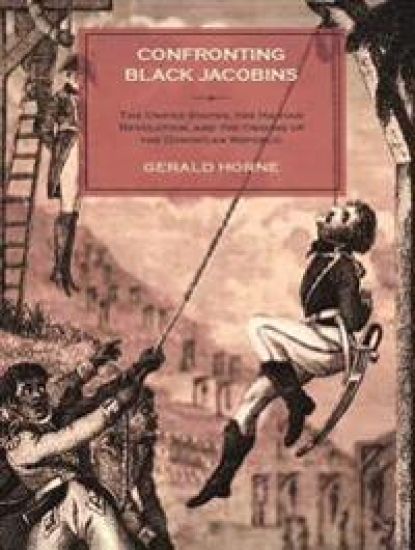
The Haitian Revolution, the product of the first successful slave revolt, was truly world-historic in its impact. When Haiti declared independence in 1804, the leading powers--France, Great Britain, and Spain--suffered an ignominious defeat and the New World was remade. The island revolution also had a profound impact on Haiti's mainland neighbor, the United States. Inspiring the enslaved and partisans of emancipation while striking terror throughout the Southern slaveocracy, it propelled the fledgling nation one step closer to civil war. Gerald Horne's path breaking new work explores the complex and often fraught relationship between the United States and the island of Hispaniola. Giving particular attention to the responses of African Americans, Horne surveys the reaction in the United States to the revolutionary process in the nation that became Haiti, the splitting of the island in 1844, which led to the formation of the Dominican Republic, and the failed attempt by the United States to annex both in the 1870s. Drawing upon a rich collection of archival and other primary source materials, Horne deftly weaves together a disparate array of voices--world leaders and diplomats, slaveholders, white abolitionists, and the freedom fighters he terms Black Jacobins. Horne at once illuminates the tangled conflicts of the colonial powers, the commercial interests and imperial ambitions of U. S. elites, and the brutality and tenacity of the American slaveholding class, while never losing sight of the freedom struggles of Africans both on the island and on the mainland, which sought the fulfillment of the emancipatory promise of 18th century republicanism.
Confronting Black Jacobins

Confronting Black Jacobins

Gerald Horne

Monthly Review Press,U.S.
2015
sidottu
The Haitian Revolution, the product of the first successful slave revolt, was truly world-historic in its impact. When Haiti declared independence in 1804, the leading powers--France, Great Britain, and Spain--suffered an ignominious defeat and the New World was remade. The island revolution also had a profound impact on Haiti's mainland neighbor, the United States. Inspiring the enslaved and partisans of emancipation while striking terror throughout the Southern slaveocracy, it propelled the fledgling nation one step closer to civil war. Gerald Horne's path breaking new work explores the complex and often fraught relationship between the United States and the island of Hispaniola. Giving particular attention to the responses of African Americans, Horne surveys the reaction in the United States to the revolutionary process in the nation that became Haiti, the splitting of the island in 1844, which led to the formation of the Dominican Republic, and the failed attempt by the United States to annex both in the 1870s. Drawing upon a rich collection of archival and other primary source materials, Horne deftly weaves together a disparate array of voices--world leaders and diplomats, slaveholders, white abolitionists, and the freedom fighters he terms Black Jacobins. Horne at once illuminates the tangled conflicts of the colonial powers, the commercial interests and imperial ambitions of U. S. elites, and the brutality and tenacity of the American slaveholding class, while never losing sight of the freedom struggles of Africans both on the island and on the mainland, which sought the fulfillment of the emancipatory promise of 18th century republicanism.
Race to Revolution

Race to Revolution

Gerald Horne

Monthly Review Press,U.S.
2014
sidottu
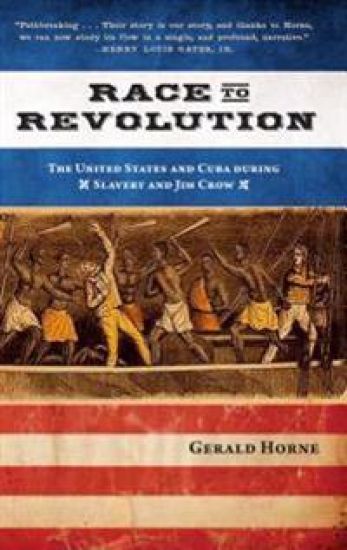
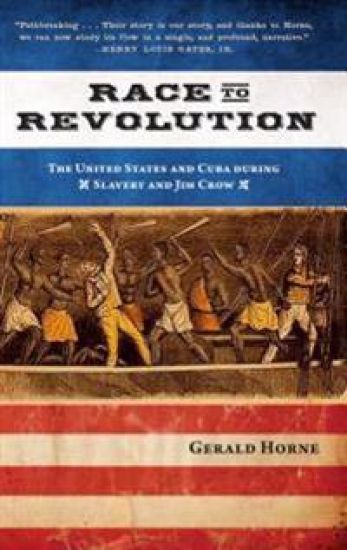
The histories of Cuba and the United States are tightly intertwinedand have been for at least two centuries. In Race to Revolution, historian Gerald Horne examines a critical relationship betweenthe two countries by tracing out the typically overlooked interconnectionsamong slavery, Jim Crow, and revolution. Slavery wascentral to the economic and political trajectories of Cuba and theUnited States, both in terms of each nation's internal political andeconomic development and in the interactions between the smallCaribbean island and the Colossus of the North. Horne draws a direct link between the black experiences in twovery different countries and follows that connection throughchanging periods of resistance and revolutionary upheaval. BlackCubans were crucial to Cuba's initial independence, and the relativefreedom they achieved helped bring down Jim Crow in theUnited States, reinforcing radical politics within the black communitiesof both nations. This in turn helped to create the conditionsthat gave rise to the Cuban Revolution which, on New Years' Dayin 1959, shook the United States to its core. Based on extensive research in Havana, Madrid, London, andthroughout the U. S., Race to Revolution delves deep into thehistorical record, bringing to life the experiences of slaves andslave traders, abolitionists and sailors, politicians and poor farmers. It illuminates the complex web of interaction and infl uencethat shaped the lives of many generations as they struggled overquestions of race, property, and political power in both Cuba andthe United States.
Race to Revolution

Race to Revolution

Gerald Horne

Monthly Review Press,U.S.
2014
nidottu
The histories of Cuba and the United States are tightly intertwinedand have been for at least two centuries. In Race to Revolution, historian Gerald Horne examines a critical relationship betweenthe two countries by tracing out the typically overlooked interconnectionsamong slavery, Jim Crow, and revolution. Slavery wascentral to the economic and political trajectories of Cuba and theUnited States, both in terms of each nation's internal political andeconomic development and in the interactions between the smallCaribbean island and the Colossus of the North. Horne draws a direct link between the black experiences in twovery different countries and follows that connection throughchanging periods of resistance and revolutionary upheaval. BlackCubans were crucial to Cuba's initial independence, and the relativefreedom they achieved helped bring down Jim Crow in theUnited States, reinforcing radical politics within the black communitiesof both nations. This in turn helped to create the conditionsthat gave rise to the Cuban Revolution which, on New Years' Dayin 1959, shook the United States to its core. Based on extensive research in Havana, Madrid, London, andthroughout the U. S., Race to Revolution delves deep into thehistorical record, bringing to life the experiences of slaves andslave traders, abolitionists and sailors, politicians and poor farmers. It illuminates the complex web of interaction and infl uencethat shaped the lives of many generations as they struggled overquestions of race, property, and political power in both Cuba andthe United States.
The Counter-Revolution of 1776

The Counter-Revolution of 1776

Gerald Horne

New York University Press
2014
sidottu
Illuminates how the preservation of slavery was a motivating factor for the Revolutionary War The successful 1776 revolt against British rule in North America has been hailed almost universally as a great step forward for humanity. But the Africans then living in the colonies overwhelmingly sided with the British. In this trailblazing book, Gerald Horne shows that in the prelude to 1776, the abolition of slavery seemed all but inevitable in London, delighting Africans as much as it outraged slaveholders, and sparking the colonial revolt. Prior to 1776, anti-slavery sentiments were deepening throughout Britain and in the Caribbean, rebellious Africans were in revolt. For European colonists in America, the major threat to their security was a foreign invasion combined with an insurrection of the enslaved. It was a real and threatening possibility that London would impose abolition throughout the colonies—a possibility the founding fathers feared would bring slave rebellions to their shores. To forestall it, they went to war. The so-called Revolutionary War, Horne writes, was in part a counter-revolution, a conservative movement that the founding fathers fought in order to preserve their right to enslave others. The Counter-Revolution of 1776 brings us to a radical new understanding of the traditional heroic creation myth of the United States.
The World and Africa and Color and Democracy (The Oxford W. E. B. Du Bois)

The World and Africa and Color and Democracy (The Oxford W. E. B. Du Bois)

W. E. B. Du Bois; Mahmood Mamdani; Gerald Horne

Oxford University Press Inc
2014
nidottu
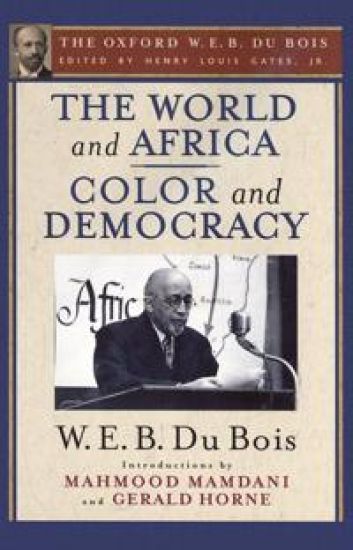
W. E. B. Du Bois was a public intellectual, sociologist, and activist on behalf of the African American community. He profoundly shaped black political culture in the United States through his founding role in the NAACP, as well as internationally through the Pan-African movement. Du Bois's sociological and historical research on African-American communities and culture broke ground in many areas, including the history of the post-Civil War Reconstruction period. Du Bois was also a prolific author of novels, autobiographical accounts, innumerable editorials and journalistic pieces, and several works of history. Collected in one volume for the first time, The World and Africa and Color and Democracy are two of W E. B. Du Bois's most powerful essays on race. He explores how to tell the story of those left out of recorded history, the evils of colonialism worldwide, and Africa's and African's contributions to, and neglect from, world history. More than six decades after W. E. B. Du Bois wrote The World and Africa and Color and Democracy, they remain worthy guides for the twenty-first century. With a series introduction by editor Henry Louis Gates, Jr., and two introductions by top African scholars, this edition is essential for anyone interested in world history.
Black Revolutionary

Black Revolutionary

Gerald Horne

University of Illinois Press
2013
nidottu
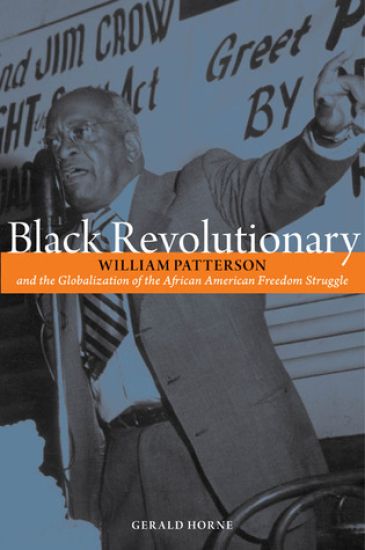
A leading African American Communist, lawyer William L. Patterson (1891–1980) was instrumental in laying the groundwork for the defeat of Jim Crowby virtue of his leadership of the Scottsboro campaign in the 1930s. In this watershed biography, historian Gerald Horne shows how Patterson helped to advance African American equality by fostering and leveraging international support for the movement. Horne highlights key moments in Patterson's global activism: his early education in the Soviet Union, his involvement with the Scottsboro trials and other high-profile civil rights cases of the 1930s to 1950s, his 1951 "We Charge Genocide" petition to the United Nations, and his later work with prisons and the Black Panther Party. Through Patterson's story, Horne examines how the Cold War affected the freedom movement, with civil rights leadership sometimes disavowing African American leftists in exchange for concessions from the U. S. government. He also probes the complex and often contradictory relationship between the Communist Party and the African American community, including the impact of the FBI's infiltration of the Communist Party. Drawing from government and FBI documents, newspapers, periodicals, archival and manuscript collections, and personal papers, Horne documents Patterson's effectiveness at carrying the freedom struggle into the global arena and provides a fresh perspective on twentieth-century struggles for racial justice.
Black Revolutionary

Black Revolutionary

Gerald Horne

University of Illinois Press
2013
sidottu
A leading African American Communist, lawyer William L. Patterson (1891–1980) was instrumental in laying the groundwork for the defeat of Jim Crowby virtue of his leadership of the Scottsboro campaign in the 1930s. In this watershed biography, historian Gerald Horne shows how Patterson helped to advance African American equality by fostering and leveraging international support for the movement. Horne highlights key moments in Patterson's global activism: his early education in the Soviet Union, his involvement with the Scottsboro trials and other high-profile civil rights cases of the 1930s to 1950s, his 1951 "We Charge Genocide" petition to the United Nations, and his later work with prisons and the Black Panther Party. Through Patterson's story, Horne examines how the Cold War affected the freedom movement, with civil rights leadership sometimes disavowing African American leftists in exchange for concessions from the U. S. government. He also probes the complex and often contradictory relationship between the Communist Party and the African American community, including the impact of the FBI's infiltration of the Communist Party. Drawing from government and FBI documents, newspapers, periodicals, archival and manuscript collections, and personal papers, Horne documents Patterson's effectiveness at carrying the freedom struggle into the global arena and provides a fresh perspective on twentieth-century struggles for racial justice.