Kirjojen hintavertailu – 12 903 735 kirjaa ja 27 kauppaa

Kirjailija

Gerald Horne

Kirjat ja teokset yhdessä paikassa: 58 kirjaa, julkaisuja vuosilta 1997–2025, suosituimpiin kuuluu W.E.B. Du Bois. Vertaile teosten hintoja ja tarkista saatavuus suomalaisista kirjakaupoista.

58 kirjaa

Kirjojen julkaisuvuodet: 1997–2025.

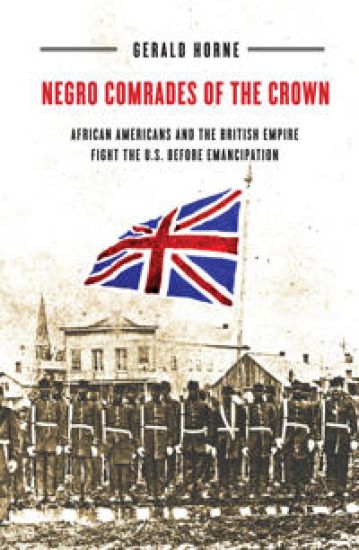
Negro Comrades of the Crown

Negro Comrades of the Crown

Gerald Horne

New York University Press
2013
pokkari
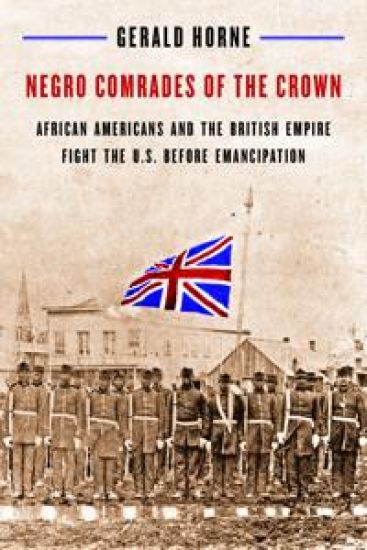
While it is well known that more Africans fought on behalf of the British than with the successful patriots of the American Revolution, Gerald Horne reveals in his latest work of historical recovery that after 1776, Africans and African-Americans continued to collaborate with Great Britain against the United States in battles big and small until the Civil War. Many African Americans viewed Britain, an early advocate of abolitionism and emancipator of its own slaves, as a powerful ally in their resistance to slavery in the Americas. This allegiance was far-reaching, from the Caribbean to outposts in North America to Canada. In turn, the British welcomed and actively recruited both fugitive and free African Americans, arming them and employing them in military engagements throughout the Atlantic World, as the British sought to maintain a foothold in the Americas following the Revolution. In this path-breaking book, Horne rewrites the history of slave resistance by placing it for the first time in the context of military and diplomatic wrangling between Britain and the United States. Painstakingly researched and full of revelations, Negro Comrades of the Crown is among the first book-length studies to highlight the Atlantic origins of the Civil War, and the active role played by African Americans within these external factors that led to it. Listen to a one hour special with Dr. Gerald Horne on the "Sojourner Truth" radio show.
Negro Comrades of the Crown

Negro Comrades of the Crown

Gerald Horne

New York University Press
2012
sidottu
While it is well known that more Africans fought on behalf of the British than with the successful patriots of the American Revolution, Gerald Horne reveals in his latest work of historical recovery that after 1776, Africans and African-Americans continued to collaborate with Great Britain against the United States in battles big and small until the Civil War. Many African Americans viewed Britain, an early advocate of abolitionism and emancipator of its own slaves, as a powerful ally in their resistance to slavery in the Americas. This allegiance was far-reaching, from the Caribbean to outposts in North America to Canada. In turn, the British welcomed and actively recruited both fugitive and free African Americans, arming them and employing them in military engagements throughout the Atlantic World, as the British sought to maintain a foothold in the Americas following the Revolution. In this path-breaking book, Horne rewrites the history of slave resistance by placing it for the first time in the context of military and diplomatic wrangling between Britain and the United States. Painstakingly researched and full of revelations, Negro Comrades of the Crown is among the first book-length studies to highlight the Atlantic origins of the Civil War, and the active role played by African Americans within these external factors that led to it. Listen to a one hour special with Dr. Gerald Horne on the "Sojourner Truth" radio show.
Fighting in Paradise

Fighting in Paradise

Gerald Horne

University of Hawai'i Press
2011
sidottu
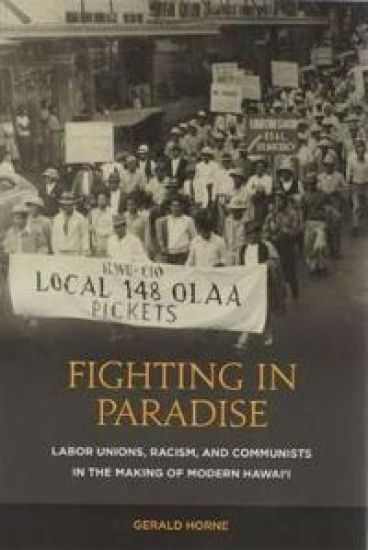
Powerful labor movements played a critical role in shaping modern Hawaii, beginning in the 1930s, when International Longshore and Warehousemen’s Union (ILWU) representatives were dispatched to the islands to organize plantation and dock laborers. They were stunned by the feudal conditions they found in Hawaii, where the majority of workers—Hawaiian, Japanese, Chinese, and Filipino in origin—were routinely subjected to repression and racism at the hands of white bosses. The wartime civil liberties crackdown brought union organizing to a halt; but as the war wound down, Hawaii workers’ frustrations boiled over, leading to an explosive success in the forming of unions. During the 1950s, just as the ILWU began a series of successful strikes and organizing drives, the union came under McCarthyite attacks and persecution. In the midst of these allegations, Hawaii’s bid for statehood was being challenged by powerful voices in Washington who claimed that admitting Hawaii to the union would be tantamount to giving the Kremlin two votes in the U. S. Senate, while Jim Crow advocates worried that Hawaii’s representatives would be enthusiastic supporters of pro–civil rights legislation. Hawaii’s extensive social welfare system and the continuing power of unions to shape the state politically are a direct result of those troubled times. Based on exhaustive archival research in Hawaii, California, Washington, and elsewhere, Gerald Horne’s gripping story of Hawaii workers’ struggle to unionize reads like a suspense novel as it details for the first time how radicalism and racism helped shape Hawaii in the twentieth century.
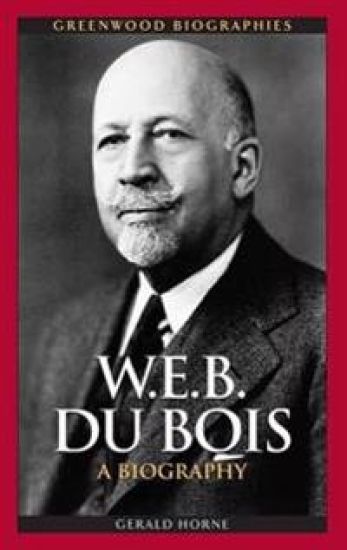
W.E.B. Du Bois

W.E.B. Du Bois

Gerald Horne

Greenwood Press
2009
sidottu
This biography of W. E. B. Du Bois gives full measure to his entire life, including his controversial final decades. This revealing biography captures the full life of W. E. B. Du Bois—historian, sociologist, author, editor—a leader in the fight to bring African Americans more fully into the American landscape as well as forceful proponent of them leaving America altogether and returning to Africa. Drawing on extensive research, Gerald Horne, a leading authority on Du Bois and a versatile and prolific scholar in his own right, offers a fully rounded portrait of this accomplished and controversial figure, including the often overlooked final decades without which no portrait of Du Bois could be complete. The book also highlights Du Bois's relationships with and influence upon other leading civil rights activists both during, and subsequent to, his extraordinarily long life, including Booker T. Washington, Frederick Douglas, Marcus Garvey, Martin Luther King, Malcolm X, and Jesse Jackson. Includes extensive use of original materials, including Du Bois’ correspondence and writingsOffers a chronology of key personal and historic events during Du Bois’ life (1868-1963)
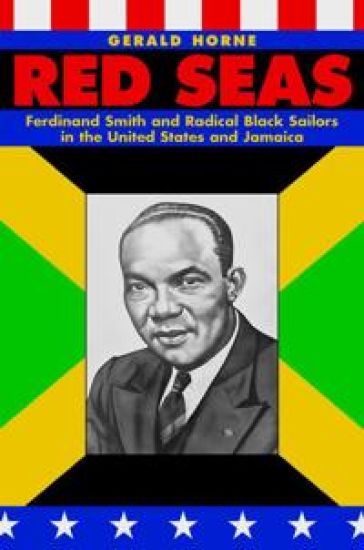
Red Seas

Red Seas

Gerald Horne

New York University Press
2009
pokkari
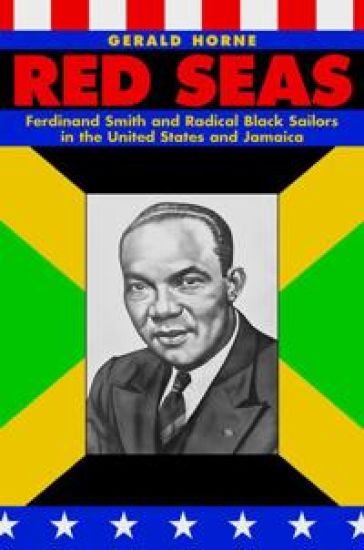
During the heyday of the U. S. and international labor movements in the 1930s and 1940s, Ferdinand Smith, the Jamaican-born co-founder and second-in-command of the National Maritime Union (NMU), stands out as one of the most—if not the most—powerful black labor leaders in the United States. Smith's active membership in the Communist Party, however, coupled with his bold labor radicalism and shaky immigration status, brought him under continual surveillance by U. S. authorities, especially during the Red Scare in the 1950s. Smith was eventually deported to his homeland of Jamaica, where he continued his radical labor and political organizing until his death in 1961. Gerald Horne draws on Smith's life to make insightful connections between labor radicalism and the Civil Rights Movement—demonstrating that the gains of the latter were propelled by the former and undermined by anticommunism. Moreover, Red Seas uncovers the little-known experiences of black sailors and their contribution to the struggle for labor and civil rights, the history of the Communist Party and its black members, and the significant dimensions of Jamaican labor and political radicalism.
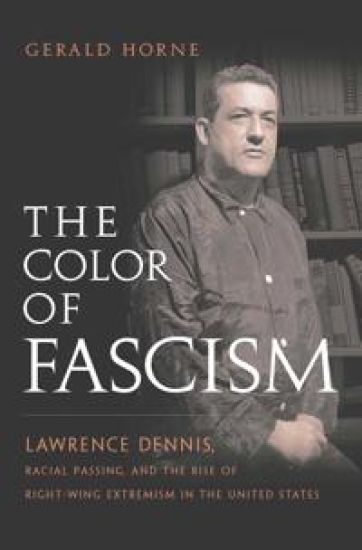
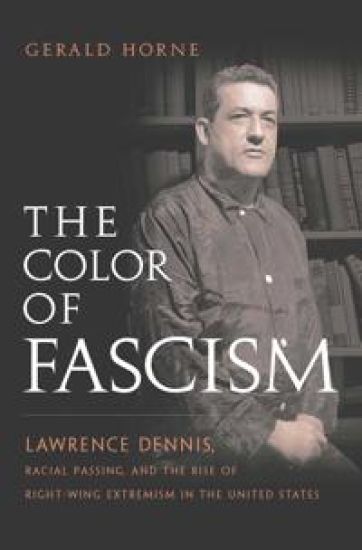
The Color of Fascism

The Color of Fascism

Gerald Horne

New York University Press
2009
pokkari
What does it mean that Lawrence Dennis—arguably the "brains" behind U. S. fascism—was born black but spent his entire adult life passing for white? Born in Atlanta in 1893, Dennis began life as a highly touted African American child preacher, touring nationally and arousing audiences with his dark-skinned mother as his escort. However, at some point between leaving prep school and entering Harvard University, he chose to abandon his family and his former life as an African American in order to pass for white. Dennis went on to work for the State Department and on Wall Street, and ultimately became the public face of U. S. fascism, meeting with Mussolini and other fascist leaders in Europe. He underwent trial for sedition during World War II, almost landing in prison, and ultimately became a Cold War critic before dying in obscurity in 1977. Based on extensive archival research, The Color of Fascism blends biography, social history, and critical race theory to illuminate the fascinating life of this complex and enigmatic man. Gerald Horne links passing and fascism, the two main poles of Dennis's life, suggesting that Dennis's anger with the U. S. as a result of his upbringing in Jim Crow Georgia led him to alliances with the antagonists of the U. S. and that his personal isolation which resulted in his decision to pass dovetailed with his ultimate isolationism. Dennis's life is a lasting testament to the resilience of right-wing thought in the U. S. The first full-scale biographical portrait of this intriguing figure, The Color of Fascism also links the strange career of a prominent American who chose to pass.
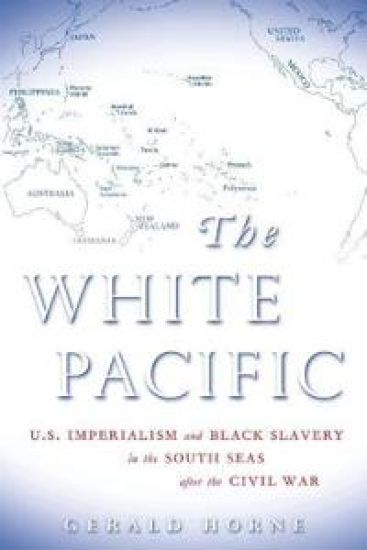
White Pacific

White Pacific

Gerald Horne

University of Hawai'i Press
2007
nidottu
Worldwide supplies of sugar and cotton were impacted dramatically as the U. S. Civil War dragged on. New areas of production entered these lucrative markets, particularly in the South Pacific, and plantation agriculture grew substantially in disparate areas such as Australia, Fiji, and Hawaii. The increase in production required an increase in labor; in the rush to fill the vacuum, freebooters and other unsavory characters began a slave trade in Melanesians and Polynesians that continued into the twentieth century. ""The White Pacific"" ranges over the broad expanse of Oceania to reconstruct the history of ""blackbirding"" (slave trading) in the region. It examines the role of U. S. citizens (many of them ex-slaveholders and ex-confederates) in the trade and its roots in Civil War dislocations. What unfolds is a dramatic tale of unfree labor, conflicts between formal and informal empire, white supremacy, threats to sovereignty in Hawaii, the origins of a White Australian policy, and the rise of Japan as a Pacific power and putative protector. It also pieces together a wonderfully suggestive history of the African American presence in the Pacific. Based on deft archival research in Australia, New Zealand, Fiji, Hawaii, the United States, and Great Britain, ""The White Pacific"" uncovers a heretofore hidden story of race, labor, war, and intrigue that contributes significantly to the emerging intersectional histories of race and ethnicity.
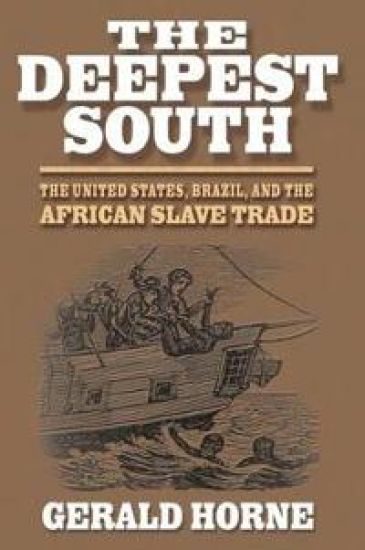
The Deepest South

The Deepest South

Gerald Horne

New York University Press
2007
pokkari
During its heyday in the nineteenth century, the African slave trade was fueled by the close relationship of the United States and Brazil. The Deepest South tells the disturbing story of how U. S. nationals - before and after Emancipation -- continued to actively participate in this odious commerce by creating diplomatic, social, and political ties with Brazil, which today has the largest population of African origin outside of Africa itself. Proslavery Americans began to accelerate their presence in Brazil in the 1830s, creating alliances there—sometimes friendly, often contentious—with Portuguese, Spanish, British, and other foreign slave traders to buy, sell, and transport African slaves, particularly from the eastern shores of that beleaguered continent. Spokesmen of the Slave South drew up ambitious plans to seize the Amazon and develop this region by deporting the enslaved African-Americans there to toil. When the South seceded from the Union, it received significant support from Brazil, which correctly assumed that a Confederate defeat would be a mortal blow to slavery south of the border. After the Civil War, many Confederates, with slaves in tow, sought refuge as well as the survival of their peculiar institution in Brazil. Based on extensive research from archives on five continents, Gerald Horne breaks startling new ground in the history of slavery, uncovering its global dimensions and the degrees to which its defenders went to maintain it.
The Color of Fascism

The Color of Fascism

Gerald Horne

New York University Press
2006
sidottu
What does it mean that Lawrence Dennis—arguably the "brains" behind U. S. fascism—was born black but spent his entire adult life passing for white? Born in Atlanta in 1893, Dennis began life as a highly touted African American child preacher, touring nationally and arousing audiences with his dark-skinned mother as his escort. However, at some point between leaving prep school and entering Harvard University, he chose to abandon his family and his former life as an African American in order to pass for white. Dennis went on to work for the State Department and on Wall Street, and ultimately became the public face of U. S. fascism, meeting with Mussolini and other fascist leaders in Europe. He underwent trial for sedition during World War II, almost landing in prison, and ultimately became a Cold War critic before dying in obscurity in 1977. Based on extensive archival research, The Color of Fascism blends biography, social history, and critical race theory to illuminate the fascinating life of this complex and enigmatic man. Gerald Horne links passing and fascism, the two main poles of Dennis's life, suggesting that Dennis's anger with the U. S. as a result of his upbringing in Jim Crow Georgia led him to alliances with the antagonists of the U. S. and that his personal isolation which resulted in his decision to pass dovetailed with his ultimate isolationism. Dennis's life is a lasting testament to the resilience of right-wing thought in the U. S. The first full-scale biographical portrait of this intriguing figure, The Color of Fascism also links the strange career of a prominent American who chose to pass.
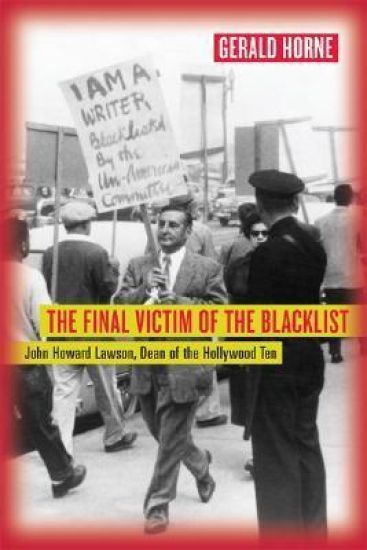
The Final Victim of the Blacklist

The Final Victim of the Blacklist

Gerald Horne

University of California Press
2006
pokkari
Before he attained notoriety as Dean of the Hollywood Ten - the blacklisted screenwriters and directors persecuted because of their varying ties to the Communist Party - John Howard Lawson had become one of the most brilliant, successful, and intellectual screenwriters on the Hollywood scene in the 1930s and 1940s, with several hits to his credit including "Blockade", "Sahara", and "Action in the North Atlantic". After his infamous, almost violent, 1947 hearing before the House Un-American Activities Committee, Lawson spent time in prison and his lucrative career was effectively over. Studded with anecdotes and based on previously untapped archives, this first biography of Lawson brings alive his era and features many of his prominent friends and associates, including John Dos Passos, Theodore Dreiser, F. Scott Fitzgerald, Charles Chaplin, Gene Kelly, Edmund Wilson, Ernest Hemingway, Humphrey Bogart, Dalton Trumbo, Ring Lardner, Jr., and many others. Lawson's life becomes a prism through which we gain a clearer perspective on the evolution and machinations of McCarthyism and anti-Semitism in the United States, on the influence of the left on Hollywood, and on a fascinating man whose radicalism served as a foil for launching the political careers of two Presidents: Richard Nixon and Ronald Reagan. In vivid, marvelously detailed prose, "Final Victim of the Blacklist" restores this major figure to his rightful place in history as it recounts one of the most captivating episodes in twentieth century cinema and politics.
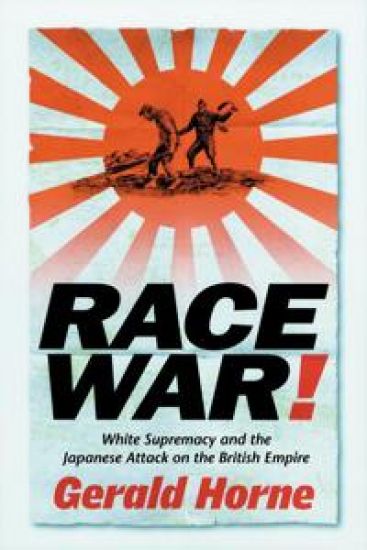
Race War!

Race War!

Gerald Horne

New York University Press
2005
pokkari
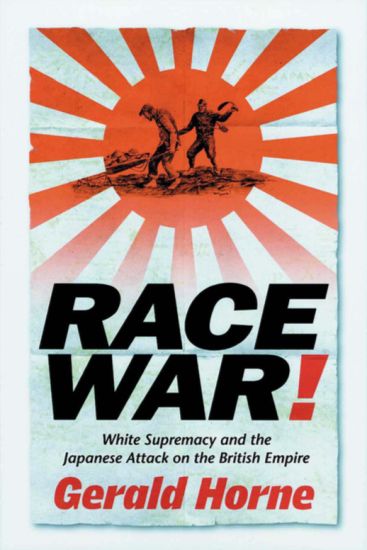
Japan's lightning march across Asia during World War II was swift and brutal. Nation after nation fell to Japanese soldiers. How were the Japanese able to justify their occupation of so many Asian nations? And how did they find supporters in countries they subdued and exploited? Race War! delves into submerged and forgotten history to reveal how European racism and colonialism were deftly exploited by the Japanese to create allies among formerly colonized people of color. Through interviews and original archival research on five continents, Gerald Horne shows how race played a key—and hitherto ignored—;role in each phase of the war. During the conflict, the Japanese turned white racism on its head portraying the war as a defense against white domination in the Pacific. We learn about the reverse racial hierarchy practiced by the Japanese internment camps, in which whites were placed at the bottom of the totem pole, under the supervision of Chinese, Korean, and Indian guards—an embarrassing example of racial payback that was downplayed by the defeated Japanese and the humiliated Europeans and Euro-Americans. Focusing on the microcosmic example of Hong Kong but ranging from colonial India to New Zealand and the shores of the U. S., Gerald Horne radically retells the story of the war. From racist U. S. propaganda to Black Nationalist open support of Imperial Japan, information about the effect of race on U. S. and British policy is revealed for the first time. This revisionist account of the war draws connections between General Tojo, Malaysian freedom fighters, and Elijah Muhammed of the Nation of Islam and shows how white racism encouraged and enabled Japanese imperialism. In sum, Horne demonstrates that the retreat of white supremacy was not only driven by the impact of the Cold War and the energized militancy of Africans and African-Americans but by the impact of the Pacific War as well, as a chastened U. S. and U. K. moved vigorously after this conflict to remove the conditions that made Japan's success possible.
Red Seas

Red Seas

Gerald Horne

New York University Press
2005
sidottu
During the heyday of the U. S. and international labor movements in the 1930s and 1940s, Ferdinand Smith, the Jamaican-born co-founder and second-in-command of the National Maritime Union (NMU), stands out as one of the most—if not the most—powerful black labor leaders in the United States. Smith's active membership in the Communist Party, however, coupled with his bold labor radicalism and shaky immigration status, brought him under continual surveillance by U. S. authorities, especially during the Red Scare in the 1950s. Smith was eventually deported to his homeland of Jamaica, where he continued his radical labor and political organizing until his death in 1961. Gerald Horne draws on Smith's life to make insightful connections between labor radicalism and the Civil Rights Movement—demonstrating that the gains of the latter were propelled by the former and undermined by anticommunism. Moreover, Red Seas uncovers the little-known experiences of black sailors and their contribution to the struggle for labor and civil rights, the history of the Communist Party and its black members, and the significant dimensions of Jamaican labor and political radicalism.
Black and Brown

Black and Brown

Gerald Horne

New York University Press
2005
sidottu
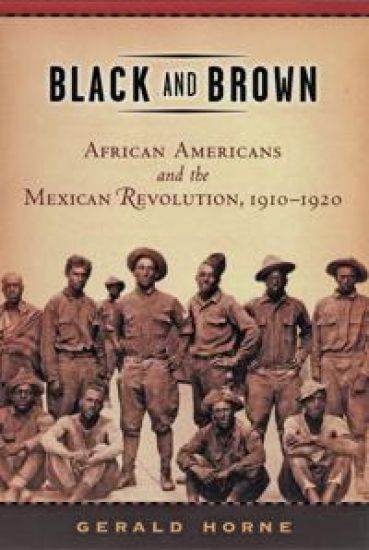
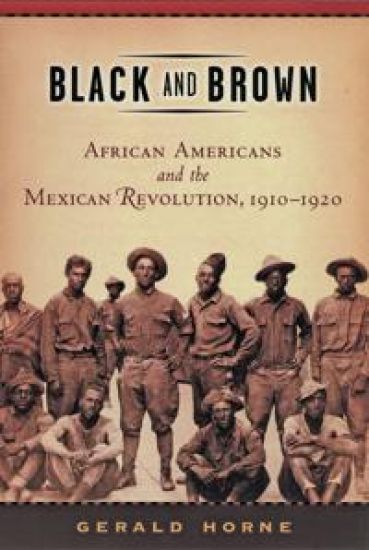
Winner of a 2005 Gustavus Myers Outstanding Book Award (Honorable Mention) Horne brings to light the lives of black Americans living along the Mexican border during and immediately after the Mexican Revolution The Mexican Revolution was a defining moment in the history of race relations, impacting both Mexican and African Americans. For black Westerners, 1910–1920 did not represent the clear-cut promise of populist power, but a reordering of the complex social hierarchy which had, since the nineteenth century, granted them greater freedom in the borderlands than in the rest of the United States. Despite its lasting significance, the story of black Americans along the Mexican border has been sorely underreported in the annals of U. S. history. Gerald Horne brings the tale to life in Black and Brown. Drawing on archives on both sides of the border, a host of cutting-edge studies and oral histories, Horne chronicles the political currents which created and then undermined the Mexican border as a relative safe haven for African Americans. His account addresses blacks' role as “Indian fighters,” the relationship between African Americans and immigrants, and the U. S. government's growing fear of black disloyalty, among other essential concerns of the period: the heavy reliance of the U. S. on black soldiers along the border placed white supremacy and national security on a collision course that was ultimately resolved in favor of the latter. Mining a forgotten chapter in American history, Black and Brown offers tremendous insight into the past and future of race relations along the Mexican border.
Black and Brown

Black and Brown

Gerald Horne

New York University Press
2005
pokkari
Honorable Mention for 2005 Gustavus Myers Outstanding Book Award Brings to light the lives of Black Americans living along the Mexican border during and immediately after the Mexican Revolution The Mexican Revolution was a defining moment in the history of race relations, impacting both Mexican and African Americans. For Black Westerners, 1910–1920 did not represent the clear-cut promise of populist power, but a reordering of the complex social hierarchy which had, since the nineteenth century, granted them greater freedom in the borderlands than in the rest of the United States. Despite its lasting significance, the story of Black Americans along the Mexican border has been sorely underreported in the annals of U. S. history. Gerald Horne brings the tale to life in Black and Brown. Drawing on archives on both sides of the border, a host of cutting-edge studies and oral histories, Horne chronicles the political currents which created and then undermined the Mexican border as a relative safe haven for African Americans. His account addresses Black people's role as "Indian fighters," the relationship between African Americans and immigrants, and the U. S. government's growing fear of Black disloyalty. He also considers how the heavy reliance of the U. S. on Black soldiers along the border placed white supremacy and national security on a collision course that was ultimately resolved in favor of the latter. Mining a forgotten chapter in American history, Black and Brown offers tremendous insight into the past and future of race relations along the Mexican border.
Race War!

Race War!

Gerald Horne

New York University Press
2003
sidottu
Japan's lightning march across Asia during World War II was swift and brutal. Nation after nation fell to Japanese soldiers. How were the Japanese able to justify their occupation of so many Asian nations? And how did they find supporters in countries they subdued and exploited? Race War! delves into submerged and forgotten history to reveal how European racism and colonialism were deftly exploited by the Japanese to create allies among formerly colonized people of color. Through interviews and original archival research on five continents, Gerald Horne shows how race played a key—and hitherto ignored—;role in each phase of the war. During the conflict, the Japanese turned white racism on its head portraying the war as a defense against white domination in the Pacific. We learn about the reverse racial hierarchy practiced by the Japanese internment camps, in which whites were placed at the bottom of the totem pole, under the supervision of Chinese, Korean, and Indian guards—an embarrassing example of racial payback that was downplayed by the defeated Japanese and the humiliated Europeans and Euro-Americans. Focusing on the microcosmic example of Hong Kong but ranging from colonial India to New Zealand and the shores of the U. S., Gerald Horne radically retells the story of the war. From racist U. S. propaganda to Black Nationalist open support of Imperial Japan, information about the effect of race on U. S. and British policy is revealed for the first time. This revisionist account of the war draws connections between General Tojo, Malaysian freedom fighters, and Elijah Muhammed of the Nation of Islam and shows how white racism encouraged and enabled Japanese imperialism. In sum, Horne demonstrates that the retreat of white supremacy was not only driven by the impact of the Cold War and the energized militancy of Africans and African-Americans but by the impact of the Pacific War as well, as a chastened U. S. and U. K. moved vigorously after this conflict to remove the conditions that made Japan's success possible.
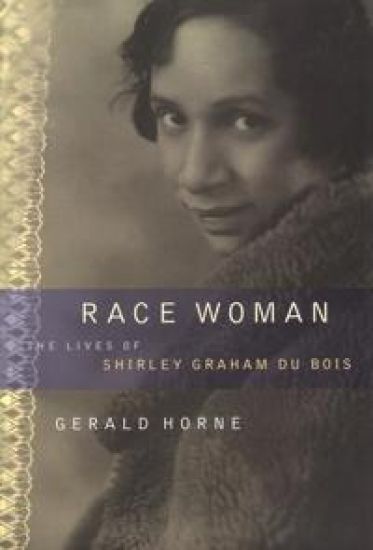
Race Woman

Race Woman

Gerald Horne

New York University Press
2002
pokkari
An intriguing study of artist and civil rights activist Shirley Graham Du Bois One of the most intriguing activists and artists of the twentieth century, Shirley Graham Du Bois also remains one of the least studied and understood. In Race Woman, Gerald Horne draws a revealing portrait of this controversial figure who championed the civil rights movement in America, the liberation struggles in Africa and the socialist struggles in Maoist China. Through careful analysis and use of personal correspondence, interviews, and previously unexamined documents, Horne explores her work as a Harlem Renaissance playwright, biographer, composer, teacher, novelist, Left political activist, advisor and inspiration, who was a powerful historical actor.
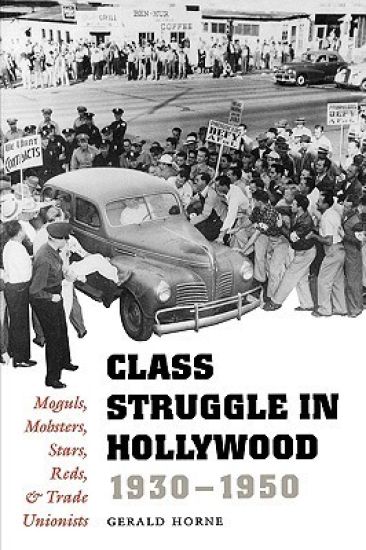
Class Struggle in Hollywood, 1930-1950

Class Struggle in Hollywood, 1930-1950

Gerald Horne

University of Texas Press
2001
pokkari
As World War II wound down in 1945 and the cold war heated up, the skilled trades that made up the Conference of Studio Unions (CSU) began a tumultuous strike at the major Hollywood studios. This turmoil escalated further when the studios retaliated by locking out CSU in 1946. This labor unrest unleashed a fury of Red-baiting that allowed studio moguls to crush the union and seize control of the production process, with far-reaching consequences. This engrossing book probes the motives and actions of all the players to reveal the full story of the CSU strike and the resulting lockout of 1946. Gerald Horne draws extensively on primary materials and oral histories to document how limited a "threat" the Communist party actually posed in Hollywood, even as studio moguls successfully used the Red scare to undermine union clout, prevent film stars from supporting labor, and prove the moguls' own patriotism. Horne also discloses that, unnoticed amid the turmoil, organized crime entrenched itself in management and labor, gaining considerable control over both the "product" and the profits of Hollywood. This research demonstrates that the CSU strike and lockout were a pivotal moment in Hollywood history, with consequences for everything from production values, to the kinds of stories told in films, to permanent shifts in the centers of power.
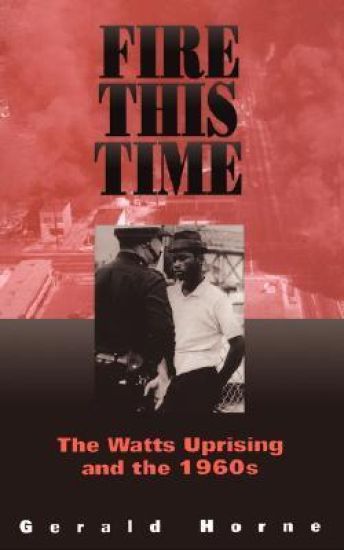
Fire This Time

Fire This Time

Gerald Horne

Da Capo Press Inc
1997
pokkari
In August 1965 the predominantly black neighbourhood of Watts in Los Angeles erupted in flames and violence following an incident of police brutality. The official death toll was thirty-four property losses reached hundreds of millions of dollars but the political results were even more profound. The civil rights movement was placed on the defensive as the image of rioting blacks in the West replaced the image of meek and angelic protestors in the South. A white backlash ensued that led directly to Ronald Reagan's election as governor of California in 1966. This is the first comprehensive treatment of the uprising, its causes, and its aftermath, and is based on hundreds of oral histories and unprecedented archival research. With a cast that includes Ronald Reagan, Tom Bradley, Martin Luther King, Jr., Edmund G. Brown, the NAACP, the Black Panthers, the Nation of Islam, and thousands of blacks and whites, Fire This Time is a compelling account of an event that changed the face of racial justice in America.