
Kirjailija
Gertrude Stein
Kirjat ja teokset yhdessä paikassa: 166 kirjaa, julkaisuja vuosilta 1909–2026, suosituimpiin kuuluu The Autobiography of Alice B. Toklas;With an Introduction by Sherwood Anderson. Vertaile teosten hintoja ja tarkista saatavuus suomalaisista kirjakaupoista.
166 kirjaa
Kirjojen julkaisuvuodet: 1909–2026.

Tender Buttons: Objects Food Rooms
Gertrude Stein
Createspace Independent Publishing Platform
2008
nidottu
Halvin toimitettuna 14,50 €
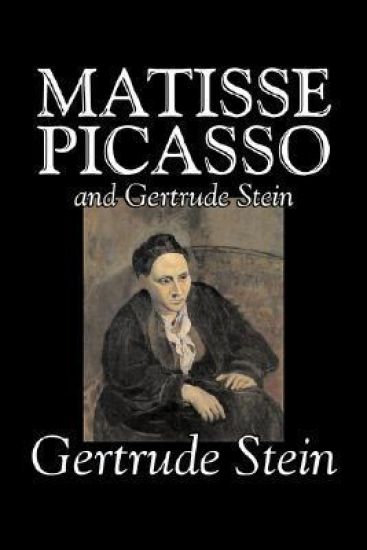
Matisse, Picasso and Gertrude Stein by Gertrude Stein, Fiction, Literary
Gertrude Stein
Aegypan
2007
pokkari
Gertrude Stein is best known for the quote, "A rose is a rose is a rose is a rose." She was an early 20th century writer whose work mirrored the experimentalism of the Cubist art movement." A Long Gay Book" (the novella that opens this volume -- a novella so substantial that it could well fill a volume by itself) is written in the stream-of-consciousness style that Stein helped to make famous.
Ida är Ida. En suicide blonde, en Dulcinea, en Garbo, en Gertrude Stein. Ida är en skönhetsdrottning som flytt sitt uppdrag; när Ida är på en plats vill hon alltid byta plats. Dessutom är Ida mycket upptagen. Med att vila. Och gifta sig, om och om igen. Gertrude Stein är Gertrude Stein, och Ida är hennes roman, en av hennes mest tillgängliga texter, på samma gång rolig och oroande. Ida: En roman ingår i Modernistas nya serie med Moderna klassiker. Gertrude Stein (1874-1946) var en av 1900-talets största litterära innovatörer. Hon var en av de centrala gestalterna i den avantgardistiska konst- och litteraturvärlden i 20-talets Paris där hennes och partnern Alice B Toklas hem blev en knytpunkt för exilamerikaner och europeiska konstnärer och författare. Ida: En roman skrevs under upptakten till andra världskriget, och publicerades av Random House 1941, medan Stein satt fast i Vichy-regimens Frankrike.
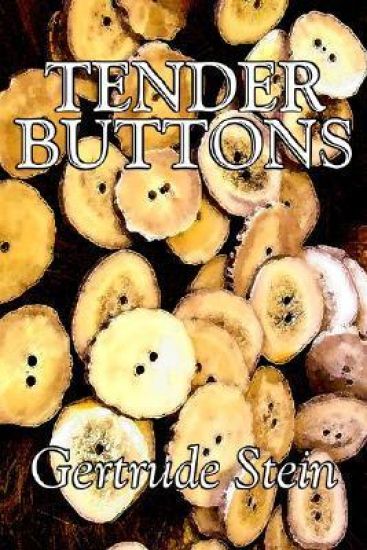
The change of color is likely and a difference a very little difference is prepared. Sugar is not a vegetable. -- Gertrude Stein Gertrude Stein wrote many odd and peculiar texts and this work -- Tender Buttons -- is among the best known of them. Stein's wonderful and peculiar approach to the language seems to focus on sounds and rhythms rather than the sense of words. Abandoning the sense of things, it's said, she attempted to capture "moments of consciousness," independent of time and memory. That may and may not be the case, but over the years, this and many similar works have been described by critics as a "feminist reworking of patriarchal language." We don't know about that, but we do like the work, just as we like Stein.

För första gången på svenska - Gertrude Steins oemotståndligt charmiga dokument över hennes oblyga livslånga egotripp: Allas självbiografi. Amerikanskorna Gertrude Stein och hennes käresta och allt-i-allo Alice B Toklas höll salong för konstnärer och författare i hemmet på Rue de Fleurus 27 i Paris i över fyra decennier. Hit kom Picasso, Matisse, Apollinaire, Hemingway och många andra för att prata med den fascinerande Gertrude Stein som hade åsikter om allt.

A series of local crimes inspired this attempt by the author to relieve her writer's block. A droll detective novel, its central mystery involves rediscovering the path to creativity.

The 1937 Sequel to THE AUTOBIOGRAPHY OF ALICE B TOKLAS, is Stein's account of her triumphant return to the U. S, and a meditation of the meaning of identity, success and America. I used to be fond of saying that America was a land of failure. Most of the great men in America had a long life of early failure and a long life of later failure'. A darker work than TOKLAS, but written in a similarily engaging manner, this is Stein at her most accessible and her most serious; it should be amongst her most popular books.'

Before becoming the patron of Lost Generation artists, Gertrude Stein established her reputation as an innovative author whose style was closer to painting than literature. Stein's strong influence on 20th-century literature is evident in this 1915 work of highly original prose rendered in thought-provoking experimental techniques.
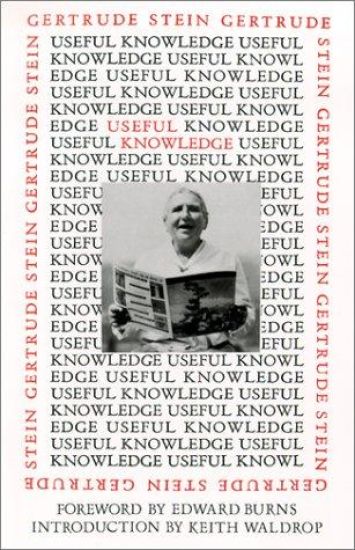
Useful Knowledge is pleasant and therefore it is very much to be enjoyed, writes Gertrude Stein in her Advertisement for this Book-an apt characterization of the experience of reading it sixty years after its disappearance from print. Despite her long expatriation, she always remained in her words, firmly born in Allegheny Pennsylvania. Indeed- physical detachment from her homeland seems only to have deepened her love for the country, a passion very nearly erotic, that blossomed in this private remembrance that is both tender and humorous. War, Woodrow Wilson, Chicago, Sherwood Anderson-such is the range of her intimate concerns. As for the significant questions to which her writings respond: Wherein Iowa differs from Kansas and Indiana and Wherein the South differs from the North, useful knowledge indeed, when the thought is opened along with the word in these extraordinary prose inventions. Keith Waldrop's introduction furnishes new insight into the process and development of Stein's infamous style as always more intricately evolving than is recognized. And Edward Burns provides useful knowledge about Useful Knowledge, the kind of information about Stein's text that we rarely find when we most want it
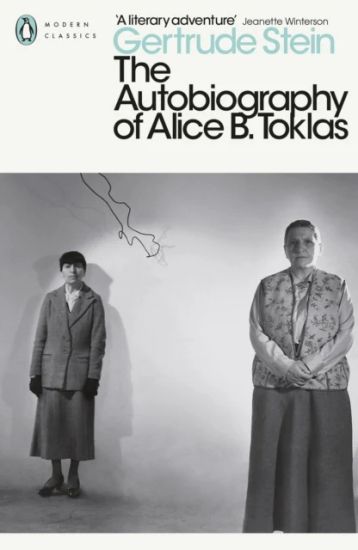
The Autobiography of Alice B. Toklas
Gertrude Stein
Penguin Classics
2001
pokkari
Halvin toimitettuna 17,00 €
A fascinating insight into the vibrant culture of Modernism, and the rich artistic world of Paris's Left Bank, Gertrude Stein's The Autobiography of Alice B. Toklas includes an introduction by Thomas Fensch in Penguin Modern Classics. For Gertrude Stein and her wife Alice B. Toklas, life in Paris was based upon the rue de Fleurus and the Saturday evenings and 'it was like a kaleidoscope slowly turning'. Picasso was there with 'his high whinnying Spanish giggle', as were Cezanne and Matisse, Hemingway and Fitzgerald. As Toklas put it - 'The geniuses came and talked to Gertrude Stein and the wives sat with me'. A light-hearted entertainment, this is in fact Gertrude Stein's own autobiography and a roll-call of all the extraordinary painters and writers she met between 1903 and 1932. Audacious, sardonic and characteristically self-confident, this is a definitive account by American in Paris. Gertrude Stein (1874-1946), a writer of experimental prose, is one of the original American Modernists. Born in Pennsylvania, she lived most of her life in Paris with her partner, Alice B. Toklas. Experimental books like Three Lives (1909), Tender Buttons (1914), and The Making of Americans (1925) established her reputation as an avant-garde stylist, and The Autobiography of Alice B. Toklas made her an international celebrity. As an experimental writer she has been an inspiration to countless novelists and poets in our century, from Ernest Hemingway and Edith Sitwell in her own time to Jack Kerouac and Robert Duncan in ours. If you enjoyed The Autobiography of Alice B. Toklas, you might like Virginia Woolf's Orlando, also available in Penguin Modern Classics.'Buttonholes the reader with its informality, its unhurried rhythms, deadpan humour and acerbic remarks'Frances Spalding, Sunday Times

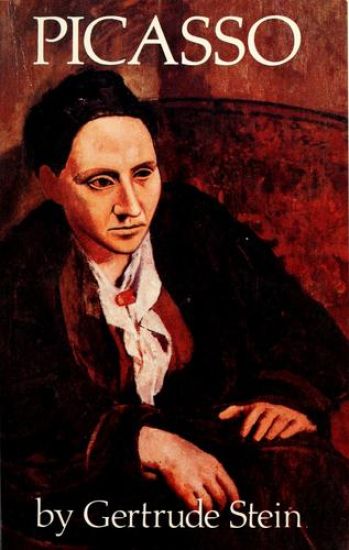
For more than a generation, Gertrude Stein's Paris home at 27 rue de Fleurus was the center of a glittering coterie of artists and writers, one of whom was Pablo Picasso. In this intimate and revealing memoir, Stein tells us much about the great man (and herself) and offers many insights into the life and art of the 20th century's greatest painter. Mixing biological fact with artistic and aesthetic comments, she limns a unique portrait of Picasso as a founder of Cubism, an intimate of Appollinaire, Max Jacob, Braque, Derain, and others, and a genius driven by a ceaseless quest to convey his vision of the 20th century. We learn, for example, of the importance of his native Spain in shaping Picasso's approach to art; of the influence of calligraphy and African sculpture; of his profound struggle to remain true to his own vision; of the overriding need to empty himself of the forms and ideas that welled up within him. Stein's close relationship with Picasso furnishes her with a unique vantage point in composing this perceptive and provocative reminiscence. It will delight any admirer of Picasso or Gertrude Stein; it is indispensable to an understanding of modern art.
Gertrude Stein began the creative work that was to earn her the reputation as one of the most original writers of this century with the three pieces in this volume. Fernhurst, a fictional episode based on a Bryn Mawr scandal of the early 1900s, explores the labyrinth of love between man and woman and between woman and woman; Q. E. D. fictionalizes an early Stein romance (doomed finally by a rival); and the third selection is an early draft of The Making of Americans, which records Stein's struggle toward maturity as woman and artist. Essential works of a significant twentieth-century literary voice.
In the more than 75 plays Gertrude Stein wrote between 1913 and 1946, she envisioned a new dramaturgy, beginning with the pictorial conception of a play as a landscape. She drew into her plays the daily flow of life around her - including the natural world - and turned cities, villages, parts of the dramatic structure, and even her own friends into characters. She made punctuation and typography part of her compositional style and chose words for their joyful impact as sound and wordplay. For Stein, the writing process itself was always important in developing the "continuous present" at the heart of her work. "Last Operas and Plays" contains many of Stein's most important and most-produced works. As a special feature, it also includes her essay "Plays", in which she reflects on the experience in the theatre of seeing and hearing, and on emotion and time.
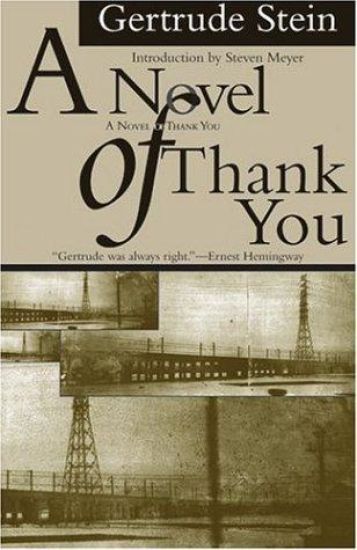
This is the first paperback edition of one of Stein's most revealing novels. Written in 1925-26 (but not published until 1958), it is Stein's midcareer assessment of herself, her writing, and her relationships, composed in the unique style for which she is celebrated. In place of a traditional narrative, Stein explores the nature of narrative, its possibilities, the various genres (historical novels, the novel of manners, adventure stories) available to the writer, the conventions of novel-writing, and the novelist's relation to her materials. In a sense, the novel is about "preparing a novel" (the subject of chap. 50), about everything that goes through a writer's head as she begins to write. Mixed in with her meditations on writing are daily events in her marriage to Alice B. Toklas, visits from friends - including such notable figures of the period as Josephine Baker, Virgil Thomson, Rene Crevel, and a number of expatriate American writers and artists - travels in and around France, memories of the past, inquiries into names and the nature of identity, and virtually anything else that occurs to her. As she writes at one point, "It can easily be remembered that a novel is everything, " so everything of interest to Stein goes into her preparations for the novel that is A Novel of Thank You.
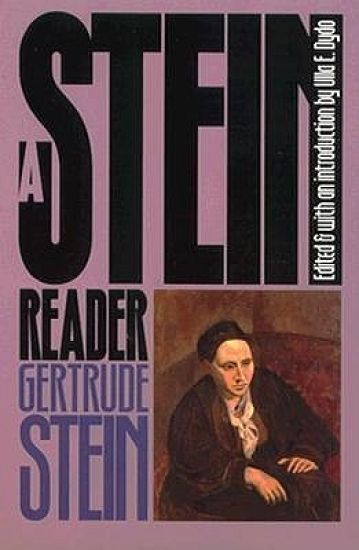
This important collection presents Gertrude Stein for the first time in her brilliant modernity. Ulla E. Dydo's textual scholarship demonstrates Stein's constant questioning of convention, and A Stein Reader changes the balance of work in print, concentrating on Stein's experimental work and including many key works that are virtually unknown or unavailable. A Stein Reader includes unpublished work, such as the portrait "Article"; shows the astonishing stylistic change in the neglected "A Long Gay Book"; draws attention to the many unknown plays such as "Reread Another;" and offers fascinating portraits of Matisse, Picasso, and Sitwell. Illuminating headnotes bring out connections between pieces and provide invaluable keys to Stein's motifs and thought patterns.