
Kirjailija
Gilbert K Chesterton
Kirjat ja teokset yhdessä paikassa: 140 kirjaa, julkaisuja vuosilta 2008–2025, suosituimpiin kuuluu Father Brown Mysteries 5 Book Box Set by G.K. Chesterton. Vertaile teosten hintoja ja tarkista saatavuus suomalaisista kirjakaupoista.
Nimi esiintyy myös muodoissa: Gilbert K. Chesterton, Gilbert K.Chesterton, Gilbert. K. Chesterton
140 kirjaa
Kirjojen julkaisuvuodet: 2008–2025.
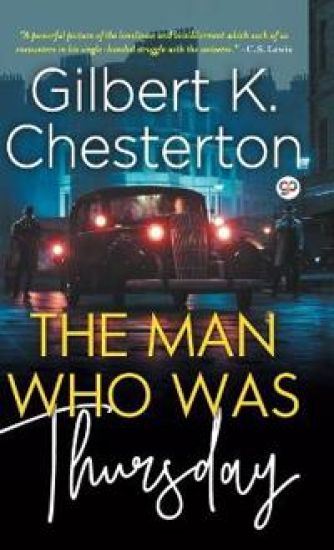
First published in 1908, 'The Man Who Was Thursday' is a metaphysical thriller novel by G. K. Chesterton. It is the story of Gabriel Syme, who is recruited by Scotland Yard as part of an anti-anarchist task force. When he meets Lucian Gregory, a poet, and member of a secret society of anarchists, he gains access to the underground movement. The group is led by a central council of seven men, each named for a day of the week. Gabriel convinces the local chapter to elect him to the vacant position of "Thursday" and he soon discovers that he is not the only one pretending to be something that he is not. "G. K. Chesterton's The Man Who Was Thursday is a wacky, nightmarish, deliriously well-written adventure story for grownups in which nothing is what it seems and everyone wears a mask, whether figurative or literal. It's hard to think of a more thrilling book."-Kate Christensen, TIME Magazine Top 10 Hardcover Library Books: A Wrinkle in Time (9789389440188) How to Stop Worrying and Start Living (9789387669161) Their Eyes Were Watching God (9789389440577) The Magic of Believing (9789388118217) Zen in the Art of Archery (9789354990298) A Cloud by Day, a Fire by Night (9789391181611) Siddhartha by Hermann hesse (9789387669116) The Richest Man in Babylon (9789354990717) The Book of Five Rings (9789389440553) The Knowledge of the Holy (9789389157239) Note: Search by ISBN
Gilbert K. Chesterton's fictional "The Trees of Pride" story goes around Squire Vane, who has imported three "peacock trees," which, according to the local people, spread illness and eat people. The Squire let go of these comments as simple superstitions, but while the three guests raised the point and angered the squire, he walked out to the trees to spend the night among them, to show the people that they were not risky, but the next morning he was nowhere. His guests and a local doctor went out to find out what exactly happened to him and sort out a completely twisted web. This is a brilliant composition of a human's capacity and desire to believe in supernatural activities, all wrapped up in a tale of honour and arrogance.
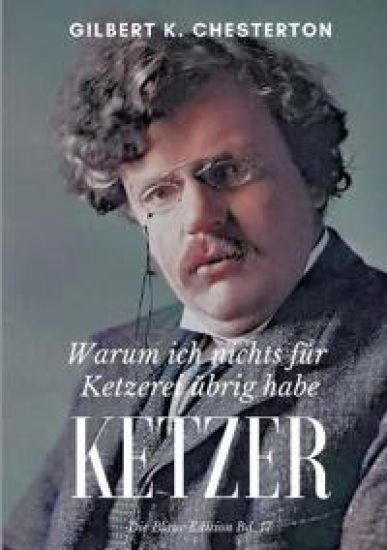
"Ketzer" ist eine Sammlung von 20 Beitr gen von G. K. Chesterton. W hrend die Kapitel von "Ketzer" sich auf bekannte Pers nlichkeiten beziehen, sind die Themen, die er diskutiert, f r die "vagen Modernen" des 21. Jahrhunderts ebenso universell wie f r die des 20. Er zitiert ausf hrlich und argumentiert ausgiebig gegen den Atheisten Joseph McCabe, u ert sich in scharfen Tiraden ber seinen engen pers nlichen Freund und intellektuellen Rivalen George Bernard Shaw sowie ber Friedrich Nietzsche, H. G. Wells, Rudyard Kipling und eine Reihe anderer wichtiger Intellektueller seiner Zeit, von denen er viele pers nlich kannte. Zusammen mit der Orthodoxie wird dieses Buch als zentraler Bestandteil von Chestertons Moraltheologie angesehen, die heutige Leser nach wie vor fasziniert.
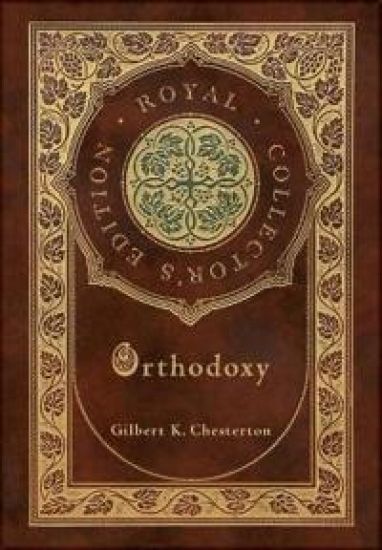
Orthodoxy (Royal Collector's Edition) (Case Laminate Hardcover with Jacket)
Gilbert K Chesterton
Engage Books
2021
sidottu
Halvin toimitettuna 42,40 €
Orthodoxy is a book by G. K. Chesterton that has become a classic of Christianity. In the book's preface Chesterton states the purpose is to "attempt an explanation, not of whether the Christian faith can be believed, but of how he personally has come to believe it." Chesterton presents an original view of Christian religion. He sees it as the answer to natural human needs, the "answer to a riddle" in his own words, and not simply as an arbitrary truth received from somewhere outside the boundaries of human experience. Orthodoxy was influential in the conversion of Theodore Maynard to Roman Catholicism as well as in the ordination of Canon Bernard Iddings Bell. In the magazine, The Atlantic, critic James Parker recommends the book thusly: "If you've got an afternoon, read his masterpiece of Christian apologetics Orthodoxy: ontological basics retailed with a blissful, zooming frivolity, Thomas Aquinas meets Eddie Van Halen." Chesterton chose the title, Orthodoxy, to focus instead on the plainness of the Apostles' Creed, though he admitted the general sound of the title was "a thinnish sort of thing." This case laminate collector's edition includes a Victorian inspired dust-jacket.
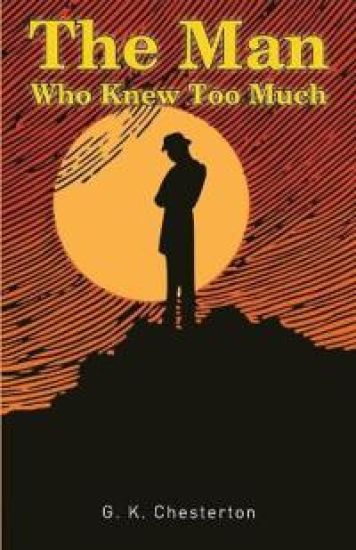
A prolific and popular writer, G. K. Chesterton (1874-1936) is best known as the creator of detective-priest Father Brown (even though Chesterton's mystery stories constitute only a small fraction of his writings). The eight adventures in this classic British mystery trace the activities of Horne Fisher, the man who knew too much, and his trusted friend Harold March. Although Horne's keen mind and powerful deductive gifts make him a natural sleuth, his inquiries have a way of developing moral complications. Notable for their wit and sense of wonder, these tales offer an evocative portrait of upper-crust society in pre-World War I England.
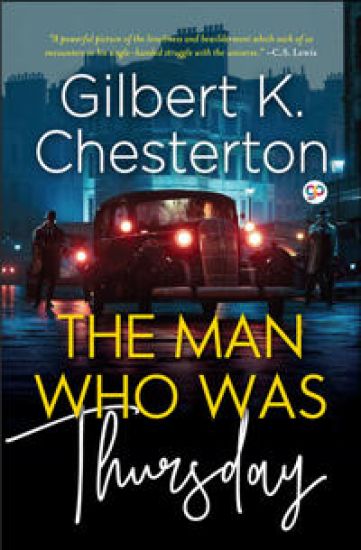
'The Man Who Was Thursday' is a novel by G. K. Chesterton, first published in 1908. The book has been referred to as a metaphysical thriller. It is the story of Gabriel Syme, who is recruited by Scotland Yard as part of an anti-anarchist task force. When he meets Lucian Gregory, a poet and member of a secret society of anarchists, he gains access to the underground movement. The group is led by a central council of seven men, each named for a day of the week. Gabriel convinces the local chapter to elect him to the vacant position of "Thursday" and he soon discovers that he is not the only one pretending to be something that he is not. 'The Man Who Was Thursday' is a wild, mad, hilarious and profoundly moving tale that ultimately defies classification. The novel has been described as "one of the hidden hinges of twentieth-century writing, the place where, before our eyes, the nonsense-fantastical tradition of Lewis Carroll and Edward Lear pivots and becomes the nightmare-fantastical tradition of Kafka and Borges." "G. K. Chesterton's The Man Who Was Thursday is a wacky, nightmarish, deliriously well-written adventure story for grownups in which nothing is what it seems and everyone wears a mask, whether figurative or literal. It's hard to think of a more thrilling book."-Kate Christensen, TIME Magazine's Summer Reading List 2009.
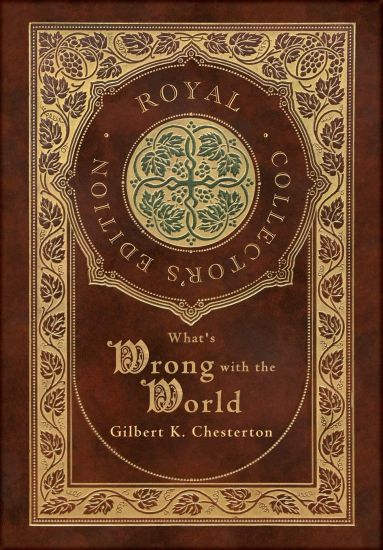
What's Wrong with the World (Royal Collector's Edition) (Case Laminate Hardcover with Jacket)
Gilbert K Chesterton
Royal Classics
2021
sidottu
In What's Wrong With the World Gilbert K. Chesterton identified many things wrong with the world, including social evil, prejudices that stop people from discussing social solutions in open and honest forums, an inability to learn from the past, the destruction of the family unit, the dehumanization of modern industrialism, and commercialism. Chesterton wrote about 80 books, several hundred poems, some 200 short stories, 4000 essays, and several plays. He was a literary and social critic, historian, playwright, novelist, Catholic theologian and apologist, debater, and mystery writer. He was a columnist for the Daily News, The Illustrated London News, and his own paper, G. K.'s Weekly. Chesterton's writings consistently displayed wit and a sense of humour. He employed paradox, while making serious comments on the world, government, politics, economics, philosophy, theology and many other topics. This case laminate collector's edition includes a Victorian inspired dust-jacket.
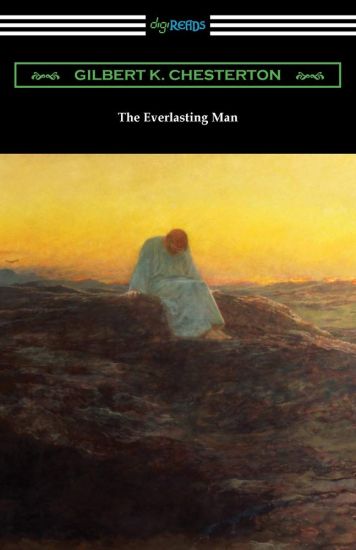
First published in 1925, "The Everlasting Man" by G. K. Chesterton is a powerful argument against the theories of evolution and comparative religion. Chesterton deeply disagreed with the view of animal and human evolution popularized by "The Outline of History" written by H. G. Wells in 1919. Wells argued that human civilization was nothing more than a logical progression from simple animal life and that Jesus Christ was no more than a charismatic leader. In Wells' view, the Christian religion was merely one amongst many and nothing more. Armed with persuasive arguments and research, Chesterton sought to prove that man was far more than just a special kind of animal and that Jesus was more than just a charismatic individual. Chesterton argues that humans are quite unlike any other animal on earth and have achieved more and understand more than would be possible without the presence of a divine creator. Christianity provides its believers with a true answer to the chaos and suffering the world experienced before Jesus brought his message to his disciples. "The Everlasting Man" made a lasting impression on such respected authors as C. S. Lewis and continues to inspire the faithful with its compelling defense of Christianity. This edition is printed on premium acid-free paper.

Saint Francis of Assisi is the founder of the Franciscan Order and one of the most influential figures of medieval Christian history. First published in 1923, G. K. Chesterton's "St. Francis of Assisi" is considered by many to be the definitive biography of the beloved religious leader and saint. Saint Francis was born to a prosperous merchant family and lived his early life carefree and consumed with material possessions. He underwent a religious conversion as a young adult and began to devote himself to a life of poverty and faith. While Saint Francis was never formally educated or ordained as a priest, he traveled the countryside preaching and built a strong following of faithful devotees who were inspired by his pure life of abstinence and piety. Saint Francis eventually received formal permission from the pope to create the Franciscan Order, which grew quickly. Centuries later, Saint Francis remains venerated the world over and is often associated with his love of animals and the natural world. "St. Francis of Assisi" is an engrossing and riveting portrayal of a man wholly devoted to his faith. This edition is printed on premium acid-free paper.
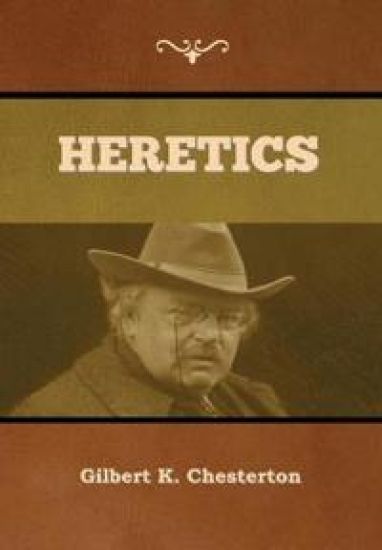
Gilbert Keith Chesterton KC*SG (29 May 1874 - 14 June 1936) was an English writer, philosopher, lay theologian, and literary and art critic. He has been referred to as the "prince of paradox". Time magazine observed of his writing style: "Whenever possible Chesterton made his points with popular sayings, proverbs, allegories--first carefully turning them inside out." Chesterton created the fictional priest-detective Father Brown, and wrote on apologetics. Even some of those who disagree with him have recognised the wide appeal of such works as Orthodoxy and The Everlasting Man. Chesterton routinely referred to himself as an "orthodox" Christian, and came to identify this position more and more with Catholicism, eventually converting to Catholicism from High Church Anglicanism. George Bernard Shaw, his "friendly enemy", said of him, "He was a man of colossal genius." Biographers have identified him as a successor to such Victorian authors as Matthew Arnold, Thomas Carlyle, Cardinal John Henry Newman, and John Ruskin. (wikipedia.org)
Gilbert Keith Chesterton KC*SG (29 May 1874 - 14 June 1936) was an English writer, philosopher, lay theologian, and literary and art critic. He has been referred to as the "prince of paradox". Time magazine observed of his writing style: "Whenever possible Chesterton made his points with popular sayings, proverbs, allegories--first carefully turning them inside out." Chesterton created the fictional priest-detective Father Brown, and wrote on apologetics. Even some of those who disagree with him have recognised the wide appeal of such works as Orthodoxy and The Everlasting Man. Chesterton routinely referred to himself as an "orthodox" Christian, and came to identify this position more and more with Catholicism, eventually converting to Catholicism from High Church Anglicanism. George Bernard Shaw, his "friendly enemy", said of him, "He was a man of colossal genius." Biographers have identified him as a successor to such Victorian authors as Matthew Arnold, Thomas Carlyle, Cardinal John Henry Newman, and John Ruskin. (wikipedia.org)
This book has been considered by academicians and scholars of great significance and value to literature. This forms a part of the knowledge base for future generations. So that the book is never forgotten we have represented this book in a print format as the same form as it was originally first published. Hence any marks or annotations seen are left intentionally to preserve its true nature.
The Paradoxes of Mr. Pond is G. K. Chesterton's final collection of detective stories, published after his death in 1936. The main characters in the book are Mr. Pond, his friend Captain Peter Gahagan, a romantic and impulsive Irishman, and a well-known government official, Sir Hubert Wotton. Also mentioned in more than one chapter are Violet Varney, an actress, and her sister Joan, to whom Gahagan proposes after being suspected of having an affair with Lord Crome's wife in "Ring of Lovers". Joan, now married to Gahagan, appears in the framing sequence of "A Tall Story". (wikipedia.org)
The Paradoxes of Mr. Pond is G. K. Chesterton's final collection of detective stories, published after his death in 1936. The main characters in the book are Mr. Pond, his friend Captain Peter Gahagan, a romantic and impulsive Irishman, and a well-known government official, Sir Hubert Wotton. Also mentioned in more than one chapter are Violet Varney, an actress, and her sister Joan, to whom Gahagan proposes after being suspected of having an affair with Lord Crome's wife in "Ring of Lovers". Joan, now married to Gahagan, appears in the framing sequence of "A Tall Story". (wikipedia.org)
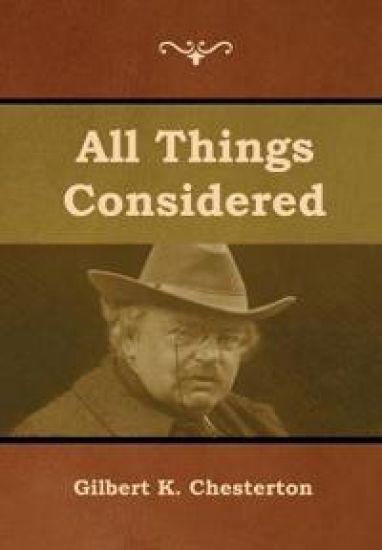
G. K. Chesterton is well known as a novelist, essayist, storyteller, poet, philosopher, theologian, historian, artist, and critic. He's less well-known as a journalist these days, yet all evidence indicates that he viewed his work for the various newspapers as his primary raison-de-etre. "All Things Considered" brings together about thirty columns that Chesterton wrote for the London Daily News in the years before World War I. There's no theme here; as the title suggests, this is a hodgepodge that wanders over everything imaginable. The only unifying thread is high quality.
A book by G. K. Chesterton detailing a popular theme both in his own philosophy, and in Christianity, of the 'holy fool', such as in Dostoevsky's The Idiot and Cervantes' Don Quixote. This is a book in two parts. The first, "The Enigma of Innocent Smith," concerns the arrival of a new tenant at Beacon House, a London boarding establishment. Like Mary Poppins, this man (who is tentatively identified by lodger Arthur Inglewood as an ex-schoolmate named Innocent Smith) is accompanied by a great wind, and he breathes new life into the household with his games and antics. During his first day in residence the eccentric Smith creates the High Court of Beacon; arranges to elope with Mary Gray, paid companion to heiress Rosamund Hunt; inspires Inglewood to declare his love for Diana Duke, the landlady's daughter; and prompts a reconciliation between jaded journalist Michael Moon and Rosamund. However, when the household is at its happiest two doctors appear with awful news: Smith is wanted on charges of burglary, desertion of a spouse, polygamy, and attempted murder. The fact that Smith almost immediately fires several shots from a revolver at Inglewood's friend Dr. Herbert Warner seems to confirm the worst. Before Smith can be taken to a jail or an asylum, Michael Moon declares that the case falls under the purview of the High Court of Beacon and suggests that the household investigate the matter before involving the authorities or the press. The second part, "The Explanations of Innocent Smith," follows the trial. The prosecution consists of Moses Gould, a merrily cynical Jew who lives at Beacon House and considers Smith at best a fool and at worst a scoundrel, and Dr. Cyrus Pym, an American criminal specialist called in by Dr. Warner; Michael Moon and Arthur Inglewood act for the defense. The evidence consists of correspondence from people who witnessed or participated in the exploits that led to the charges against Smith. In every case, the defendant is revealed to be, as his first name states, innocent. He fires bullets near people to make them value life; the house he breaks into is his own; he travels around the world only to return with renewed appreciation for his house and family; and the women he absconded with are actually his wife Mary, posing as a spinster under different aliases so they may repeatedly re-enact their courtship. Smith is, needless to say, acquitted on all charges. Movie adaptation Dale Ahlquist (president of the American Chesterton Society and host of the EWTN series, G. K. Chesterton: The Apostle of Common Sense) is the executive producer of a motion picture version of Manalive. In 2006 he teamed up with screenwriter/producer/director, Joey Odendahl. They eventually formed Moonhunt Productions, and Manalive is to be their first feature. It will star Mark Shea as Innocent Smith and Kevin O'Brian as Professor Eames. As of 2009, the movie has completed filming and is in the post-production phase. (Wikipedia)
A book by G. K. Chesterton detailing a popular theme both in his own philosophy, and in Christianity, of the 'holy fool', such as in Dostoevsky's The Idiot and Cervantes' Don Quixote. This is a book in two parts. The first, "The Enigma of Innocent Smith," concerns the arrival of a new tenant at Beacon House, a London boarding establishment. Like Mary Poppins, this man (who is tentatively identified by lodger Arthur Inglewood as an ex-schoolmate named Innocent Smith) is accompanied by a great wind, and he breathes new life into the household with his games and antics. During his first day in residence the eccentric Smith creates the High Court of Beacon; arranges to elope with Mary Gray, paid companion to heiress Rosamund Hunt; inspires Inglewood to declare his love for Diana Duke, the landlady's daughter; and prompts a reconciliation between jaded journalist Michael Moon and Rosamund. However, when the household is at its happiest two doctors appear with awful news: Smith is wanted on charges of burglary, desertion of a spouse, polygamy, and attempted murder. The fact that Smith almost immediately fires several shots from a revolver at Inglewood's friend Dr. Herbert Warner seems to confirm the worst. Before Smith can be taken to a jail or an asylum, Michael Moon declares that the case falls under the purview of the High Court of Beacon and suggests that the household investigate the matter before involving the authorities or the press. The second part, "The Explanations of Innocent Smith," follows the trial. The prosecution consists of Moses Gould, a merrily cynical Jew who lives at Beacon House and considers Smith at best a fool and at worst a scoundrel, and Dr. Cyrus Pym, an American criminal specialist called in by Dr. Warner; Michael Moon and Arthur Inglewood act for the defense. The evidence consists of correspondence from people who witnessed or participated in the exploits that led to the charges against Smith. In every case, the defendant is revealed to be, as his first name states, innocent. He fires bullets near people to make them value life; the house he breaks into is his own; he travels around the world only to return with renewed appreciation for his house and family; and the women he absconded with are actually his wife Mary, posing as a spinster under different aliases so they may repeatedly re-enact their courtship. Smith is, needless to say, acquitted on all charges. Movie adaptation Dale Ahlquist (president of the American Chesterton Society and host of the EWTN series, G. K. Chesterton: The Apostle of Common Sense) is the executive producer of a motion picture version of Manalive. In 2006 he teamed up with screenwriter/producer/director, Joey Odendahl. They eventually formed Moonhunt Productions, and Manalive is to be their first feature. It will star Mark Shea as Innocent Smith and Kevin O'Brian as Professor Eames. As of 2009, the movie has completed filming and is in the post-production phase. (Wikipedia)