Kirjojen hintavertailu – 12 903 725 kirjaa ja 27 kauppaa

Kirjailija

Gilbert K Chesterton

Kirjat ja teokset yhdessä paikassa: 140 kirjaa, julkaisuja vuosilta 2008–2025, suosituimpiin kuuluu Father Brown Mysteries 5 Book Box Set by G.K. Chesterton. Vertaile teosten hintoja ja tarkista saatavuus suomalaisista kirjakaupoista.

Nimi esiintyy myös muodoissa: Gilbert K. Chesterton, Gilbert K.Chesterton, Gilbert. K. Chesterton

140 kirjaa

Kirjojen julkaisuvuodet: 2008–2025.

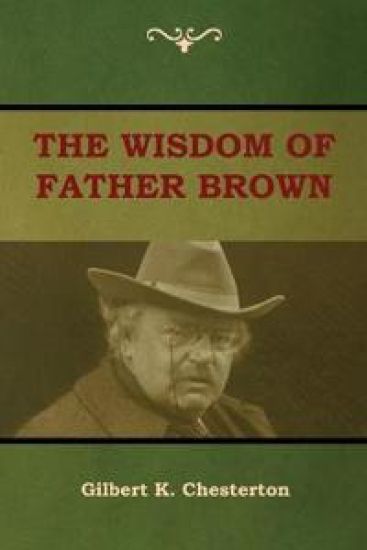
The Wisdom of Father Brown

The Wisdom of Father Brown

Gilbert K Chesterton

Indoeuropeanpublishing.com
2018
sidottu
Father Brown is a fictional Roman Catholic priest and amateur detective who is featured in 53 short stories published between 1910 and 1936 written by English novelist G. K. Chesterton. Father Brown solves mysteries and crimes using his intuition and keen understanding of human nature. Chesterton loosely based him on the Rt Rev. Msgr. John O'Connor (1870-1952), a parish priest in Bradford, who was involved in Chesterton's conversion to Catholicism in 1922.
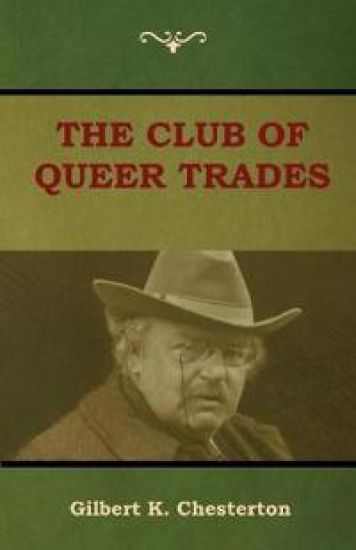
The Club of Queer Trades (The Club of Peculiar Trades)

The Club of Queer Trades (The Club of Peculiar Trades)

Gilbert K Chesterton

Indoeuropeanpublishing.com
2018
sidottu
Each story in the collection is centered on a person who is making his living by some novel and extraordinary means (a "queer trade," using the word "queer" in the sense of "peculiar"). To gain admittance one must have invented a unique means of earning a living and the subsequent trade being the main source of income.
The Wisdom of Father Brown

The Wisdom of Father Brown

Gilbert K Chesterton

Indoeuropeanpublishing.com
2018
pokkari
Father Brown is a fictional Roman Catholic priest and amateur detective who is featured in 53 short stories published between 1910 and 1936 written by English novelist G. K. Chesterton. Father Brown solves mysteries and crimes using his intuition and keen understanding of human nature. Chesterton loosely based him on the Rt Rev. Msgr. John O'Connor (1870-1952), a parish priest in Bradford, who was involved in Chesterton's conversion to Catholicism in 1922.
The Club of Queer Trades (The Club of Peculiar Trades)

The Club of Queer Trades (The Club of Peculiar Trades)

Gilbert K Chesterton

Indoeuropeanpublishing.com
2018
pokkari
Each story in the collection is centered on a person who is making his living by some novel and extraordinary means (a "queer trade," using the word "queer" in the sense of "peculiar"). To gain admittance one must have invented a unique means of earning a living and the subsequent trade being the main source of income.
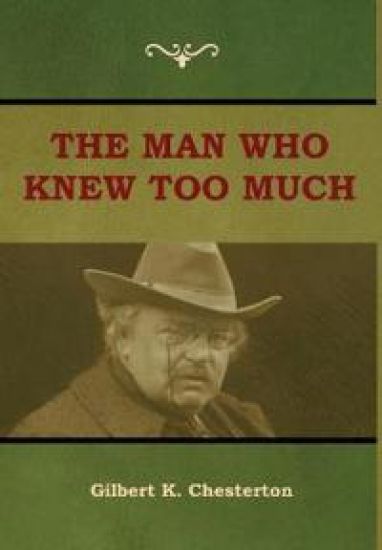
The Man Who Knew Too Much

The Man Who Knew Too Much

Gilbert K Chesterton

Indoeuropeanpublishing.com
2018
sidottu
The Man Who Knew Too Much and other stories (1922) is a book of detective stories by English writer G. K. Chesterton, published in 1922 by Cassell and Company in the United Kingdom, and Harper Brothers in the United States. The book contains eight connected short stories about "The Man Who Knew Too Much," and additional unconnected stories featuring separate heroes/detectives. The United States edition contained one of these additional stories: "The Trees of Pride," while the United Kingdom edition contained "Trees of Pride" and three more, shorter stories: "The Garden of Smoke," "The Five of Swords" and "The Tower of Treason."
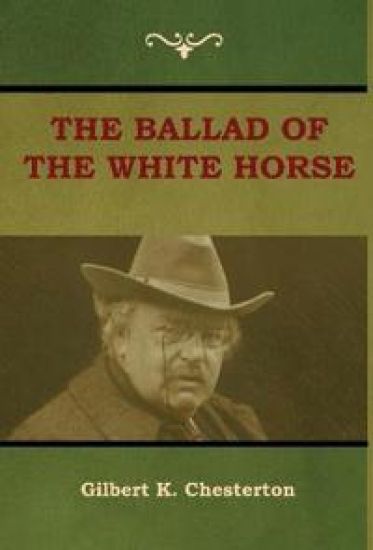
The Ballad of the White Horse

The Ballad of the White Horse

Gilbert K Chesterton

Indoeuropeanpublishing.com
2018
sidottu
The Ballad of the White Horse is a poem by G. K. Chesterton about the idealised exploits of the Saxon King Alfred the Great, published in 1911. Written in ballad form, the work has been described as one of the last great traditional epic poems ever written in the English language. The poem narrates how Alfred was able to defeat the invading Danes at the Battle of Ethandun under the auspices of God working through the agency of the Virgin Mary. In addition to being a narration of Alfred's military and political accomplishments, it is also considered a Roman Catholic allegory. Chesterton incorporates a significant amount of philosophy into the basic structure of the story. The poem consists of 2,684 lines of English verse. They are divided into stanzas, typically consisting of 4 to 6 lines each. The poem is based on the ballad stanza form, although the poem often departs significantly from it. Types of metrical feet are used more or less freely, although there is often basic repetition in a line. The rhyme scheme varies, often being ABCB or ABCCCB.
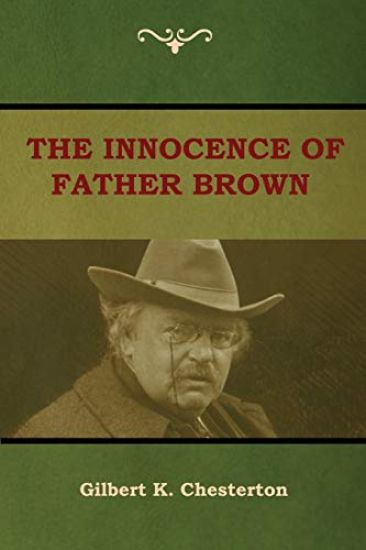
The Innocence of Father Brown

The Innocence of Father Brown

Gilbert K Chesterton

Indoeuropeanpublishing.com
2018
pokkari
Father Brown is a fictional Roman Catholic priest and amateur detective who is featured in 53 short stories published between 1910 and 1936 written by English novelist G. K. Chesterton. Father Brown solves mysteries and crimes using his intuition and keen understanding of human nature. Chesterton loosely based him on the Rt Rev. Msgr. John O'Connor (1870-1952), a parish priest in Bradford, who was involved in Chesterton's conversion to Catholicism in 1922.
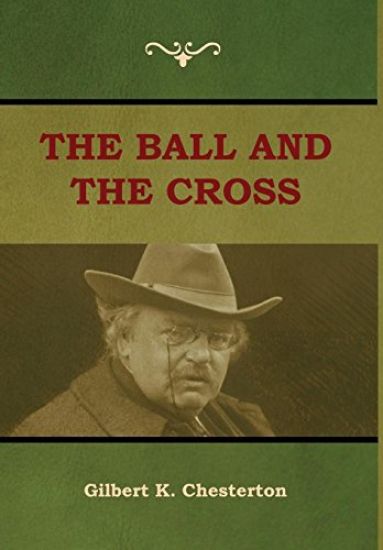
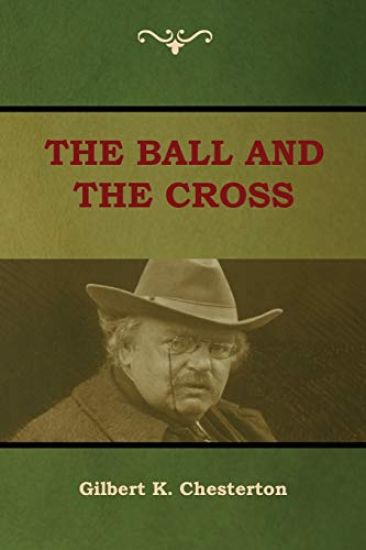
The Ball and The Cross

The Ball and The Cross

Gilbert K Chesterton

Indoeuropeanpublishing.com
2018
sidottu
The Ball and the Cross is a novel by G. K. Chesterton. The title refers to a more worldly and rationalist worldview, represented by a ball or sphere, and the cross representing Christianity. The first chapters of the book were serialized from 1905 to 1906 with the completed work published in 1909. The novel's beginning involves debates about rationalism and religion between a Professor Lucifer and a monk named Michael. A part of this section was quoted in Pope John Paul I's Illustrissimi letter to G. K. Chesterton. Much of the rest of the book concerns the dueling, figurative and somewhat more literal, of a Jacobite Catholic named Maclan and an atheist Socialist named Turnbull. Lynette Hunter has argued that the novel is more sympathetic to Maclan, but does indicate Maclan is also presented as in some ways too extreme. Turnbull, as well, is presented in a sympathetic light: both duelists are ready to fight for and die for their antagonistic opinions and, in doing so, develop a certain partnership that evolves into a friendship. The real antagonist is the world outside, which desperately tries to prevent from happening a duel over "mere religion" (a subject both duelists judge of utmost importance).
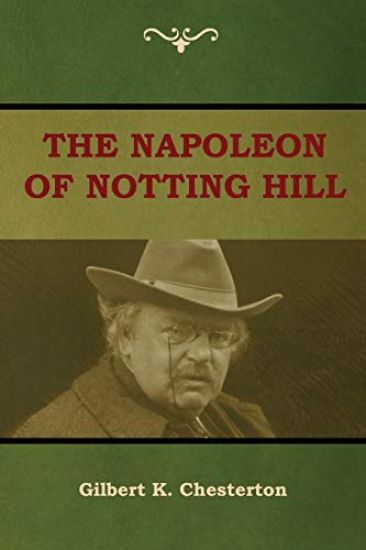
The Napoleon of Notting Hill

The Napoleon of Notting Hill

Gilbert K Chesterton

Indoeuropeanpublishing.com
2018
pokkari
The Napoleon of Notting Hill is a novel written by G. K. Chesterton in 1904, set in a nearly unchanged London in 1984. Although the novel is set in the future, it is, in effect, set in an alternative reality of Chesterton's own period, with no advances in technology or changes in the class system or attitudes. It postulates an impersonal government, not described in any detail, but apparently content to operate through a figurehead king, randomly chosen. The dreary succession of randomly selected Kings of England is broken up when Auberon Quin, who cares for nothing but a good joke, is chosen. To amuse himself, he institutes elaborate costumes for the provosts of the districts of London. All are bored by the King's antics except for one earnest young man who takes the cry for regional pride seriously - Adam Wayne, the eponymous Napoleon of Notting Hill. Michael Collins, who led the fight for Irish independence from British Rule, is known to have admired the book. There has been speculation that the setting of the book prompted the date chosen for the setting of George Orwell's Nineteen Eighty-Four. The novel is also quoted at the start of Neil Gaiman's novel Neverwhere. Both the novel and Chesterton's The Man Who Was Thursday are referenced in the 2000 video game Deus Ex.
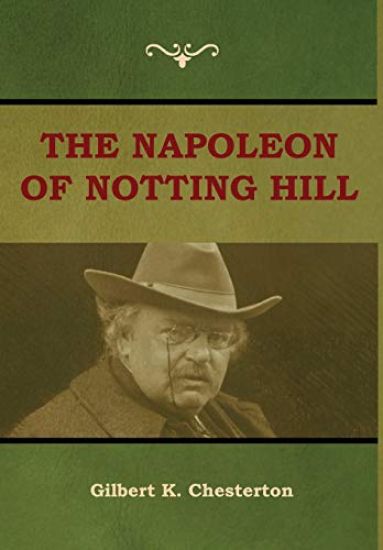
The Napoleon of Notting Hill

The Napoleon of Notting Hill

Gilbert K Chesterton

Indoeuropeanpublishing.com
2018
sidottu
The Napoleon of Notting Hill is a novel written by G. K. Chesterton in 1904, set in a nearly unchanged London in 1984. Although the novel is set in the future, it is, in effect, set in an alternative reality of Chesterton's own period, with no advances in technology or changes in the class system or attitudes. It postulates an impersonal government, not described in any detail, but apparently content to operate through a figurehead king, randomly chosen. The dreary succession of randomly selected Kings of England is broken up when Auberon Quin, who cares for nothing but a good joke, is chosen. To amuse himself, he institutes elaborate costumes for the provosts of the districts of London. All are bored by the King's antics except for one earnest young man who takes the cry for regional pride seriously - Adam Wayne, the eponymous Napoleon of Notting Hill. Michael Collins, who led the fight for Irish independence from British Rule, is known to have admired the book. There has been speculation that the setting of the book prompted the date chosen for the setting of George Orwell's Nineteen Eighty-Four. The novel is also quoted at the start of Neil Gaiman's novel Neverwhere. Both the novel and Chesterton's The Man Who Was Thursday are referenced in the 2000 video game Deus Ex.
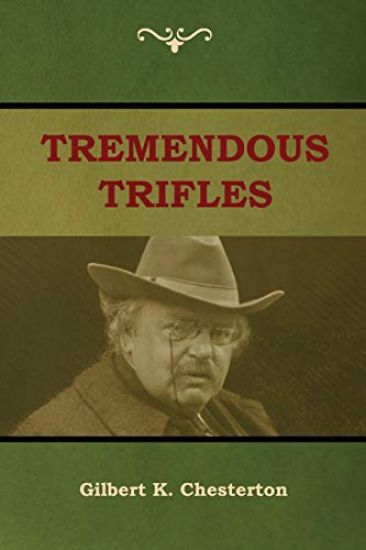
Tremendous Trifles

Tremendous Trifles

Gilbert K Chesterton

Indoeuropeanpublishing.com
2018
pokkari
Gilbert Keith Chesterton, KC*SG (29 May 1874 - 14 June 1936), was an English writer, poet, philosopher, dramatist, journalist, orator, lay theologian, biographer, and literary and art critic. Chesterton is often referred to as the "prince of paradox." Time magazine has observed of his writing style: "Whenever possible Chesterton made his points with popular sayings, proverbs, allegories--first carefully turning them inside out." ...
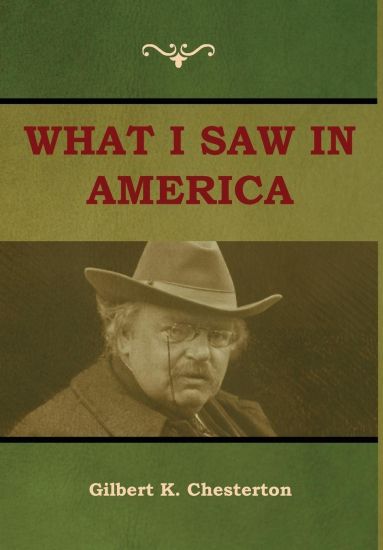
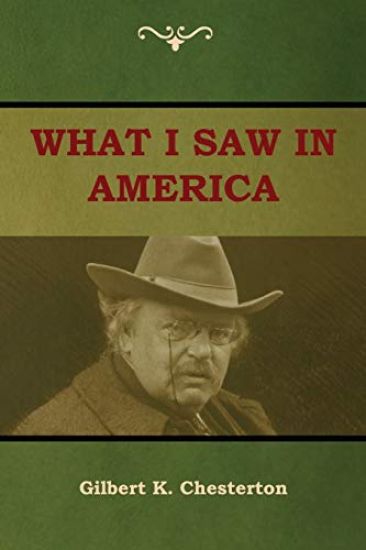
What I saw in America

What I saw in America

Gilbert K Chesterton

Indoeuropeanpublishing.com
2018
sidottu
Gilbert Keith Chesterton, KC*SG (29 May 1874 - 14 June 1936), was an English writer, poet, philosopher, dramatist, journalist, orator, lay theologian, biographer, and literary and art critic. Chesterton is often referred to as the "prince of paradox." Time magazine has observed of his writing style: "Whenever possible Chesterton made his points with popular sayings, proverbs, allegories--first carefully turning them inside out." Chesterton is well known for his fictional priest-detective Father Brown, and for his reasoned apologetics. Even some of those who disagree with him have recognised the wide appeal of such works as Orthodoxy and The Everlasting Man. Chesterton routinely referred to himself as an "orthodox" Christian, and came to identify this position more and more with Catholicism, eventually converting to Catholicism from High Church Anglicanism. George Bernard Shaw, his "friendly enemy," said of him, "He was a man of colossal genius." Biographers have identified him as a successor to such Victorian authors as Matthew Arnold, Thomas Carlyle, Cardinal John Henry Newman, and John Ruskin. (wikipedia.org)
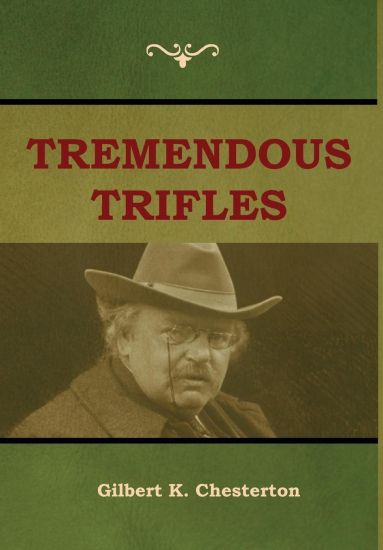
Tremendous Trifles

Tremendous Trifles

Gilbert K Chesterton

Indoeuropeanpublishing.com
2018
sidottu
Gilbert Keith Chesterton, KC*SG (29 May 1874 - 14 June 1936), was an English writer, poet, philosopher, dramatist, journalist, orator, lay theologian, biographer, and literary and art critic. Chesterton is often referred to as the "prince of paradox." Time magazine has observed of his writing style: "Whenever possible Chesterton made his points with popular sayings, proverbs, allegories--first carefully turning them inside out." Chesterton is well known for his fictional priest-detective Father Brown, and for his reasoned apologetics. Even some of those who disagree with him have recognised the wide appeal of such works as Orthodoxy and The Everlasting Man. Chesterton routinely referred to himself as an "orthodox" Christian, and came to identify this position more and more with Catholicism, eventually converting to Catholicism from High Church Anglicanism. George Bernard Shaw, his "friendly enemy," said of him, "He was a man of colossal genius." Biographers have identified him as a successor to such Victorian authors as Matthew Arnold, Thomas Carlyle, Cardinal John Henry Newman, and John Ruskin.

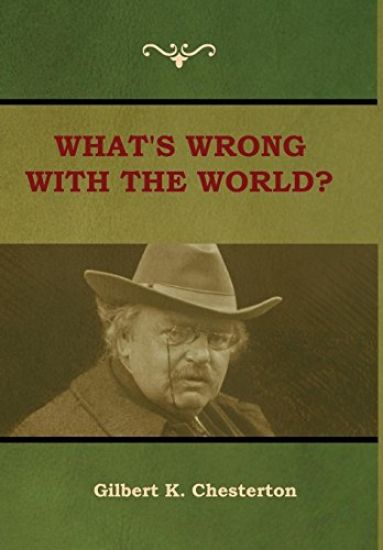
What's Wrong With the World?

What's Wrong With the World?

Gilbert K Chesterton

Indoeuropeanpublishing.com
2018
sidottu
Gilbert Keith Chesterton, KC*SG (29 May 1874 - 14 June 1936), was an English writer, poet, philosopher, dramatist, journalist, orator, lay theologian, biographer, and literary and art critic. Chesterton is often referred to as the "prince of paradox." Time magazine has observed of his writing style: "Whenever possible Chesterton made his points with popular sayings, proverbs, allegories--first carefully turning them inside out." Chesterton is well known for his fictional priest-detective Father Brown, and for his reasoned apologetics. Even some of those who disagree with him have recognised the wide appeal of such works as Orthodoxy and The Everlasting Man. Chesterton routinely referred to himself as an "orthodox" Christian, and came to identify this position more and more with Catholicism, eventually converting to Catholicism from High Church Anglicanism. George Bernard Shaw, his "friendly enemy," said of him, "He was a man of colossal genius." Biographers have identified him as a successor to such Victorian authors as Matthew Arnold, Thomas Carlyle, Cardinal John Henry Newman, and John Ruskin.
What I saw in America

What I saw in America

Gilbert K Chesterton

Indoeuropeanpublishing.com
2018
pokkari
"Let me begin my American impressions with two impressions I had before I went to America. One was an incident and the other an idea; and when taken together they illustrate the attitude I mean. The first principle is that nobody should be ashamed of thinking a thing funny because it is foreign; the second is that he should be ashamed of thinking it wrong because it is funny." (Chesterton)
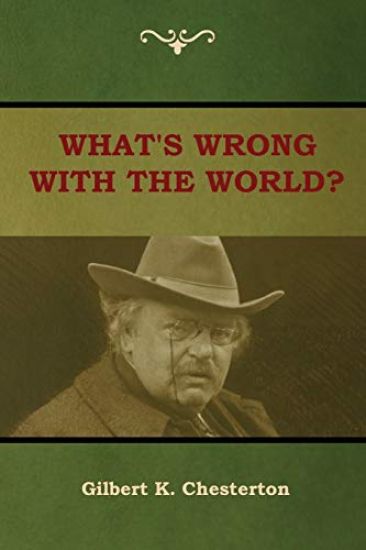
What's Wrong With the World?

What's Wrong With the World?

Gilbert K Chesterton

Indoeuropeanpublishing.com
2018
pokkari
Gilbert Keith Chesterton, KC*SG (29 May 1874 - 14 June 1936), was an English writer, poet, philosopher, dramatist, journalist, orator, lay theologian, biographer, and literary and art critic. Chesterton is often referred to as the "prince of paradox." Time magazine has observed of his writing style: "Whenever possible Chesterton made his points with popular sayings, proverbs, allegories--first carefully turning them inside out." Chesterton is well known for his fictional priest-detective Father Brown, and for his reasoned apologetics. Even some of those who disagree with him have recognised the wide appeal of such works as Orthodoxy and The Everlasting Man. Chesterton routinely referred to himself as an "orthodox" Christian, and came to identify this position more and more with Catholicism, eventually converting to Catholicism from High Church Anglicanism. George Bernard Shaw, his "friendly enemy," said of him, "He was a man of colossal genius." Biographers have identified him as a successor to such Victorian authors as Matthew Arnold, Thomas Carlyle, Cardinal John Henry Newman, and John Ruskin.
The Ball and The Cross

The Ball and The Cross

Gilbert K Chesterton

Indoeuropeanpublishing.com
2018
pokkari
The Ball and the Cross is a novel by G. K. Chesterton. The title refers to a more worldly and rationalist worldview, represented by a ball or sphere, and the cross representing Christianity. The first chapters of the book were serialized from 1905 to 1906 with the completed work published in 1909. The novel's beginning involves debates about rationalism and religion between a Professor Lucifer and a monk named Michael. A part of this section was quoted in Pope John Paul I's Illustrissimi letter to G. K. Chesterton. Much of the rest of the book concerns the dueling, figurative and somewhat more literal, of a Jacobite Catholic named Maclan and an atheist Socialist named Turnbull. Lynette Hunter has argued that the novel is more sympathetic to Maclan, but does indicate Maclan is also presented as in some ways too extreme. Turnbull, as well, is presented in a sympathetic light: both duelists are ready to fight for and die for their antagonistic opinions and, in doing so, develop a certain partnership that evolves into a friendship. The real antagonist is the world outside, which desperately tries to prevent from happening a duel over "mere religion" (a subject both duelists judge of utmost importance).
Orthodoxy

Orthodoxy

Gilbert K Chesterton

Indoeuropeanpublishing.com
2018
pokkari
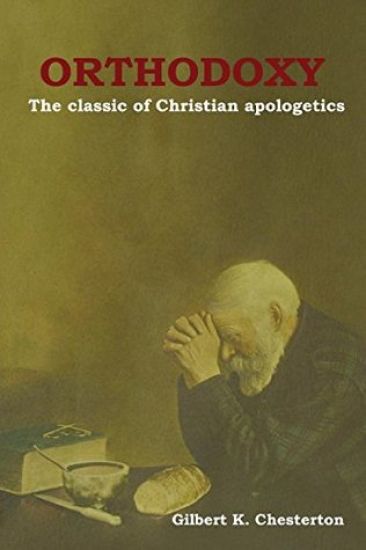
Orthodoxy is a book by G. K. Chesterton that has become a classic of Christian apologetics. Chesterton considered this book a companion to his other work, Heretics. In the book's preface Chesterton states the purpose is to "attempt an explanation, not of whether the Christian faith can be believed, but of how he personally has come to believe it." In it, Chesterton presents an original view of Christian religion. He sees it as the answer to natural human needs, the "answer to a riddle" in his own words, and not simply as an arbitrary truth received from somewhere outside the boundaries of human experience (wikipedia.org).
Orthodoxy

Orthodoxy

Gilbert K Chesterton

Indoeuropeanpublishing.com
2018
sidottu
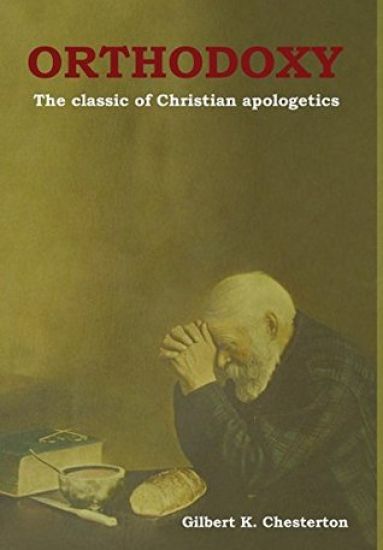
Orthodoxy is a book by G. K. Chesterton that has become a classic of Christian apologetics. Chesterton considered this book a companion to his other work, Heretics. In the book's preface Chesterton states the purpose is to "attempt an explanation, not of whether the Christian faith can be believed, but of how he personally has come to believe it." In it, Chesterton presents an original view of Christian religion. He sees it as the answer to natural human needs, the "answer to a riddle" in his own words, and not simply as an arbitrary truth received from somewhere outside the boundaries of human experience (wikipedia.org).