Kirjojen hintavertailu – 12 903 725 kirjaa ja 27 kauppaa
Kirjailija
Gilbert K Chesterton
Kirjat ja teokset yhdessä paikassa: 140 kirjaa, julkaisuja vuosilta 2008–2025, suosituimpiin kuuluu Father Brown Mysteries 5 Book Box Set by G.K. Chesterton. Vertaile teosten hintoja ja tarkista saatavuus suomalaisista kirjakaupoista.
Nimi esiintyy myös muodoissa: Gilbert K. Chesterton, Gilbert K.Chesterton, Gilbert. K. Chesterton
Heretics by Gilbert K. Chesterton. Heretics is a collection of 20 essays originally published by G. K. Chesterton in 1905. In his first essay, Chesterton describes his understanding of the words Orthodox and Heretic as they apply to, and have changed in, the modern period. Chesterton argues that in modernity, "The word 'orthodoxy' not only no longer means being right; it practically means being wrong". He continues to write that society no longer tolerates a man's life philosophy or religion, yet is increasingly absorbed in "art for art's sake". Nothing more strangely indicates an enormous and silent evil of modern society than the extraordinary use which is made nowadays of the word "orthodox." In former days the heretic was proud of not being a heretic. It was the kingdoms of the world and the police and the judges who were heretics. He was orthodox. He had no pride in having rebelled against them; they had rebelled against him. The armies with their cruel security, the kings with their cold faces, the decorous processes of State, the reasonable processes of law-all these like sheep had gone astray.
Trieste Publishing has a massive catalogue of classic book titles. Our aim is to provide readers with the highest quality reproductions of fiction and non-fiction literature that has stood the test of time. The many thousands of books in our collection have been sourced from libraries and private collections around the world. The titles that Trieste Publishing has chosen to be part of the collection have been scanned to simulate the original. Our readers see the books the same way that their first readers did decades or a hundred or more years ago. Books from that period are often spoiled by imperfections that did not exist in the original. Imperfections could be in the form of blurred text, photographs, or missing pages. It is highly unlikely that this would occur with one of our books. Our extensive quality control ensures that the readers of Trieste Publishing's books will be delighted with their purchase. Our staff has thoroughly reviewed every page of all the books in the collection, repairing, or if necessary, rejecting titles that are not of the highest quality. This process ensures that the reader of one of Trieste Publishing's titles receives a volume that faithfully reproduces the original, and to the maximum degree possible, gives them the experience of owning the original work. We pride ourselves on not only creating a pathway to an extensive reservoir of books of the finest quality, but also providing value to every one of our readers. Generally, Trieste books are purchased singly - on demand, however they may also be purchased in bulk. Readers interested in bulk purchases are invited to contact us directly to enquire about our tailored bulk rates.
Thank you for checking out this book by Theophania Publishing. We appreciate your business and look forward to serving you soon. We have thousands of titles available, and we invite you to search for us by name, contact us via our website, or download our most recent catalogues. Nothing more strangely indicates an enormous and silent evil of modern society than the extraordinary use which is made nowadays of the word "orthodox." In former days the heretic was proud of not being a heretic. It was the kingdoms of the world and the police and the judges who were heretics. He was orthodox. He had no pride in having rebelled against them; they had rebelled against him. The armies with their cruel security, the kings with their cold faces, the decorous processes of State, the reasonable processes of law-all these like sheep had gone astray. The man was proud of being orthodox, was proud of being right. If he stood alone in a howling wilderness he was more than a man; he was a church. He was the centre of the universe; it was round him that the stars swung. All the tortures torn out of forgotten hells could not make him admit that he was heretical. But a few modern phrases have made him boast of it. He says, with a conscious laugh, "I suppose I am very heretical," and looks round for applause. The word "heresy" not only means no longer being wrong; it practically means being clear-headed and courageous. The word "orthodoxy" not only no longer means being right; it practically means being wrong. All this can mean one thing, and one thing only. It means that people care less for whether they are philosophically right. For obviously a man ought to confess himself crazy before he confesses himself heretical. The Bohemian, with a red tie, ought to pique himself on his orthodoxy. The dynamiter, laying a bomb, ought to feel that, whatever else he is, at least he is orthodox.
This collection of literature attempts to compile many of the classic works that have stood the test of time and offer them at a reduced, affordable price, in an attractive volume so that everyone can enjoy them.
Heretics by Gilbert K. Chesterton. Heretics is a collection of 20 essays originally published by G. K. Chesterton in 1905. Contents1. Introductory Remarks on the Importance of Othodoxy 2. On the Negative Spirit 3. On Mr. Rudyard Kipling and Making the World Small 4. Mr. Bernard Shaw 5. Mr. H. G. Wells and the Giants 6. Christmas and the Esthetes 7. Omar and the Sacred Vine 8. The Mildness of the Yellow Press 9. The Moods of Mr. George Moore 10. On Sandals and Simplicity 11. Science and the Savages 12. Paganism and Mr. Lowes Dickinson 13. Celts and Celtophiles 14. On Certain Modern Writers and the Institution of the Family 15. On Smart Novelists and the Smart Set 16. On Mr. McCabe and a Divine Frivolity 17. On the Wit of Whistler 18. The Fallacy of the Young Nation 19. Slum Novelists and the Slums 20. Concluding Remarks on the Importance of Orthodoxy
Mixing theology and detective mystery, this book of short stories central around the same character and the struggles of his philosophical and theological ideas as he struggles with the politicians and criminals around him in whether a decision is the best for the greater good or else whether greater chaos will ensue. This book is an exciting read for any lover of detective fiction and theology as dialogue goes around both.
El regreso de don Quijote (1926), aparecida por entregas en la revista GK's Weekly, es la ltima novela de Chesterton y uno de los m s hermosos homenajes que jam s se hayan rendido al Quijote y a Cervantes. Michael Herne, un bibliotecario experto en la cultura hitita y ajeno al mundo moderno, tras interpretar el papel de un rey medieval en una obra de teatro, decide no quitarse el disfraz y encabezar, en la vida real, un golpe de Estado bufonesco contra la industria y la sociedad moderna, para el que cuenta, en un principio, con el apoyo de los nobles. En esta peculiar obra que podr a calificarse de sociolog a ficci n Chesterton da rienda suelta a su fabulosa imaginaci n, aunque sin despegar los pies del suelo, y crea un pu ado de personajes nicos, signados todos por el sello del quijotismo: el bibliotecario loco que se cree Ricardo Coraz n de Le n; un noble calavera que encarna como ninguno el quijotismo, en tanto que es desfacedor de entuertos y h roe aut ntico de esta novela; un sindicalista de la miner a al que Chesterton glorifica en su lucha contra la aristocracia, que no sale muy bien parada en esta l cida y disparatada f bula; dos hermosas mujeres que a su vez dan divertida r plica a la Dulcinea cervantina, y un sinf n de personajes que permiten al creador del Padre Brown alimentar su vena sat rica y caricaturizar personajes relevantes de su tiempo.
El regreso de don Quijote (1926), aparecida por entregas en la revista GK's Weekly, es la ltima novela de Chesterton y uno de los m s hermosos homenajes que jam s se hayan rendido al Quijote y a Cervantes. Michael Herne, un bibliotecario experto en la cultura hitita y ajeno al mundo moderno, tras interpretar el papel de un rey medieval en una obra de teatro, decide no quitarse el disfraz y encabezar, en la vida real, un golpe de Estado bufonesco contra la industria y la sociedad moderna, para el que cuenta, en un principio, con el apoyo de los nobles. En esta peculiar obra que podr a calificarse de sociolog a ficci n Chesterton da rienda suelta a su fabulosa imaginaci n, aunque sin despegar los pies del suelo, y crea un pu ado de personajes nicos, signados todos por el sello del quijotismo: el bibliotecario loco que se cree Ricardo Coraz n de Le n; un noble calavera que encarna como ninguno el quijotismo, en tanto que es desfacedor de entuertos y h roe aut ntico de esta novela; un sindicalista de la miner a al que Chesterton glorifica en su lucha contra la aristocracia, que no sale muy bien parada en esta l cida y disparatada f bula; dos hermosas mujeres que a su vez dan divertida r plica a la Dulcinea cervantina, y un sinf n de personajes que permiten al creador del Padre Brown alimentar su vena sat rica y caricaturizar personajes relevantes de su tiempo.
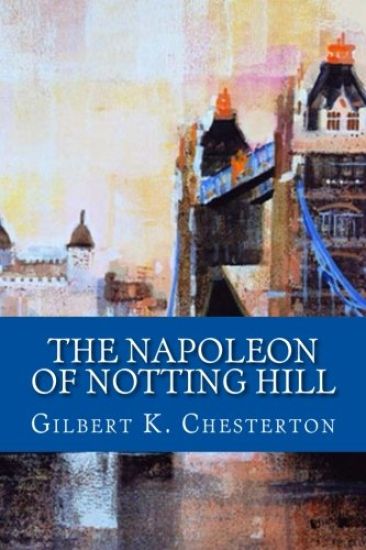
When a new king is selected and Auberon Quin is randomly chosen, he institutes a series of reforms that many of his new leaders find boring and childish. While Quin enjoys a good joke, a young leader named Adam Wayne takes things very seriously even going to war with neighbouring boroughs. Although written mainly as a comedic work, Chesterton philosophically explores the actions of man and respect for each other.
The Man Who Knew Too Much and other stories (1922) is a book of detective stories by English writer G. K. Chesterton, published in 1922 by Cassell and Company in the United Kingdom, and Harper Brothers in the United States. The book contains eight connected short stories about "The Man Who Knew Too Much", and additional unconnected stories featuring separate heroes/detectives. The United States edition contained one of these additional stories: "The Trees of Pride", while the United Kingdom edition contained "Trees of Pride" and three more, shorter stories: "The Garden of Smoke", "The Five of Swords" and "The Tower of Treason". Horne Fisher, "The Man Who Knew Too Much", is the main protagonist of the first eight stories. In the final story, "The Vengeance of the Statue", Fisher notes: "The Prime Minister is my father's friend. The Foreign Minister married my sister. The Chancellor of the Exchequer is my first cousin." Because of these intimate relationships with the leading political figures in the land, Fisher knows too much about the private politics behind the public politics of the day. This knowledge is a burden to him in the eight stories, because he is able to uncover the injustices and corruptions of the murders in each story, but in most cases the real killer gets away with the killing because to bring him openly to justice would create a greater chaos: starting a war, reinciting Irish rebellions or removing public faith in the government. In the seventh story, "The Fad of the Fisherman", the Prime Minister himself is the murderer, who kills the financier whose country house he is visiting because the financier is trying to start a war with Sweden over "the Danish ports". By killing his host, the Prime Minister seeks to avoid a war in which many more people would die, and the financier would profit at the cost of thousands of lives. In "The Vanishing Prince", an Irish rebel, Michael, is cornered in a tower, but a junior policeman named Wilson kills two senior police officers to be promoted in the field to become officer in charge of the case. He then tries to blame the two murders on the rebel to ensure he is hung. The rebel, otherwise a gentleman, is enraged and shoots (but only wounds) Wilson. Fisher, however, is forced to arrest Michael: "Wilson recovered, and we managed to persuade him to retire. But we had to pension that damnable murderer more magnificently than any hero who ever fought for England. I managed to save Michael from the worst, but we had to send that perfectly innocent man to penal servitude for a crime we know he never committed; but it was only afterwards that we could connive in a sneakish way at his escape. And Sir Walter Carey is Prime Minister of this country, which he would probably never have been if the truth had been told of such a horrible scandal in his department. It might have done for us altogether in Ireland; it would certainly have done for him. And he is my father's oldest friend, and has always smothered me in kindness. I am too tangled up in the whole thing, you see, and I was certainly never born to set it right." Fisher is accompanied in the stories by a political journalist, Harold March, but rather than being his "Watson", the stories are all written in the third person. Less a clumsy foil to reflect Fisher's brilliance, March is more of a sounding board for Fisher to discuss Chesterton's paradoxes and philosophy. Apart from the first story, in which March meets Fisher, and the final story, the stories have no internal chronology, and so can be read in any order.... Gilbert Keith Chesterton, KC*SG (29 May 1874 - 14 June 1936), better known as G. K. Chesterton, was an English writer, poet, philosopher, dramatist, journalist, orator, lay theologian, biographer, and literary and art critic. WILLIAM HATHERELL (1855-1928). William Hatherell was a Victorian era illustrator who worked for magazines such as The Graphic, Harpers, Scribner's and the Century.
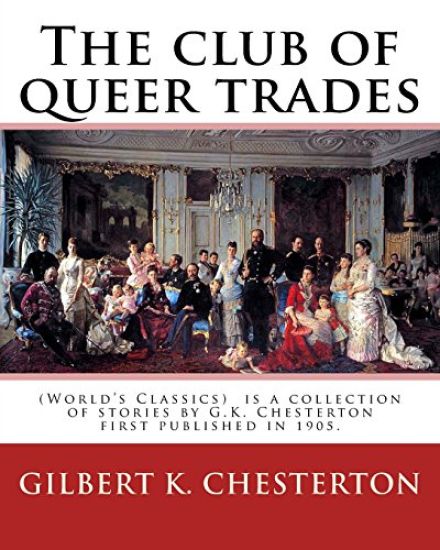
The Club of Queer Trades is a collection of stories by G. K. Chesterton first published in 1905. Each story in the collection is centered on a person who is making his living by some novel and extraordinary means (a "queer trade"). Contents: The Tremendous Adventures of Major Brown The Painful Fall of a Great Reputation The Awful Reason of the Vicar's Visit The Singular Speculation of the House-agent The Noticeable Conduct of Professor Chadd The Eccentric Seclusion of the Old Lady Gilbert Keith Chesterton, (29 May 1874 - 14 June 1936), better known as G. K. Chesterton, was an English writer, poet, philosopher, dramatist, journalist, orator, lay theologian, biographer, and literary and art critic. Chesterton is often referred to as the "prince of paradox". Time magazine has observed of his writing style: "Whenever possible Chesterton made his points with popular sayings, proverbs, allegories-first carefully turning them inside out." Chesterton is well known for his fictional priest-detective Father Brown, and for his reasoned apologetics. Even some of those who disagree with him have recognised the wide appeal of such works as Orthodoxy and The Everlasting Man. Chesterton, as a political thinker, cast aspersions on both Progressivism and Conservatism, saying, "The whole modern world has divided itself into Conservatives and Progressives. The business of Progressives is to go on making mistakes. The business of the Conservatives is to prevent the mistakes from being corrected." Chesterton routinely referred to himself as an "orthodox" Christian, and came to identify this position more and more with Catholicism, eventually converting to Catholicism from High Church Anglicanism. George Bernard Shaw, Chesterton's "friendly enemy" according to Time, said of him, "He was a man of colossal genius." Biographers have identified him as a successor to such Victorian authors as Matthew Arnold, Thomas Carlyle, Cardinal John Henry Newman, and John Ruskin.