Kirjailija
Giuseppe Verdi
Kirjat ja teokset yhdessä paikassa: 123 kirjaa, julkaisuja vuosilta 1977–2026, suosituimpiin kuuluu Requiem to the Memory of Alessandro Manzoni. Vertaile teosten hintoja ja tarkista saatavuus suomalaisista kirjakaupoista.
123 kirjaa
Kirjojen julkaisuvuodet: 1977–2026.
Giuseppe Verdi's Falstaff. Full score. Complete and unabridged, this reproduction of the original G. Ricordi score presents Verdi's last great work.
Otello, Verdi's penultimate opera, was composed more than a dozen years after Aida, which he had intended to be his last work for the stage. He was persuaded by his publisher Giulio Ricordi to work with the librettist Arrigo Boito on an adaptation of Shakespeare's Othello; the resulting work is one of the supreme examples of Italian opera. Greeted with enormous enthusiasm at its premiere at La Scala in 1887, Otello immediately went on to huge success in all the major opera houses of the world. The richness of its musical and dramatic inventiveness is largely unmatched in Verdi's output, and its title role is perhaps the most demanding for the tenor in any Italian opera. This volume contains articles describing how Verdi was persuaded to write the opera and extracts from the extended correspondence between Verdi and Boito during the period of composition, as well as a detailed musical commentary and a historical survey of important productions and performers of the principal roles. The guide includes the full libretto with English translation, a discography, a bibliography, and DVD and website guides.
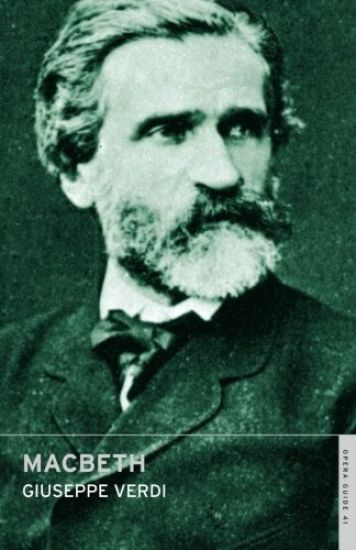
Macbeth
Francesco Maria Piave; Giuseppe Verdi
Createspace Independent Publishing Platform
2014
nidottu
Jérusalem
Alphonse Royer; Gustave Vaez; Giuseppe Verdi
Createspace Independent Publishing Platform
2014
nidottu
Title: J rusalem Composer: Giuseppe Verdi Original Publisher: Bureau Centrale de Musique The complete vocal score to Verdi's J rusalem as originally published by the Bureau Centrale de Musique in 1847. Performer's Reprints are produced in conjunction with the International Music Score Library Project. These are out of print or historical editions, which we clean, straighten, touch up, and digitally reprint. Due to the age of original documents, you may find occasional blemishes, damage, or skewing of print. While we do extensive cleaning and editing to improve the image quality, some items are not able to be repaired. A portion of each book sold is donated to small performing arts organizations to create jobs for performers and to encourage audience growth.
Verdis Opera Rigoletto: Containing the Italian Text, with an English Translation (1888)
Giuseppe Verdi; Francesco Maria Piave; Victor Hugo
Literary Licensing, LLC
2014
nidottu
Grand Opera Librettos: Rigoletto, Italian and English Text and Music of the Principal Airs
Giuseppe Verdi
Literary Licensing, LLC
2014
nidottu
Verdi's "Attila", his ninth opera, had its premiere at Venice's Teatro La Fenice in March 1846. Based on the German play Attila, King of the Huns, the libretto has its own storied history: as Verdi fell seriously ill before the work's completion, the main librettist moved permanently to Madrid, leaving the last act of Attila only a sketch. It was then that Verdi called upon Francesco Maria Piave, the librettist for two of his earlier works, who at the composer's behest scratched plans for a large choral finale and decided instead to concentrate on the dramatic roles of the protagonists. In the years since Attila has become one of Verdi's most popular and oftstaged early works. The composer's inimitable vitality, soaring arcs of melody, grand choruses, and passion are here amply apparent. This critical edition, based on Verdi's autograph full score preserved at the British Library, restores the opera's original text and accurately reflects the composer's colorful and elaborate musical setting, while Helen Greenwald's masterly introduction discusses the opera's origins, sources, and performance questions, and her critical commentary details editorial problems and their solutions.
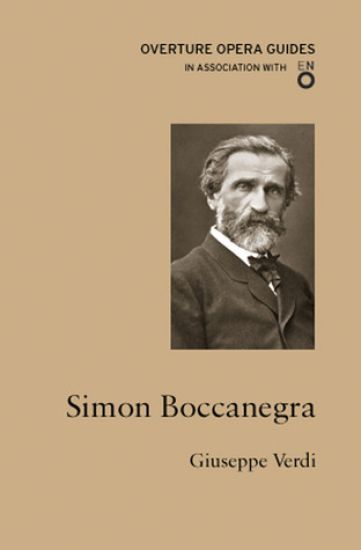
Verdi's Simon Boccanegra exists in two versions: that of the 1857 original and that of the 1881 revision. The texts of the libretto of both versions are included in this guide, with a number of essays which focus on the differences between the two. Rodolfo Celleti provides the story's historical context, setting the events of the real life of Simon Boccanegra against the unification of Italy, which formed the political backdrop to the composition of both versions of Verdi's opera. James A. Hepokoski gives a detailed synopsis of the 1881 score, and indicates the ways in which Verdi radically revised the original and reworked it to fit his late style. Lastly, Desmond Shawe-Taylor discusses Verdi's attitude to his singers, and the critical reception that performances of both versions of the opera received. This edition contains over twenty illustrations, a thematic guide and the texts of the libretti in the original with literal translations. There is also a bibilography, discography and DVD guide, together with a list of websites that will allow the reader to explore the opera further.
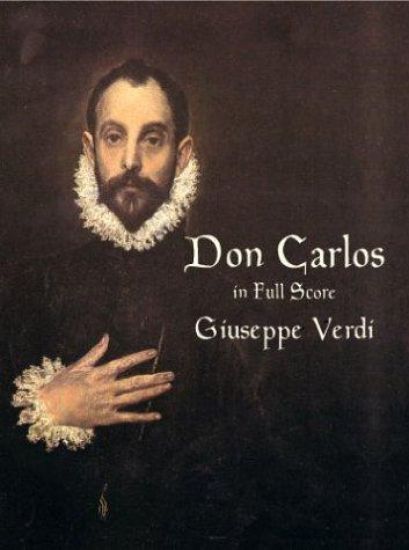
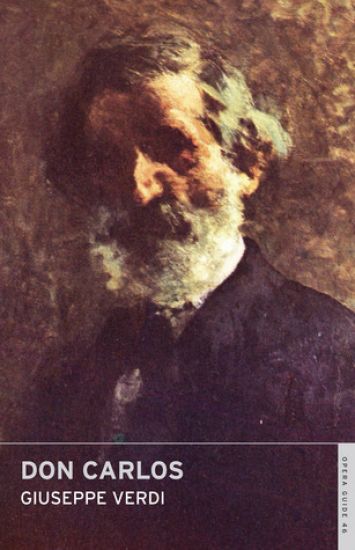
Based on the play by Schiller about tragic love and intrigue at the court of Philip II of Spain, Don Carlos is among the most complex and challenging of Verdi's works. The composer revised the opera twice in the 20 years following its 1867 debut at the Paris Opéra, incorporating into it the musical ideas that later culminated in such masterpieces as Otello and Falstaff. For that reason Don Carlos is much studied by students and performers, who will welcome this new edition of the final version. It is reprinted from the authoritative G. Ricordi edition. Note. Credits and Characters. Annotated Contents. Instrumentation.
It used to be thought that Verdi miscalculated with this attempt at a “grand opera” in the French style. This guide demonstrates that Don Carlos was – and remains – an extraordinary achievement in melding two opposing visions of opera: the spectacular public aspect of the French tradition with the dramatic concision of the Italian. And because of the variety of versions which Verdi sanctioned, this debate is open-ended. Contents: A Grand Opera with a Difference, Julian Budden; Off the Beaten Track, Gilles de Van; “A Family Portrait in a Royal Household”: ‘Don Carlos’ from Schiller to Verdi, F. J. Lamport; Stendhal’s ‘Don Carlos’: “The most moving opera ever written”, by Nicholas Cronk; Don Carlos: Grand Opera in Five Acts by Joseph Méry and Camille du Locle; Don Carlo: Italian translation by Achille de Lauzières and Angelo Zanardini with additional material translated by Piero Faggioni; Don Carlos: English translation by Andrew Porter; Introduction by Jennifer Batchelor
Verdi came to Shakespeare through Italian translation and had never seen Macbeth on stage when he wrote his first version of the opera in 1847. Giorgio Melchiori draws a parallel between the conditions in which the playwright and the composer were working and compares their achievements. The supernatural was a vital element in both conceptions: the opera is “in the fantastic style”, with bizarre music for the witches’ dances and choruses. Theatre historian Michael Booth vividly introduces the staging of Shakespeare in the nineteenth century. Harold Powers discusses how the dramatic situations lent themselves to the forms and purposes of Italian opera. Contents: ‘Macbeth’: Shakespeare to Verdi, Giorgio Melchiori; Making ‘Macbeth’ ‘Musicabile’, Harold Powers; ‘Macbeth’ and the Nineteenth-Century Theatre, Michael R. Booth; A Note on Shakespeare’s ‘Macbeth’, August Wilhelm Schlegel; The Preface in the Ricordi Libretto; Piave’s Intended Preface for the 1847 Libretto; Macbeth: Libretto by Francesco Maria Piave (1865); Macbeth: English translation by Jeremy Sams
“See how the drama is turned into laughter”, comment the chorus, as they witness the destruction of a marriage and a friendship. Here Pierluigi Petrobelli shows how the irony woven into the tragedy results from the meeting of French and Italian traditions. Is this really a ridiculous libretto mangled by censorship, or is it Verdi’s finest achievement, with its perfectly symmetrical drama and beautiful variety? Benedict Sarnaker analyses the extended love duet – the kernel of the score, and the pivot of the action. Harold Powers looks at the laughing chorus and at the quicksilver character of Oscar, unique in Verdi’s work. Contents: Introduction, Nicholas John; A Fusion of Styles, Pierluigi Petrobelli; A King Restored: Structure and Music in ‘A Masked Ball’, Benedict Sarnaker; The ‘Laughing Chorus’ in Contexts, Harold Powers; Un ballo in maschera: Libretto by Antonio Somma; A Masked Ball: English translation by Edmund Tracey
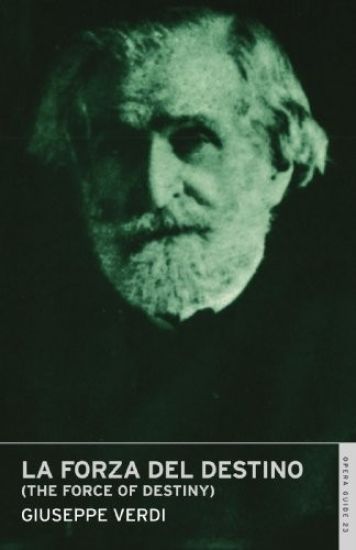
“Verdi’s War and Peace“, writes Peter Conrad of this epic opera composed in 1862. It encompasses the extremes of a religious and secular existence – the worlds of the lovers pursued by an uncompromising fate and of the people in the scenes at the inn and on the battlefield. Despite its beautiful score, this opera has often seemed perplexing: Richard Bernas shows us how the music is devised as a convincing entity, and Bruce A. Brown traces the tortuous but fascinating history of its revisions. Here translated into English by Andrew Porter, La forza del destino deserves a serious reassessment. Contents: War and Peace, Peter Conrad; The Music of ‘The Force of Destiny’, Richard Bernas; The Revision of ‘The Force of Destiny’; ‘That Damned Ending’, Bruce A. Brown; La forza del destino: Libretto by Francesco Piave (1862) with additions by Antonio Ghislanzoni (1869); The Force of Destiny: English translation by Andrew Porter
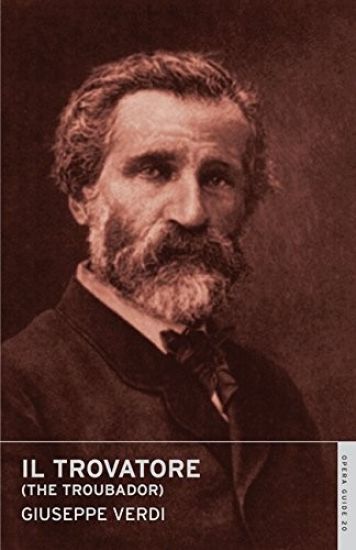
In this guide to Verdi’s popular opera, Marcello Conati of the Institute for Verdi Studies points out that, although audiences have always adored it, critics are only now coming to see that it represents a step forward, not back, from the revolutionary drama of Rigoletto, completed a year before. Professor D. R. B. Kimbell, an expert on Verdi’s music, clarifies the story and takes us through the score, while Professor Donald Shaw examines the unusual symbolism of the Spanish Romantic movement. Il Trovatore can be approached just as a theatrical experience, but these essays give brief and valuable insights into the type of drama it is, and the way it works. Contents: ‘Higher than the highest’, Marcello Conati; ‘Il trovatore’: Music and Drama, D. R. B. Kimbell; Antonio García Gutiérrez’s ‘El trovador’, Donald Shaw; Il trovatore: Libretto by Salvatore Cammarano; Il trovatore: English translation by Tom Hammond
Rigoletto was first produced at the Teatro La Fenice, Venice, in 1851, and is generally seen as marking the beginning of Giuseppe Verdi’s extraordinary middle period. It was followed in quick succession by Il trovatore and La traviata, and even after the great success of these two works Verdi regarded it as his ‘best opera’ up to that time. Based on Victor Hugo’s play Le Roi s’amuse, which was banned after its premiere in Paris in 1832, the opera faced considerable difficulties with local censors before performance was permitted. In the story of the hunchbacked court jester and his beloved daughter, Verdi believed he had found “the greatest subject and perhaps the greatest drama of modern times”. The guide contains articles on the place of Rigoletto in Verdi’s oeuvre and the background to its composition, a detailed examination of its musical structure and a survey of its performance history including discussions of some of its most distinguished interpreters. A further article highlights aspects of the opera’s particularly Italian character. The guide also includes the full Italian libretto with English translation, sixteen pages of illustrations, a musical thematic guide, a bibliography and discography, and DVD and website guides. Contains:The Making of Rigoletto, Jonathan KeatesThe Music of Rigoletto, Roger ParkerA Selective Performance History, George HallRigoletto: Libretto by Francesco Maria Piave after Victor Hugo’s play Le Roi s’amuseRigoletto: English Translation by William Weaver