Kirjailija
Gordon Graham
Kirjat ja teokset yhdessä paikassa: 37 kirjaa, julkaisuja vuosilta 1997–2026, suosituimpiin kuuluu David Hume and the Aberdeen Philosophers. Vertaile teosten hintoja ja tarkista saatavuus suomalaisista kirjakaupoista.
37 kirjaa
Kirjojen julkaisuvuodet: 1997–2026.
David Hume is the most famous philosopher of the Scottish Enlightenment. Yet his prominence in the history of philosophy has had the unhappy effect of overshadowing some of the most insightful critics amongst his contemporaries. This book aims to restore the philosophical credentials of a remarkable set of eighteenth-century philosophers based in Aberdeen’s two university colleges. In their own time, Thomas Reid, George Campbell, Alexander Gerard and James Beattie provided compelling counters to the intellectual dominance of Hume’s Edinburgh. Though they are now largely neglected, all four prove to be philosophers of striking critical acumen. Their work can still cast fresh light on Hume’s influential contribution to the enduring philosophical questions of morality, religion, aesthetics and politics.
David Hume is the most famous philosopher of the Scottish Enlightenment. Yet his prominence in the history of philosophy has had the unhappy effect of overshadowing some of the most insightful critics amongst his contemporaries. This book aims to restore the philosophical credentials of a remarkable set of eighteenth-century philosophers based in Aberdeen's two university colleges. In their own time, Thomas Reid, George Campbell, Alexander Gerard and James Beattie provided compelling counters to the intellectual dominance of Hume's Edinburgh. Though they are now largely neglected, all four prove to be philosophers of striking critical acumen. Their work can still cast fresh light on Hume's influential contribution to the enduring philosophical questions of morality, religion, aesthetics and politics.
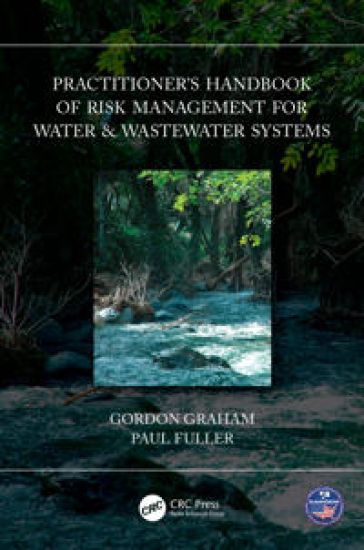
Practitioner’s Handbook of Risk Management for Water & Wastewater Systems
Gordon Graham; Paul Fuller
TAYLOR FRANCIS LTD
2024
nidottu
Real risk management is predicated on the eventuality of human erraticism and therefore necessitates the design of resilient systems, such as control measures, policies, procedures, processes, rules, checklists, and protocols, to protect organizations against unpredictability. However, these systems aren’t enough to prevent tragedies, they must be paired with an organizational culture that drives employee understanding, adherence, questioning, and enforcement of these systems. Success is conditioned on this interdependent relationship, meaning employees do the right thing, the right way every time, as they unequivocally support the underlying rationale of their organizational systems, mission, and purpose. This dynamic, inculcated way of thinking is intrinsic to high-reliability organizations and should be the aspiration of all executives, managers, and supervisors. Authors Gordon Graham and Paul Fuller impart a wide range of practical information on resilient systems- as these thoughtfully designed protocols, kept up-to-date and properly implemented, serve to minimize organizational risk in the water and wastewater industry. Features: Offers guidance for organizations to maximize service, enhance safety, and minimize liability. Presents fundamental background on risk, systems, risk management, as well as factors leading to industrial tragedies and how to avoid or mitigate them. Includes practical examples to demonstrate the necessary steps to transform a water facility into a highly reliable and safe organization. Centering on organizational risk management, Practitioner’s Handbook of Risk Management for Water & Wastewater Systems provides the investigative tools for risk assessments and risk/frequency matrixes to effectively recognize and prioritize the thousands of risks facing professionals working in the water and wastewater industry today.

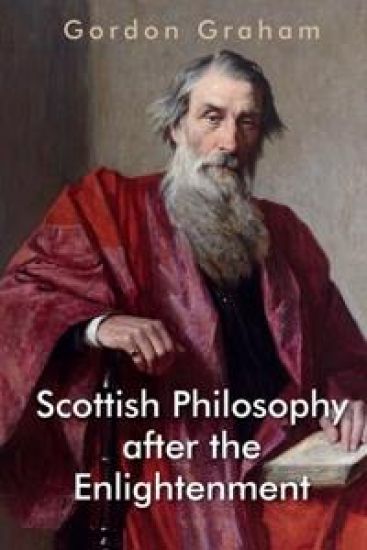
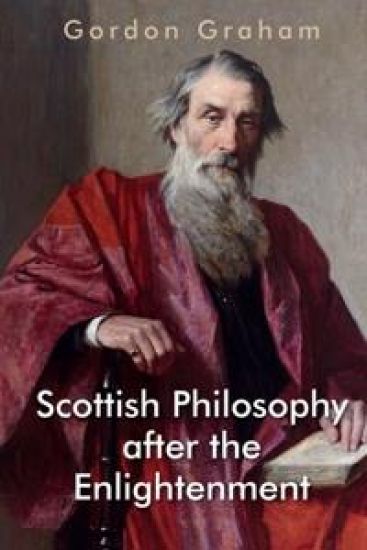
Beginning with Sir William Hamilton's revitalisation of philosophy in Scotland in the 1830s, Gordon Graham takes up the theme of George Davie's The Democratic Intellect and explores a century of debates surrounding the identity and continuity of the Scottish philosophical tradition. Graham identifies a host of once-prominent but now neglected thinkers - such as Alexander Bain, J. F. Ferrier, Thomas Carlyle, Alexander Campbell Fraser, John Tulloch, Henry Jones, Henry Calderwood, David Ritchie and Andrew Seth Pringle-Pattison - whose reactions to Hume and Reid stimulated new currents of ideas. He concludes by considering the relation between the Scottish philosophical tradition and the 20th-century philosopher John Macmurray.
Beginning with Sir William Hamilton's revitalization of philosophy in Scotland in the 1830s, this book takes up the theme of George Davie's The Democratic Intellect and explores a century of debates surrounding the identity and continuity of the Scottish philosophical tradition. Alexander Bain, J F Ferrier, Thomas Carlyle, Alexander Campbell Fraser, John Tulloch, Henry Jones, Henry Calderwood, David Ritchie, and Andrew Seth Pringle-Pattison are among the once prominent, but now neglected thinkers whose reactions to Hume and Reid stimulated new currents of ideas. Graham concludes by considering the relation between the Scottish philosophical tradition and the twentieth-century philosopher John Macmurray.
Practitioner’s Handbook of Risk Management for Water & Wastewater Systems
Gordon Graham; Paul Fuller
Taylor Francis Ltd
2021
sidottu
Real risk management is predicated on the eventuality of human erraticism and therefore necessitates the design of resilient systems, such as control measures, policies, procedures, processes, rules, checklists, and protocols, to protect organizations against unpredictability. However, these systems aren’t enough to prevent tragedies, they must be paired with an organizational culture that drives employee understanding, adherence, questioning, and enforcement of these systems. Success is conditioned on this interdependent relationship, meaning employees do the right thing, the right way every time, as they unequivocally support the underlying rationale of their organizational systems, mission, and purpose. This dynamic, inculcated way of thinking is intrinsic to high-reliability organizations and should be the aspiration of all executives, managers, and supervisors. Authors Gordon Graham and Paul Fuller impart a wide range of practical information on resilient systems- as these thoughtfully designed protocols, kept up-to-date and properly implemented, serve to minimize organizational risk in the water and wastewater industry. Features: Offers guidance for organizations to maximize service, enhance safety, and minimize liability. Presents fundamental background on risk, systems, risk management, as well as factors leading to industrial tragedies and how to avoid or mitigate them. Includes practical examples to demonstrate the necessary steps to transform a water facility into a highly reliable and safe organization. Centering on organizational risk management, Practitioner’s Handbook of Risk Management for Water & Wastewater Systems provides the investigative tools for risk assessments and risk/frequency matrixes to effectively recognize and prioritize the thousands of risks facing professionals working in the water and wastewater industry today.

At a time when religion and science are thought to be at loggerheads, art is widely hailed as religion's natural spiritual ally. Philosophy, Art, and Religion investigates the extent to which this is true. It charts the way in which modern conceptions of 'Art' often marginalize the sacred arts, construing choral and instrumental music, painting and iconography, poetry, drama, and architecture as 'applied' arts that necessarily fall short of the ideal of 'art for art's sake'. Drawing on both history of art and philosophical aesthetics, Graham sets out the historical context in which the arts came to free themselves from religious patronage, in order to conceptualize the cultural context in which religious art currently finds itself. The book then relocates religious art within the aesthetics of everyday life. Subsequent chapters systematically explore each of the sacred arts, using a wide range of illustrative examples to uncover the ways in which artworks can illuminate religious faith, and religious content can lend artworks a deeper dimension.
Gordon Graham presents a radically innovative study of Wittgenstein's philosophy, in relation to the age-old impulse to connect ordinary human life with the transcendent reality of God. He offers an account of its relevance to the study of religion that is completely different to the standard version of 'Wittgensteinian philosophy of religion' expounded by both its adherents and critics. Graham goes on to revitalize the philosophy of 'true religion', an alternative, though not a rival, to the lively philosophical theology of Plantinga and Swinburne that currently dominates the subject. This alternative style of philosophy of religion has equally deep historical roots in the philosophical works of Spinoza, Hume, Schleiermacher, and Mill. At the same time, it is more easily connected to the psychological, sociological, and anthropological studies of William James, Emile Durkheim, Max Weber, Mircea Eliade, and Mary Douglas. Graham uses Wittgenstein's conception of philosophy to argue in favour of the idea that 'true religion' is to be understood as human participation in divine life.
A fast and easy way to write winning white papers! Whether you’re a marketing manager seeking to use white papers to promote your business, or a copywriter keen to break into this well-paying field, White Papers For Dummies gives you a wealth of practical, hands-on advice from one of the world’s leading experts in the field. The fact-based documents known as white papers have been called the “king of content.” No other B2B marketing piece can do more to generate leads, nurture prospects, and build mindshare. Where white papers were once used only by technology firms, they are becoming “must-have” items in the marketing toolkit for almost any B2B firm. Practically every startup must produce a white paper as part of its business planning. But writing effective white papers is a big challenge. Now you can benefit from the experience of a white paper specialist who’s done more than 200 projects for clients from Silicon Valley to Finland, from mighty Google to tiny startups. Author Gordon Graham—also known as That White Paper Guy—provides dozens of tips and tricks to help your project come together faster and easier. White Papers For Dummies will help you to: Quickly determine if your B2B firm could benefit from a white paperMaster the three phases of every white paper project: planning, production, and promotionUnderstand when and how to use the three main types of white paperDecide which elements to include and which to leave outLearn the best practices of seasoned white paper researchers and writersChoose from 40 different promotional tactics to get the word outAvoid common mistakes that many beginners make
The Long Shadow of Emile Cailliet
Abigail Rian Evans; Clemens Bartollas; Gordon Graham; Kenneth Henke
Wipf Stock Publishers
2011
pokkari
The Long Shadow of Emile Cailliet
Abigail Rian Evans; Clemens Bartollas; Gordon Graham; Kenneth Henke
Pickwick Publications
2011
sidottu
Theories of Ethics offers a comprehensive survey of the major schools and figures in moral philosophy, from Socrates to the present day. Written entirely in non-technical language, it aims to be introductory without being elementary, so that readers may quickly engage with selected readings from classic sources. The writings of major philosophers are explained in a structured exploration of recurrently important issues about right and wrong, good and evil, social relations and religious meaning. This book is a radical revision of Gordon Graham’s Eight Theories of Ethics (Routledge 2004). A hallmark of the new edition is the incorporation of primary readings into the text itself, making the book suitable as a stand-alone publication for any ethics course or for anyone wanting to know the history and arguments or moral philosophy. Primary sources include extracts from Aristotle, Camus, Hume, Kant, Locke, Mill, Nietzsche, Plato, Reid, and Sartre, as well as Aldo Leopold and James Lovelock. The new edition also offers extended treatment of the objective/subjective debate, social contract theory, Nietzsche on morality, recent interpretations of Kant, the relation between morality and the existence of God, and a full chapter on environmental ethics.