Kirjojen hintavertailu – 12 903 724 kirjaa ja 27 kauppaa

Kirjailija

Gordon Graham

Kirjat ja teokset yhdessä paikassa: 37 kirjaa, julkaisuja vuosilta 1997–2026, suosituimpiin kuuluu David Hume and the Aberdeen Philosophers. Vertaile teosten hintoja ja tarkista saatavuus suomalaisista kirjakaupoista.

37 kirjaa

Kirjojen julkaisuvuodet: 1997–2026.

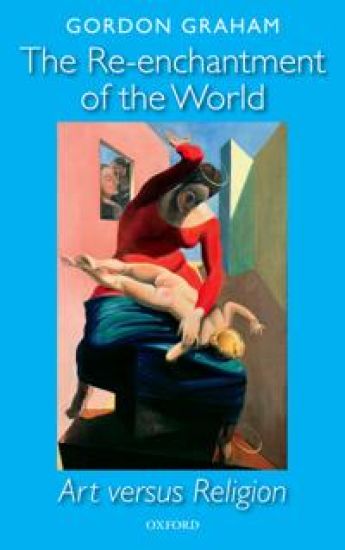
The Re-enchantment of the World

The Re-enchantment of the World

Gordon Graham

Oxford University Press
2010
nidottu
The Re-enchantment of the World is a philosophical exploration of the role of art and religion as sources of meaning in an increasingly material world dominated by science. Gordon Graham takes as his starting point Max Weber's idea that contemporary Western culture is marked by a 'disenchantment of the world' -- the loss of spiritual value in the wake of religion's decline and the triumph of the physical and biological sciences. Relating themes in Hegel, Nietzsche, Schleiermacher, Schopenhauer, and Gadamer to topics in contemporary philosophy of the arts, Graham explores the idea that art, now freed from its previous service to religion, has the potential to re-enchant the world. In so doing, he develops an argument that draws on the strengths of both 'analytical' and 'continental' traditions of philosophical reflection. The opening chapter examines ways in which human lives can be made meaningful as a background to the debates surrounding secularization and secularism. Subsequent chapters are devoted to painting, literature, music, architecture, and festival with special attention given to Surrealism, 19th-century fiction, James Joyce, the music of J. S. Bach and the operas of Wagner. Graham concludes that that only religion properly so called can 'enchant the world', and that modern art's ambition to do so fails.
Ethics and International Relations

Ethics and International Relations

Gordon Graham

Wiley-Blackwell (an imprint of John Wiley Sons Ltd)
2008
sidottu
Ethics and International Relations, Second Edition, offers a comprehensive introduction to the philosophical issues raised by international politics. Presupposing no prior philosophical knowledge and deliberately avoiding the use of technical language, it is ideally suited for political philosophy, applied ethics and international relations courses. Revised and updated, new material includes coverage of the war on terror, the impact of globalization, and ideas of cosmopolitan governance. Clearly and thoughtfully organized, it proceeds logically from general morality and international relations to issues surrounding just war theory and global justiceA crisp, analytical treatment presented with a student-sensitive approach and informed by real world issuesCovers a wide array of subtopics
Ethics and International Relations

Ethics and International Relations

Gordon Graham

Wiley-Blackwell (an imprint of John Wiley Sons Ltd)
2008
nidottu
Ethics and International Relations, Second Edition, offers a comprehensive introduction to the philosophical issues raised by international politics. Presupposing no prior philosophical knowledge and deliberately avoiding the use of technical language, it is ideally suited for political philosophy, applied ethics and international relations courses. Revised and updated, new material includes coverage of the war on terror, the impact of globalization, and ideas of cosmopolitan governance. Clearly and thoughtfully organized, it proceeds logically from general morality and international relations to issues surrounding just war theory and global justiceA crisp, analytical treatment presented with a student-sensitive approach and informed by real world issuesCovers a wide array of subtopics
Universities

Universities

Gordon Graham

Societas
2008
pokkari
Research assessment exercises, teaching quality assessment, line management, staff appraisal, student course evaluation, modularization, student fees — these are all names of innovations (and problems) in modern British universities. How far do they reflect a more conscientious approach to the effective promotion of higher education, and how far do they constitute a significant departure from traditional academic concerns and values? Using some themes of Cardinal Newman's classic The Idea of a University as a springboard, this extended essay aims to address these questions.
The Re-enchantment of the World

The Re-enchantment of the World

Gordon Graham

Oxford University Press
2007
sidottu
The Re-enchantment of the World is a philosophical exploration of the role of art and religion as sources of meaning in an increasingly material world dominated by science. Gordon Graham takes as his starting point Max Weber's idea that contemporary Western culture is marked by a 'disenchantment of the world' -- the loss of spiritual value in the wake of religion's decline and the triumph of the physical and biological sciences. Relating themes in Hegel, Nietzsche, Schleiermacher, Schopenhauer, and Gadamer to topics in contemporary philosophy of the arts, Graham explores the idea that art, now freed from its previous service to religion, has the potential to re-enchant the world. In so doing, he develops an argument that draws on the strengths of both 'analytical' and 'continental' traditions of philosophical reflection. The opening chapter examines ways in which human lives can be made meaningful as a background to the debates surrounding secularization and secularism. Subsequent chapters are devoted to painting, literature, music, architecture, and festival with special attention given to Surrealism, 19th-century fiction, James Joyce, the music of J. S. Bach and the operas of Wagner. Graham concludes that that only religion properly so called can 'enchant the world', and that modern art's ambition to do so fails.
Institution of Intellectual Values

Institution of Intellectual Values

Gordon Graham

Imprint Academic
2007
pokkari
This is a revised and expanded version of the much praised short book Universities: The Recovery of An Idea. It contains chapters on the history of universities; the value of university education; the nature of research; the management and funding of universities plus additional essays on such subjects as human nature and the study of the humanities, interdisciplinary versus multidisciplinary study, information systems and the concept of a library, the prospects for e-learning, reforming universities, intellectual integrity and the realities of funding, and spiritual values and the knowledge economy.
Philosophy of the Arts

Philosophy of the Arts

Gordon Graham

Routledge
2005
sidottu
Philosophy of the Arts presents a comprehensive and accessible introduction to those coming to aesthetics and the philosophy of art for the first time. The third edition is greatly enhanced by new sections on art and beauty, modern art, Aristotle and katharsis, and Hegel. Each chapter has been thoroughly revised with fresh material and extended discussions. As with previous editions, the book:is jargon-free and will appeal to students of music, art history and literature as well as philosophylooks at a wide range of the arts from film, painting and architecture to fiction, music and poetrydiscusses a range of philosophical theories of thinkers such as Hume, Kant, Gaender, Collingwood, Derrida, Hegel and Crocecontains regular summaries and suggestions for further reading.
Philosophy of the Arts

Philosophy of the Arts

Gordon Graham

Routledge
2005
nidottu
Philosophy of the Arts presents a comprehensive and accessible introduction to those coming to aesthetics and the philosophy of art for the first time. The third edition is greatly enhanced by new sections on art and beauty, modern art, Aristotle and katharsis, and Hegel. Each chapter has been thoroughly revised with fresh material and extended discussions. As with previous editions, the book:is jargon-free and will appeal to students of music, art history and literature as well as philosophylooks at a wide range of the arts from film, painting and architecture to fiction, music and poetrydiscusses a range of philosophical theories of thinkers such as Hume, Kant, Gaender, Collingwood, Derrida, Hegel and Crocecontains regular summaries and suggestions for further reading.
Case Against the Democratic State
The history of the last two hundred years is a story of the immense and relentless growth of the State at the expense of other social institutions. We are now so familiar and accepting of the State's pre-eminence in all things, that few think to question it, and most suppose that democratic endorsement legitimizes it. The aim of this essay is to present a sustained and compelling argument against both presumptions. It contends that the gross imbalance of power in the modern State between ruler and ruled is sorely in need of justification, and that democracy simply masks this need with an illusion of popular sovereignty. Although this is an essay in cultural criticism whose argument should be fully accessible to the general reader, it is written from within the European tradition of political philosophy from Plato to Rawls.
Genes: A Philosophical Inquiry

Genes: A Philosophical Inquiry

Gordon Graham

Routledge
2002
sidottu
'It's all in the genes'. Is this true, and if so, what is all in the genes? Genes: A Philosophical Inquiry is a crystal clear and highly informative guide to a debate none of us can afford to ignore. Beginning with a much-needed overview of the relationship between science and technology, Gordon Graham lucidly explains and assesses the most important and controversial aspects of the genes debate: Darwinian theory and its critics, the idea of the 'selfish' gene, evolutionary psychology, memes, genetic screening and modification, including the risks of cloning and 'designer' babies. He considers areas often left out of the genes debate, such as the environmental risks of genetic engineering and how we should think about genes in the wider context of debates on science, knowledge and religion. Gordon Graham asks whether genetic engineering might be introducing God back into the debate and whether the risks of a brave new genetic world outweigh the potential benefits. Essential reading for anyone interested in science, technology, and philosophy, Genes: A Philosophical Inquiry is ideal for those wanting to find out more about the ethical implications of genetics and the future of biotechnology.
Genes: A Philosophical Inquiry

Genes: A Philosophical Inquiry

Gordon Graham

Routledge
2002
nidottu
'It's all in the genes'. Is this true, and if so, what is all in the genes? Genes: A Philosophical Inquiry is a crystal clear and highly informative guide to a debate none of us can afford to ignore. Beginning with a much-needed overview of the relationship between science and technology, Gordon Graham lucidly explains and assesses the most important and controversial aspects of the genes debate: Darwinian theory and its critics, the idea of the 'selfish' gene, evolutionary psychology, memes, genetic screening and modification, including the risks of cloning and 'designer' babies. He considers areas often left out of the genes debate, such as the environmental risks of genetic engineering and how we should think about genes in the wider context of debates on science, knowledge and religion. Gordon Graham asks whether genetic engineering might be introducing God back into the debate and whether the risks of a brave new genetic world outweigh the potential benefits. Essential reading for anyone interested in science, technology, and philosophy, Genes: A Philosophical Inquiry is ideal for those wanting to find out more about the ethical implications of genetics and the future of biotechnology.
Evil and Christian Ethics

Evil and Christian Ethics

Gordon Graham

Cambridge University Press
2000
sidottu
Genocide in Rwanda, multiple murder at Denver or Dunblane, the gruesome activities of serial killers - what makes these great evils, and why do they occur? In addressing such questions this book, unusually, interconnects contemporary moral philosophy with work in New Testament scholarship. The conclusions to emerge are surprising. Gordon Graham argues that the inability of modernist thought to account satisfactorily for evil and its occurrence should not lead us to embrace an eclectic postmodernism, but to take seriously some unfashionable pre-modern conceptions - Satan, demonic possession, spiritual powers, cosmic battles. Precisely because it strives to observe the high standards of clarity and rigour that are the hallmarks of philosophy in the analytical tradition, the book makes a powerful case for the rejection of humanism and naturalism, and for explaining the moral obligation to struggle against evil by reference to the New Testament's cosmic narrative.
Evil and Christian Ethics

Evil and Christian Ethics

Gordon Graham

Cambridge University Press
2000
pokkari
Genocide in Rwanda, multiple murder at Denver or Dunblane, the gruesome activities of serial killers - what makes these great evils, and why do they occur? In addressing such questions this book, unusually, interconnects contemporary moral philosophy with recent work in New Testament scholarship. The conclusions to emerge are surprising. Gordon Graham argues that the inability of modernist thought to account satisfactorily for evil and its occurrence should not lead us to embrace an eclectic postmodernism, but to take seriously some unfashionable pre-modern conceptions – Satan, demonic possession, spiritual powers, cosmic battles. Precisely because it strives to observe the high standards of clarity and rigour that are the hallmarks of philosophy in the analytical tradition, the book makes a powerful case for the rejection of humanism and naturalism, and for explaining the moral obligation to struggle against evil by reference to the New Testament’s cosmic narrative.
The Internet

The Internet

Gordon Graham

Routledge
1999
nidottu
The Internet: A Philosophical Inquiry develops many of the themes Gordon Graham presented in his highly successful radio series, The Silicon Society. Exploring the tensions between the warnings of the Neo-Luddites and the bright optimism of the Technophiles, Graham offers the first concise and accessible exploration of the issues which arise as we enter further into the world of Cyberspace. This original and fascinating study takes us to the heart of questions that none of us can afford to ignore: how does the Internet affect our concepts of identity, moral anarchy, censorship, community, democracy, virtual reality and imagination? Free of jargon and full of stimulating ideas, this is essential reading for anyone wishing to think clearly and informatively about the complexities of our technological future.
The Shape of the Past

The Shape of the Past

Gordon Graham

Oxford University Press
1997
nidottu
Can human history as a whole be interpreted in any meaningful way? Has there been real progress between stone age and space age? Does history repeat itself? Is there evidence of divine providence? Questions such as these have fascinated thinkers, and some of the greatest philosophers, notably Kant and Hegel, have turned their minds to philosophical history. As a branch of philosophy, however, it has received little attention in the analytical tradition. This pioneering work aims to bring the methods of analytical philosophy to the critical examination of some of these questions. In addition to Hegel and Kant, the discussion ranges over the writings of Augustine, Machiavelli, and Alasdair MacIntyre. The ideas of historical progress, secularization and the decline of religion, cultural cycles, historical rupture and God in history are all subjected to careful analysis. Gordon Graham argues that, although unfashionable, the claim that history is the story of progress under the guidance of providence is one of the most plausible accounts of the shape of the past.