Kirjailija
Gore Vidal
Kirjat ja teokset yhdessä paikassa: 81 kirjaa, julkaisuja vuosilta 1993–2026, suosituimpiin kuuluu Julian. Vertaile teosten hintoja ja tarkista saatavuus suomalaisista kirjakaupoista.
81 kirjaa
Kirjojen julkaisuvuodet: 1993–2026.
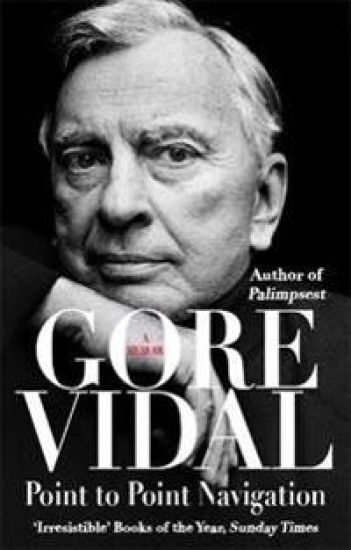
POINT TO POINT NAVIGATION refers to a form of navigation Gore Vidal resorted to as a first mate in the navy during World War II. As he says, 'As I was writing this account of my life and times since PALIMPSEST, I felt as if I were again dealing with those capes and rocks in the Bering Sea that we had to navigate so often with a compass made inoperable by weather.' It is a beautifully apt analogy for the hazards eluded (mostly) during his eventful life. From his desks in Ravello and the Hollywood Hills, Gore Vidal travels in memory through the arenas of literature, television, film, theatre, politics, and international society, recounting achievements and defeats, friends and enemies made (and on a number of occasions lost). Among the gathering of notables to be found in these pages, Tennessee Williams, Eleanor Roosevelt, Orson Welles, Greta Garbo, and Francis Ford Coppola. Some of the book's most moving pages are devoted to the illness and death of his partner of five decades, Howard Austen, and indeed the book is, among other things, a meditation on mortality, written in the spirit of Montaigne.
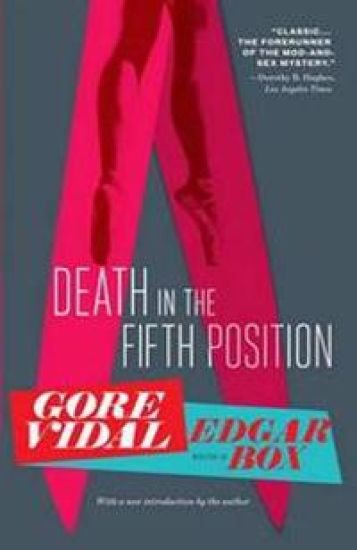
In Death in the Fifth Position, dashing P. R. man Peter Sargent is hired by a ballet company on the eve of a major upcoming performance. Handling the press seems to be no problem, but when a rising star in the company is killed during the performance--dropped from thirty feet above the stage, crashing to her death in a perfect fifth position--Sargent has a real case on his hands. As he ingratiates himself with the players behind the scenes (especially one lovely young ballerina), he finds that this seemingly graceful ballet company is performing their most dramatic acts behind the curtain. There are sharp rivalries, sordid affairs, and shady characters. Sargent, though, has no trouble staying on point and proving that the ballerina killer is no match for his keen eye and raffish charm.
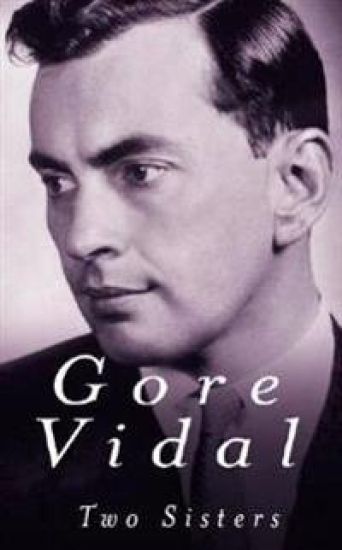
Two Sisters is Gore Vidal's fictional memoir of a love affair with a beautiful set of twins in post-war Paris - a story skilfully interwoven with notebooks, diaries and the vivid fragment of a screenplay set in ancient Greece. In seductive settings from a brothel in a Parisian backstreet to the rooftops of seventies Rome, Vidal assembles his characters, real and imagined: Cocteau and Tennessee Williams, Gide and Mailer rub shoulders with creations as unforgettable as the ageing femme fatale Marietta Donegal and Hollywood hustler and flagellant Murray Morris. All are bound together in a mesmerising fiction that builds to an extraordinary conclusion.

Vidal has a fierce, uncontaminated sense of what's right and wrong, and he expresses his most intimate opinions fearlessly' John Simpson, Daily MailThis new selection brings together the best of Gore Vidal's essays, comment and criticism from his fifty-year writing career. With mercurial intelligence and often courageous - and outrageous! - forthrightness, Vidal explores his keystone subjects: primarily the worlds of literature and US politics; but also showbiz, sexuality and modern manners. His gaze ranges from the fiction of Calvino and Updike to the politics of pornography to the Clinton and Bush administrations, America post-September 11 and contemporary imperial ambitions. These essays are a witty and brilliant assessment of our times from the most memorable of American literary masters.
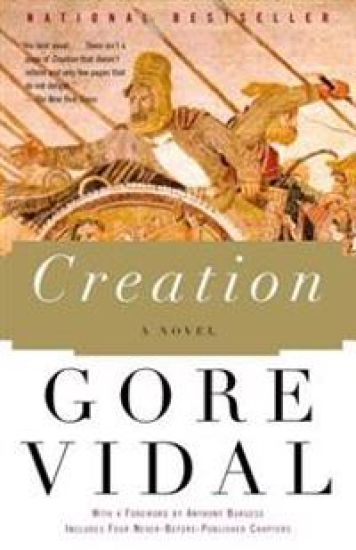
A sweeping novel of politics, war, philosophy, and adventure-in a restored edition, featuring never-before-published material from Gore Vidal's original manuscript-Creation offers a captivating grand tour of the ancient world. Cyrus Spitama, grandson of the prophet Zoroaster and lifelong friend of Xerxes, spent most of his life as Persian ambassador for the great king Darius. He traveled to India, where he discussed nirvana with Buddha, and to the warring states of Cathay, where he learned of Tao from Master Li and fished on the riverbank with Confucius. Now blind and aged in Athens-the Athens of Pericles, Sophocles, Thucydides, Herodotus, and Socrates-Cyrus recounts his days as he strives to resolve the fundamental questions that have guided his life's journeys: how the universe was created, and why evil was created with good. In revisiting the fifth century b.c.-one of the most spectacular periods in history-Gore Vidal illuminates the ideas that have shaped civilizations for millennia.
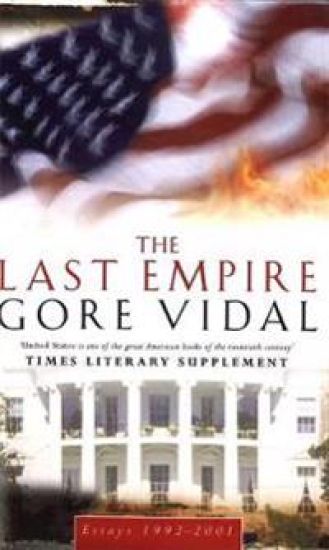
Gore Vidal's new collection of essays shows him still writing at his finest. His comments on the deplorable state of American politics - from Bill Clinton to George Bush - are as apposite as ever and, controversially, there are two magnificent essays on the Oklahoma bomber Timothy McVeigh - who entered into an extraordinary correspondence with Vidal when he was in gaol - to the recent terrorist attacks on the World Trade Center.
* The magnificent concluding volume of Vidal's epic NARRATIVES OF EMPIRE, embodying the passage of American history.
The Golden Age is Vidal's crowning achievement, a vibrant tapestry of American political and cultural life from 1939 to 1954, when the epochal events of World War II and the Cold War transformed America, once and for all, for good or ill, from a republic into an empire. The sharp-eyed and sympathetic witnesses to these events are Caroline Sanford, Hollywood actress turned Washington D. C., newspaper publisher, and Peter Sanford, her nephew and publisher of the independent intellectual journal The American Idea. They experience at first hand the masterful maneuvers of Franklin Roosevelt to bring a reluctant nation into the Second World War, and, later, the actions of Harry Truman that commit the nation to a decade-long twilight struggle against Communism developments they regard with a decided skepticism even though it ends in an American global empire. The locus of these events is Washington D. C., yet the Hollywood film industry and the cultural centers of New York also play significant parts. In addition to presidents, the actual characters who appear so vividly in the pages of The Golden Age include Eleanor Roosevelt, Harry Hopkins, Wendell Willkie, William Randolph Hearst, Dean Acheson, Tennessee Williams, Joseph Alsop, Dawn Powell and Gore Vidal himself. The Golden Age offers up U. S. history as only Gore Vidal can, with unrivaled penetration, wit, and high drama, allied to a classical view of human fate. It is a supreme entertainment that is not only sure to be a major bestseller but that will also change listeners' understanding of American history and power."
With a New Introduction Washington, D. C., is the final installment in Gore Vidal's Narratives of Empire, his acclaimed six-volume series of historical novels about the American past. It offers an illuminating portrait of our republic from the time of the New Deal to the McCar-thy era. Widely regarded as Vidal's ultimate comment on how the American political system degrades those who participate in it, Washington, D. C. is a stunning tale of corruption and diseased ambitions. It traces the fortunes of James Burden Day, a powerful conservative senator who is eyeing the presidency; Clay Overbury, a pragmatic young congressional aide with political aspirations of his own; and Blaise Sanford, a ruthless newspaper tycoon who understands the importance of money and image in modern politics. With characteristic wit and insight, Vidal chronicles life in the nation's capital at a time when these men and others transformed America into "possibly the last empire on earth." "Washington, D. C. may well be the finest of contemporary novels about the capital," said The New Yorker, and the Times Literary Supplement deemed it "a prodigiously skilled and clever performance."
"Mr. Vidal demonstrates a political imagination and insider's sagacity equaled by no other practicing fiction writer I can think of. And like the earlier novels in his historical cycle, Empire is a wonderfully vivid documentary drama." --The New York Times Book Review In this extraordinarily powerful epic Gore Vidal recreates America's Gilded Age--a period of promise and possibility, of empire-building and fierce political rivalries. In a vivid and beathtaking work of fiction, where the fortunes of a sister and brother intertwine with the fates of the generation, their country, and some of the greatest names of their day, including President McKinley, Theodore Roosevelt, William Jennings Bryan, William and Henry James, the Astors, the Vanderbilts, and the Whitneys, Gore Vidal sweeps us from the nineteenth century into the twentieth, from the salvaged republic of Lincoln to a nation boldly reaching for the world.
Gore Vidal's Narratives of Empire series spans the history of the United States from the Revolution to the post-World War II years. With their broad canvas and large cast of fictional and historical characters, the novels in this series present a panorama of the American political and imperial experience as interpreted by one of its most worldly, knowing, and ironic observers. The centennial of the United States was celebrated with great fanfare--fireworks, exhibitions, pious calls to patriotism, and perhaps the most underhanded political machination in the country's history: the theft of the presidency from Samuel Tilden in favor of Rutherford B. Hayes. This was the Gilded Age, when robber barons held the purse strings of the nation, and the party in power was determined to stay in power. Gore Vidal's 1876 gives us the news of the day through the eyes of Charlie Schuyler, who has returned from exile to regain a lost fortune and arrange a marriage into New York society for his widowed daughter. And although Tammany Hall has faltered and Boss Tweed has fled, the effects of corruption reach deep, even into Schuyler's own family.
For readers who can't get enough of the hit Broadway musical Hamilton, Gore Vidal's stunning novel about Aaron Burr, the man who killed Alexander Hamilton in a duel--and who served as a successful, if often feared, statesman of our fledgling nation. Here is an extraordinary portrait of one of the most complicated--and misunderstood--figures among the Founding Fathers. In 1804, while serving as vice president, Aaron Burr fought a duel with his political nemesis, Alexander Hamilton, and killed him. In 1807, he was arrested, tried, and acquitted of treason. In 1833, Burr is newly married, an aging statesman considered a monster by many. But he is determined to tell his own story, and he chooses to confide in a young New York City journalist named Charles Schermerhorn Schuyler. Together, they explore both Burr's past--and the continuing civic drama of their young nation. Burr is the first novel in Gore Vidal's Narratives of Empire series, which spans the history of the United States from the Revolution to post-World War II. With their broad canvas and sprawling cast of fictional and historical characters, these novels present a panorama of American politics and imperialism, as interpreted by one of our most incisive and ironic observers.
History is gossip,' says a protagonist in Washington, D. C., 'but the trick is determining which gossip is history.' It is a trick that Gore Vidal has mastered in his ongoing chronicle of that circus of opportunism and hypocrisy called American politics and which he plays with renewed vigour in this expose of the nation's capital. Young Clay Overbury, Senator Burden Day's assistant, has both a modest background and immense ambitions. Extremely handsome, oozing charm and seemingly dedicated to the Senator's cause, he is also duplicitous, conniving, and disloyal. But Enid Canford doesn't think so: she marries him, so providing the Sanford newspaper dynasty with a direct line to the Senator. Her father Blaise, at first loathing his son-in-law, later learns to love him - for all the wrong reasons. So begins this tale of lust and ambition set in the Republic's high noon. From the late 1930s to Jo McCarthy's reign of terror, Gore Vidal charts the seamy, sleazy side of Washington. Mixing sober history with nakedly Gothic melodrama, he provides an intoxicating cocktail of blackmail, betrayal, sexual ambivalence, lunacy and conspiracy - or, in a word, politics.
A novel about Aaron Burr, the character now perhaps best known for his part in Lin-Manuel Miranda's Hamilton - the Vice President of the United States who killed Alexander Hamilton in a duel.
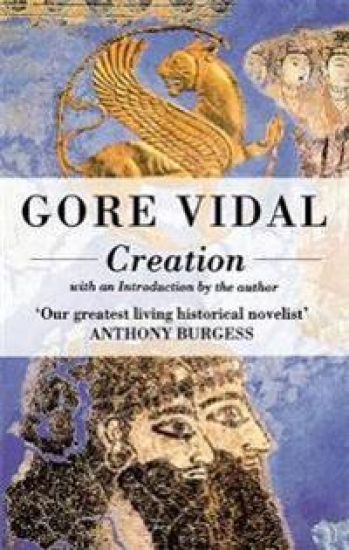
Vidal's historical novel set in the 5th century BC and narrated by Cyrus Spitama, son of a Persian prince and Greek sorceress, grandson of the prophet Zoroaster, and ambassador to the courts of India, China and Greece. Pericles, Thucydides, Sophocles and Confucius are among the book's characters.
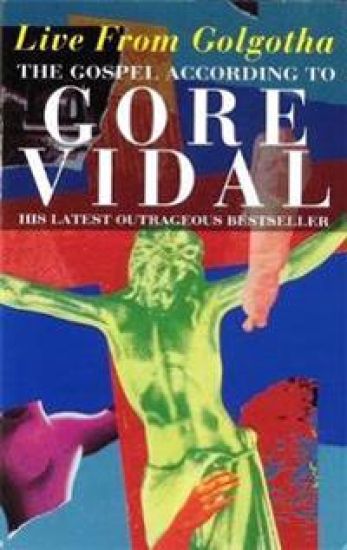
Thanks to the latest breakthrough in computer software, a cyberpunk- known bleakly as The Hacker- is destroying the tapes that describe the mission of Jesus Christ and His Gospel or Good News. The Sacred Story is vanishing rapidly. Fortunately one tape is Hackerproof, that of Timothy, who in his youth, was Robin to Saint Paul's Batman. Now, in Timothy's old age, Saint Paul comes to him in a vision and begs him to write down the True Gospel, otherwise all is lost. And thanks to the wonders of modern techonology, a TV crew will pre-record, live from Golgotha, the Crucifixion in order to boost NBC during the upcoming ratings battle. Will it take place or not? Will the Hacker manage to destroy all the records, including Timothy's? Will Jesus's weight problem be an image problem in the light of today's high standards? Tune in to Gore Vidal's classic of the greatest story never told- until now.