Kirjojen hintavertailu – 12 903 725 kirjaa ja 27 kauppaa
Kirjailija
Gore Vidal
Kirjat ja teokset yhdessä paikassa: 81 kirjaa, julkaisuja vuosilta 1993–2026, suosituimpiin kuuluu Julian. Vertaile teosten hintoja ja tarkista saatavuus suomalaisista kirjakaupoista.
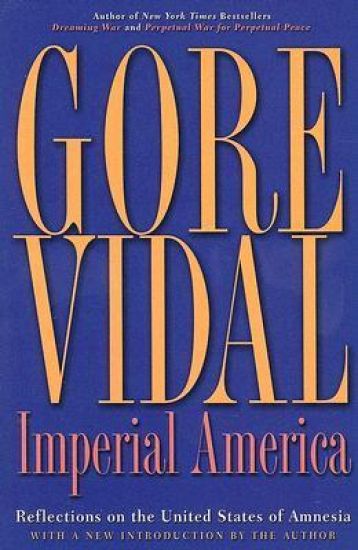
Gore Vidal has been described as the last 'noble defender" of the American republic. In Imperial America, Vidal steals the thunder of a right wing America--those who have camouflaged their extremist rhetoric in the Old Glory and the Red, White, and Blue--by demonstrating that those whose protest arbitrary and secret government, those who defend the bill of rights, those who seek to restrain America's international power, are the true patriots. "Those Americans who refuse to plunge blindly into the maelstrom of European and Asiatic politics are not defeatist or neurotic," he writes. "They are giving evidence of sanity, not cowardice, of adult thinking as distinguished from infantilism. They intend to preserve and defend the Republic. America is not to be Rome or Britain. It is to be America."
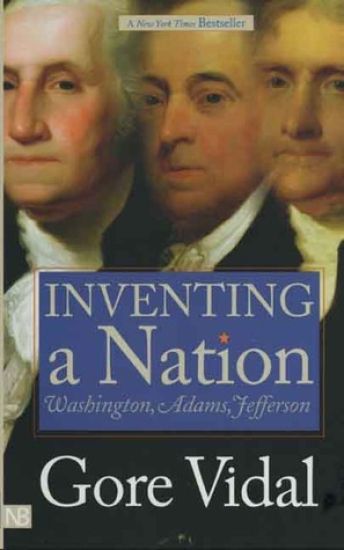
Gore Vidal’s uniquely irreverent take on America’s founding fathers will enliven all future discussion of the enduring power of their nation-building ideas “Trust Gore Vidal to teach us things we never learned in school. In Inventing a Nation, his quick wit flickers over the canonical tale of our republic’s founding, turning it into a dark and deliciously nuanced comedy of men, manners, and ideas.”—Amanda Heller, Boston Globe (Sunday) “Entertaining and enlightening. . . . A must for buffs of American civilization and its discontents.”—Booklist Gore Vidal, one of the master stylists of American literature and one of the most acute observers of American life and history, turns his immense literary and historiographic talent to a portrait of the formidable trio of George Washington, John Adams, and Thomas Jefferson. In Inventing a Nation, Vidal transports the reader into the minds, the living rooms (and bedrooms), the convention halls, and the salons of Washington, Jefferson, Adams, and others. We come to know these men, through Vidal’s splendid and percipient prose, in ways we have not up to now—their opinions of each other, their worries about money, their concerns about creating a viable democracy. Vidal brings them to life at the key moments of decision in the birthing of our nation. He also illuminates the force and weight of the documents they wrote, the speeches they delivered, and the institutions of government by which we still live. More than two centuries later, America is still largely governed by the ideas championed by this triumvirate.
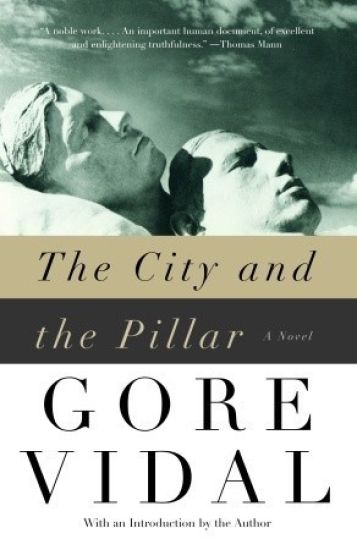
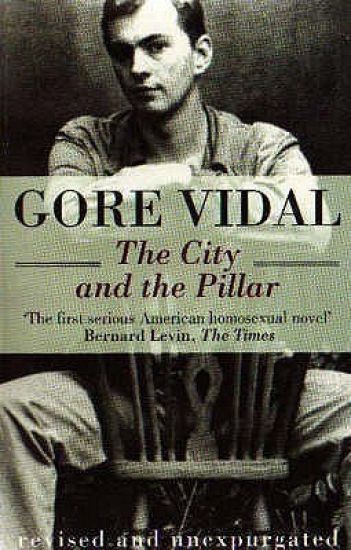
A literary cause c l bre when first published in 1948, Gore Vidal's now-classic The City and the Pillar stands as a landmark novel of the gay experience. Jim, a handsome, all-American athlete, has always been shy around girls. But when he and his best friend, Bob, partake in "awful kid stuff," the experience forms Jim's ideal of spiritual completion. Defying his parents' expectations, Jim strikes out on his own, hoping to find Bob and rekindle their amorous friendship. Along the way he struggles with what he feels is his unique bond with Bob and with his persistent attraction to other men. Upon finally encountering Bob years later, the force of his hopes for a life together leads to a devastating climax. The first novel of its kind to appear on the American literary landscape, The City and the Pillar remains a forthright and uncompromising portrayal of sexual relationships between men.
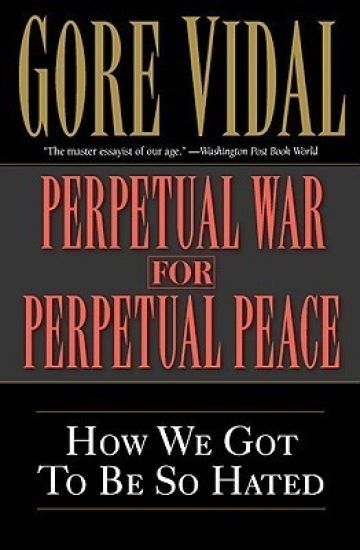
Offers a series of essays analyzing the development of United States foreign policy and criticizing the country's role in the world, its intervention in other lands, and the domestic impact of such policies.
How We Got To Be So Hated - Causes of Conflict in the Last Empire. Gore Vidal transcends the simplistic black-and-white sloganizing of politicians and the corporate-sponsored media, and makes a rational investigation into the causes behind the devastating events of 11 September and the Oklahoma bombing.
Like his National Book Award--winning United States, Gore Vidal's scintillating ninth collection, The Last Empire, affirms his reputation as our most provocative critic and observer of the modern American scene. In the essays collected here, Vidal brings his keen intellect, experience, and razor-edged wit to bear on an astonishing range of subjects. From his celebrated profiles of Clare Boothe Luce and Charles Lindbergh and his controversial essay about the Bill of Rights-which sparked an extended correspondence with convicted Oklahoma City Bomber Timothy McVeigh-to his provocative analyses of literary icons such as John Updike and Mark Twain and his trenchant observations about terrorism, civil liberties, the CIA, Al Gore, Tony Blair, and the Clintons, Vidal weaves a rich tapestry of personal anecdote, critical insight, and historical detail. Written between the first presidential campaign of Bill Clinton and the electoral crisis of 2000, The Last Empire is a sweeping coda to the last century's conflicted vision of the American dream.
The United States has been engaged in what the great historian Charles A. Beard called "perpetual war for perpetual peace. " The Federation of American Scientists has cataloged nearly 200 military incursions since 1945 in which the United States has been the aggressor. In a series of penetrating and alarming essays, whose centerpiece is a commentary on the events of September 11, 2001 (deemed too controversial to publish in this country until now) Gore Vidal challenges the comforting consensus following September 11th and goes back and draws connections to Timothy McVeigh's bombing of the federal building in Oklahoma City. He asks were these simply the acts of "evil-doers?" "Gore Vidal is the master essayist of our age. " Washington Post "Our greatest living man of letters. "Boston Globe "Vidal's imagination of American politics is so powerful as to compel awe. "Harold Bloom, The New York Review of Books
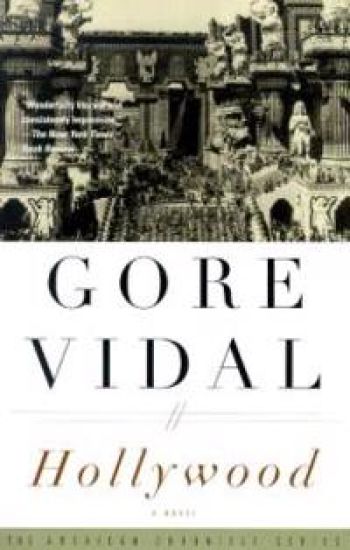
"Wicked and provocative... Vidal's purview of Hollywood in one of its golden ages is fascinating." --Chicago Tribune In his brilliant and dazzling new novel, Gore Vidal sweeps us into one of the most fascinating periods of American political and social change. The time is 1917. In Washington, President Wilson is about to lead the United States into the Great War. In California, a new industry is born that will transform America: moving pictures. Here is history as only Gore Vidal can re-create it: brimming with intrigue and scandal, peopled by the greats of the silver screen and American politics, from Charlie Chaplin and Douglas Fairbanks to Franklin D. Roosevelt and the author's own grandfather, the blind Senator Gore. With Hollywood, Vidal once again proves himself a superb storyteller and a perceptive chronicler of human nature's endless deceptions.
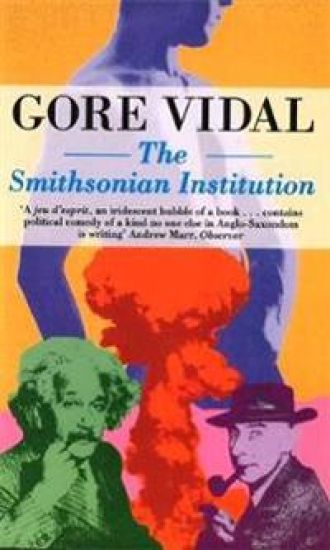
Good Friday, 1939, and T., a sixteen-year-old schoolboy, arrives at the Smithsonian Institute in Washington. The museum is closed, but T. manages to slip in, and it would appear that somehow, he is expected. An old man, Bentsen, shows him around, and T. realises that all is not as it seems. As he goes to examine a Native American exhibit, he is drawn magically into the nineteenth-century world of a reservation of Sioux Indians. They like what they see of T. and immediately get the pot boiling. T. is forced to take refuge in the tent of a young Squaw. They become lovers, and she helps him to escape back to the safety of the Smithsonian. Back with Bentsen, T. explores the Smithsonian further and begins to fathom the mysteries of time travel. The Smithsonian scientists have discovered how to get back to the past, but still don't know how to travel to the future. T. puts his brilliant mathematical brain to the problem. However, given a glimpse into the future, T. sees his own untimely death, and becomes determined to prevent the outbreak of WWII...
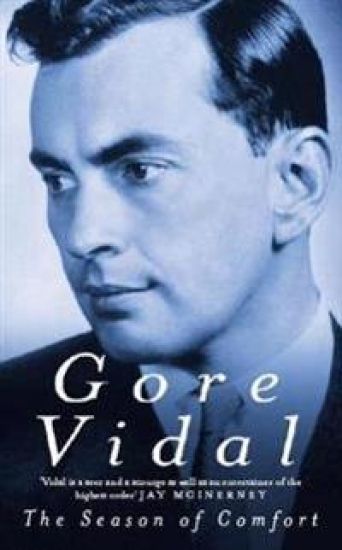
A novel based on the emotional conflict centered around a son's urge to sever the pshychological umbilical cord which ties him to a selfish and possessive mother. Completely unsympathetic to his young experiences and inclinations, forever critical of his interests and reactions, she nevertheless appeals to his sympathies and attempts to hold him emotionally.
In their teens, Jim Willard and Bob Ford share a moment of sexual intimacy and Jim spends years searching for the recreation of that moment. When the opportunity occurs, it explodes with violence and pain. This was one of the first pieces of explicitly gay fiction.
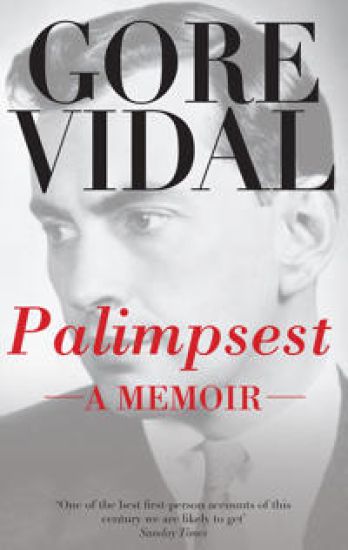
This is a memoir of the first 40 years of Gore Vidal's life, ranging back and forth across a rich history. He describes his difficult family, talented friends and interesting enemies with a cast that includes Tennessee Williams, the Kennedys, Jack Kerouac and Norman Mailer.
A collection of essays taken from 40 years of the author's work. It is divided into three sections: State of the Art , which covers literature; State of the Union , which deals with politics and public life; and State of Being , which gives his personal responses to people and events.
Kidnapped and held to ransom by Duke Leopold of Austria after the Third Crusade, Richard the Lion Heart, it is said, was found by his faithful troubadour Blondel de Neel. But how? And what trials did the faithful and long-suffering lyricist have to overcome to find his king? Gore Vidal paints a broad, colourful and poignant picture of a man searching for his master; for the symbolic king who is the goal of man's eternal quest; for the spiritual centre of his life.
When two women tragically perish in a Duluth snowdrift, the one called Edna is reborn in 'Duluth', the popular television series and the one called Beryl finds herself in a 'Hyatt Regency' romantic novel entitled ROGUE DUKE. In Duluth they do it all with word processors. Meanwhile Lieutenant Darlene Ecks, strip-search enthusiast, terrorizes a barrio full of illegal Mexican immigrants until they rise up in defiance, the mayor plumbs the mysteries of a bright red spaceship and a life and death contest is waged between Duluth's leading socialite and its foremost author to complete contradictory biographies of Betty Grable. Gore Vidal's wicked extravaganza sports special effects not expected in a novel; and it poses taunting puzzles like who is the guy they call The Dude? And why is it said, 'Every society gets the Duluth it deserves'?