Kirjojen hintavertailu – 12 859 818 kirjaa ja 27 kauppaa
Kirjailija
Graham Holderness
Kirjat ja teokset yhdessä paikassa: 24 kirjaa, julkaisuja vuosilta 1992–2025, suosituimpiin kuuluu Hamlet - The First Quarto (Sos). Vertaile teosten hintoja ja tarkista saatavuus suomalaisista kirjakaupoista.
William Shakespeare stills stands head and shoulders above any other author in the English language, a position that is unlikely ever to change. Yet it is often said that we know very little about him - and that applies as much to what he believed as it does to the rest of his biography. Or does it? In this authoritative new study, Graham Holderness takes us through the context of Shakespeare's life, times of religious and political turmoil, and looks at what we do know of Shakespeare the Anglican. But then he goes beyond that, and mines the plays themselves, not just for the words of the characters, but for the concepts, themes and language which Shakespeare was himself steeped in - the language of the Bible and the Book of Common Prayer. Considering particularly such plays as Richard ll, Henry V, The Merchant of Venice, Measure for Measure, Hamlet, Othello, The Tempest and The Winter's Tale, Holderness shows how the ideas of Catholicism come up against those of Luther and Calvin; how Christianity was woven deep into Shakespeare's psyche, and how he brought it again and again to his art.
Who was the real architect of the Gunpowder Plot? Who was the first person to wear a Guy Fawkes mask? Why was Shakespeare's Dark Lady dark? These and many other questions are answered in Graham Holderness's new novel, which combines historical fiction, psychological mystery and supernatural thriller in a highly original and imaginative re-telling of the Gunpowder Plot. It is 1604. The Gunpowder Plotters are tunnelling under the palace of Westminster, and confront an immovable obstacle. Guy Fawkes travels to Europe to fetch help, and brings back more than he bargained for. Who is the mysterious Dark Lady? Who is the man in the mask? Why is London over-run by a plague of vampires, and who is going to defeat them? From a Westminster vault to a Transylvanian mine, from the crypt of Lambeth Palace to the under-stage of the Globe theatre, Black and Deep Desires takes the reader on a tour of historical, psychological and mythical underworlds, delving deep into some of history's unexplored corridors, into the secret thoughts of Catholic terrorists, and into the dark wellsprings of Shakespeare's poetry. In Black and Deep Desires Graham Holderness combines the expertise of an internationally-recognised Shakespeare scholar, the narrative flair of his 2001 novel The Prince of Denmark, and the poetic sensibility that won his verse collection Craeft a Poetry Book Society award.
The first in a series on Shakespeare's original texts, including facsimile pages, this version of "Hamlet" is claimed to be, in some ways, the most authentic version of the play that we have. Included are an introduction, notes, and a theoretical, historical and contextual critique. This text has been rejected by scholars as a "bad Quarto" - corrupt and pirated text printed without the permission of the playwright or his company. Nonetheless, it was the first version of the play to be published and it has been produced in the modern theatre with success. This new edition of that Quarto seeks to acknowledge the play's distinctive poetic and dramatic qualities, instead of comparing them unfavourably to one of the other versions.
This new examination of Shakespeare’s four Roman tragedies (Julius Caesar, Titus Andronicus, Coriolanus and Antony and Cleopatra) revisits Shakespeare’s dramatic recreations of ancient Rome in the light of considerations of place:the places from which Shakespeare initiated his imaginative reconstructions, where plays are written and performedthe places he constructed within the plays, the places the plays imagine and recreate, together with the places from which he derived themthe places within which we as readers and spectators experience those creations, where such plays are read, viewed and critically analysed. Alongside this analysis the book explores contemporary critical debates and the uses of place and space in selected modern adaptations – the Taviani brothers’ Italian film Caesar Must Die, Julie Taylor’s film Titus, John Osborne’s play A Place Calling Itself Rome and Ahmed Shawqi’s Arabic Death of Cleopatra. The book provides a descriptive, palimpsestic map of the places within which Shakespeare’s Roman plays operate, tracing the contours of Rome’s Republic and Empire, overlaid with the Europe of Shakespeare’s day, in which a Romanised London looked with fascination towards the East, towards Rome and Alexandria. Equipped with such a map we can attempt to do what Shakespeare did: to recreate ancient Rome in conjunction and rapprochement with its early modern and modern counterparts.
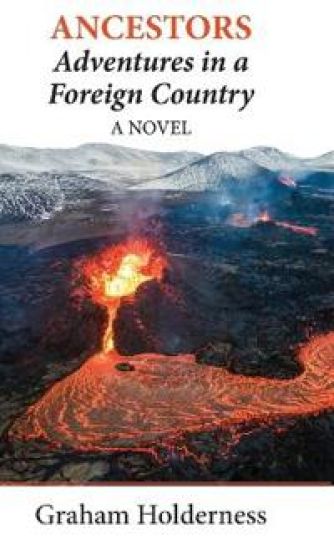
This highly original novel by the internationally acclaimed author Graham Holderness is an historical novel which is also part contemporary chronicle, part autobiographical. It explores, in principle, the challenges of personal ancestry and heritage, and the contemporary loyalties of us all in a rapidly changing country. / Holderness tells the story of a typical modern intellectual, nearing the end of his career as an academic, a radical political activist and internationalist facing fundamental choices of how to live and where to belong. / The focal figure is self-described as rootless, unanchored, a citizen of the world, but with no homeland of his own. Yet on his sixtieth birthday his son, who has taken an interest in family history, gives him as a present a genealogical DNA test. From this modest intervention flow various unforeseen consequences which ultimately turn his world upside down. / Exploring an unknown history, he realises that his own ancestry is nothing like what he believed it might be. He has to learn more about remote periods of history endured and shaped by his ancestors. He is forced to revalue his parents, his children, himself and his place in the world. Eventually he is compelled to revalue his country. / In parallel to the modern story is a separate narrative, tracing three generations of his ancestors - from when Scandinavians were forced to quit Iceland by the Katla eruption of 939. This story traces the family's history across three generations, as they settle in England, and find their status changing from refugees to settlers with their own stake in the country. By 991 one of them stands with Ealdorman Byrhtnoth at the Battle of Maldon, defending his homeland against Viking invaders. The two narratives converge as the decade ends in contemporary Britain with Brexit. In the light of his new knowledge and understanding, and a new relationship with his children, our 'hero' encounters the challenges of asking where do his loyalties lie? To whom does he belong - to the world, or to the past, family, country? Is he a cosmopolitan internationalist, an arriviste who has never truly belonged, whose homeland is always somewhere else? Or a native of England, and a citizen of a new, revalued Britain?
In the first full length study to relate Shakespeare's Roman works to a longer history of the city of Rome, author Graham Holderness reads Shakespeare's Roman works"Titus Andronicus, Julius Caesar, Antony and Cleopatra and Coriolanus"via a double perspective, the ancient and the modern. He argues that for Shakespeare, Rome was not simply the republic and empire of antiquity, but a contemporary place that possessed its own meanings, retained its own legacies from the past, and was in the process of generating new meanings. Holderness presents a new take on the conflicts fought out in the plays, proposing that they were not just ancient Roman conflicts with relevance for sixteenth-century England, but were also shaped in early modern encounters with Rome as a place of fallen greatness and cultural revival, of growing ecclesiastical power, and of consolidating religious authority. He explains the ambivalence towards Rome that speaks throughout the Roman works, less in terms of the conflicts between ancient writers over the grounds of republican and imperial visions, and more in terms of St Augustine's polarization of Rome into earthly and heavenly cities, of sixteenth-century Rome's cultural and aesthetic character, and of the tense relationship for English Catholics between Protestant and papal authority. Finally the book extends the perspective to include the range of modern meanings attributed to Rome, and shows how these enter into critical readings, theatrical performances and screen adaptations of Shakespeare's Roman works.
This remarkable book reveals the sensational, historical and personal stories of the physical, cultural and psychological territory of London's Smithfield. These stories construct an impression of Smithfield, 'Little Britain', and throw their dark light both on British national history, and on the human condition.
The first in a series on Shakespeare's original texts, including facsimile pages, this version of "Hamlet" is claimed to be, in some ways, the most authentic version of the play that we have. Included are an introduction, notes, and a theoretical, historical and contextual critique. This text has been rejected by scholars as a "bad Quarto" - corrupt and pirated text printed without the permission of the playwright or his company. Nonetheless, it was the first version of the play to be published and it has been produced in the modern theatre with success. This new edition of that Quarto seeks to acknowledge the play's distinctive poetic and dramatic qualities, instead of comparing them unfavourably to one of the other versions.
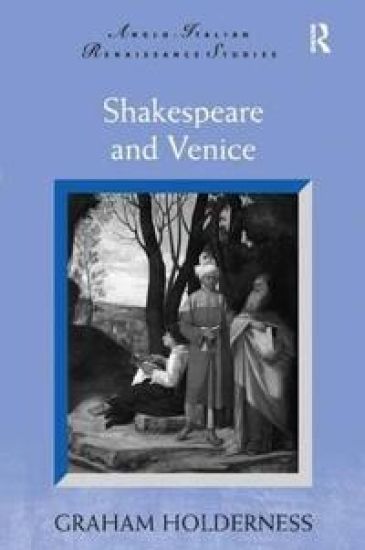
Shakespeare and Venice is the first book length study to describe and chronicle the mythology of Venice that was formulated in the Middle Ages and has persisted in fiction and film to the present day. Graham Holderness focuses specifically on how that mythology was employed by Shakespeare to explore themes of conversion, change, and metamorphosis. Identifying and outlining the materials having to do with Venice which might have been available to Shakespeare, Holderness provides a full historical account of past and present Venetian myths and of the city's relationship with both Judaism and Islam. Holderness also provides detailed readings of both The Merchant of Venice and of Othello against these mythical and historical dimensions, and concludes with discussion of Venice's relevance to both the modern world and to the past.
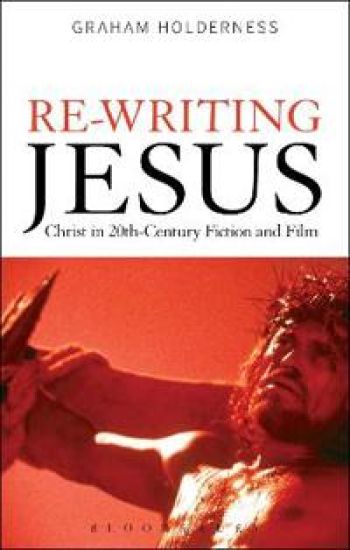
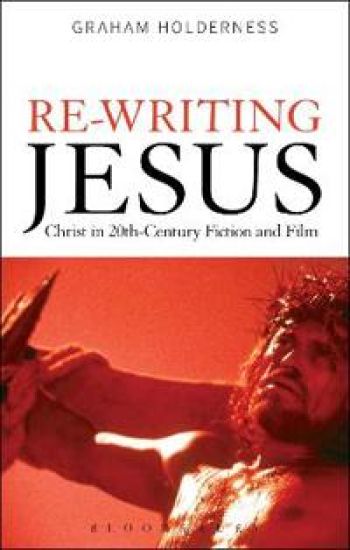
At the heart of Christian theology lies a paradox unintelligible to other religions and to secular humanism: that in the person of Jesus, God became man, and suffered on the cross to effect humanity’s salvation. In his dual nature as mortal and divinity, and unlike the impassable God of other monotheisms, Christ thus became accessible to artistic representation. Hence the figure of Jesus has haunted and compelled the imagination of artists and writers for 2,000 years. This was never more so than in the 20th Century, in a supposedly secular age, when the Jesus of popular fiction and film became perhaps more familiar than the Christ of the New Testament. In Re-Writing Jesus: Christ in 20th Century Fiction and Film Graham Holderness explores how writers and film-makers have sought to recreate Christ in work as diverse as Anthony Burgess’s Man of Nazareth and Jim Crace’s Quarantine, to Martin Scorsese’s The Last Temptation of Christ and Mel Gibson’s Passion of the Christ. These works are set within a longer and broader history of ‘Jesus novels’ and ‘Jesus films’, a lineage traced back to Ernest Renan and George Moore, and explored both for their reflections of contemporary Christological debates, and their positive contributions to Christian theology. In its final chapter, the book draws on the insights of this tradition of Christological representation to creatively construct a new life of Christ, an original work of theological fiction that both subsumes the history of the form, and offers a startlingly new perspective on the biography of Christ.
At the heart of Christian theology lies a paradox unintelligible to other religions and to secular humanism: that in the person of Jesus, God became man, and suffered on the cross to effect humanity’s salvation. In his dual nature as mortal and divinity, and unlike the impassable God of other monotheisms, Christ thus became accessible to artistic representation. Hence the figure of Jesus has haunted and compelled the imagination of artists and writers for 2,000 years. This was never more so than in the 20th Century, in a supposedly secular age, when the Jesus of popular fiction and film became perhaps more familiar than the Christ of the New Testament. In Re-Writing Jesus: Christ in 20th Century Fiction and Film Graham Holderness explores how writers and film-makers have sought to recreate Christ in work as diverse as Anthony Burgess’s Man of Nazareth and Jim Crace’s Quarantine, to Martin Scorsese’s The Last Temptation of Christ and Mel Gibson’s Passion of the Christ. These works are set within a longer and broader history of ‘Jesus novels’ and ‘Jesus films’, a lineage traced back to Ernest Renan and George Moore, and explored both for their reflections of contemporary Christological debates, and their positive contributions to Christian theology. In its final chapter, the book draws on the insights of this tradition of Christological representation to creatively construct a new life of Christ, an original work of theological fiction that both subsumes the history of the form, and offers a startlingly new perspective on the biography of Christ.
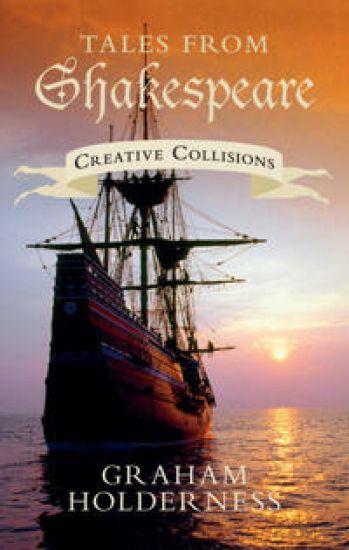
In this engaging new book, writer and critic Graham Holderness shows how a classic Shakespeare play can be the source for a modern story, providing a creative 'collision' between the Shakespeare text and contemporary concerns. Using an analogy from particle physics, Holderness tests his methodology through specific examples, structured in four parts: a recreation of performances of Hamlet and Richard II aboard the East India Company ship the Red Dragon in 1607; an imagined encounter between Shakespeare and Ben Jonson writing the King James Bible; the creation of a contemporary folk hero based on Coriolanus and drawing on films such as Skyfall and The Hurt Locker; and an account of the terrorist bombing at a performance of Twelfth Night in Qatar in 2005. These pieces of narrative and drama are interspersed with literary criticism, each using a feature of the original Shakespeare play or its performance to illuminate the extraordinary elasticity of Shakespeare. The 'tales' provoke questions about what we understand to be Shakespeare and not-Shakespeare, making the book of vital interest to students, scholars, and enthusiasts of Shakespeare, literary criticism and creative writing.
Shakespeare and Venice is the first book length study to describe and chronicle the mythology of Venice that was formulated in the Middle Ages and has persisted in fiction and film to the present day. Graham Holderness focuses specifically on how that mythology was employed by Shakespeare to explore themes of conversion, change, and metamorphosis. Identifying and outlining the materials having to do with Venice which might have been available to Shakespeare, Holderness provides a full historical account of past and present Venetian myths and of the city's relationship with both Judaism and Islam. Holderness also provides detailed readings of both The Merchant of Venice and of Othello against these mythical and historical dimensions, and concludes with discussion of Venice's relevance to both the modern world and to the past.
Powerful and disturbing, this version of the Hamlet story is set in a modern Middle Eastern state whose leader has just died, to be replaced by his brother, a ruthless, Westernized dictator who juggles petro-dollars, arms dealers, and democratic slogans in an attempt to quell the rising tides of Islamic extremism. Presenting a composite of many Arab concerns that affect peoples from the Arabian Gulf to the Atlantic and beyond, it is a concrete and poetic formulation of an Arab viewpoint, combining aspects of the Arab oral-poetry tradition with the rhetoric of modern-day politics. It is Hamlet as pure, dangerous politics.